AWS Contributors Engage Open Source Communities at Open Source Summit Korea 2026 and MCP DevSummit Seoul 2026

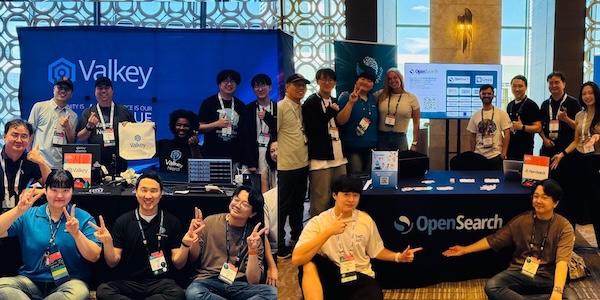
The global momentum behind enterprise-grade open-source software continued to accelerate as Amazon Web Services (AWS) contributors converged on Seoul, South Korea, for two of the region’s premier technology gatherings: the Open Source Summit Korea 2026 and the MCP DevSummit Seoul 2026. Over the course of four dynamic days, software engineers, project maintainers, community leaders, and enterprise users from across the globe gathered to exchange technical knowledge, collaborate on architectural solutions, and discuss the future trajectories of two cornerstone Linux Foundation projects: OpenSearch and Valkey.
The high-profile event underscored the increasing importance of community-driven development in modern cloud architectures. As organizations increasingly rely on scalable observability tools and ultra-fast data caching layers, events like the Open Source Summit serve as critical nodes for technical alignment and cross-industry cooperation. AWS, which has maintained a steadfast commitment to supporting and contributing to open-source initiatives, used the platform to highlight the latest feature releases, performance benchmarks, and cloud service integrations for both OpenSearch and Valkey.
Community Engagement and Collaborative Networking in Seoul
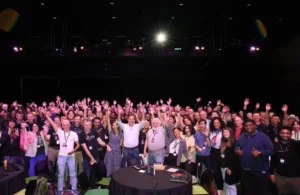
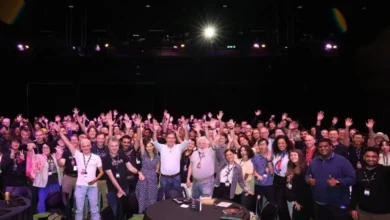
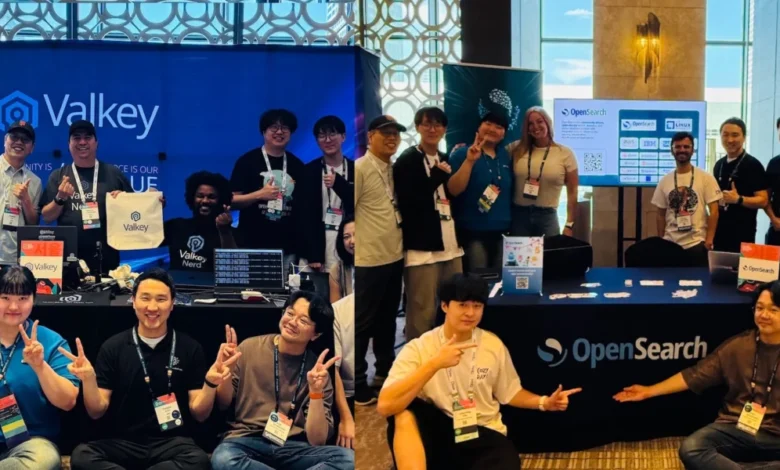
Throughout the four-day conference schedule, the physical presence of AWS contributors and local open-source advocates was heavily felt. Leaders of the vibrant Korean OpenSearch communities stepped forward to volunteer their time and expertise at the dedicated project booths, facilitating hands-on demonstrations, answering complex technical queries, and engaging directly with developers who manage large-scale data infrastructures.
A central highlight of the week was the specialized user group meetup organized by the OpenSearch Project Seoul community. This side event provided an informal yet focused setting for local practitioners to share real-world deployment strategies, discuss troubleshooting methodologies, and offer direct feedback to core contributors. According to community organizers, the active participation of regional developers highlights South Korea’s status as a rapidly growing hub for advanced cloud-native technologies and distributed data systems.
Background and Evolution of OpenSearch 3.7
To fully appreciate the technical discussions taking place in Seoul, one must examine the rapid pace of innovation within the OpenSearch ecosystem. OpenSearch has matured into an indispensable, enterprise-grade search and observability suite designed to bring structure and clarity to massive volumes of unstructured data.
On June 9, 2026, the project released OpenSearch 3.7, marking a significant milestone in observability and search performance. The release introduced a suite of new tools explicitly engineered to streamline workflows by allowing engineers to query, alert, and track Service Level Objectives (SLOs) across logs, traces, and metrics through a unified, cohesive interface. This consolidation reduces operational overhead by eliminating the need to pivot between disparate monitoring tools.
Furthermore, OpenSearch 3.7 delivered dramatic performance enhancements, most notably vector search capabilities that operate up to 5.5 times faster than previous iterations. This architectural leap is particularly crucial for organizations implementing modern generative artificial intelligence (GenAI) applications, semantic search, and Retrieval-Augmented Generation (RAG) pipelines, where low-latency vector retrieval dictates overall user experience.
The benefits of these advancements were quickly made accessible to enterprise users. Beginning July 30, 2026, AWS integrated OpenSearch 3.7 directly into Amazon OpenSearch Service. This managed offering allows organizations to leverage the enhanced vector search performance, superior search relevance, and advanced Query Insights capabilities without the operational burden of managing underlying cluster infrastructure.
Performance Milestones and Cloud Integration for Valkey 9.1
In parallel with search and observability, high-performance data caching and in-memory storage took center stage during the summit discussions, specifically focusing on Valkey. As an open-source, high-performance key-value datastore, Valkey has emerged as a robust solution capable of supporting diverse, demanding workloads ranging from low-latency caching and real-time message queues to serving as a primary database for high-throughput applications.
The technical trajectory of Valkey reached a new peak with the release of Valkey 9.1 on May 19, 2026. This version introduced a thoroughly redesigned I/O threading model engineered to maximize modern multi-core processor efficiency. As a result, Valkey 9.1 delivered up to a 17% increase in overall throughput compared to its predecessors. Additionally, the development team optimized memory utilization, achieving up to a 20% reduction in memory overhead for strings smaller than 128 bytes—a crucial optimization for large-scale key-value deployments handling millions of tiny objects.

Building on these open-source developments, AWS announced the availability of Valkey 9.1 within Amazon ElastiCache starting June 23, 2026. Designed specifically for node-based clusters, the managed service implementation provides customers with significantly higher throughput, enhanced memory efficiency, and robust access control mechanisms tailored for complex multi-tenant cloud environments.
Broader Industry Implications and Future Roadmap
The active participation of cloud providers like AWS in community-led summits such as Open Source Summit Korea 2026 illustrates a fundamental shift in the software industry. Proprietary lock-in is increasingly yielding to open-source governance models where innovation is crowdsourced, transparent, and collaboratively validated.
Industry analysts point out that by embedding cutting-edge open-source releases like OpenSearch 3.7 and Valkey 9.1 directly into managed cloud services, providers bridge the gap between community-driven research and enterprise production requirements. Organizations gain the agility and flexibility of open-source software coupled with the enterprise-grade security, scalability, and automated management of cloud platforms.
Looking ahead, the OpenSearch and Valkey communities show no signs of slowing down their development velocity. Both projects have mapped out ambitious roadmaps focused on deeper artificial intelligence integration, enhanced cryptographic security, and even greater resource efficiency. Developers and enterprise architects interested in participating in this ongoing evolution can connect with AWS contributors and core project maintainers at upcoming community events scheduled globally throughout the remainder of the year.
As the technology sector continues to navigate an era defined by data proliferation and AI-driven transformation, events in Seoul serve as a testament to the enduring power of collaborative, open-source engineering. The dialogue established at Open Source Summit Korea and MCP DevSeoul will undoubtedly reverberate through future code commits, architectural designs, and production deployments across the global digital landscape.