The Evolving Web Platform: How Modern Browser Capabilities Are Reducing Dependency Bloat

The landscape of web development is undergoing a silent but significant transformation as the divide between third-party library reliance and native browser functionality continues to narrow. For years, developers have populated their package.json files with heavy dependencies to handle tasks like date formatting, HTTP requests, modal management, and deep cloning. However, recent advancements in browser standards—often categorized under the "Baseline" initiative—have rendered many of these packages redundant. A comprehensive audit of a typical mid-sized JavaScript application reveals that developers can often reclaim between 60KB and 90KB of minified and gzipped bundle size simply by shifting to native platform features, directly improving performance and reducing the attack surface of their applications.
The Rise of Baseline and the Shift in Web Standards
The "Baseline" project, spearheaded by the WebDX Community Group, serves as an industry-standard benchmark for web platform interoperability. By providing a clear, evidence-based status for web features across major browsers—Chrome, Edge, Firefox, and Safari—it allows developers to distinguish between experimental technologies and those ready for production.
The standardization process has accelerated significantly over the past 36 months. Previously, the "wait time" for a feature to be considered safe for broad implementation was often measured in years of polyfill maintenance. Today, the transition from "Newly" available (supported in the latest versions of major engines) to "Widely" available (supported across all major browsers for at least 30 months) is occurring faster than ever. This evolution is fundamentally changing the calculus for performance engineering; whereas developers once prioritized library stability, they are now increasingly encouraged to prioritize "platform-first" development.

Auditing the Dependency Ecosystem: A Categorical Approach
The most effective way to audit a modern codebase is to move beyond individual package reviews and instead evaluate entire functional clusters. By focusing on groups of related tasks, engineering teams can identify systemic inefficiencies.
The Internationalization Cluster
Internationalization (i18n) was once the domain of complex libraries like timeago.js and numeral. Today, the Intl namespace in JavaScript offers robust, native solutions. The Intl.RelativeTimeFormat API, for instance, provides localized string generation for relative dates without the need for additional JavaScript overhead. Similarly, Intl.NumberFormat and Intl.ListFormat have effectively deprecated common utility packages used for formatting currency, percentages, and lists with Oxford commas. Industry analysts estimate that removing these specific libraries can reduce bundle sizes by approximately 14KB, with virtually zero trade-off in functionality or locale support.
HTTP Clients and the Fetch API
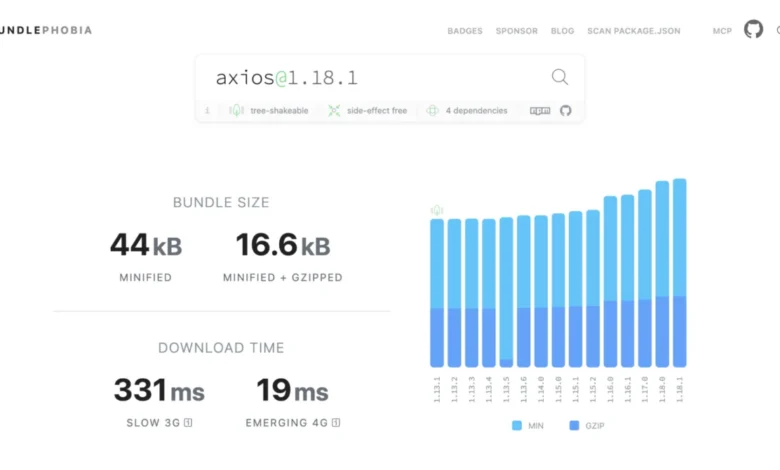
The dominance of libraries like axios and superagent is largely predicated on their developer experience (DX) and ease of use compared to the native fetch API. While axios remains popular due to built-in features like request interceptors and automatic JSON parsing, modern fetch—when paired with AbortController and AbortSignal.timeout()—can replicate 90% of those use cases. The primary implication here is not just bundle size, but security; every dependency added is a potential entry point for supply-chain vulnerabilities. For applications that do not require highly complex retry logic or global request interceptors, moving to a thin, custom fetch wrapper can save nearly 17KB in payload weight.
UI Primitives and the "Top Layer"
Perhaps the most dramatic change in modern web development is the arrival of the "Top Layer" in CSS and HTML. The <dialog> element, the Popover API, and CSS anchor positioning have collectively addressed the need for external UI libraries that once dominated the space. Previously, developers relied on a11y-dialog, focus-trap, and tippy.js to manage accessibility, focus management, and tooltip positioning. These tasks are now handled natively by the browser. A transition to native primitives not only reduces the bundle size by an estimated 24KB but also ensures better accessibility compliance, as browser-native implementations are tested against rigorous WCAG standards by browser vendors themselves.

Strategic Caution: When to Wait
While the trend toward native platform features is clear, it is not an invitation to remove all dependencies indiscriminately. The "Temporal" proposal serves as a cautionary case study. As the intended successor to the aging Date object, Temporal offers a sophisticated and immutable API. However, because it has not yet reached universal stability across all major browsers, relying on it requires a polyfill. Current polyfills for Temporal are significantly heavier than existing, stable date libraries like dayjs. In this instance, the "platform-first" approach would actually result in a larger bundle. Professional teams are advised to maintain current libraries until Baseline status is achieved, at which point the transition can be managed through conditional loading or progressive enhancement.
Establishing a Repeatable Audit Framework
To maintain a performant codebase, organizations should implement a quarterly dependency audit. This process should follow a structured decision framework:
- Baseline Verification: Consult
webstatus.devor MDN documentation to determine if the native equivalent of a library is "Widely" or "Newly" available. - Impact Analysis: Use tools like
source-map-exploreror Vite’s bundle visualizers to determine the real-world weight of a dependency within the specific context of the current project. - Functional Parity Check: Evaluate the specific methods used within a library. If an application uses only 5% of a 20KB library’s functionality, that library is a candidate for removal regardless of whether a full native replacement exists.
- Progressive Implementation: For "Newly" available features, use feature detection (
if (typeof feature === 'function')) to serve native code to modern browsers while providing a fallback for legacy clients.
Future Implications for the Web Industry
The trend of "platform-first" development represents a maturing web ecosystem. As browser vendors continue to implement features that were once the exclusive domain of open-source maintainers, the focus of the JavaScript community is shifting toward architectural efficiency rather than library accumulation.
This shift carries broader implications for the long-term sustainability of web applications. Projects that rely on a lean, native-first stack are inherently easier to maintain, as they are less susceptible to the "dependency hell" of outdated, unmaintained, or abandoned packages. Furthermore, as browsers continue to optimize these native APIs at the engine level, the performance gains of removing third-party code will only compound over time.

For the average development team, the directive is clear: the gap between "you need a library for this" and "the browser does this" is closing rapidly. By adopting a disciplined approach to auditing dependencies against the current Baseline standards, developers can deliver faster, more secure, and more resilient applications. The goal is not merely to "ship less JavaScript," but to build a more robust web infrastructure that relies on the inherent strengths of the platform rather than the transient convenience of external dependencies. In the coming year, as new features like advanced CSS anchor positioning become more prevalent, the potential for further reductions in dependency overhead will only continue to grow, rewarding those who stay informed and act with strategic, evidence-based intent.