Amazon Web Services Expands Elastic Block Store Capabilities with Cross-Account Volume Clones and Advanced Re-Encryption Options


Amazon Web Services (AWS), a subsidiary of Amazon.com specializing in cloud computing platforms, has officially announced a significant enhancement to its Amazon Elastic Block Store (Amazon EBS) service. By introducing cross-account copy functionality for EBS Volume Clones, AWS is bridging a critical operational gap for enterprises managing complex, multi-account cloud environments. This new capability enables organizations to generate point-in-time copies of their EBS volumes and securely transfer them across distinct AWS accounts. Furthermore, it incorporates optional re-encryption using AWS Key Management Service (AWS KMS) keys native to the target account, addressing both rigorous security mandates and agile development workflows.
The rollout marks a major step forward in how development, testing, and production environments interact within modern enterprise cloud architecture. Historically, replicating production-grade datasets into isolated, secondary environments for testing or debugging involved cumbersome backup, export, and import workflows that consumed both time and storage resources. With the integration of cross-account volume clones, AWS aims to streamline these processes while preserving strict data isolation and security boundaries between organizational units.
Main Facts and Functional Overview
The newly released feature builds directly upon the foundation laid by Amazon EBS Volume Clones, which were introduced by AWS to allow users to generate instantaneous, point-in-time block storage copies within the same Availability Zone. The extension of this feature into a cross-account paradigm fundamentally changes how data can be shared and mobilized across an enterprise architecture.
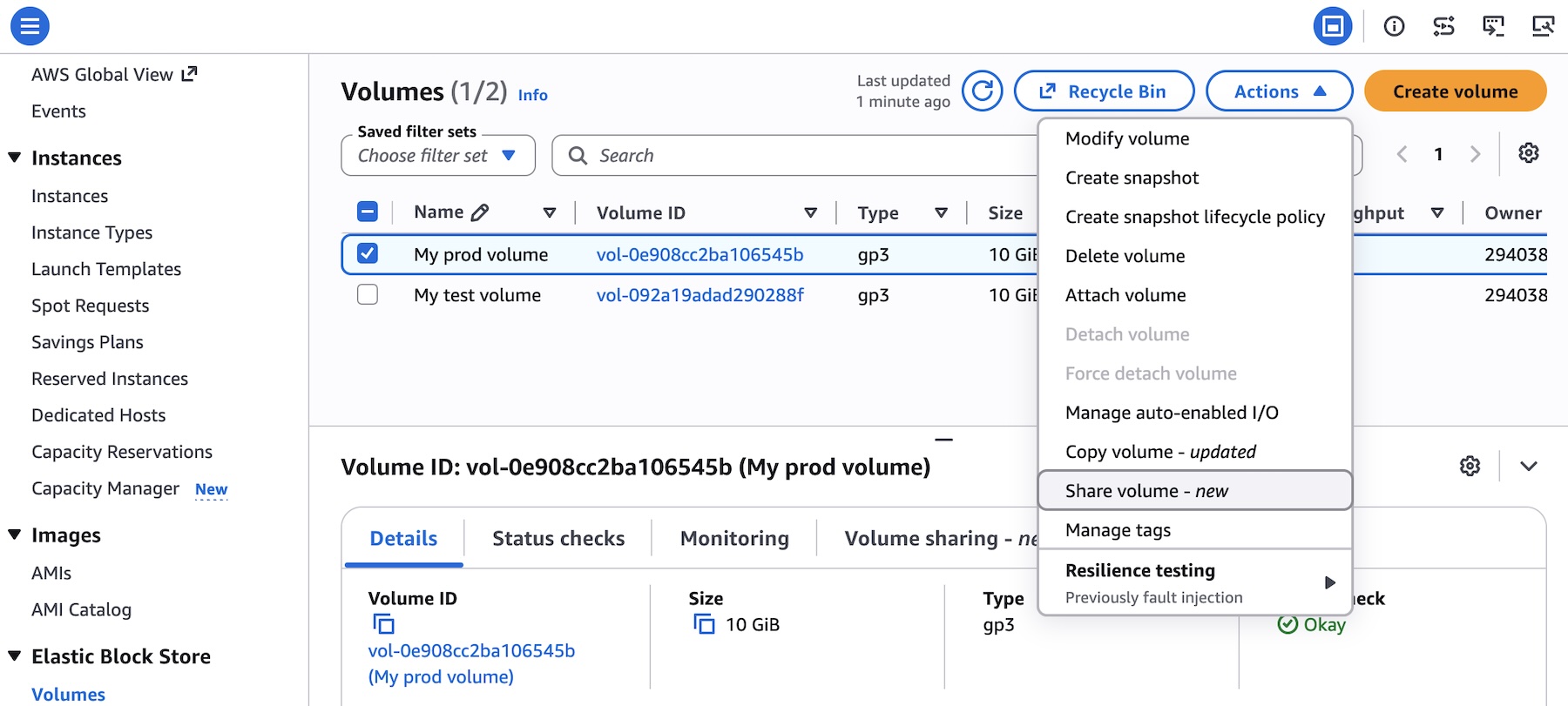
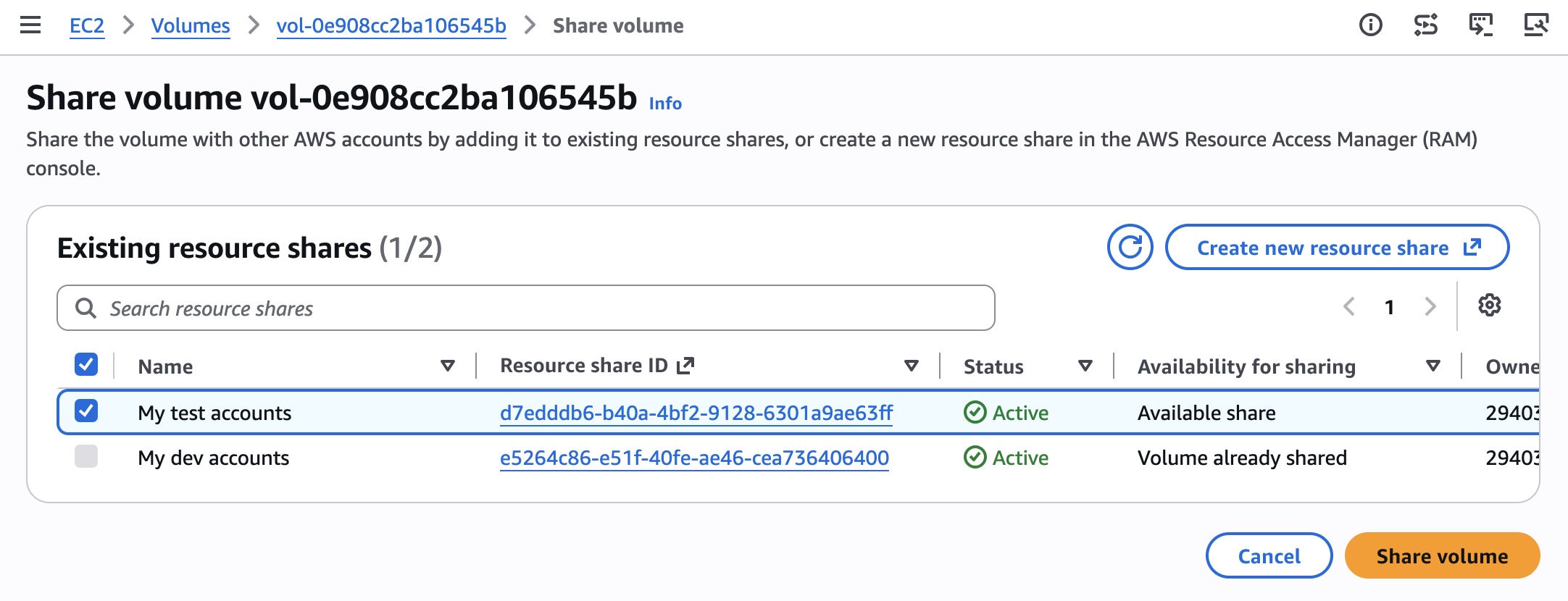
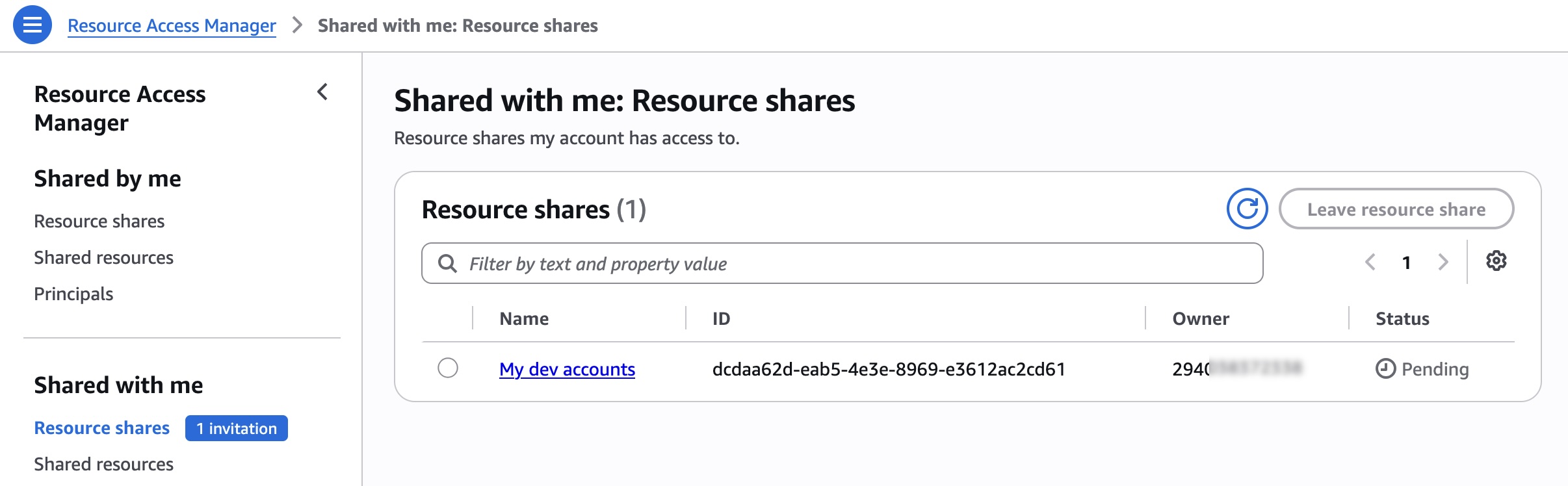
At its core, the mechanism operates through a controlled handoff between AWS accounts, mediated by AWS Resource Access Manager (AWS RAM). The primary volume owner initiates the process by granting the designated target account explicit access to the source EBS volume through the Amazon EBS management console. Once the resource share is established via AWS RAM and accepted within the target account, authorized administrators in the secondary account can locate the shared asset and trigger a direct volume copy operation.
A critical security feature of this release is the capability to re-encrypt the copied volume in transit and at rest. When executing the copy procedure in the target environment, the administrator can apply a unique AWS KMS key belonging to that specific account. This ensures that production data—even when mirrored for development or staging purposes—remains compliant with internal governance policies, regional data sovereignty requirements, and external regulatory frameworks such as HIPAA, GDPR, or PCI-DSS.

The operational workflow has also been designed to support automation. System administrators and DevOps engineers can manage these cross-account sharing and copying procedures programmatically. Integration with the AWS MCP Server and associated plugins allows engineering teams to execute these workflows directly through preferred AI coding assistants and infrastructure-as-code pipelines, minimizing manual intervention and reducing the likelihood of human error during deployment.
Background Context and Chronological Evolution
The trajectory of Amazon EBS reflects the broader evolution of cloud storage from simple virtual disk persistence to high-performance, highly flexible, and deeply integrated enterprise data systems. When Amazon EBS was initially launched, its primary function was to provide persistent block-level storage volumes for use with Amazon Elastic Compute Cloud (Amazon EC2) instances. Over the ensuing decade and a half, AWS progressively layered advanced features onto the service, including snapshot management, elastic volumes that scale without downtime, multi-attach capabilities, and advanced encryption standards.
Despite these advancements, managing data across multi-account strategies—widely recommended by AWS in its Well-Architected Framework for security and cost allocation—frequently presented friction points. Enterprises adopting a multi-account approach often struggled with the administrative overhead of refreshing testing environments with production-scale data without compromising security credentials or violating principle-of-least-privilege access controls.
The stepping stones leading to the current release highlight a deliberate product roadmap:
- Foundational Block Storage: Establishment of high-availability block storage designed for low-latency workloads.
- Introduction of EBS Snapshots: The capability to back up volume data incrementally to Amazon S3, forming the basis for long-term retention and basic data migration.
- Launch of EBS Volume Clones: The introduction of instantaneous, storage-efficient copies within the same Availability Zone, significantly accelerating local development tasks.
- Cross-Account Volume Clones (Present Day): The logical extension of volume cloning across AWS account boundaries, combining instantaneous copy technology with centralized access management via AWS RAM and target-account KMS re-encryption.
Supporting Data, Architecture, and Operational Mechanics
To fully appreciate the technical implications of cross-account volume clones, it is necessary to examine the underlying architecture governed by AWS RAM and Amazon EC2/EBS infrastructure.
AWS RAM is a service that enables administrators to securely share their AWS resources—such as subnets, transit gateways, and now EBS volumes—with other AWS accounts or within an entire AWS Organization. By leveraging AWS RAM, organizations eliminate the need to create duplicate resources or configure overly permissive cross-account Identity and Access Management (IAM) role assumptions. Instead, resource sharing is handled at the service level with granular permission controls.
When a volume is shared and subsequently cloned across accounts, the underlying data transfer is managed entirely within the high-speed, secure AWS global network infrastructure. This ensures high throughput and low latency, avoiding the bandwidth bottlenecks associated with manual export-to-S3 and import-from-S3 routines.
Furthermore, the integration with AWS KMS provides cryptographic certainty. Even if a source volume is encrypted under a KMS key managed by Account A, the target account (Account B) can ingest the clone and immediately apply a KMS key managed by Account B. This decoupling of encryption keys ensures that the production account retains zero ongoing cryptographic access or visibility into how the data is utilized within the development or staging environment, enforcing absolute separation of duties.
Industry Implications and Enterprise Analysis
The introduction of cross-account volume clones carries profound implications for software development life cycles (SDLC), data analytics pipelines, and disaster recovery preparedness.

In modern software engineering, the fidelity of testing environments is directly proportional to the accuracy of the data used within them. Historically, organizations faced a difficult compromise: either test applications against synthetic or outdated datasets—which frequently failed to surface production-specific edge cases—or expose production databases and storage volumes to auxiliary environments, creating severe security vulnerabilities. By allowing instantaneous, secure, and re-encrypted copies to be piped directly into segregated development accounts, AWS has effectively removed this trade-off.
From a financial and operational perspective, the feature aligns with modern FinOps practices. Organizations often struggle with bloated storage costs stemming from redundant, poorly managed snapshots and manual copies distributed haphazardly across multiple accounts. By centralizing the governance of volume sharing through AWS RAM and utilizing the space-efficient architecture inherent to EBS volume clones, enterprises can maintain leaner storage footprints while ensuring developers have timely access to the exact data states required for troubleshooting and feature validation.
Security analysts have noted that this capability also strengthens compliance postures. In heavily regulated industries such as financial services and healthcare, auditors scrutinize how production data is handled outside of core operational perimeters. The mandatory requirement for explicit AWS RAM resource sharing, coupled with target-account KMS re-encryption, provides a clear, auditable trail of data provenance and access consent. This transparency simplifies compliance reporting and reduces the risk of data leakage resulting from misconfigured cross-account permissions.
Ecosystem Integration and Future Outlook
As cloud infrastructures continue to scale in complexity, the integration of automation tooling and artificial intelligence assistants into cloud management has become a focal point for AWS. The support for the AWS MCP Server and related plugins underscores a strategic shift toward programmatic and AI-assisted cloud administration. Engineers can now script, audit, and execute complex cross-account storage operations using natural language prompts or automated CI/CD pipelines, lowering the operational barrier to entry for advanced multi-account architectures.
Industry observers anticipate that the foundational technology enabling cross-account volume clones will serve as a stepping stone for even more advanced data orchestration features within the AWS ecosystem. As global enterprises increasingly move toward distributed, multi-region, and multi-account cloud strategies, the ability to seamlessly, securely, and instantly mobilize block storage data will remain a cornerstone of enterprise resilience.
AWS has confirmed that cross-account volume clones for Amazon EBS are generally available across all AWS Regions that currently support standard Amazon EBS Volume Clones. Organizations looking to adopt the feature can begin utilizing it immediately through the Amazon EC2 and Amazon EBS management consoles, or via programmatic interfaces supported by the AWS SDK and CLI. Feedback channels, including AWS re:Post and direct enterprise support lines, remain open as the platform continues to gather user telemetry and refine subsequent iterations of the service.
Related posts: