The Evolution of Media Archiving: How Tools Like yt-dlp Keep Offline Content Accessible in a Streaming-First Era


The digital landscape has undergone a profound transformation over the past three decades, shifting from an open ecosystem of peer-to-peer file sharing and direct downloads to a centralized, subscription-based streaming model. In the early days of widespread consumer internet adoption, acquiring and storing digital media—ranging from compressed MP3 audio files to feature-length motion pictures—was a ubiquitous practice. Users relied on decentralized networks, peer-to-peer protocols, and pioneering software clients such as Napster, Kazaa, and LimeWire, alongside early BitTorrent clients, to build personal digital libraries.
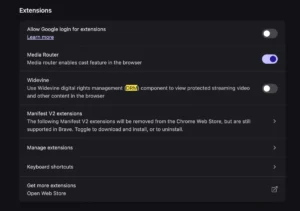
Today, however, that digital autonomy has largely been restricted. Modern web architectures, proprietary media players, and streaming platforms employ sophisticated digital rights management (DRM) protocols, encrypted media streams, and blob URLs designed specifically to prevent direct content extraction and local storage. Despite these industry-wide barriers, open-source utilities have emerged to bridge the gap between cloud-based streaming and local archiving. Among these, the command-line utility yt-dlp has established itself as the de facto standard for preserving digital media from YouTube and hundreds of other supported platforms, serving researchers, archivists, and everyday consumers seeking offline access to information.
The Technological Shift from Open Downloads to Encrypted Streaming
To understand the modern necessity of tools like yt-dlp, one must examine the architectural evolution of the World Wide Web. In the late 1990s and throughout the 2000s, websites frequently served media files through direct HTTP or FTP links. A user could simply click a hyperlink, prompt their browser to download the file directly, and store it on a local hard drive without impedance.
As broadband speeds increased and copyright holders grew increasingly concerned about rampant unauthorized distribution, media companies and platform operators transitioned toward dynamic delivery mechanisms. Protocols such as HTTP Live Streaming (HLS) and Dynamic Adaptive Streaming over HTTP (DASH) broke media files down into thousands of tiny, encrypted segments—often just seconds in length—which are reassembled on the fly by the user’s web browser. Furthermore, the adoption of blob URLs obscures the true resource path of the media, effectively shielding the underlying files from casual inspection and direct downloading.
For content creators, educators, and archivists, these security layers present a significant usability hurdle. While streaming offers unmatched convenience for casual viewers with stable, high-speed internet connections, it introduces severe limitations for individuals operating in regions with intermittent connectivity, limited data caps, or strict censorship regimes. Consequently, a robust community of developers has continuously engineered command-line utilities capable of bypassing these hurdles by parsing platform APIs, deciphering stream manifests, and reconstructing complete media files locally.

The Rise and Evolution of Video Extraction Software
The lineage of modern video extraction tools traces back to the mid-2000s, coinciding with the rapid ascent of YouTube following its launch in 2005. Early solutions were often browser extensions or lightweight scripts designed to grab the specific Flash video (.flv) files served by the platform at the time.
By the early 2010s, the landscape crystallized around a single, highly influential Python-based project: youtube-dl. Created in 2006 by Ricardo Garcia and later maintained by a rotating cast of open-source contributors, youtube-dl became the universal backend engine for countless graphical user interface (GUI) applications and web-based video downloaders. Its modular architecture allowed developers to write site-specific "extractors," enabling the tool to support not just YouTube, but thousands of video-hosting websites, news outlets, and educational portals.
However, as YouTube and other media giants continuously updated their anti-bot measures, encryption standards, and JavaScript-based player challenges, the original youtube-dl project suffered from frequent maintenance bottlenecks. Slow release cycles led to a frustrating user experience where the tool would routinely break whenever platforms altered their backend infrastructure.
This maintenance lag paved the way for yt-dlp, an active fork of the original project that prioritized rapid updates, enhanced performance, and robust community contributions. By aggressively patching extraction failures and introducing advanced features—such as integrated sponsorblock support, native aria2c integration for accelerated download speeds, and sophisticated subtitle merging—yt-dlp quickly usurped its predecessor. Today, it stands as the undisputed titan of command-line media extraction.
Technical Implementation: Archiving Channels and Audio Extraction
For users looking to leverage yt-dlp for personal archiving, travel preparation, or offline media consumption, the tool offers a granular level of control through command-line arguments. Unlike graphical web-based downloaders, which are often throttled by advertisements or limited to low-resolution outputs, yt-dlp interfaces directly with the source platform’s highest-quality streams.
To download an entire archive or channel, users can execute a straightforward command within their terminal or command prompt environment:

yt-dlp https://www.youtube.com/@beetlejuicearchives3490This command instructs the utility to parse the channel’s identifier, traverse its video listing, and sequentially download each video in its highest available quality profile, utilizing the default video and audio container formats (typically MP4 or WebM).
In many scenarios, however, users are interested strictly in the spoken word, musical performances, or lecture audio rather than high-definition video files. This is particularly common among commuters, long-distance travelers, and individuals seeking to minimize storage consumption on mobile devices. yt-dlp accommodates this workflow through extraction flags that bypass video rendering entirely, pulling only the audio stream and converting it into universally supported audio formats:
yt-dlp -x --audio-format mp3 https://www.youtube.com/@beetlejuicearchives3490In this command, the -x flag tells the utility to extract the audio track from the downloaded container, while --audio-format mp3 prompts the integrated FFmpeg backend to transcode the resulting stream into a standard MP3 file. This flexibility transforms a video-centric repository into a portable audiobook, podcast, or musical archive.
Data Privacy, Accessibility, and the Digital Divide
The necessity of media extraction tools extends far beyond mere personal convenience; it intersects directly with discussions surrounding digital preservation, accessibility, and the global digital divide. Industry data consistently underscores the disparity in internet infrastructure across geographic regions. According to reports from the International Telecommunication Union (ITU), billions of people globally still lack reliable, high-speed broadband access, relying instead on expensive, metered mobile data connections.
For students, researchers, and professionals operating in bandwidth-constrained environments, streaming large educational lectures, documentaries, or archival footage in real-time is often financially and technically prohibitive. By utilizing tools like yt-dlp to pull content during off-peak hours or while connected to unmetered institutional Wi-Fi, users can curate offline repositories that ensure uninterrupted access to critical information.
Furthermore, digital archivists frequently emphasize the fragility of cloud-hosted media. Content hosted on major platforms is subject to sudden removal due to shifting corporate policies, copyright disputes, account terminations, or platform deprecation. Historical archives, rare musical recordings, and independent journalism housed exclusively on streaming networks remain vulnerable to sudden disappearance. Local downloading acts as a vital safeguard against digital erosion, ensuring that cultural and informational artifacts are preserved for posterity.

Industry Response and Platform Policies
The relationship between platform operators and media extraction software developers has historically been contentious. Major technology companies operate on advertising-driven business models that rely on continuous user engagement, active telemetry collection, and served impressions. When users bypass the primary interface by downloading media directly and viewing it through local media players, platforms lose valuable engagement data and advertising revenue.
In response, companies like Google (the parent company of YouTube) frequently update their Terms of Service to explicitly prohibit unauthorized downloading, scraping, or automated extraction of content. Tech giants routinely deploy sophisticated bot-detection algorithms, rate-limiting protocols, and dynamic token-signing mechanisms designed to disrupt third-party downloaders.
Despite these measures, open-source developers argue that downloading media for personal use, educational research, and offline accessibility falls under well-established legal precedents regarding fair use and format shifting. Unlike commercial piracy operations that seek to redistribute or monetize copyrighted intellectual property unlawfully, command-line utilities are fundamentally neutral technologies akin to modern videocassette recorders (VCRs) or digital video recorders (DVRs) of previous decades.
Broader Implications and Future Outlook
As the internet continues to evolve toward tighter centralization, increased encryption, and automated content curation, the tension between user autonomy and platform control will likely intensify. The widespread adoption of tools like yt-dlp reflects a persistent consumer demand for ownership and control over digital media.
While streaming services will undoubtedly remain the primary vector for media consumption for the foreseeable future, the technical ability to extract, convert, and store digital content locally ensures that users retain a degree of independence from the cloud. Whether utilized by travelers preparing for long flights, educators compiling offline lesson plans, or archivists safeguarding historical media against digital decay, media extraction utilities remain an essential component of the modern digital toolkit—preserving the spirit of open access in an increasingly locked-down digital world.