Managing workloads on Amazon Elastic Kubernetes Service (Amazon EKS) has long been a complex balancing act for DevOps and Site Reliability Engineering (SRE) teams. As cluster complexity grows, the challenges of maintaining system health—ranging from intermittent "OOMKilled" (Out of Memory) errors to IP exhaustion—often result in significant operational friction. Traditionally, engineers have been forced to engage in a manual, time-consuming diagnostic dance: collecting pod logs, tracing erratic events, and auditing node-level performance metrics. This manual intervention is not only labor-intensive but frequently results in the loss of critical diagnostic data, as ephemeral pods are terminated and nodes are cycled out of the cluster before an engineer can intervene.
The resulting increase in Mean Time to Resolution (MTTR) represents a significant bottleneck for enterprise infrastructure. When incidents occur during off-peak hours or weekends, the delay between a failure and the initiation of a diagnostic review can extend system downtime, impacting end-user experience and operational availability. While existing AI-driven tools like K8sGPT and Amazon Bedrock Agents have made strides in cluster maintenance, they often lack a unified, end-to-end automated workflow. K8sGPT, for instance, is limited to analyzing current resource states, and Amazon Bedrock Agents typically require manual orchestration to integrate with CI/CD pipelines and observability platforms.
The introduction of the AWS DevOps Agent, a frontier-level automation tool designed to bridge these gaps, marks a significant shift in incident management. By connecting code repositories, observability stacks, and CI/CD pipelines, the DevOps Agent can autonomously analyze root causes. To operationalize this, the development of the DevOps Agent Operator—a specialized Kubernetes controller—provides the necessary bridge to turn reactive troubleshooting into an automated, proactive incident response pipeline.
The Logic of Automated Detection
The DevOps Agent Operator serves as a vigilant sentinel within the Kubernetes control plane. Because the DevOps Agent requires an external trigger to initiate an investigation, the Operator fulfills this role by monitoring the EKS cluster for specific failure signals. The necessity of an Operator-based approach is rooted in the ephemeral nature of Kubernetes resources. Standard event logs in Kubernetes are notoriously short-lived, often persisting for less than an hour, while crashed containers frequently overwrite their logs upon restart.
By deploying an Operator, organizations ensure that data collection is synchronized with the failure event itself. The Operator acts on three core principles: it preserves evidence at the exact moment of failure, it reaches beyond the limitations of standard kubectl commands to access low-level node logs, and it ensures that incident reports are throttled and deduplicated to prevent alert fatigue. If a mass failure occurs—such as a configuration error causing 100 replicas to crash simultaneously—the Operator processes the failure on a per-pod basis, ensuring that every incident is captured and indexed without overwhelming the investigation pipeline.

Architectural Framework and Implementation
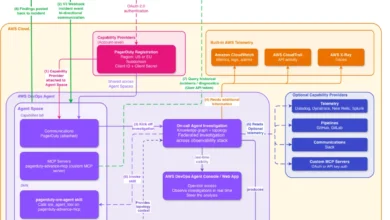
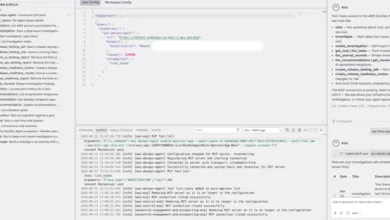
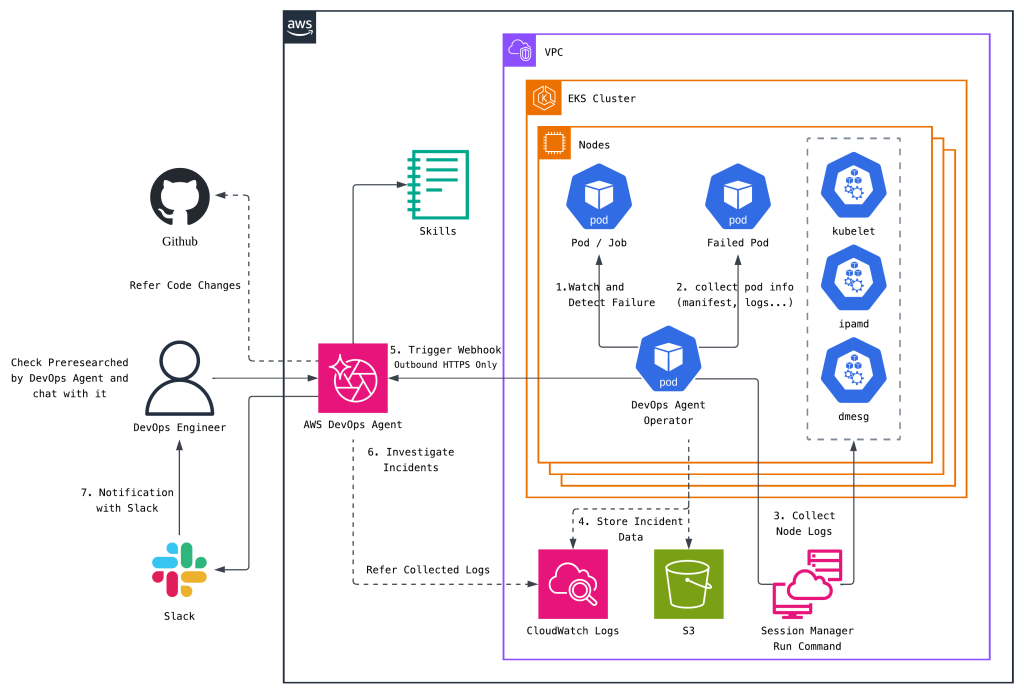
The architecture of this solution integrates several AWS services into a cohesive, automated ecosystem. Upon detecting a pod failure, the Operator performs a multi-stage diagnostic routine. It first gathers Kubernetes-level context, such as current manifests and event timelines. It then executes deeper diagnostics on the underlying EC2 node, utilizing AWS Systems Manager (SSM) to retrieve kernel logs (dmesg), containerd status, and network interface metrics.
Once this data is aggregated, the Operator stores the diagnostic package in Amazon S3 and CloudWatch Logs, ensuring that the evidence is immutable and available for the AI-driven investigation. Finally, the Operator triggers the AWS DevOps Agent via a secure, HMAC-SHA256-signed webhook. This ensures that when the DevOps Agent begins its analysis, it is not working with stale data but with a comprehensive "black box" recording of the failure event.
A Practical Scenario: Addressing Memory Leaks
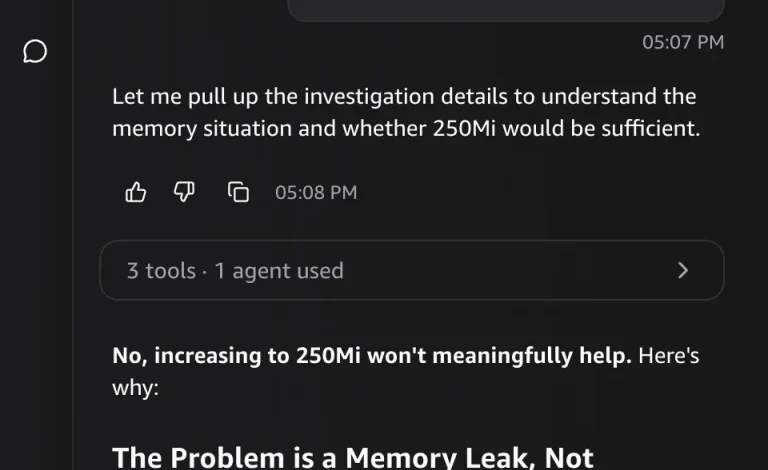
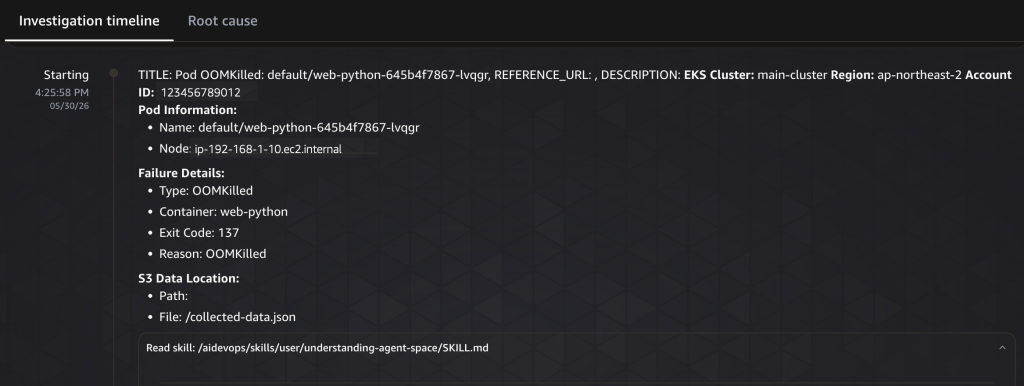
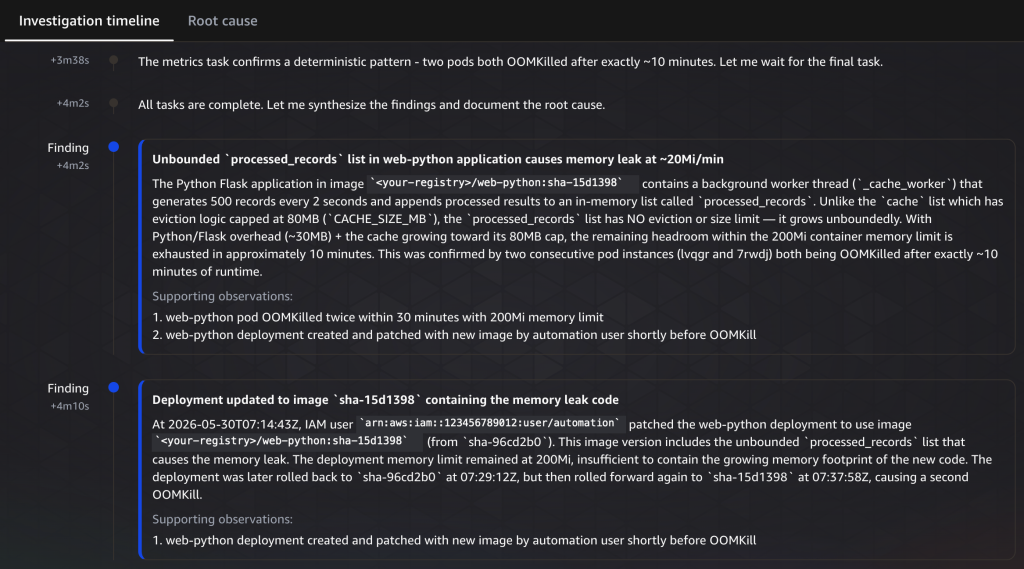
To illustrate the efficacy of this automated pipeline, consider a common production failure: a memory leak introduced by a faulty code deployment. In a typical scenario, a developer pushes an update to a Python-based web service. While the deployment appears successful, a logic error—such as an unbounded list in a background worker thread—begins consuming memory at a rate of 20Mi per minute.
Within approximately ten minutes, the pod hits its memory limit and is terminated with an OOMKilled status. Under manual management, an engineer might be alerted, spend time logging into the cluster, pulling logs, and then manually cross-referencing these logs with recent GitHub commits. With the DevOps Agent Operator, the timeline is compressed to near-zero latency.
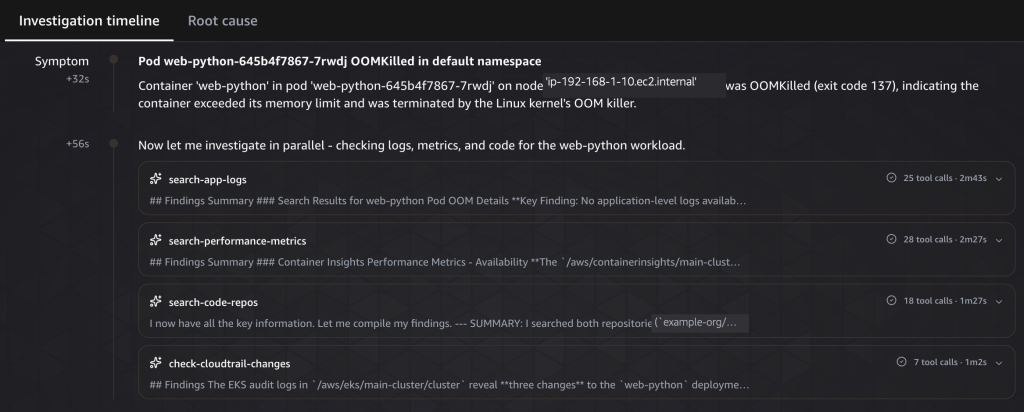
- Failure Detection: The Operator immediately identifies the OOMKilled state and triggers the workflow.
- Data Collection: The Operator captures the kernel OOM killer logs, identifying the exact memory usage threshold reached.
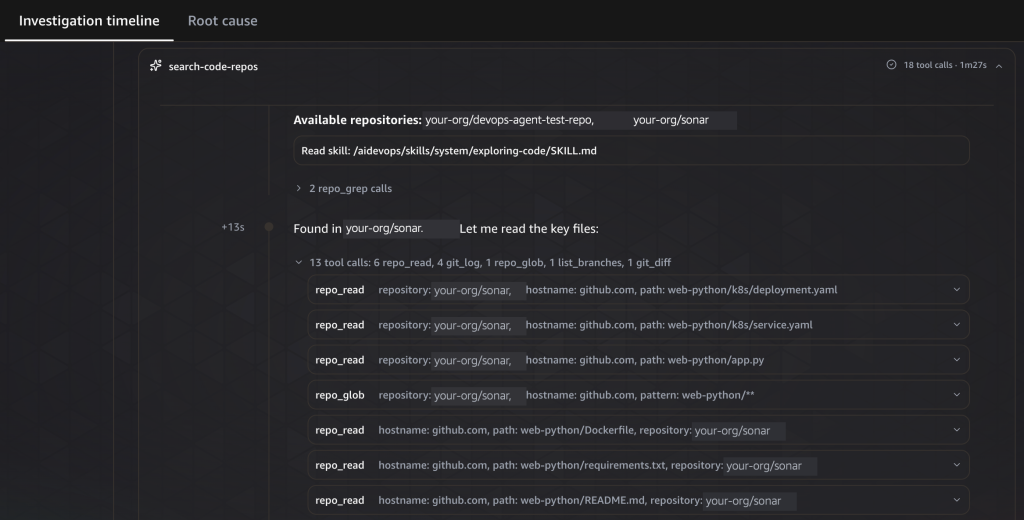
- Investigation: The DevOps Agent correlates this data with the deployment history from the connected GitHub repository.
- Resolution: The Agent identifies that the memory leak began immediately following the most recent container image update. It flags the specific code module responsible and proposes a rollback plan, providing the engineer with the precise commands to revert the cluster to the last stable state.
This level of insight moves the engineer from the role of "data gatherer" to "decision maker," allowing them to focus on verifying the proposed fix rather than hunting for the root cause.
Implications for Enterprise Operations
The integration of the DevOps Agent Operator into the EKS lifecycle has profound implications for enterprise SRE teams. By reducing the human labor involved in initial triage, organizations can significantly reduce MTTR, which directly correlates to higher service-level objectives (SLOs) and improved reliability.
Furthermore, the solution addresses the "noise" problem inherent in large-scale Kubernetes clusters. By configuring WEBHOOK_MIN_SEVERITY and WEBHOOK_SKIP_CATEGORIES, teams can tune the Operator to ignore minor transient issues while ensuring that high-severity failures are immediately prioritized. The use of IAM roles for service accounts (IRSA) ensures that the Operator adheres to the principle of least privilege, only accessing the resources necessary to perform diagnostics.
Strategic Considerations and Future Directions
While the DevOps Agent Operator provides a powerful template for incident response, it is currently positioned as a reference implementation. Organizations adopting this technology must be prepared to manage the infrastructure that supports it, including the lifecycle of the S3 buckets and CloudWatch log groups used for evidence storage. Proper lifecycle policies—such as expiring logs after 14 days—are essential to maintaining cost efficiency.
Looking forward, the potential to extend this model is vast. Future iterations could incorporate custom "skills" for the DevOps Agent to handle specialized infrastructure failures, such as VPC CNI IP exhaustion or persistent volume attachment errors. As the open-source community continues to contribute to the Operator’s codebase, it is expected that detection logic will become increasingly sophisticated, allowing for predictive analysis before a failure even occurs.
For organizations operating at scale, the transition to automated diagnostic pipelines is no longer an optional luxury but a necessity. By leveraging the DevOps Agent Operator, teams can transform their EKS management from a reactive, manual burden into a streamlined, AI-assisted operation. The key to successful adoption lies in a phased implementation: starting with non-production environments to refine detection criteria, followed by a gradual rollout into mission-critical clusters. As the industry moves toward increasingly complex, distributed architectures, the ability to automate the "how" and "why" of system failure will define the next generation of cloud-native excellence.
Related posts: