The Evolution of Web Architecture: Moving Toward Intent-Driven Design and the Obsolescence of the Graphical User Interface


For over four decades, the digital landscape has been defined by the point-and-click paradigm, a structural framework where users navigate complex menus, multi-step forms, and endless browser tabs to execute simple tasks. From the inception of the Xerox Star in 1981 to the widespread adoption of the Apple Macintosh, the Graphical User Interface (GUI) became the standard bridge between human intent and machine execution. However, as Artificial Intelligence (AI) and Large Language Models (LLMs) achieve greater maturity, the industry is witnessing a seismic shift: the transition from static, manual interfaces to intent-driven, autonomous experiences. This evolution seeks to eliminate the friction inherent in modern software, marking a transition toward what many industry experts now describe as the "No Interface" movement.
The Chronology of Digital Friction
The history of computing is largely a history of adding layers of abstraction between the user and the system. In the 1980s, the GUI was a revolutionary advancement, replacing command-line inputs with intuitive visual metaphors. By the 1990s, the emergence of the World Wide Web introduced the hyperlink-based navigation that still powers the majority of the internet today.

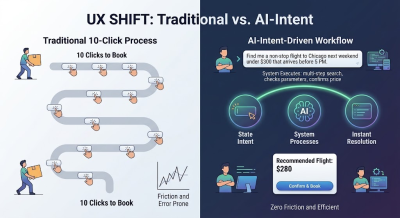
However, the 2010s marked a peak in "interface bloat." As businesses sought to capture user data and guide consumers through rigid sales funnels, the burden of interaction shifted entirely to the user. A 2023 industry study indicated that the average consumer spends approximately 40% of their digital task time navigating software overhead—managing cookie settings, searching for hidden menu items, or reconciling data across disconnected browser tabs—rather than performing the actual work. This "10-click process" for tasks as simple as booking a flight or researching a product has become a primary point of friction, creating a digital environment that is increasingly difficult to navigate efficiently.
The Rise of Intent-Driven Design
The concept of Intent-Driven Design posits that the ideal software experience should require zero manual navigation. Instead of the user acting as an orchestrator of micro-steps, the software acts as an agent, receiving a high-level goal and executing the necessary backend processes to achieve it.
This philosophy draws heavily from the principles of Human-Computer Interaction (HCI) established by figures such as Don Norman and the "No Interface" framework proposed by Golden Krishna. The shift is not merely cosmetic; it is structural. Where traditional design focuses on the visual placement of buttons, intent-driven design focuses on the interpretation of natural language and contextual data.
Case Studies in Modern Automation
Several platforms are currently leading this transition, effectively replacing traditional UIs with generative outcomes:
- Perplexity AI and the Synthesized Search: Traditional search engines operated as directories, providing a list of links that forced the user to perform the cognitive labor of synthesis. Perplexity AI has inverted this model by providing direct, cited answers to queries. By synthesizing information from multiple sources into a single, cohesive response, it eliminates the need for users to open dozens of tabs.
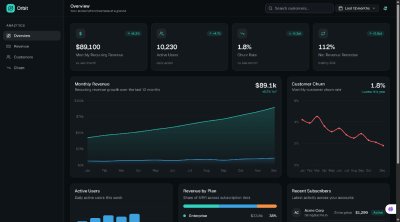
- Vercel v0 and Generative UI: Web development, historically reliant on manual drag-and-drop builders or manual coding in environments like Figma, is being transformed by generative tools. Vercel v0 allows users to describe a functional UI component—such as a complex financial dashboard—which is then rendered in real-time. This reduces the time spent on layout construction from hours to seconds.
- Goblin.tools: Serving as a prime example of accessible design, this platform breaks down complex, overwhelming tasks into manageable sub-tasks. By leveraging AI to parse intent from a simple prompt, it removes the need for users to manually build and organize Kanban boards or task lists.
Core Pillars of the New Paradigm
The transition toward intent-driven design is supported by three technological pillars that fundamentally change the relationship between the user and the computer.
1. High-Level Goal Mapping
Modern systems are moving away from granular command inputs toward natural language processing. By leveraging environmental metadata—such as time of day, geolocation, and historical user behavior—the system can anticipate needs before the user explicitly requests them. This context-aware design is becoming a requirement for modern mobile and desktop operating systems.

2. Generative UI
In a traditional web environment, every user is presented with a static layout. Generative UI introduces the concept of dynamic rendering, where the interface manifests only the elements required for the immediate task. If a user expresses a need for a data calculation, the UI generates a calculator; once the calculation is complete, the widget recedes, decluttering the user’s workspace.
3. Autonomous Execution via AI Agents
Perhaps the most significant change is the shift from manual user execution to background agent execution. While traditional interfaces emphasize error prevention through intrusive warning modals, intent-driven systems prioritize "frictionless reversibility." By providing clear "undo" functionality and transparent audit logs, these systems empower AI to take autonomous action while maintaining a safety net for the user.
Analysis of Implications and Risks
While the reduction of friction is a net positive for user productivity, the removal of the traditional UI introduces significant ethical and technical challenges.
A primary concern is the "Black Box" problem. When software makes decisions based on inferred intent, users may struggle to understand why a specific result was achieved or how to correct it. To mitigate this, design guidelines from organizations like Google’s PAIR (People + AI Research) emphasize the importance of feedback loops. Systems must be transparent about their interpretations, providing users with the ability to verify and modify the AI’s logic in real-time.
Furthermore, there is the risk of the "Illusion of Control." If a system automates too much, it can become patronizing or invasive. Industry experts, including those at the Center for Humane Technology, argue that designers must maintain clear boundaries. High-stakes actions—such as financial transactions or data privacy settings—should always require explicit, human-confirmed validation, even in an era of high-level automation.
The Future of UX Roles
The role of the UX designer is currently undergoing a fundamental re-evaluation. The skill set required to design static buttons and rigid forms is becoming secondary to the ability to map complex user journeys and design generative UI components. UX professionals are moving toward a role of "Experience Architects," who oversee the logic, ethics, and transparency of AI agents rather than just the visual layout of a page.
As stated in current industry discourse, the objective is no longer to make a "prettier" button, but to eliminate the button entirely. By mastering patterns such as ambient feedback and inline prompts, designers can ensure that as we move toward screenless, agent-driven environments, the experiences remain deeply human-centered.
Conclusion: A Shift in Success Metrics
For decades, the digital industry has measured success through engagement metrics like time-on-page and click-through rates. These metrics encouraged the creation of interfaces designed to keep users trapped in a cycle of interaction. The shift toward intent-driven design rejects these metrics in favor of "Time Well Spent."
The ultimate test of a digital product in the modern era is no longer how many clicks it generates, but how efficiently it solves a user’s problem and recedes into the background. As we move forward, the most successful platforms will not be those with the most vibrant interfaces, but those that achieve seamless, invisible completion. The era of the "10-click process" is drawing to a close, replaced by an era where the best interface is, indeed, no interface at all.
Related posts: