Elevating Usability Testing: The Critical Imperative of Realistic Login Flows in Financial Prototypes

The efficacy of usability testing, a cornerstone of user experience (UX) design, hinges on creating environments that mirror real-world application usage as closely as possible. However, a recurring observation in almost every usability session reveals a significant flaw: participants frequently pause at the login screen, type something, and then glance up, a subtle but telling gesture indicating they are checking whether they are "doing it right." This hesitation is a clear sign that the participant has registered the prototype as an artificial environment, not a live application. Consequently, every data point collected after this moment is filtered through this awareness, potentially skewing findings and undermining the validity of the research.
The Deceptive Pause: Unmasking Flaws in Traditional Usability Testing
This momentary pause, seemingly innocuous, carries profound implications for the integrity of UX research. When users perceive a prototype as anything less than a fully functional product, their behavior shifts. They may become overly cautious, less critical, or even attempt to "please" the researcher by guessing the intended interaction rather than reacting naturally. This phenomenon, often referred to as the "Hawthorne effect" or "observer-expectancy effect" in a research context, means that the feedback gathered reflects how users interact with a demonstration, not how they would genuinely engage with a shipped product. The authenticity gap created by unrealistic prototypes can lead to misleading insights, wasted development cycles, and ultimately, products that fail to meet genuine user needs.
The Unique Demands of FinTech: A Higher Bar for Authenticity
The problem of prototype fidelity is sharpened considerably in the financial technology (FinTech) sector. Users of banking, investment, and payment applications are inherently trained to notice discrepancies and inconsistencies. In a domain where security, accuracy, and trust are paramount, any element that "feels off" can trigger significant user apprehension. A balance that doesn’t add up, a field that accepts invalid input, or a login screen that bypasses real authentication are not mere inconveniences; they are critical trust breakers.
When a banking prototype skips real authentication, participants don’t merely disengage; they often stop mid-session to explicitly flag the issue. This isn’t just about identifying a bug; it’s about a fundamental erosion of trust in the simulated environment. For product teams, this translates into findings that reflect how users behave in a staged demonstration, devoid of the genuine emotional and cognitive investment that comes with managing real money. The stakes are considerably higher in FinTech, where user trust directly correlates with adoption, retention, and brand reputation. According to a 2023 survey by PwC, security and trust remain the top two concerns for consumers when choosing financial service providers, underscoring the critical importance of a robust and believable digital experience from the very first interaction.
Bridging the Authenticity Gap: The ProtoPie Solution
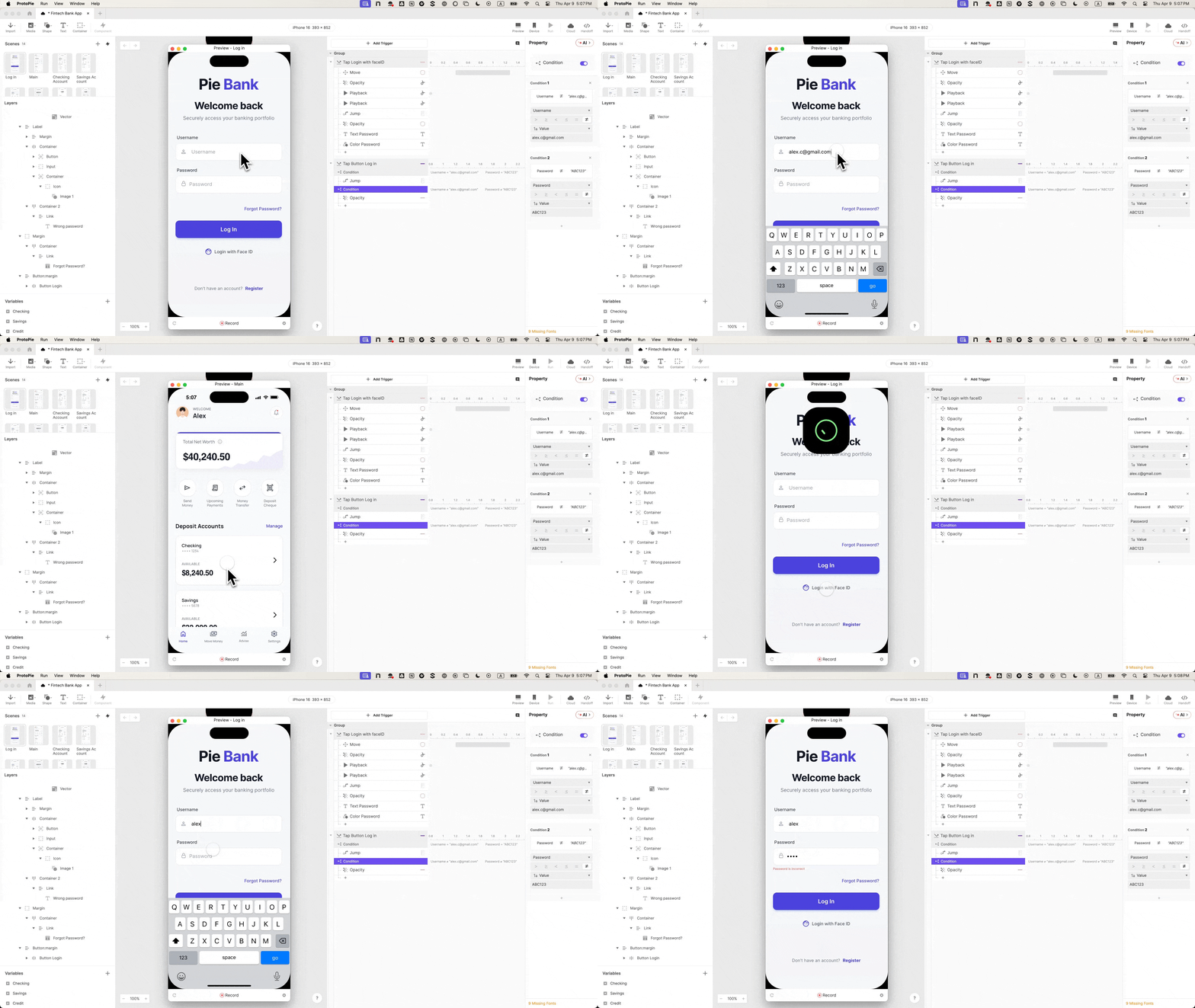
The solution to this pervasive challenge lies in elevating the fidelity of prototypes, particularly at critical interaction points like the login screen. By making these interactions genuinely functional, product teams can establish participant trust early and gather more authentic, actionable insights. The fix, while impactful, is often narrower than perceived: identify the precise moment where user trust is established, and make that interaction real. In a banking application, that pivotal moment is unequivocally the login.
Modern prototyping tools, such as ProtoPie, are designed to facilitate this level of realism without requiring extensive coding expertise. They empower designers to build complex interactions, including functional text inputs, masked password fields, credential validation, live error states, and even biometric authentication animations, that are virtually indistinguishable from a native application experience. This capability represents a significant leap forward from static mockups or basic click-through prototypes, offering a true simulation of a shipped product.
The Anatomy of a Realistic Login: A Step-by-Step Deconstruction of Best Practices
Creating a truly authentic login flow involves a sequence of detailed steps, each contributing to the overall sense of realism and functionality. This process, exemplified by a mobile banking prototype named "Pie Bank," transforms a static design into a dynamic, interactive experience.
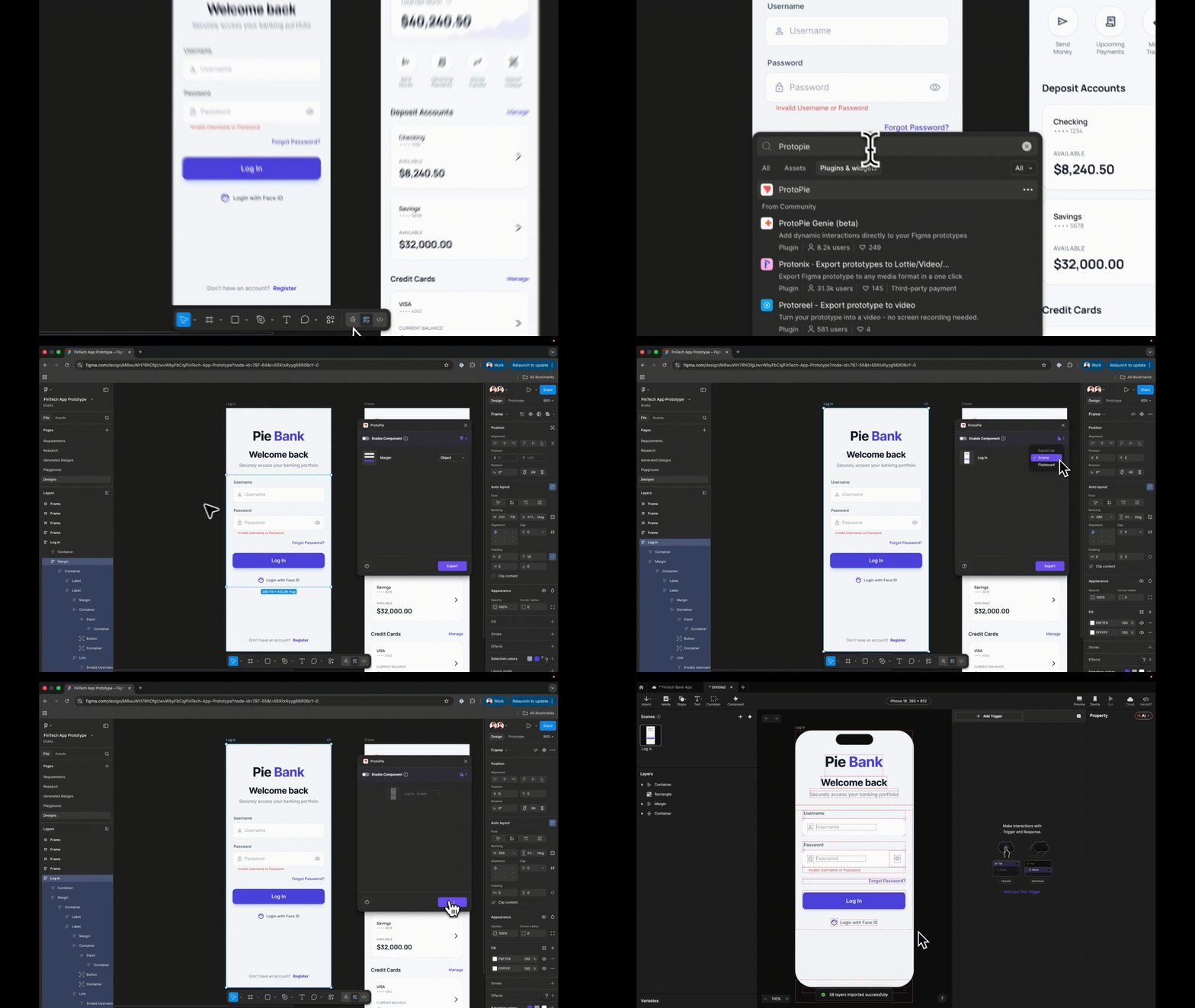
1. Seamless Design Import and Layer Management: The initial phase involves importing the design from tools like Figma. Crucially, the import process must preserve the layer hierarchy, rather than flattening the design into a single image. Choosing "Scene" export ensures that every element arrives in the prototyping environment as a separate, targetable layer. This meticulous approach to layer management is foundational, as meaningful layer names (e.g., "Input Username" instead of "Rectangle 14") are essential for efficient referencing in subsequent formulas and interactions, preventing significant time loss in complex projects.
2. Interactive Input Fields: Beyond Static Placeholders: A critical step towards realism is replacing static text placeholders with native input layers that accept real keyboard entry. This allows participants to type actual text, engaging with the prototype actively rather than passively observing. By dragging an "Input" layer onto the canvas and matching its visual properties (placeholder text, background fill, font) to the existing design, the prototype immediately begins to behave like an app. Duplicating this for both username and password fields lays the groundwork for a truly interactive login.
3. Password Masking: A Small Detail, A Big Impact: The psychological impact of a masked password field cannot be overstated. When a user types a password, seeing dots instead of characters reinforces the perception of security and professionalism. ProtoPie simplifies this by offering a "Text Password" type for input layers, automatically handling the masking without requiring any custom logic. This seemingly minor detail significantly contributes to the prototype’s authenticity, making it feel more secure and robust.
4. Establishing Navigation: The Essential Destination: A common pitfall in prototyping is attempting to wire navigation responses before the destination scene exists. Best practice dictates creating the destination scene (e.g., a dashboard) first, even if it’s initially blank. This ensures a logical flow and prevents errors when defining navigation triggers.

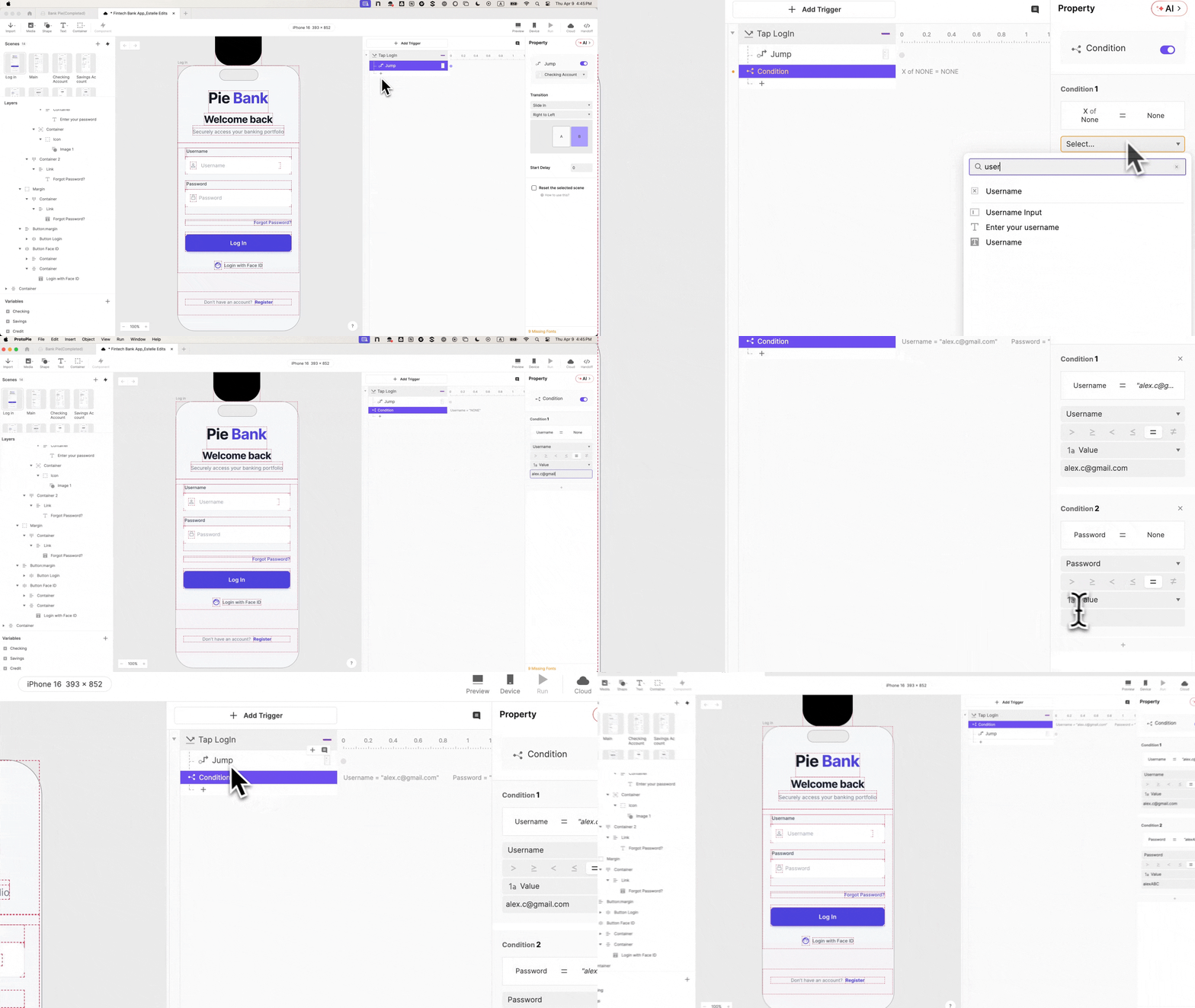
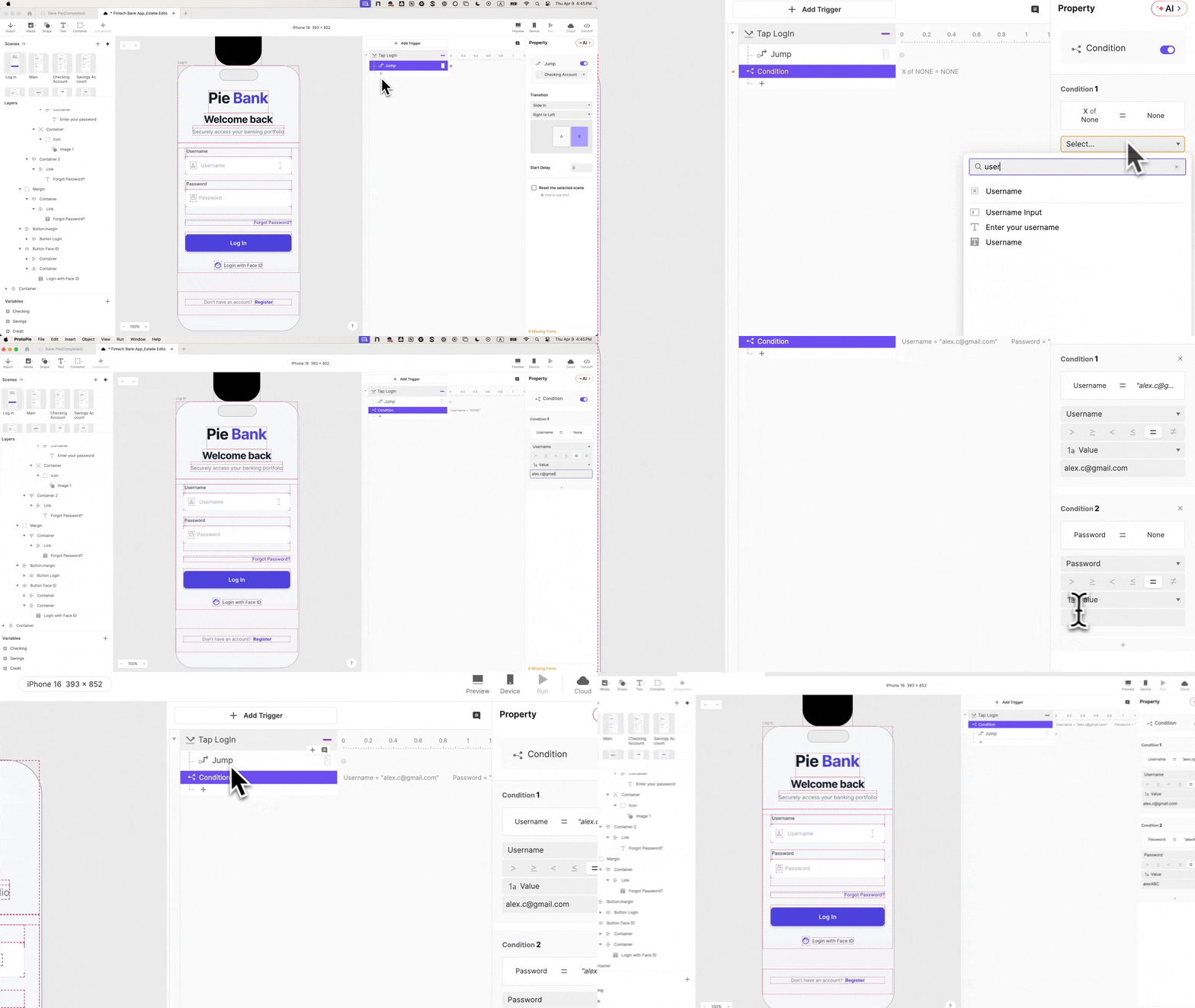
5. Implementing Credential Validation: The Core of Trust: The true test of a realistic login lies in its ability to validate credentials. Initially, a login button might navigate to the dashboard regardless of input. To rectify this, variables must be introduced to store the text typed into the username and password fields. Binding these variables to their respective input layers with formulas (e.g., input("Input Username").text) allows the prototype to "remember" what was typed. Debug icons can be enabled to show live variable values, confirming successful binding.
The critical next step is to add conditional logic to the login button’s "Tap" trigger. This condition, requiring both the username and password variables to match predefined valid credentials, ensures that only correct inputs grant access. Moving the "Jump" response (to the dashboard scene) inside this condition means that incorrect credentials, empty fields, or wrong formats will prevent navigation. This single constraint fundamentally alters the texture of subsequent test sessions, forcing participants to genuinely "log in" and providing invaluable data on their approach to authentication.
6. Crafting the Error State: A Critical Research Touchpoint: A truly robust login flow anticipates and gracefully handles errors. Most basic prototypes omit a live error state, but it is an indispensable element for realistic testing. By setting the initial opacity of an error message layer to zero, and then adding a second condition (the inverse of the valid credential condition) to the login button’s trigger, the error text can be made visible (opacity 100) when incorrect credentials are entered. This dual outcome – successful login to the dashboard or display of an error message – provides a genuine research touchpoint. Researchers can observe if users understand the error message, whether they retry, or if they seek alternative authentication methods, yielding insights that a faked login cannot provide.
7. Biometric Integration: The Pinnacle of Native Experience: The integration of biometric authentication, such as Face ID, represents the pinnacle of native experience simulation. This is often the detail that makes testers question, "Is this real?" By importing a Lottie animation file for Face ID, positioning it off-screen, and then orchestrating a sequence of responses triggered by a "Login with Face ID" button, a seamless experience can be created. The sequence typically involves moving the animation into view, seeking to its start, playing the animation, and then jumping to the dashboard scene.
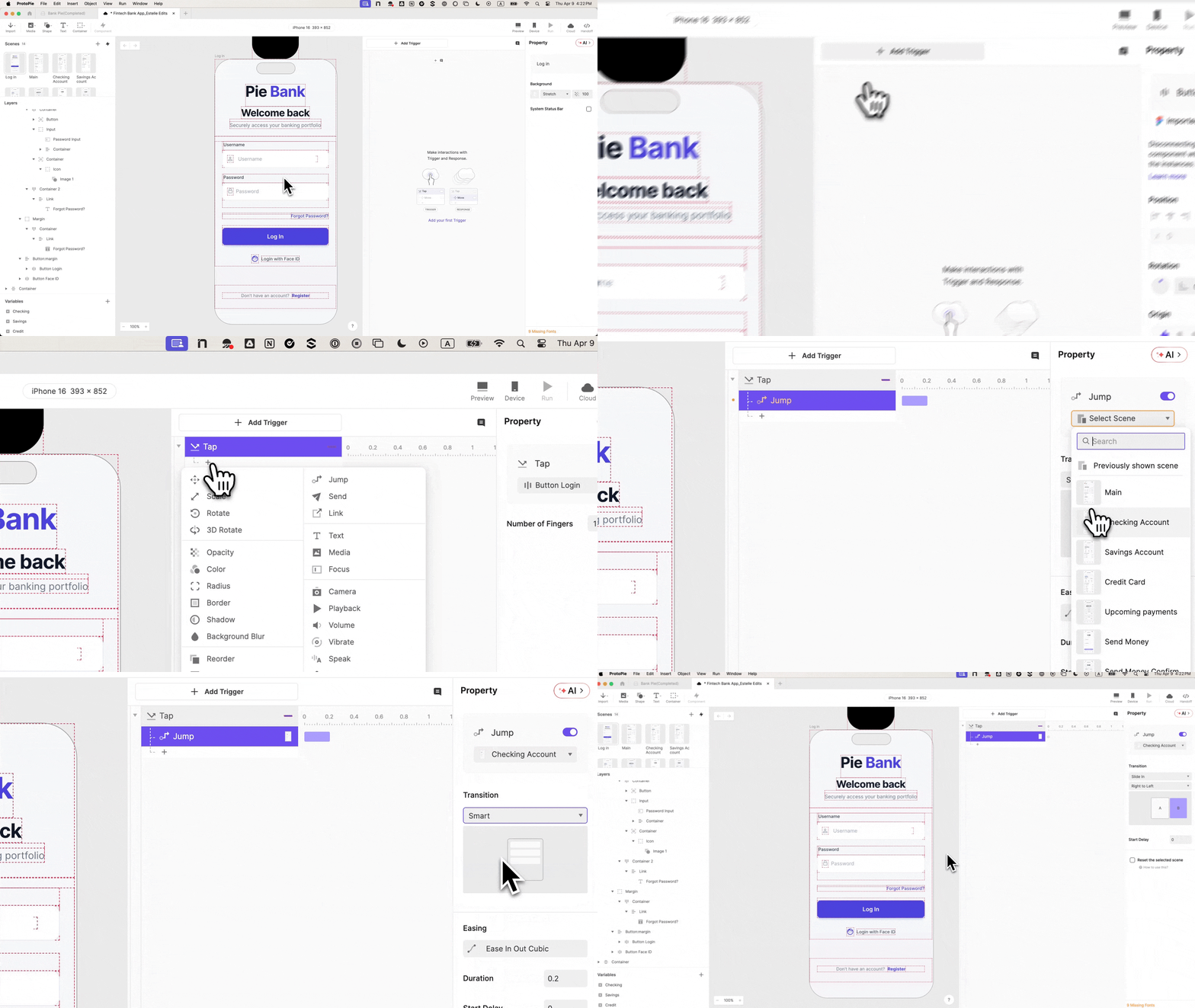
8. Staggering the Timing: Achieving Native Feel: The timing of these responses is crucial for achieving a native feel. Without carefully calibrated delays, all responses might fire simultaneously, causing an abrupt scene jump before the animation completes. Introducing offsets – for example, a 0-second delay for moving and seeking the animation, a 0.5-second delay for playing it, and a 1-second delay for jumping to the next scene – creates a fluid, organic interaction. Enabling "Reset selected scenes" on the Jump response ensures that navigating back to the login screen resets the animation’s position, preventing it from appearing stuck. The result is a biometric login that is virtually indistinguishable from the real thing, dramatically enhancing user immersion and trust.
Beyond the Login: Broader Implications for Product Development
The investment in building a realistic login flow, even when the login itself isn’t the primary feature under test, yields substantial benefits across the entire product development lifecycle.
Enhanced Research Outcomes: When authentication genuinely works, the entire usability session benefits from a higher level of participant trust and engagement. The error state, for instance, transforms into a genuine research touchpoint, allowing researchers to gather insights into user behavior when faced with failure – do they understand the message, do they retry, do they reach for Face ID instead? These are nuanced questions that a faked login simply cannot answer, leading to more accurate and actionable qualitative data. This reduction in the "observer effect" means insights are closer to real-world usage.

Streamlined Stakeholder Reviews: Prototypes that behave like shipped products speak for themselves. In stakeholder reviews, a highly interactive and authentic flow minimizes the need for verbal explanations and reduces the risk of misinterpretations. Decision-makers can directly experience the product as users would, fostering clearer communication and more informed feedback. This can significantly accelerate the approval process and build stronger confidence in the product vision.
Improved Engineering Handoff: For engineering teams, the interaction panel of a high-fidelity prototype becomes an invaluable resource. It documents the precise behavior, including conditional logic, variable bindings, and timing sequences, in a clear, unambiguous manner. This level of detail ensures that engineers understand the intended user experience, reducing guesswork, minimizing rework, and accelerating the development phase. The prototype serves as a living specification, bridging the gap between design intent and technical implementation.
Building User Trust and Loyalty: In the competitive landscape of FinTech, user trust is paramount. A seamless, secure, and authentic onboarding and login experience sets the tone for the entire user journey. When users feel confident in the application’s functionality and security from the outset, it fosters stronger loyalty and reduces churn. Conversely, clunky or unrealistic initial interactions can lead to early abandonment and a damaged brand perception.
Compliance and Risk Mitigation: While not explicitly a compliance tool, realistic prototypes can indirectly aid in risk mitigation. By simulating real user interactions, designers can identify potential usability issues that might lead to user errors in sensitive financial transactions. This proactive identification of friction points can help ensure that the final product adheres to best practices for security and user guidance, indirectly supporting compliance efforts.
The Future of Prototyping: A Drive Towards Hyper-Realism
The trend towards hyper-realistic prototyping is not just a luxury but an evolving necessity in the digital product development landscape, especially in high-stakes sectors like FinTech. As user expectations for seamless and secure digital experiences continue to rise, the tools and methodologies used to design and test these experiences must evolve in parallel. UX leaders consistently emphasize that the fidelity of a prototype directly correlates with the quality of the insights it can yield. Industry analysts highlight that investing in robust prototyping workflows leads to more efficient development cycles, reduced post-launch issues, and ultimately, more successful products.
The ability to create a login flow that is indistinguishable from a real application fundamentally changes what can be learned from a prototype. It transforms a demonstration into a genuine research instrument, allowing product teams to probe deeper into user psychology, decision-making processes, and emotional responses. It’s where participant trust is established, and getting it right ensures that everything downstream—from subsequent feature testing to stakeholder approvals and engineering handoffs—produces better, more reliable signal. This commitment to authenticity at critical junctures represents a vital step towards building truly user-centric financial products that inspire confidence and foster lasting engagement.