The User-Centric Disconnect: Why Enterprises’ Enthusiastic AI Push Often Fails to Resonate with Everyday Users

The current technological landscape is dominated by an almost feverish enthusiasm for Artificial Intelligence. Companies across sectors are pouring significant resources into developing and integrating new AI features, products, and workflows, often operating under the silent assumption that a universal craving for more AI exists among their user base. This corporate zeal envisions a future where AI seamlessly replaces outdated practices and inefficient processes, ushering in an era of unprecedented productivity and innovation. However, a growing body of evidence from user experience (UX) research and real-world adoption patterns suggests a stark disconnect between this industry vision and the lived reality and preferences of most people. Far from actively seeking more AI, many users appear resistant or, at best, passively accepting of its integration, particularly when it fails to genuinely enhance their daily lives or work.
The AI Adoption Conundrum: Unpacking Low Engagement
Despite the immense investment and pervasive hype, numerous AI features are grappling with alarmingly low adoption and retention rates. Reports, such as those cited by IBM, indicate a significant "AI adoption gap" that extends beyond mere initial interest. This underperformance comes at a substantial cost, encompassing not only the considerable expenditure on research, development, and deployment but also the intangible yet critical risk of reputational damage. When AI solutions are perceived as intrusive, unreliable, or burdensome, they can erode user trust and foster a negative sentiment towards technological advancement. The rapid proliferation of generative AI tools in recent years, while impressive in capability, has often been met with a cautious, rather than enthusiastic, reception by end-users who quickly encounter the practical challenges of integrating such tools into established routines.
"Powered by AI" is Not a Value Proposition
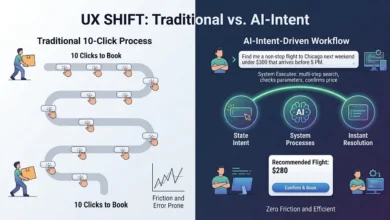
A fundamental miscalculation by many senior leadership teams is the belief that "AI" itself constitutes a compelling value proposition. In the realm of user experience, technology is merely a means to an end; customers are primarily interested in solutions that address their problems, improve efficiency, or enrich their experiences, not the underlying technical architecture. Labeling a product as "AI-powered" does not inherently translate into happy or excited customers. Often, new AI features are introduced as "bolt-ons" – separate tools or functionalities appended to existing systems. This approach frequently takes users out of their established, comfortable workflows, forcing them to learn new interfaces, navigate different systems, and engage in constant context-switching. Such disruptions increase cognitive load and friction, directly undermining the very productivity gains AI is intended to deliver. As eloquently illustrated by David Bland’s Business Model Canvas annotation, AI belongs in the "Key Activities" and "Key Resources" sections, signifying its role as an operational enabler, rather than a standalone "Value Proposition" that customers actively seek.
AI’s Unintended Consequences: Amplifying Organizational Flaws
Paradoxically, AI often serves to amplify existing shortcuts and shortcomings within organizations, rather than magically resolving them. From inconsistent data quality to flawed decision-making processes, years of accumulated quick patches, technical debt, broken corporate cultures, and internal politics cannot be remedied by simply layering AI on top. Instead, these deep-seated issues become more visible and often get directly exposed to users. Inconsistencies or conflicting priorities, previously masked within complex human-driven processes, are highlighted by AI’s structured, logical (or pseudo-logical) processing, leaving users to interpret and reconcile the resulting mess.

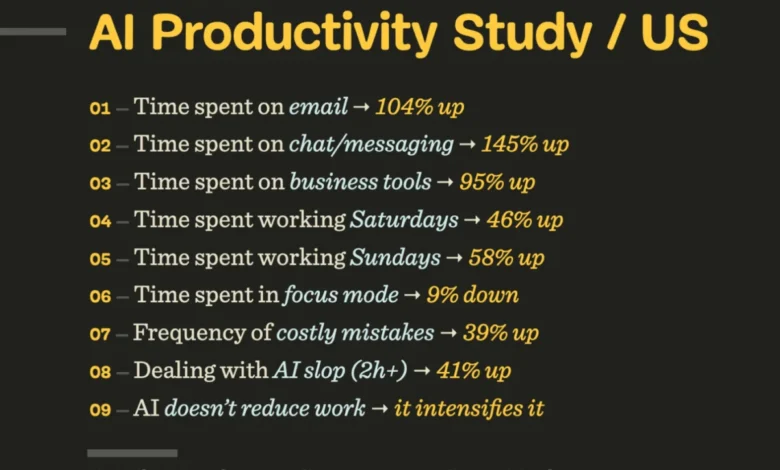
Moreover, the fragmented nature of modern enterprise workflows means employees often juggle numerous disconnected systems. Introducing yet another "AI tool" merely adds to this complexity, demanding further context shifts and increasing the mental overhead. The perceived ease of AI interaction, such as asking an AI to generate a response, frequently masks a hidden cost: the time and effort required to find and fix "hallucinations" – factually incorrect or nonsensical outputs that generative AI models can produce. This verification process can be more arduous and time-consuming than creating original content, especially in fields requiring precision, accuracy, or adherence to specific guidelines, effectively negating any initial efficiency gains and often producing work that is neither rewarding nor truly productive. Studies, including those cited by Mike Rosenberg, NBC News, HBR, WSJ, and Activtrak, have indicated that AI integration can, counter-intuitively, intensify work by increasing time spent on emails and messaging, business tools, and even working on weekends, while simultaneously leading to more costly mistakes and time spent dealing with "AI slop."
Addressing the Human Element: Anxiety, Resistance, and Trust
The psychological impact of AI on the workforce is another critical factor contributing to its lukewarm reception. For many, AI is not a tool they proactively choose to explore; rather, it arrives uninvited, dictated by corporate mandates. This lack of agency, coupled with a pervasive media narrative emphasizing AI’s potential to replace jobs, fosters deep anxiety and resistance to change. Instead of excitement, the dominant emotions are often apprehension about one’s future role in a rapidly evolving technological landscape. This fear is compounded by the inherent unpredictability and unreliability of many current AI systems. Unlike traditional software features, AI often lacks transparency and explainability, operating as a "black box" where the rationale behind its outputs is opaque. This absence of predictability and reliability makes AI features perceived not as helpful assistants but as potential threats or liabilities, hindering trust and widespread adoption. People generally do not dream of a future filled with AI art museums, AI fridges, AI hotel receptionists, or AI-narrated children’s books. They are wary of romantic AI partners for their children or managing swarms of autonomous AI agents controlling their finances. The idealized vision of a "magical box" to converse with constantly does not align with most people’s desire for genuine human interaction and control over their lives.
Redefining AI’s Role: What Users Truly Value

The prevailing discourse surrounding AI often misconstrues user expectations. Users do not compare AI features to human fallibility; they compare them to other software features. If an AI-powered feature is unreliable, while a non-AI alternative consistently delivers, users will invariably choose the latter. The core demand remains unchanged: features that are fast, accessible, reliable, predictable, and useful, every single time. The focus should shift from the speed of AI development and deployment to the quality and consistency of the user experience. Many users prioritize doing things well, with sufficient time for thoughtful decision-making, and deriving satisfaction from their work, rather than merely achieving faster delivery at any cost. The sense of reward and achievement, often derived from skill and effort, can diminish when AI automates core creative or intellectual processes without careful consideration.
What people genuinely need from AI is augmentation, not wholesale replacement. They seek tools that seamlessly integrate into their existing ways of working, taking over the most mundane, annoying, and mentally exhausting tasks – those from which they derive little pleasure. When AI automates these tedious processes, its value becomes immediately apparent and tangible. This approach liberates human cognitive resources and time, allowing individuals to focus on the rewarding, unique, creative, and intuitively driven aspects of their roles. Data from organizations like GovAI and Brookings Institution, visualized by The Washington Post, illustrate that while many jobs are exposed to AI automation, the most vulnerable aspects are often repetitive and administrative, leaving ample room for human ingenuity in higher-order tasks.
The "AI-Second" Approach: Seamless Integration and Mundane Automation
For AI to truly deliver value, it must be deeply integrated into existing workflows, aligning with and adapting to users’ established mental models rather than forcing users to adapt to the AI. This means AI should operate subtly, humbly, and ambiently in the background, serving a supportive role. This is the essence of an "AI-second" approach, where the technology is invisible, yet indispensable, silently enhancing productivity and reducing drudgery without demanding constant attention or cognitive load. Examples of effective "AI-second" implementations include intelligent spam filters, predictive text that genuinely anticipates user needs, or smart scheduling assistants that handle administrative minutiae without explicit user prompts. The branding of such features as "AI," "smart," or "automation" becomes secondary to their demonstrable utility and seamless functionality. Users must intuitively understand the specific use cases where AI helps them and ideally be inspired to discover further applications organically.

Expert Voices on Human-Centric AI
This perspective resonates deeply with leading voices in the field. As Bo Young Lee powerfully articulated, "I don’t want to read books written by AI. I don’t want to gaze upon paintings by AI. I don’t want AI to teach my children. I don’t want to have an AI therapist. I don’t want AI making my medical decisions. I want AI to do all the physical and mental labor that taxes me so I can read books written by humans and go to art galleries to engage with art made by humans. I want AI that makes my life easier rather than forces me to change myself." This statement encapsulates the profound human desire for AI to serve, not to dictate; to free, not to replace; and to enhance, not to diminish the richness of human experience.
Implications for Enterprise Strategy and Product Design
The implications of this user-centric disconnect are significant for enterprise strategy and product design. Companies must shift their focus from technology-driven deployment to human-centered problem-solving. This requires a deeper understanding of user needs, pain points, and existing workflows through rigorous UX research and design thinking. Investments in AI should prioritize reliability, transparency, and seamless integration over novel, yet ultimately disruptive, features. Product designers and developers are faced with the challenge of creating intuitive interfaces for AI, ensuring that users can understand its capabilities, limitations, and how to effectively leverage it without succumbing to frustration or distrust. The emphasis must be on designing AI that complements human capabilities, offloads cognitive burdens, and genuinely contributes to job satisfaction and overall well-being.

Conclusion: Reclaiming the Human Experience with Thoughtful AI
Ultimately, the aspiration for AI should not be to simply inject more technology into people’s lives but to enrich them. This means leveraging AI to automate the mundane, repetitive, and time-consuming tasks that burden daily routines, both personal and professional. By doing so, AI can free up invaluable time and mental headspace, allowing individuals to dedicate themselves to activities they truly love and enjoy – whether that’s engaging in creative pursuits, fostering human connections, or simply savoring life’s meaningful moments. The future of AI success lies not in maximizing interaction with machines, but in maximizing the time humans have to interact with each other and pursue their passions. It’s a vision where AI serves as an invisible enabler, making life easier and more fulfilling, thereby reclaiming the human experience rather than displacing it.
For designers, product managers, and developers striving to build AI interfaces that genuinely resonate with users and meet these evolving expectations, resources such as "Design Patterns For AI Interfaces" offer invaluable guidance. This video course, accompanied by live UX training, provides practical examples and frameworks for creating AI experiences that are reliable, predictable, and truly augment human capabilities, fostering adoption and trust rather than resistance.