AMD’s Advancing AI 2026 Summit Ignites Industry Dialogue: Chris Lattner Calls AI "Mid" as George Hotz Targets NVIDIA’s Trillion-Dollar Moat

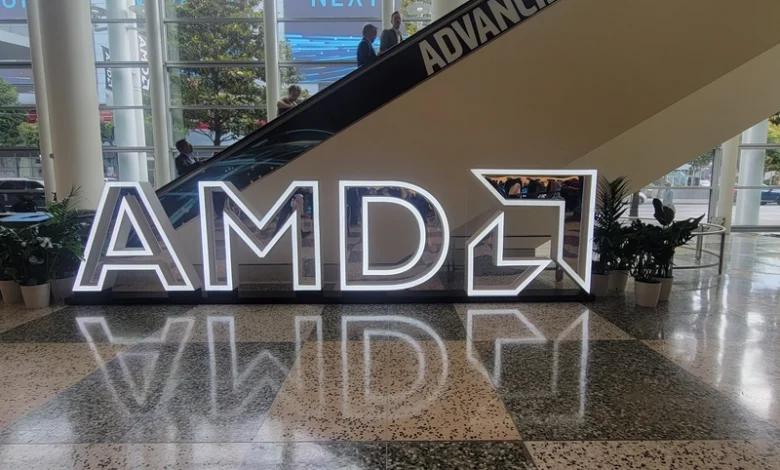
San Francisco, CA – The AMD Advancing AI 2026 summit recently concluded its first day at the Moscone Center, serving as a pivotal platform for industry leaders to discuss the future of artificial intelligence hardware and software. The event, offered free to attendees, underscored AMD’s strategic investment in cultivating an open ecosystem in the rapidly evolving AI landscape, directly challenging the entrenched dominance of proprietary solutions. Day one featured provocative discussions from luminaries like Chris Lattner, creator of LLVM and Mojo, who controversially labeled mainstream AI as "mid," and George Hotz, founder of comma.ai and tinygrad, who openly declared his ambition to diminish NVIDIA’s market valuation by a trillion dollars through open-source innovation.
The strategic timing and accessibility of the Advancing AI 2026 summit reflect a broader industry trend where technology giants are heavily investing in ecosystem development to secure their foothold in the burgeoning AI market. AMD’s decision to host a comprehensive two-day event, complete with technical talks, vendor access, and keynote speakers, free of charge, signals a significant commitment to fostering adoption of its technologies. This approach aims to accelerate developer engagement and integrate AMD’s hardware, particularly its GPUs and NPUs, into the core of AI development and deployment. Analysts suggest that such investments are critical in the current competitive environment, where building a strong community and developer mindshare can translate into substantial long-term returns, especially against established competitors like NVIDIA.
The Foundational Debate: Hardware, Software, and the AI Ecosystem
The day commenced with a dynamic three-person panel featuring Chris Lattner, Ramin Hasani, and Hassan Akbari. The discussion, while initially lacking a formal theme, quickly converged on the intricate relationship between hardware capabilities, software frameworks, and the broader AI ecosystem. This focus on symbiotic technical ecosystems resonated deeply with attendees, particularly those seeking a more granular understanding of AI’s underlying infrastructure.
Chris Lattner, a figure of immense influence in the computing world, particularly known for creating LLVM, the foundational compiler infrastructure underpinning a vast array of modern software, delivered a statement that immediately captured attention: "AI is mid." This remark, though met with laughter, was not intended as a dismissal of AI’s potential but rather a nuanced critique of its current public manifestation. Lattner’s perspective, deeply rooted in compiler and hardware architecture, suggests that the large language models (LLMs) and predictive AI applications most users interact with daily represent the "product" layer. These applications, while impressive, are merely the surface manifestation of the profound, complex work occurring in the foundational layers of training, hardware design, and computational efficiency.

Lattner elaborated on the challenge posed by NVIDIA’s CUDA, which he likened to GCC in its foundational, albeit monolithic, status within the compiler landscape. CUDA has established a formidable "moat" by locking developers into a proprietary ecosystem, making it difficult for competitors to gain traction. Lattner’s counter-strategy, embodied in his work with Modular and its Mojo programming language, emphasizes architectural innovation rather than direct confrontation. Mojo aims to be a portable alternative to CUDA, allowing hardware to express its full capabilities without being confined to a single vendor’s language. This approach seeks to bypass the CUDA moat by offering a more flexible and hardware-agnostic framework, potentially democratizing access to high-performance AI computing. The success of such initiatives is crucial for fostering competition and innovation in the AI hardware market, which is currently heavily skewed towards NVIDIA due to its CUDA ecosystem.
Deep Dive into Algorithmic Optimization and Unified Ecosystems
The panel continued with Ramin Hasani, CEO of Liquid AI, delving into highly abstract concepts that underscored the complexity of advanced AI research. Hasani’s discourse emphasized the importance of algorithmic-level problem-solving before resorting to kernel optimizations, highlighting a hierarchical approach to AI development. He introduced the concept of "liquid foundation models," a core innovation of his company, which focuses on dynamically adapting models to various hardware configurations – CPUs, NPUs, and GPUs – for optimal performance. His insights pointed towards a future where AI systems are not only intelligent but also highly adaptable and efficient across diverse computational environments. This adaptability is key to unlocking AI’s full potential across different scales, from data centers to edge devices.
Hassan Akbari provided a cohesive perspective, emphasizing the critical need for a unified ecosystem across frameworks, hardware, and software. Akbari stressed that optimization is not achieved by tuning individual components in isolation but by leveraging their interconnectivity. His remarks highlighted the industry’s shift towards holistic system design, where hardware and software co-design become paramount for achieving peak performance and efficiency. Akbari also raised a pertinent question regarding the efficiency of current AI development: "Large models can now be distilled into smaller ones that are still effective. So are we wasting compute?" This query challenged the prevailing trend of continuously scaling models, advocating for a more pragmatic approach to model development. From a customer perspective, Akbari reiterated that reliability, cost per token, and accuracy remain the ultimate metrics of success, emphasizing the need for robust evaluation pipelines, benchmarks, and data-driven deployments.
George Hotz’s Open-Source Offensive Against NVIDIA
A highlight of the day was the impassioned presentation by George Hotz, a celebrated hacker and entrepreneur known for his audacious feats, including jailbreaking the iPhone, reverse-engineering the PlayStation 3, and founding the autonomous driving company comma.ai. Hotz’s track record of challenging established systems set the stage for his direct assault on NVIDIA’s market dominance.

Hotz introduced tinygrad, an open-source neural network framework and deep learning library, which he described as remarkably lean, comprising only about 25,000 lines of pure Python, with a core engine of roughly 9,000 lines. His declared mission: to "commoditize the petaflop." This translates into a bold objective of "knocking a trillion dollars of value off NVIDIA" by providing a viable, open-source alternative to their proprietary CUDA ecosystem. This ambitious goal underscores the growing sentiment within the open-source community that high-performance AI computing should be accessible and not monopolized by a single vendor.
Hotz’s philosophy behind tinygrad is centered on achieving the highest development velocity, not merely out-of-the-box speed. He argued that while proprietary frameworks like TensorFlow might offer faster initial performance, tinygrad’s architecture is designed for a steeper and quicker improvement curve over time. A cornerstone of tinygrad’s design is its complete lack of dependencies, a significant departure from most modern software projects. This "no dependencies" approach, including the deliberate avoidance of libraries like NumPy, is a strategic choice aimed at preventing bloat, version drift, and external breakage. Hotz articulated that fewer moving parts translate to greater stability and longevity, a principle that resonates deeply with developers seeking robust and maintainable solutions. He even hinted at tinygrad’s potential as a backend for various applications, inviting developers to explore its capabilities. His advocacy for "GPUs for the middle class" further solidified his vision of democratizing access to advanced AI computation, making it more affordable and available beyond large data centers.
AMD’s Broader Strategic Implications and the Shift to Local AI
The collective insights from the summit painted a clear picture of AMD’s strategic direction: to challenge NVIDIA’s hegemony by fostering an open, interconnected, and developer-friendly AI ecosystem. The event’s emphasis on CPU, GPU, NPU, compute, and infrastructure highlights AMD’s ambition to provide comprehensive hardware solutions across the entire AI stack.
Beyond the theoretical discussions, the summit also offered practical workshops, demonstrating AMD’s commitment to tangible developer support. Sessions like "Build Your OpenClaw Agent with Multi-Modal Models" and a workshop on "vibecoding with local models" provided hands-on experience with AMD’s learning platforms and Jupyter notebooks.
One particularly impactful workshop, masquerading as "vibecoding," was a deep dive into Lemonade and Qwen. Lemonade, a community project supported by AMD engineers, enables the local execution of large language models on personal GPUs or NPUs. The workshop showcased running Qwen3.6-35B-A3B locally, guiding participants through the framework from the silicon level up to the application layer. This hands-on experience profoundly shifted attendees’ perspectives, illustrating the vast layers of technology underlying even seemingly simple AI applications.

The ability to run powerful LLMs locally through projects like Lemonade represents a significant trend toward decentralized AI. This paradigm offers numerous advantages, including enhanced data privacy, reduced inference costs, and the potential for greater creative freedom for developers. By keeping computation local, users retain control over their data, mitigating concerns associated with cloud-based AI services. While setting up such environments from scratch presents its own challenges, the excitement generated by the prospect of exploring new ideas and systems locally was palpable.
Looking Ahead: The Democratization of AI Compute
The first day of AMD’s Advancing AI 2026 summit served as a powerful testament to the ongoing transformation within the artificial intelligence industry. The discussions from Chris Lattner and George Hotz, in particular, highlighted the critical need for innovation at the foundational layers of AI, from compiler infrastructure to open-source deep learning frameworks. Their challenges to the status quo, especially NVIDIA’s market dominance, underscore a broader movement towards democratizing AI compute and fostering more open, competitive ecosystems.
While many developers operate at the high-level software or SaaS layer, the summit provided a crucial reminder of the intricate hardware and infrastructure that underpins all AI applications. The shift in perspective, from focusing solely on the end product to understanding the full stack, is invaluable for the industry’s collective advancement. AMD’s proactive stance in hosting such an event positions it as a key player in shaping the future trajectory of AI development, emphasizing collaboration and open standards.
The "Lemonade itch"—the desire to set up local AI environments from scratch—is a tangible outcome of the summit, symbolizing a growing interest in self-sufficiency and control over AI development. As the industry progresses, the interplay between proprietary solutions and open-source alternatives, and the continuous push for efficiency and accessibility across the entire AI stack, will undoubtedly define the next era of artificial intelligence. The second day of the summit, including Dr. Lisa Su’s keynote, was anticipated to further elaborate on AMD’s long-term vision and strategic roadmap in this dynamic and fiercely competitive landscape.