AWS Pioneers Autonomous Incident Remediation with DevOps Agent and Kiro CLI Integration, Dramatically Reducing MTTR for Cloud Workloads

The relentless pace of digital transformation and the increasing complexity of distributed cloud-native architectures have elevated incident response from a necessary evil to a critical differentiator for enterprise operations. In the dynamic realm of AWS, where workloads span countless services and microservices, the traditional approach to incident remediation—a manual, labor-intensive process often executed under immense pressure—is proving increasingly unsustainable. Today, AWS has announced a groundbreaking integration that promises to revolutionize this landscape: a closed-loop incident remediation pipeline that connects the autonomous investigation capabilities of AWS DevOps Agent with the automated code remediation prowess of Kiro CLI. This powerful synergy ushers in a new era where operational incidents, from detection to deployed fix, can be resolved with minimal human intervention, primarily limited to a critical human-in-the-loop pull request approval.
For years, the scenario has been all too familiar: a critical alarm fires at 2 AM, jolting an on-call engineer into action. The subsequent hours are a frantic race against time, involving the correlation of disparate telemetry data across Amazon CloudWatch, deployment pipelines, application logs, and a myriad of other sources to pinpoint the root cause. Once identified, the engineer must then manually craft, test, and deploy a fix—a process that routinely stretches into hours, if not an entire shift. This manual toil not only exacts a heavy toll on operational teams, leading to burnout and reduced productivity, but also translates directly into significant financial losses for businesses due to downtime and service degradation. Industry reports frequently highlight the staggering cost of outages, with some estimates placing the average cost per minute of downtime for enterprises in the tens of thousands of dollars, underscoring the urgent need for faster, more efficient remediation strategies. According to a 2022 Uptime Institute survey, 25% of all outages cost over $1 million, emphasizing the economic imperative for rapid resolution.
The advent of AWS DevOps Agent marked a significant leap forward in addressing the initial half of this challenge. Launched to general availability following a successful preview, AWS DevOps Agent autonomously investigates incidents, intelligently sifting through vast amounts of data to identify root causes and generate comprehensive mitigation plans. Early adopters and partners during its preview phase reported compelling results: up to a 75% reduction in Mean Time To Recovery (MTTR), an 80% acceleration in investigation times, and an impressive 94% accuracy in root cause identification. These metrics alone represent a paradigm shift, transforming the often-chaotic incident investigation phase into a streamlined, AI-driven process completed in minutes rather than hours. However, even with highly accurate investigation findings and mitigation recommendations, a critical gap remained: the actual implementation of the fix still required manual effort. Someone had to read the findings, translate them into code, rigorously test the solution, and then shepherd it through the deployment pipeline. The question lingered: what if this "second half" of the remediation story could also be automated?
The Journey Towards Autonomous Operations: A Chronology
The path to fully autonomous incident response has been a gradual but persistent evolution, driven by the increasing demands of modern cloud environments. Initially, monitoring solutions like Amazon CloudWatch provided crucial visibility into application and infrastructure health, enabling early detection of anomalies. However, responding to these anomalies remained a largely manual endeavor.
- Early 2010s: Reactive Monitoring: The focus was primarily on reactive monitoring and manual troubleshooting. Engineers relied heavily on dashboards and logs to diagnose issues, often in isolation.
- Mid-2010s: Emergence of Automation Scripts: Organizations began developing basic automation scripts and runbooks to handle repetitive tasks. The concept of "shift-left" in operations started gaining traction, aiming to push responsibilities and automation earlier in the development lifecycle.
- Late 2010s – Early 2020s: Rise of AIOps: The field of Artificial Intelligence for IT Operations (AIOps) gained prominence. Tools began leveraging machine learning to analyze vast operational data, predict issues, and identify root causes with greater speed and accuracy. AWS’s commitment to AIOps manifested in services designed to simplify and automate operational tasks.
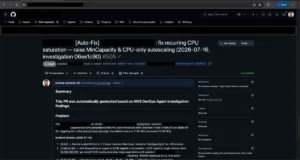
- Recent Past (Pre-DevOps Agent GA): AWS DevOps Agent Preview: AWS DevOps Agent was introduced in preview, specifically focusing on autonomous investigation. This represented a critical advancement, moving beyond mere detection to intelligent root cause analysis and mitigation planning, directly addressing the mental overhead and time spent by engineers during incident investigations. Previous AWS blog posts, such as "Leverage Agentic AI for Autonomous Incident Response with AWS DevOps Agent," demonstrated how to configure the agent for monitoring and autonomous investigations, with code samples illustrating automatic triggering via CloudWatch alarms. This laid the groundwork for the current innovation, providing mitigation plans ready for execution.
- Present Day: Closed-Loop Remediation: The integration of AWS DevOps Agent with Kiro CLI closes the loop entirely. This marks the culmination of efforts to not only understand an incident but also to programmatically apply a solution, bridging the divide between diagnosis and cure with unprecedented speed.
Bridging the Gap: AWS DevOps Agent and Kiro CLI in Harmony
The newly unveiled solution orchestrates two cutting-edge agents—AWS DevOps Agent for autonomous investigation and mitigation, and Kiro CLI for automated code remediation—through a fully serverless, event-driven bridge. This architecture is designed to take an application from the moment of an incident to a deployed fix with minimal human intervention.
Consider a typical modern web application hosted on AWS. It might feature a frontend served via an Application Load Balancer (ALB), backend compute instances running on Amazon EC2, and a robust data layer powered by an Amazon RDS database. The application’s source code and infrastructure-as-code (CloudFormation templates) are meticulously managed within AWS CodeCommit. When an anomaly surfaces in such an environment, the integrated solution springs into action.
The Solution Architecture: A Closer Look
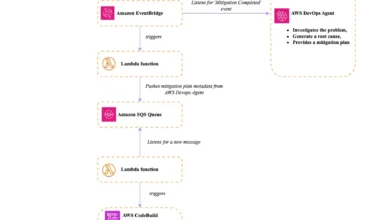
At the heart of this automated remediation pipeline is a meticulously designed architecture that leverages the strengths of various AWS services to ensure seamless operation:
-
Incident Detection and Investigation (AWS DevOps Agent): The process begins with a standard monitoring setup. An Amazon CloudWatch alarm, configured to detect performance degradation, error rates, or other anomalies, acts as the initial trigger. When this alarm transitions to an
ALARMstate, it automatically invokes the AWS DevOps Agent. The agent then embarks on its autonomous investigation, correlating telemetry from CloudWatch, AWS X-Ray, application logs, and other relevant data sources to identify the precise root cause of the incident. This sophisticated analysis can often uncover complex interdependencies that might elude manual review. Crucially, it then generates a detailed mitigation plan, outlining the necessary steps to resolve the issue. -
Capturing Mitigation Events (Amazon EventBridge): Once AWS DevOps Agent successfully completes a mitigation analysis, it publishes a lifecycle event to the Amazon EventBridge default event bus. These events carry a source of
aws.aidevopsand specific detail-types such asMitigation Completed,Investigation Completed, orMitigation Failed. For the purpose of automated remediation, theMitigation Completedevent is the critical signal, indicating that a viable solution has been identified.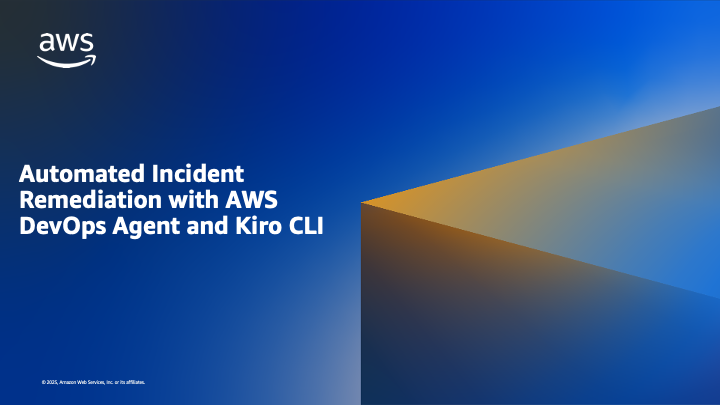
-
Event Routing and Payload Extraction (Amazon EventBridge Rule & AWS Lambda): An Amazon EventBridge rule is configured to specifically match the
Mitigation Completeddetail-type. This rule then invokes a dedicated AWS Lambda function. This Lambda function is engineered to be highly efficient, taking the incoming EventBridge payload—which contains essential metadata likeagent_space_id,task_id, andexecution_id—and using it to query the AWS DevOps Agent API. The Lambda function’s primary role is to extract two vital objects from the agent’s output:- Mitigation Summary: A high-level description of the action to be taken and the underlying reasoning, providing context for the fix.
- Execution Plan: Detailed, step-by-step instructions for implementing the fix, often in a structured, machine-readable format.
This structured payload is then published to an Amazon SQS queue, serving as a robust, decoupled buffer for downstream processing. This asynchronous design ensures resilience and scalability, preventing backpressure on the investigation phase.
-
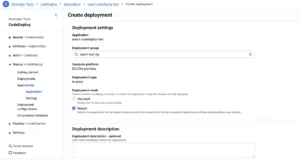
Headless Remediation Orchestration (AWS CodeBuild & Amazon SQS): The Amazon SQS queue now holds the actionable mitigation plan. To execute this plan, a compute environment capable of interacting with the codebase, running Kiro CLI, and pushing changes back to the repository is required. AWS CodeBuild emerges as the ideal candidate. As a fully managed continuous integration service, CodeBuild provides on-demand compute resources, integrates natively with AWS CodeCommit (where the application’s source code and CloudFormation templates reside), and requires no persistent infrastructure management. A trigger AWS Lambda function monitors the SQS queue and, upon receiving a message, initiates an AWS CodeBuild execution, passing the SQS message body as an environment variable.
-
Kiro CLI in Action: The Build Process: Within the AWS CodeBuild environment, a predefined
buildspec.yamlorchestrates the remediation steps:- Repository Checkout: The CodeBuild agent checks out the application and infrastructure repository from AWS CodeCommit.
- Kiro CLI Installation: Kiro CLI is installed within the build environment, ensuring it has the necessary tools to interact with the codebase.
- Authentication: Kiro CLI authenticates securely using an API key stored in AWS Secrets Manager, ensuring sensitive credentials are not exposed and adhering to security best practices.
- Execution with Steering: Kiro CLI 2.0’s headless mode is activated. It receives the mitigation plan from the environment variable (derived from the SQS message) and, crucially, leverages a "steering file" committed to the repository. This steering file provides Kiro with contextual knowledge about the project, its repository structure, coding conventions, and decision frameworks, enabling it to make targeted, predictable changes rather than generic code generation.
- Code Modification: Based on the mitigation plan and steering file, Kiro CLI intelligently modifies the appropriate files within the checked-out repository, applying the fix as instructed.
- Commit and Pull Request: Kiro CLI then commits these changes to a new feature branch and automatically creates a pull request (PR) in AWS CodeCommit. The PR description is enriched with details from the AWS DevOps Agent’s reasoning, including the agent space and execution IDs, ensuring full traceability back to the original incident.
The Role of the Steering File: Guardrails for Automated Remediation
A cornerstone of Kiro CLI’s effectiveness in this automated pipeline is its "steering file." This file is not merely a configuration; it is a repository of persistent knowledge that guides Kiro CLI’s actions, ensuring that the automated changes are not only correct but also align with the project’s established standards and conventions.
The steering file defines several critical parameters:
- Repository Structure: It informs Kiro CLI about the organization of the codebase, helping it locate relevant files for modification within a potentially complex project hierarchy.
- Coding Conventions: It dictates stylistic preferences, naming conventions, and best practices, ensuring that automated changes integrate seamlessly with existing code without introducing new technical debt or inconsistencies.
- Decision Frameworks: It provides Kiro with rules and constraints, preventing it from making broad or unintended refactors and ensuring changes are highly targeted and safe. For instance, it might specify which types of files Kiro is allowed to modify or which architectural patterns it must adhere to.
- Tooling Preferences: It can guide Kiro on which specific tools or libraries to use for certain tasks, aligning with the team’s established technology stack and avoiding the introduction of unauthorized dependencies.
By committing this steering file directly to the repository, every AWS CodeBuild execution automatically picks it up, ensuring consistency and predictability in Kiro CLI’s remediation efforts. This mechanism is vital for building trust in the automated system, as it guarantees that Kiro CLI acts within predefined boundaries, making targeted and predictable modifications rather than potentially disruptive, broad refactors.
Human-in-the-Loop: The Critical Approval Gate
At this juncture, the automated pipeline has meticulously executed its tasks: AWS DevOps Agent has diagnosed the problem, generated a fix plan, and Kiro CLI has translated that plan into code, applying the changes and creating a pull request on a dedicated feature branch. The pull request itself is a rich artifact, containing a clear description of what was changed, the reasoning directly derived from the AWS DevOps Agent’s analysis, and the unique identifiers for the agent space and execution, providing an immutable audit trail back to the original incident.
This is the deliberate "human-in-the-loop" gate—a crucial checkpoint where a developer or operations engineer reviews the proposed changes. This review is not a formality; it is an essential step to:
- Verify Correctness: Ensure the change precisely addresses the incident and introduces no new issues, validating the AI’s proposed solution.
- Scope Appropriately: Confirm the modification is contained and does not have unintended side effects on other parts of the system.
- Ensure Safety: Validate that the fix is safe to deploy into the production environment, considering potential edge cases or broader system implications that an AI might not fully grasp.
While the agents are trusted to investigate, analyze, and propose highly accurate fixes, the ultimate deployment decision rests with a human. This balanced approach marries the speed and efficiency of AI with the critical judgment and contextual understanding of human experts, fostering a robust and trustworthy operational pipeline. Once the pull request receives the necessary approvals and is merged into the main branch, standard deployment pipelines are triggered. These pipelines then implement the approved changes in the target environment, bringing the application back to full health.
Broader Impact and Implications for Enterprise Operations
The integration of AWS DevOps Agent and Kiro CLI represents more than just a technological advancement; it signifies a profound shift in how enterprises manage and respond to operational incidents. Industry experts suggest this integration is a significant step towards truly resilient and self-healing cloud infrastructures.
- Dramatic Reduction in MTTR: As demonstrated by the 75% MTTR reduction reported by AWS DevOps Agent users, extending this with automated remediation means incidents that once took hours to resolve can now be addressed in minutes. This directly translates to reduced service downtime, improved customer satisfaction, and significant cost savings. The industry average MTTR for critical incidents can still be several hours, making this reduction revolutionary.
- Reduced Operational Toil and Engineer Burnout: By automating the mundane, repetitive, and often stressful tasks associated with incident response, operations teams are liberated from constant firefighting. This allows engineers to focus on higher-value activities such as innovation, architectural improvements, and strategic planning, leading to increased job satisfaction and reduced burnout—a critical factor in retaining top talent.
- Enhanced System Reliability and Stability: Faster remediation cycles mean systems spend less time in a degraded state. This inherent improvement in reliability strengthens the overall resilience of cloud-native applications, which is paramount for mission-critical workloads.
- Improved Traceability and Auditability: The detailed pull request descriptions, linked directly to AWS DevOps Agent’s investigation findings and execution IDs, create an unparalleled audit trail. This transparency is invaluable for post-incident reviews, compliance requirements, and continuous learning, providing a clear record of every automated action.
- Scalability for Complex Environments: As cloud infrastructures grow in scale and complexity, manual incident management becomes increasingly unmanageable. This automated approach provides a
Related posts: