Architectural Refinement: Serverless AI Financial Agent Undergoes Critical Technical Debt Cleanup on Day 60 of Development Challenge

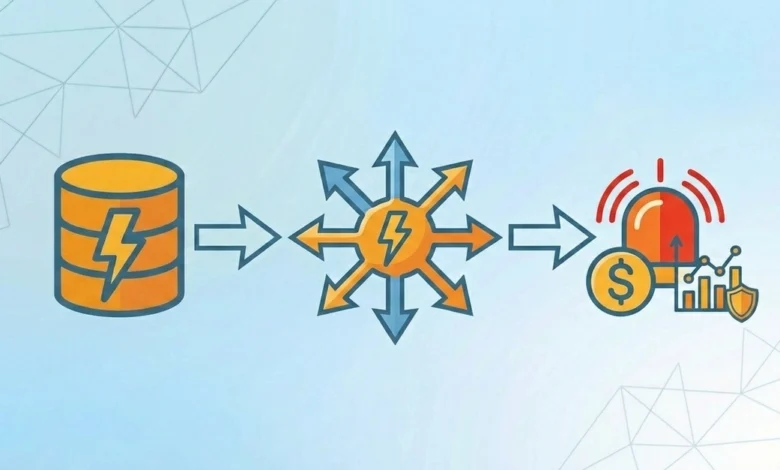
A significant milestone has been reached in the ongoing development of a Serverless AI Financial Agent, as crucial technical debt, identified during the rigorous "100 Days of Cloud" challenge, was systematically addressed. The developer, Eric Rodríguez, paused feature development to resolve two operational vulnerabilities: one related to the application’s state management and another concerning its cloud billing efficiency within Amazon CloudWatch. This remediation highlights the critical importance of architectural hygiene and FinOps principles in preparing cloud-native applications for scalability and real-world deployment.
The Inevitable Encounter with Technical Debt
As development progresses from a sandbox environment to a production-ready state, the shortcuts and temporary solutions adopted in early phases often resurface as significant impediments. This phenomenon, commonly referred to as technical debt, can manifest in various forms, from hardcoded configurations to unoptimized resource management. For the Serverless AI Financial Agent, these "little things" began to threaten operational integrity and cost efficiency, necessitating an immediate intervention on Day 60 of the intensive cloud development journey. The proactive identification and resolution of such debt are vital for ensuring long-term stability, security, and cost-effectiveness, particularly for applications designed to handle sensitive financial data and scale rapidly. Industry reports consistently show that technical debt can account for a significant portion of IT budgets, with some estimates suggesting it consumes 20-40% of development capacity. Addressing it early, as demonstrated here, can prevent much larger issues down the line.
Addressing Identity Decoupling: The Case of Duplicate User Reports
The first critical issue identified involved the application’s propensity to generate duplicate user reports, leading to the dispatch of identical emails simultaneously each afternoon. Initial investigations, including a thorough review of Amazon DynamoDB, confirmed the database’s integrity, indicating no data duplication at the storage layer. This led to a deeper forensic analysis of the application’s runtime environment.
The Root Cause: Hardcoded USER_ID in Lambda

The core of the problem was traced to a hardcoded USER_ID within the Python logic of the AWS Lambda function. This fallback mechanism, initially implemented for convenience during early testing, created a critical flaw in the application’s identity management. When the hardcoded ID failed to match the actual Amazon Cognito UUID associated with real users in the database, the Lambda execution environment would create a spurious, in-memory profile. This mock profile would then be merged with legitimate database records just before processing messages from the Amazon SQS queue, resulting in the generation and dispatch of redundant reports. This scenario underscores a fundamental principle of serverless architecture: functions should be stateless, and configuration should be externalized. Hardcoding identifiers directly into application code introduces rigidity, reduces reusability, and can lead to complex debugging challenges, especially in dynamic, event-driven environments.
The Solution: Leveraging AWS Lambda Environment Variables
The resolution involved a complete decoupling of configuration from the application code. The hardcoded USER_ID was removed from the Python script and replaced with a dynamic approach using AWS Lambda Environment Variables. This method allows for the secure injection of configuration parameters, such as target user identifiers, into the Lambda execution environment at deployment time.
AWS Lambda Environment Variables provide several advantages:
- Statelessness: They reinforce the stateless nature of Lambda functions, ensuring that the code itself remains generic and independent of specific deployment contexts.
- Security: Sensitive or environment-specific data can be managed outside the source code, reducing the risk of accidental exposure. While environment variables are not encrypted by default, they can be managed securely through AWS Secrets Manager or AWS Systems Manager Parameter Store, providing an additional layer of protection for highly sensitive information.
- Flexibility and Multi-tenancy: By externalizing configurations, the same Lambda function code can be deployed across multiple environments (development, staging, production) or serve different tenants with distinct configurations without requiring code changes. This is crucial for scalable applications like the Serverless AI Financial Agent, which is designed to handle diverse user profiles.
- Operational Simplicity: Updating configuration no longer necessitates redeploying the entire application code, streamlining operational workflows and reducing potential downtime.
By adopting this best practice, the Serverless AI Financial Agent’s identity management became dynamic, truly stateless, and prepared to handle multiple tenants without the risk of identity collisions or erroneous data processing. This architectural shift significantly enhances the application’s robustness and scalability.
The Silent Threat: Infinite Log Retention in Amazon CloudWatch
The second critical issue addressed was a subtle yet potentially costly FinOps vulnerability: the default log retention policy in Amazon CloudWatch. AWS Lambda, by design, automatically streams all function output to CloudWatch Log Groups. While this automated logging is invaluable for monitoring and debugging, the default retention policy, often set to "Never Expire," presents a silent financial hazard.

Understanding the FinOps Implications of Default Log Policies
In a high-traffic serverless application, retaining debug logs indefinitely can lead to a substantial and unnecessary storage bill. CloudWatch charges for log data ingestion and storage. As an application scales, the volume of log data can grow exponentially, quickly accumulating terabytes of historical information that may no longer be relevant for active troubleshooting but continue to incur storage costs. This scenario is a classic example of a "FinOps time bomb," where seemingly innocuous default settings can escalate into significant operational expenses.
FinOps, a portmanteau of "Finance" and "DevOps," emphasizes the importance of financial accountability and cost optimization in cloud environments. It encourages a culture where engineering, finance, and business teams collaborate to make data-driven spending decisions. The default CloudWatch log retention policy highlights a common challenge in cloud cost management: the ease of provisioning resources often overshadows the implicit long-term costs associated with their default configurations. A study by Flexera found that optimizing cloud spend is a top priority for organizations, yet many still struggle with inefficient resource utilization and uncontrolled costs.
The Solution: Implementing a Time-Bound Log Retention Policy
The resolution for this FinOps vulnerability was straightforward yet impactful. The developer navigated to the CloudWatch console and adjusted the retention policy for the relevant Lambda function Log Groups. The "Never Expire" setting was replaced with a more pragmatic 14-day retention period.
This quick, approximately 30-second configuration change serves as an automated garbage collector for log data. A 14-day window is typically sufficient for troubleshooting most operational issues, providing ample time to review recent logs for error diagnostics or performance analysis. After this period, AWS automatically purges the historical log data, preventing the accumulation of unnecessary storage costs. This approach strikes a balance between maintaining sufficient diagnostic information and optimizing cloud expenditure.
Broader Impact and Best Practices for CloudWatch Log Management:

- Cost Savings: Directly reduces storage costs associated with outdated log data. For large-scale applications generating terabytes of logs daily, this can translate into significant monthly savings.
- Compliance and Governance: Organizations often have specific data retention policies driven by regulatory compliance requirements. While 14 days might be suitable for debug logs, other log types (e.g., access logs for security auditing) may require longer retention periods, which can also be configured in CloudWatch. This flexibility allows for granular control over data lifecycle management.
- Performance: While not directly impacting application performance, managing log volume can indirectly affect the performance of log analysis tools and dashboards within CloudWatch, making it easier to navigate and query relevant data.
- Automated Management: This manual fix can be further automated using Infrastructure as Code (IaC) tools like AWS CloudFormation, AWS CDK, or Terraform. Defining log retention policies directly within the infrastructure definition ensures consistency, prevents human error, and integrates cost optimization into the deployment pipeline. This "shift-left" approach to FinOps embeds cost awareness from the earliest stages of development.
Architectural Principles and the "100 Days of Cloud" Journey
The lessons learned on Day 60 reinforce two fundamental architectural tenets: "Never hardcode your state, and never keep your logs forever!" These principles are cornerstones of robust, scalable, and cost-effective cloud-native application design.
The "100 Days of Cloud" challenge, a structured program designed to accelerate cloud proficiency, provides a practical framework for developers to encounter and overcome real-world cloud infrastructure and application development challenges. This particular episode highlights that theoretical knowledge must be complemented by practical experience and a commitment to continuous improvement and operational excellence. The journey of building a complex system like a Serverless AI Financial Agent is not merely about functionality but equally about resilience, security, and economic viability.
Implications for Scalability, Security, and FinOps Maturity
The architectural refinements implemented for the Serverless AI Financial Agent carry significant implications for its future:
- Enhanced Scalability: By decoupling identity and ensuring statelessness, the application is better positioned to handle a growing user base and increasing transaction volumes without encountering identity-related conflicts or performance bottlenecks. Serverless architectures thrive on statelessness, enabling functions to scale out rapidly without managing session-specific data.
- Improved Security Posture: Moving user identifiers out of the code and into environment variables, and potentially more secure services like AWS Secrets Manager, reduces the attack surface and aligns with the principle of least privilege. This enhances the overall security posture of the financial agent, which is paramount for an application handling sensitive user data.
- Mature FinOps Practices: The proactive management of CloudWatch log retention demonstrates a maturing approach to FinOps. It moves beyond reactive cost analysis to proactive cost governance, embedding cost awareness directly into operational practices. This shift is crucial for controlling cloud expenditure as the application scales and evolves. It transforms potential "silent time bombs" into manageable, optimized resources.
- Reduced Technical Debt Accumulation: By addressing these issues early, the developer mitigates the compounding effect of technical debt. Unchecked technical debt can slow down future development, increase maintenance costs, and introduce instability, ultimately hindering innovation and time-to-market for new features.
The experience on Day 60 serves as a powerful reminder for cloud developers and architects that robust solutions require meticulous attention to both functional requirements and operational considerations. The journey of building sophisticated cloud applications like a Serverless AI Financial Agent is iterative, demanding constant vigilance and a commitment to best practices in architecture, security, and cost management. As cloud adoption continues to accelerate globally, with the public cloud services market projected to reach over $679 billion in 2024, the lessons from this technical debt cleanup become increasingly pertinent for organizations striving to maximize their cloud investments and build resilient, cost-effective digital infrastructures.