The Evolution of Linus Torvalds and the Integration of Artificial Intelligence within the Linux Kernel Ecosystem

The Linux kernel, the foundational architecture of modern computing, is currently navigating one of its most significant philosophical and technical transitions under the leadership of its creator, Linus Torvalds. Historically characterized by a rigorous, human-centric development process and a healthy skepticism toward industry trends, the kernel project has recently clarified its stance on Artificial Intelligence (AI). What began as a dismissal of AI as "90 percent marketing" has evolved into a pragmatic, policy-driven integration that positions the Linux kernel not as an opponent of Large Language Models (LLMs), but as a disciplined adopter. This shift reflects a broader maturation of AI tools and a calculated effort by the Linux Foundation to maintain the project’s relevance in an era defined by automated development.
The Foundation of Skepticism: 2023 to Early 2024
The trajectory of Torvalds’ perspective on AI can be traced back to late 2023, during a period when the technology industry was saturated with generative AI hype. At the Open Source Summit Japan in December 2023, Torvalds engaged in a public dialogue with Dirk Hohndel, a long-time collaborator and Chief Open Source Officer. When questioned about the potential for AI-generated code to enter the kernel, Torvalds’ response was notably pragmatic rather than reactionary. He acknowledged that such code was likely already present in minor capacities, noting that the fallibility of AI—specifically its tendency toward "hallucinations"—was not inherently more dangerous than the standard human error that has historically plagued software development.
However, by the spring of 2024, Torvalds’ pragmatism was tempered by a disdain for the aggressive marketing surrounding AI. At the Open Source Summit North America in Seattle, he characterized much of the industry’s discourse as nonsense, suggesting that the true utility of AI would not be clear for at least a decade. This period was defined by a "wait and see" approach, where the kernel leadership prioritized stability over the rapid adoption of unproven automated tools. Torvalds’ frequent references to the "Gartner Hype Cycle" suggested a belief that AI was currently at the "Peak of Inflated Expectations" and would inevitably fall into the "Trough of Disillusionment" before finding a stable role in the development pipeline.
By October 2024, speaking at the Open Source Summit in Vienna, Torvalds famously quantified his skepticism, stating that the AI industry was "90 percent marketing and 10 percent reality." He argued that while the 10 percent of reality held potential, it was currently obscured by corporate noise. This stance served as a protective barrier for the kernel, signaling to developers that the project would not be swayed by external pressure to automate critical infrastructure until the tools demonstrated verifiable reliability.
The Turning Point: Personal Experimentation and "Vibe Coding"
The transition from skepticism to acceptance began in late 2025, marked by Torvalds’ increasing interest in the concept of "vibe coding." This term refers to the use of LLMs to generate code based on high-level descriptions or "vibes," allowing individuals to build functional software without deep expertise in specific programming languages. At the Open Source Summit Korea in November 2025, Torvalds expressed a "fairly positive" outlook on these tools, specifically as a pedagogical bridge for new programmers.
Torvalds’ shift was not merely theoretical; it was evidenced by his personal technical pursuits. In early 2026, he embarked on a holiday project called AudioNoise, an audio effects tool. While Torvalds authored the core logic in C, he utilized Google’s Antigravity IDE—an AI-powered development environment—to generate the Python-based visualizer components. This experiment demonstrated Torvalds’ willingness to use AI as a productivity multiplier for non-critical user-space tools, even while maintaining a strict boundary around the kernel’s core codebase.
This personal engagement with AI tools allowed Torvalds to identify the specific strengths and weaknesses of LLMs. He recognized that while AI could accelerate the creation of "boilerplate" code or visualizers, it remained a secondary tool to human logic. This realization paved the way for the first official institutional policies regarding AI within the Linux ecosystem.
Institutionalization and the Linux 7.0 Policy
The most significant milestone in this evolution occurred in April 2026 with the release of Linux Kernel 7.0. For the first time in the project’s 35-year history, the kernel documentation included a formal policy titled "AI Coding Assistants." This document established the legal and technical framework for how AI-assisted contributions would be handled.
The policy focused on three primary pillars:
- Licensing Compliance: All AI-generated or AI-assisted code must strictly adhere to the GPL-2.0 license. This addressed concerns regarding the training data used by LLMs and the potential for copyright infringement.
- Accountability: The policy explicitly barred AI tools from being listed as authors or using the
Signed-off-bytag, which is a legal requirement in the Linux Developer Certificate of Origin (DCO). Instead, a human developer must take full responsibility for the code. - Transparency: A new metadata tag,
Assisted-by, was introduced. This allowed developers to credit AI tools while maintaining a clear audit trail of human oversight.
Simultaneously, internal experimentation within the maintenance team became public. Greg Kroah-Hartman, the lead maintainer for the stable branch, was revealed to be using an AI-assisted fuzzing tool—codenamed "clanker"—to identify vulnerabilities in the kernel. Fuzzing, a process of providing invalid or random data to a program to find crashes, is a task uniquely suited for AI’s pattern-recognition capabilities. This indicated that the kernel leadership was already using AI for defensive security purposes, even as they remained cautious about its use in active code generation.
Challenges of Implementation: Productivity vs. Noise
As the kernel project opened its doors to AI-assisted contributions, it immediately faced the "noise" Torvalds had previously warned about. By May 2026, Torvalds reported that a release candidate had been overwhelmed by a surge of "pointless" pull requests. Many of these were generated by AI-assisted bug hunters who submitted trivial or technically incorrect fixes late in the development cycle. This forced Torvalds to adopt a "hardnosed" approach, threatening to reject contributions that added more to the maintainers’ workload than they contributed to the codebase.
In July 2026, at the Open Source Summit India in Mumbai, Torvalds offered a more nuanced critique of the productivity gains promised by AI. He admitted that his earlier estimates of a "10x productivity boost" were largely speculative. He highlighted a significant "hidden cost" of AI: the time required to debunk hallucinated bug reports. Maintainers often spent hours investigating reported issues that turned out to be fabrications by an LLM, a process that Torvalds described as a major drain on the project’s most valuable resource—human expertise.
Torvalds also expressed frustration with the narrative that AI was "writing" the majority of modern code. He drew a parallel to compilers, noting that while compilers translate almost all human-written code into machine instructions, they are never credited with the creative act of programming. In his view, AI is a sophisticated compiler—a tool that assists in the translation of intent into syntax, but not an independent agent.
The Final Clarification: "Fork It or Walk Away"
The culmination of this three-year journey occurred on July 14, 2026, during a heated exchange on the Linux Kernel Mailing List (LKML). The debate centered on a set of recommendations from the Software Freedom Conservancy (SFC) regarding the risks of LLMs in open-source development. Some contributors argued for a total ban on AI-assisted code, citing ethical and political concerns.
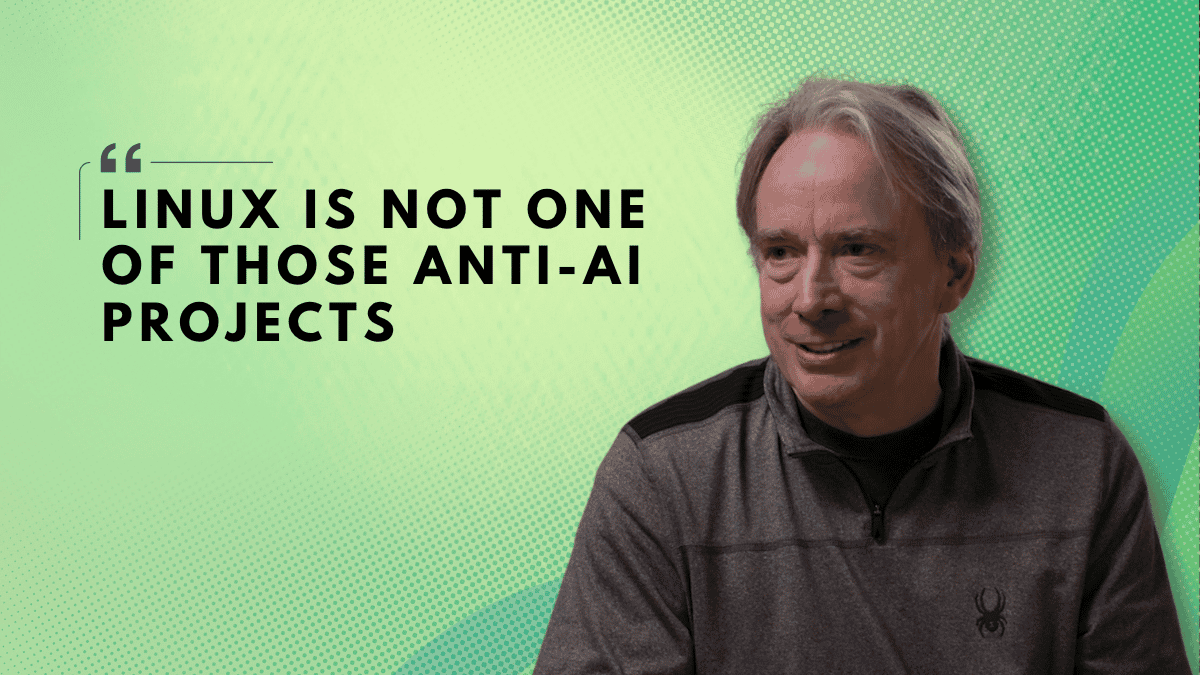
Torvalds’ response was definitive and serves as the current North Star for the project: "Linux is not one of those anti-AI projects." He emphasized that the kernel project is governed by technical merit and pragmatic utility rather than political or ideological stances against specific tools. In a classic display of his leadership style, he told those who were fundamentally opposed to the presence of AI in the kernel to "fork it or walk away."
This statement solidified the kernel’s position. By refusing to ban AI, Torvalds ensured that the Linux project would not become a "technological museum," isolated from the tools that the next generation of developers will use. However, by maintaining strict human accountability and rigorous testing standards, he ensured that the kernel would not be compromised by the unreliability of automated systems.
Analysis of Implications for the Open Source Community
The evolution of the Linux kernel’s AI policy provides a blueprint for other major open-source projects. Several key implications emerge from this transition:
1. The Primacy of the Maintainer:
Torvalds has successfully shifted the focus from "how the code is written" to "how the code is maintained." The burden of AI is not on the contributor, but on the maintainer who must verify it. By empowering maintainers to be "hardnosed" about AI-generated noise, the project protects its quality without stifling innovation.
2. Legal and Ethical Pragmatism:
By leaning on the GPL-2.0 and the DCO, the Linux kernel avoids the "legal grey area" of AI training data. The responsibility is placed squarely on the human contributor to ensure their "assisted" code is legally sound. This model avoids complex litigation by sticking to established open-source legal frameworks.
3. The Toolification of AI:
Torvalds has effectively "demoted" AI from a revolutionary threat to a standard developer tool. By comparing AI to compilers and IDEs, the kernel project strips away the hype and treats LLMs as just another step in the evolution of software engineering.
4. A Barrier to Entry vs. a Bridge:
While Torvalds initially saw AI as a way for new developers to enter the field, the reality of "hallucinated bugs" has created a new barrier. Developers using AI must now be even more skilled than before, as they must be able to verify that the code their AI produced is not just functional, but optimal for the kernel’s unique constraints.
In conclusion, the journey of Linus Torvalds from an AI skeptic to a pragmatic gatekeeper reflects the maturity of the Linux kernel itself. The project remains committed to its core values of stability and human accountability, even as it adapts to the most disruptive technological shift of the decade. As of mid-2026, the Linux kernel stands as a testament to the idea that the best way to manage the rise of AI is not through avoidance, but through the rigorous application of human standards and the uncompromising pursuit of technical excellence.
Related posts: