SvelteKit Ecosystem Evolves with Unified Configuration and Enhanced Tooling Integration

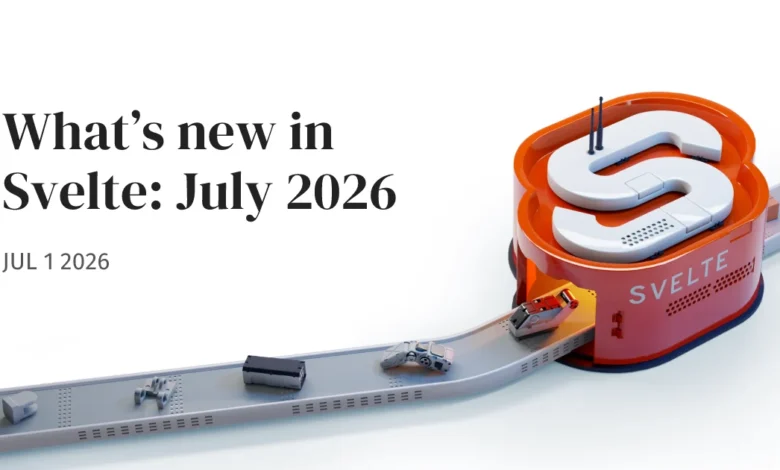
The SvelteKit development team has announced a significant architectural shift in how projects are configured, marking a major milestone in the framework’s evolution toward a more streamlined and developer-centric experience. This month’s updates introduce the ability to define SvelteKit configurations directly within the Vite configuration file, effectively deprecating the mandatory use of a separate configuration file for many use cases. Alongside this structural change, the ecosystem has received a first look at explicit environment variables—a precursor to the upcoming SvelteKit 3—and comprehensive updates to the language tools and command-line interface to ensure full compatibility with the latest Svelte syntax.
Streamlining Project Architecture: The Unified Configuration Model
For several years, SvelteKit projects have relied on a dual-configuration setup: svelte.config.js for framework-specific settings and vite.config.js for the underlying build tool and plugin management. This separation, while functional, often created friction for developers who had to navigate between two distinct files to manage a single project’s behavior. The latest update addresses this by allowing the SvelteKit configuration to be nested directly within the Vite configuration.
By integrating the SvelteKit configuration into vite.config.js, the development team is moving toward a "single source of truth" model. This change is not merely cosmetic; it reflects the deep integration between SvelteKit and Vite, which has become the industry standard for modern frontend tooling. The transition allows for better type safety and more intuitive access to Vite’s internal plugin system. For new projects, this means a cleaner root directory and a reduced cognitive load for engineers onboarding onto the framework.
Industry analysts suggest that this move aligns SvelteKit with other modern meta-frameworks that are seeking to reduce "boilerplate fatigue." As the JavaScript ecosystem matures, the trend is moving away from fragmented configuration files toward a more cohesive, plugin-based architecture. This update positions SvelteKit as one of the most streamlined options for full-stack web development.
The Roadmap to SvelteKit 3: Explicit Environment Variables
One of the most technically significant previews released this month involves the handling of environment variables. Currently, SvelteKit utilizes the $env/* modules to provide developers with access to public and private variables. While this system has been praised for its ease of use, it occasionally presented challenges regarding static analysis and clarity in larger codebases.
The upcoming SvelteKit 3 will introduce "explicit environment variables." This new approach is designed to replace the existing module-based system, offering developers a more transparent way to manage sensitive data and configuration constants. In the current preview, developers are getting a glimpse of how these explicit declarations will improve security by making it harder to accidentally expose private server-side secrets to the client-side browser environment.
This change is part of a broader strategy to align SvelteKit with the core principles of Svelte 5, emphasizing clarity and predictable behavior. By moving toward explicit declarations, SvelteKit 3 aims to eliminate the "magic" often associated with automatic environment variable injection, providing a more robust foundation for enterprise-level applications where security audits are a critical part of the development lifecycle.
Synchronizing the Toolchain: Language Tools and the SV CLI
The Svelte ecosystem is unique in its heavy reliance on a sophisticated compiler and a suite of supporting tools that translate high-level code into optimized JavaScript. This month, the Svelte language tools—including the VS Code extension—and the sv command-line interface (CLI) have been updated to support the new const ... declaration tags.
The const tag is a relatively recent addition to the Svelte compiler, allowing developers to define local variables directly within their component markup. This is particularly useful in complex loops or conditional blocks where a value needs to be calculated once and reused multiple times. Prior to this month’s updates, developers using these tags might have encountered linting errors or a lack of autocompletion in their integrated development environments (IDEs).
The synchronization of the toolchain ensures that the developer experience (DX) remains consistent across the board. The sv CLI, which has been gaining traction as the primary tool for scaffolding and managing Svelte projects, now correctly handles these new syntax features during project creation and migration. This rapid response from the tooling team demonstrates the health and agility of the Svelte contributor community, which continues to iterate quickly on feedback from the user base.
Evolution of the Svelte Compiler and Adapters
Beyond the headline changes to configuration and environment variables, the Svelte compiler and the various SvelteKit adapters have seen a flurry of minor improvements and bug fixes. The SvelteKit adapters—responsible for deploying applications to platforms like Vercel, Netlify, Cloudflare, and traditional Node.js servers—have been optimized to handle the new unified configuration format.
The Svelte compiler itself continues to undergo refinements as the community prepares for the full release of Svelte 5. These changes include performance optimizations in the reactivity engine and more descriptive error messages when the compiler encounters edge cases in component logic. Data from recent GitHub commits shows a significant focus on "tree-shaking" capabilities, ensuring that only the necessary code is shipped to the end-user, further solidifying Svelte’s reputation for producing some of the smallest bundle sizes in the industry.
Chronology of Development: A Month of Progress
The timeline of these updates reflects a calculated push toward the next generation of the framework. Early in the month, the focus was primarily on the sv CLI and ensuring that the foundation for Svelte 5 was stable. By mid-month, the discussion shifted toward configuration consolidation, with the Vite integration being tested in beta versions of the @sveltejs/kit package.
The announcement of explicit environment variables came toward the end of the month, signaling the team’s long-term vision for SvelteKit 3. This chronological progression highlights a shift from maintaining the current stable version (SvelteKit 2) to actively laying the groundwork for a future-proof architecture.
Community Impact and "Spotted in the Wild"
The Svelte community continues to expand, with an increasing number of high-profile companies adopting the framework for their production workloads. The "Spotted in the Wild" section of the community update highlights the diverse range of applications being built, from high-performance e-commerce sites to complex data visualization dashboards.
Contributors and Ambassadors have been instrumental in this growth, producing a steady stream of tutorials, UI components, and visual effects libraries. New developer tools and plugins have also emerged, aimed at simplifying the transition to the new unified configuration and helping developers audit their environment variable usage in anticipation of SvelteKit 3.
The rise of specialized UI component libraries built specifically for Svelte—leveraging its unique approach to transitions and animations—has created a rich ecosystem that rivals older frameworks like React. These community-driven projects are often the first to implement support for new compiler features, providing a feedback loop that informs the core team’s development priorities.
Analysis of Implications: A More Mature Framework
The transition to a unified configuration and the introduction of explicit environment variables represent a maturation of SvelteKit. In its early days, the framework was characterized by its radical departures from industry norms. However, by aligning more closely with Vite and adopting more explicit patterns for environment management, SvelteKit is demonstrating a willingness to embrace standard industry practices where they provide clear benefits to stability and security.
This shift is likely to make SvelteKit more attractive to enterprise developers. Large organizations often have strict requirements for configuration management and security protocols. By reducing the "magic" and providing a more standard project structure, SvelteKit is lowering the barrier for adoption in corporate environments. Furthermore, the focus on toolchain synchronization ensures that teams can rely on their IDEs and CI/CD pipelines to catch errors early in the development process.
As the industry looks toward the release of Svelte 5 and SvelteKit 3, the current updates serve as a bridge. They allow developers to start adopting future-proof patterns today without the need for a total rewrite of their existing codebases. The message from the Svelte team is clear: the framework is becoming more powerful, more secure, and easier to use, all while maintaining the performance advantages that made it popular in the first place.
Looking Ahead
As the month concludes, the Svelte development team has encouraged users to provide feedback through platforms like Reddit and Discord. This open-source feedback loop remains a cornerstone of the project’s success, ensuring that the changes to configuration and environment variables meet the practical needs of the global developer community.
With the framework’s toolchain now in sync and the roadmap for SvelteKit 3 becoming clearer, the ecosystem is poised for a period of significant growth. The focus remains on providing a developer experience that is both productive and enjoyable, minimizing the friction between writing code and deploying high-performance web applications. The coming months are expected to bring more details on the final transition to SvelteKit 3 and the stable release of the highly anticipated Svelte 5.