SvelteKit 3 Enters Release Candidate Phase as Developers Prepare for Next-Generation Web Framework Evolution

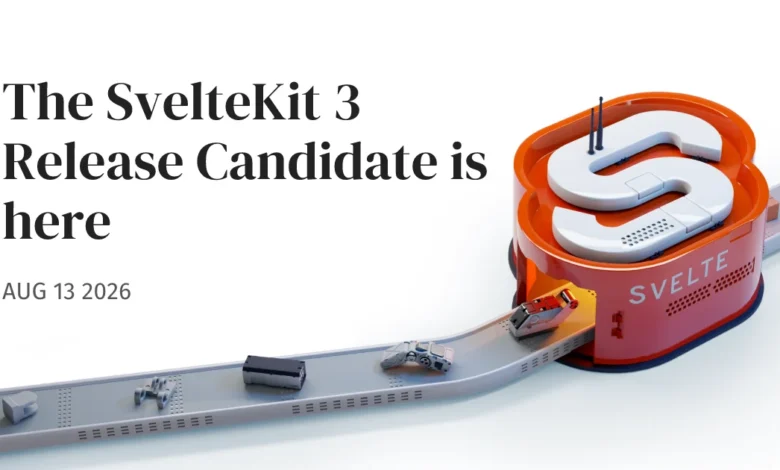
The development team behind SvelteKit has officially moved the framework into its Release Candidate (RC) phase, marking a critical milestone in the transition from SvelteKit 2. This update signifies that the core architecture is now feature-complete and stable enough for broader testing, provided that the developer community confirms the functionality meets expectations. Following this RC period, the team plans to issue a stable release, which will finalize the framework’s feature set and ensure no further breaking changes are introduced to the codebase.
The transition to SvelteKit 3 is not merely a routine maintenance update; it represents a strategic pruning of legacy systems and a foundational shift to accommodate the evolving ecosystem of web development. While SvelteKit 2 served as a bridge for the transition to Svelte 5, the third iteration is designed to leverage the full power of the newer Svelte 5 reactivity model, error boundaries, and modern Vite architecture.
Chronology and Development Roadmap
The roadmap for SvelteKit 3 has been carefully orchestrated to align with the release of Vite 8 and the broader modernization of the Svelte ecosystem. Following the widespread adoption of SvelteKit 2, which prioritized stability and seamless migration, the team began identifying areas where technical debt had accumulated.
Throughout the past year, the Svelte maintainers have signaled that significant changes were on the horizon, particularly regarding how client-server communication and configuration management should be handled. By shifting to a Release Candidate phase, the project is now in the final stage of a multi-month effort to streamline the framework’s internal API. For existing projects, the migration process has been automated through the sv migrate CLI tool, which utilizes a task-based approach to update code and generate documentation for manual interventions, ensuring developers have a clear path forward.
Core Architectural Changes and Technical Refinements
The transition to SvelteKit 3 introduces several significant departures from previous conventions, each aimed at simplifying the development experience and improving long-term maintainability.
Centralized Configuration
One of the most prominent shifts is the migration of configuration from svelte.config.js to vite.config.ts. Historically, SvelteKit relied on a two-tier configuration system. This proved to be a bottleneck for the Vite plugin, as it necessitated an asynchronous resolution process that could only occur after the full Vite config had been processed. By unifying these into a single configuration file, the framework achieves faster startup times and more reliable integration with tools like Vitest, which often operate in complex directory structures.
Abandoning the $lib Alias for Subpath Imports
In a move toward standardized modern web practices, SvelteKit 3 has deprecated the $lib alias in favor of native Node.js subpath imports. While the $lib alias was instrumental in preventing deep, nested import paths, the adoption of the Node.js subpath imports feature provides a more standard, future-proof mechanism for managing project-level imports. Developers will need to adjust their import syntax, as these subpath imports require explicit file extensions (e.g., .ts or /index.ts) to maintain unambiguous resolution in TypeScript and Node environments.
Simplified TypeScript Configuration
TypeScript integration has also undergone a major overhaul. In previous versions, developers were often required to extend a complex, framework-generated configuration file located within the .svelte-kit directory. SvelteKit 3 streamlines this by utilizing a new file, $app/tsconfig, located within node_modules. This change reduces the overhead of maintaining custom compiler options, as the framework now provides more comprehensive defaults that satisfy the needs of most applications without requiring manual intervention.
Enhancing Performance and Error Handling
The move to SvelteKit 3 brings significant performance improvements, primarily driven by the mandatory adoption of Vite 8. By integrating the Rolldown bundler, SvelteKit 3 achieves significantly faster build times compared to its predecessor.
Error handling has also seen a dramatic improvement. Previously, SvelteKit 2 was limited by its compatibility with Svelte 4, which lacked native support for error boundaries. SvelteKit 3, requiring Svelte 5, allows for more robust, consistent error management. Developers can now utilize comprehensive error boundaries that capture issues during both the loading and rendering phases. Furthermore, the handleError logic has been expanded to process all application errors uniformly, including those explicitly thrown via the error(...) helper, providing a more predictable debugging experience.
Advanced Environment Variables and Security
SvelteKit has long been recognized for its sophisticated handling of environment variables. With the release of version 3, the "explicit environment variables" feature has graduated from experimental status to a core component of the framework. Developers can now define their environment requirements in a single src/env.ts file, offering a centralized location for validating variables via Standard Schema libraries. This provides not only type safety but also security, as it allows for the precise control of which variables are exposed to the client versus those kept strictly on the server, facilitating optimizations such as automated dead code elimination.
The Vision for Remote Functions
Perhaps the most ambitious aspect of the SvelteKit 3 trajectory is the introduction of "remote functions." This feature, currently maintained under an experimental flag, represents the team’s long-term vision for client-server interaction. The goal is to move away from the traditional, sometimes cumbersome use of load functions and actions, replacing them with a more fluid, async-first communication model. By treating remote functions as first-class citizens, SvelteKit aims to make the boundary between server-side logic and client-side execution nearly invisible.
Broader Impact and Industry Implications
The release of SvelteKit 3 arrives at a time when the JavaScript ecosystem is under pressure to optimize for both developer velocity and runtime performance. The adoption of the Vite Environment API underscores a broader industry trend toward framework-agnostic tooling. While the team has opted not to support the FetchableDevEnvironment feature—citing the undue complexity it would impose on the framework—they remain committed to solving the underlying challenges, such as Cloudflare Workers integration, through alternative, more sustainable pathways.
Industry analysts suggest that the emphasis on "pruning weeds" and standardizing on Node.js native features indicates a mature development lifecycle. By reducing the surface area of custom, framework-specific abstractions, the SvelteKit team is effectively lowering the barrier to entry for developers coming from other environments, while simultaneously providing a more robust set of tools for enterprise-grade applications.
Conclusion and Call for Community Feedback
As the framework enters the final stretch before a stable release, the Svelte maintainers have issued a call to action for the developer community. The success of the stable release is contingent upon widespread testing across a diverse range of application architectures. By upgrading existing projects and submitting bug reports, developers contribute directly to the stability and reliability of the platform.
The transition to SvelteKit 3 is ultimately a commitment to the long-term viability of the Svelte ecosystem. By aligning with modern standards like Vite 8 and TypeScript-native configurations, the framework is positioning itself to remain competitive in an environment where performance, security, and developer ergonomics are paramount. With the documentation now live on the next.svelte.dev portal, the community has a comprehensive resource to navigate these changes, ensuring that the transition to version 3 is as seamless as possible.