
Data Science
-
Artificial Intelligence
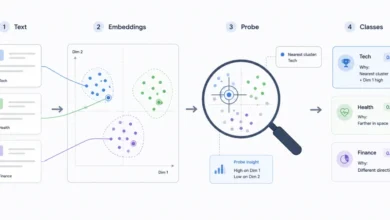
Demystifying Large Language Model Embedding Spaces Through Probing Classifiers and Explainable AI Techniques
The rapid proliferation of Large Language Models (LLMs) has fundamentally altered the landscape of natural language processing (NLP). While these…
Read More » -
Artificial Intelligence
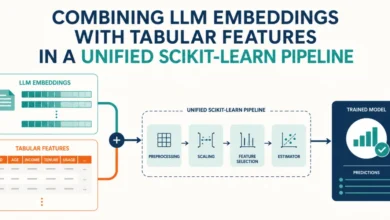
Combining LLM Embeddings with Tabular Features in a Unified Scikit-learn Pipeline
The Evolving Landscape of Data-Driven Decision Making In the current data-rich environment, few business problems rely on a single data…
Read More » -
Artificial Intelligence
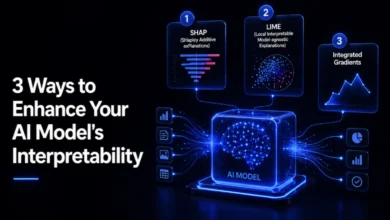
3 Ways to Enhance Your AI Model’s Interpretability
In the modern era of data science, the ability to build a model that predicts accurately is no longer the…
Read More » -
Artificial Intelligence
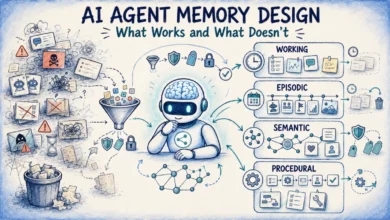
AI Agent Memory Design: What Works and What Doesn’t
Designing reliable memory systems for AI agents has emerged as the critical frontier in machine learning engineering, as developers transition…
Read More » -
Artificial Intelligence
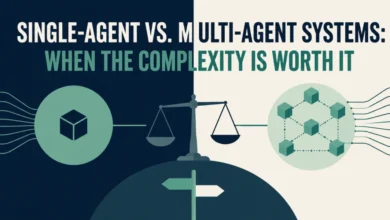
Single-Agent vs. Multi-Agent AI Systems: Determining When Architectural Complexity Is Worth the Investment
In the rapidly evolving landscape of generative artificial intelligence, developers and enterprises are increasingly confronted with a fundamental architectural dilemma:…
Read More » -
Artificial Intelligence
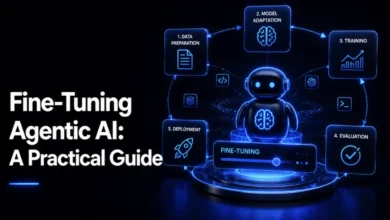
Fine-Tuning Agentic AI: A Practical Guide to Holistic System Optimization
The rapid evolution of Large Language Models (LLMs) has transitioned from simple chat interfaces to sophisticated agentic systems capable of…
Read More » -
Artificial Intelligence

Dataclasses for Structured Application Data: Replacing Fragile Dictionaries with Robust Models
The evolution of Python software architecture has long been plagued by the "dictionary-as-model" anti-pattern. Developers frequently use nested dictionaries to…
Read More » -
Artificial Intelligence

Bridging the Gap: How Traditional Machine Learning and Agentic Reasoning Create Superior AI Systems
The rapid evolution of artificial intelligence has moved beyond the simple input-output paradigm that characterized the last decade of machine…
Read More » -
Artificial Intelligence
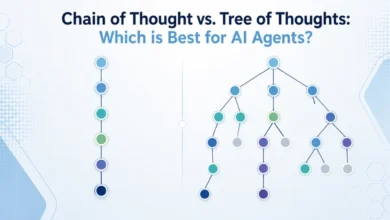
Chain of Thought vs. Tree of Thoughts: Which is Best for AI Agents?
Large language models (LLMs) are fundamentally designed to predict the next token in a sequence based on statistical probability, a…
Read More » -
Artificial Intelligence
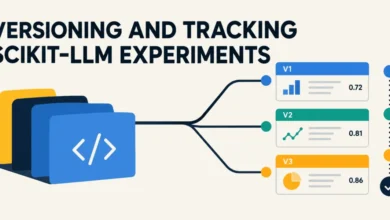
Versioning and Tracking Scikit-LLM Experiments with MLflow and Scikit-Learn Pipelines
The integration of Large Language Models (LLMs) into traditional machine learning workflows has shifted the paradigm of predictive modeling, moving…
Read More »
