October desktop wallpaper collection brings seasonal creativity to global workspaces

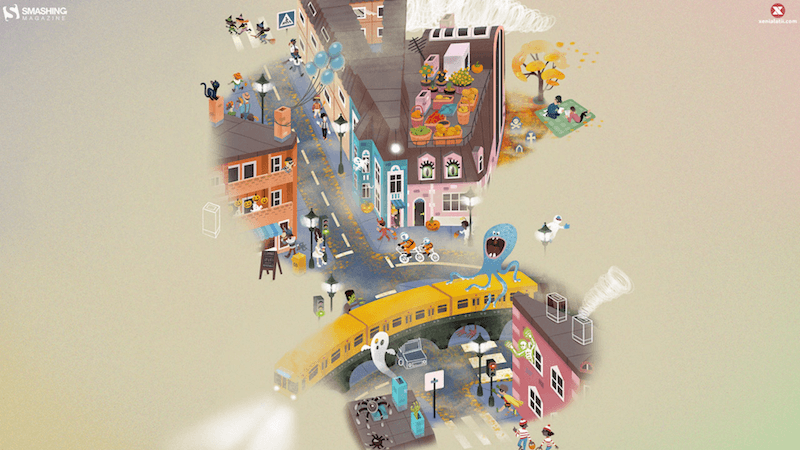
As the calendar turns toward October, the digital design community marks a long-standing tradition of desktop personalization. For over 15 years, Smashing Magazine has curated a monthly exhibition of desktop wallpapers, sourcing contributions from designers, illustrators, and digital artists across the globe. This initiative serves not only as a functional tool for users seeking to refresh their computing environments but also as a decentralized platform for artists to showcase their work to a global audience. The collection released for October 2026 reflects a thematic blend of autumn aesthetics, Halloween-inspired motifs, and artistic interpretations of the transition between seasons.
The Evolution of the Digital Wallpaper Tradition
The practice of distributing digital desktop backgrounds began in the early years of the graphical user interface (GUI). However, in the mid-2000s, this practice evolved from simple stock photography to a medium for digital artistry. The Smashing Magazine project stands as one of the longest-running examples of this phenomenon. By providing high-resolution imagery—often including calendar overlays—the project bridges the gap between utility and artistic expression.
Data from the design sector suggests that desktop customization remains a significant aspect of personal computing. Despite the rise of mobile-first computing, the desktop environment remains the primary workspace for professionals in creative, technical, and administrative fields. Studies on workplace environment psychology indicate that a personalized digital workspace can contribute to a sense of agency and comfort, which may indirectly influence productivity levels during long hours of screen exposure.
Chronology of the October 2026 Collection
The development of this month’s collection followed a standardized editorial pipeline. Following an open call for submissions, the editorial team reviewed entries based on technical quality, thematic relevance, and composition. The final selection was curated to represent a diverse array of international perspectives, featuring artists from Serbia, Spain, Hungary, Belgium, Taiwan, and the United States.
The publication of these assets occurs in late September, providing users with ample time to prepare their digital workspaces for the upcoming month. The cycle concludes with an open invitation for submissions for the subsequent month, a process that ensures a continuous influx of fresh content and keeps the platform dynamic.
Thematic Analysis: Autumnal and Spooky Imagery
The October 2026 collection is defined by two primary narrative threads: the physical transition of the natural world and the cultural observance of Halloween.
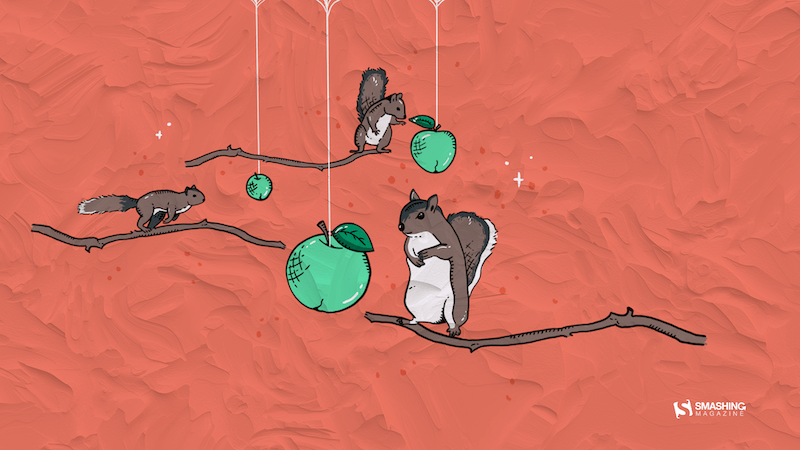
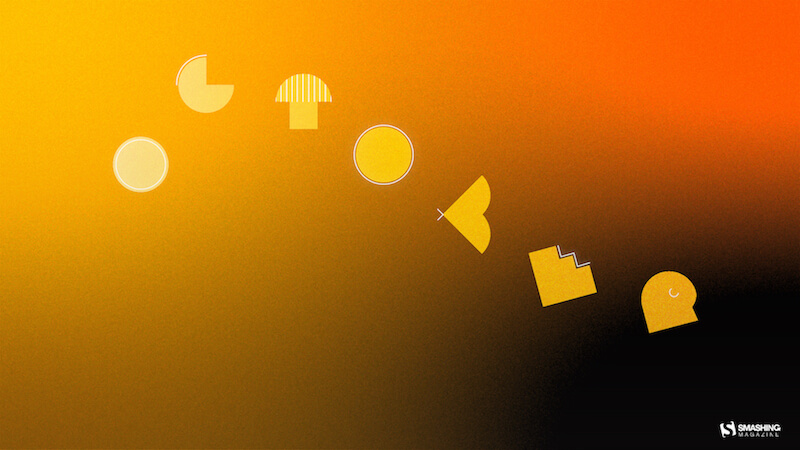
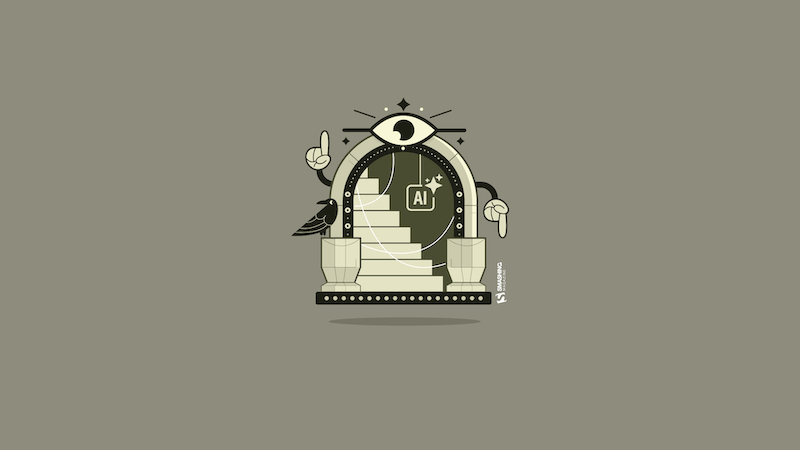
Artistic submissions like "Shades of Gold" by PopArt Studio and "Autumn Gate" by Ana Masnikosa focus on the color palettes associated with the fall—ochre, burnt orange, and deep reds. These works rely on the psychological association between the changing environment and the concept of "coziness," often contrasted with the cooling temperatures outside.
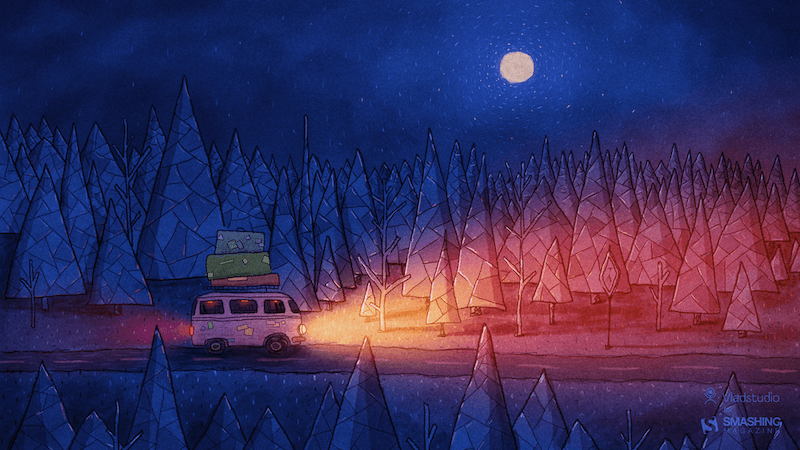
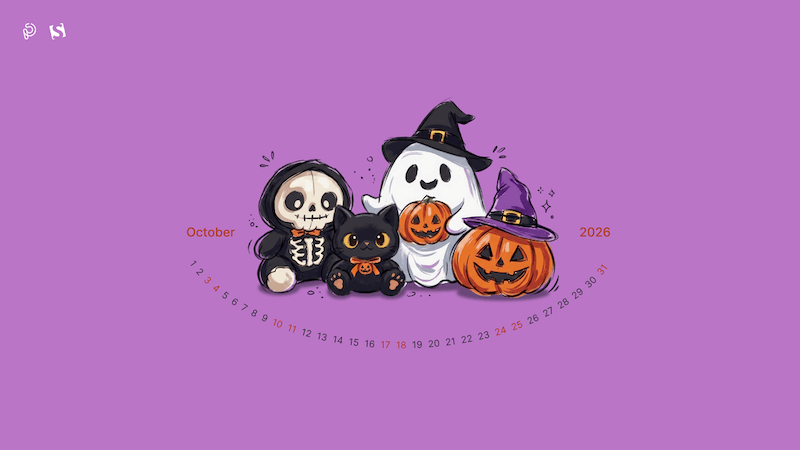
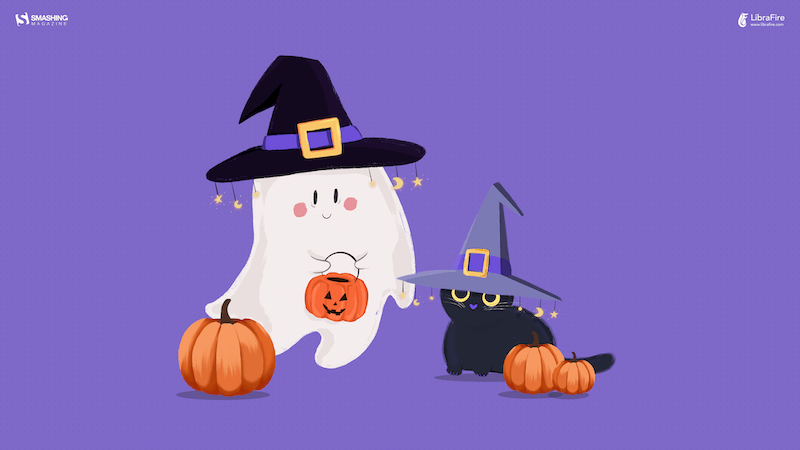
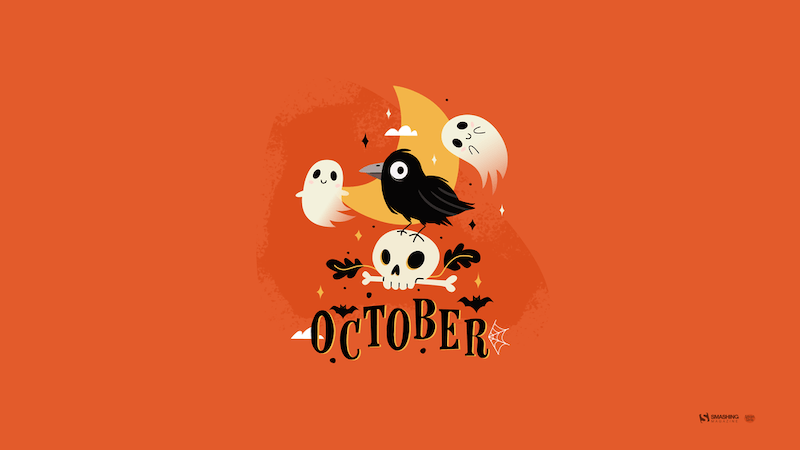
Simultaneously, the collection addresses the global cultural footprint of Halloween. Contributions such as "A Night of Universal Magic and Joy" by PopArt Studio and the "Voodoo You" series by Ricardo Gimenes highlight the cross-continental adoption of this tradition. The imagery often balances between the "spooky" and the "whimsical," reflecting a trend where Halloween is increasingly viewed as a festival of communal joy rather than strictly a holiday of horror.
Technical and Artistic Highlights
The technical requirements for these wallpapers remain rigorous. To be featured, designers must provide multiple aspect ratios and resolutions to accommodate everything from high-density laptop displays to ultra-wide desktop monitors.
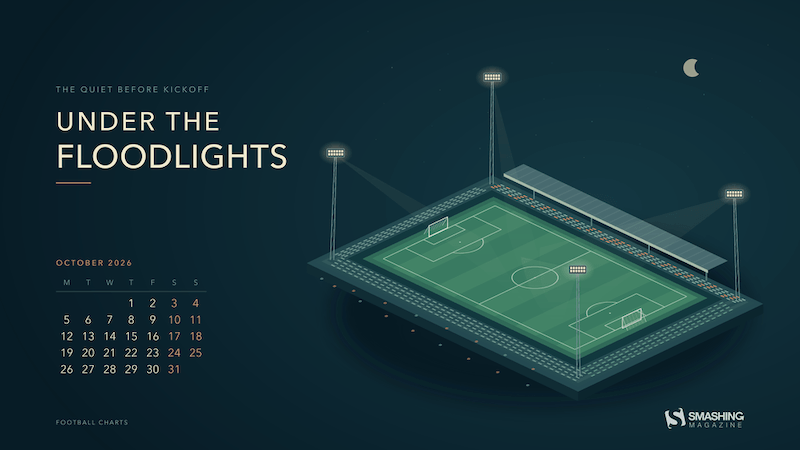
- Geometric Abstraction: "Under the Floodlights" by Football Charts utilizes geometric composition to represent the quiet, anticipation-filled moments of autumn sports, demonstrating an effective use of negative space suitable for a functional desktop.
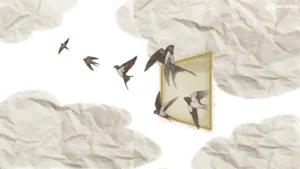
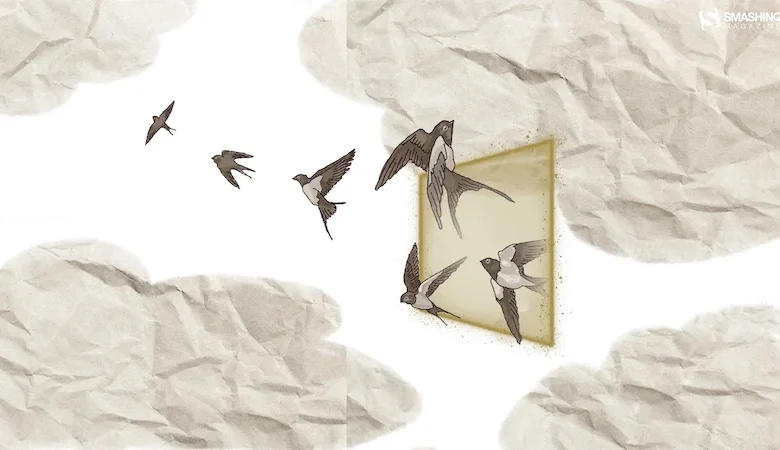
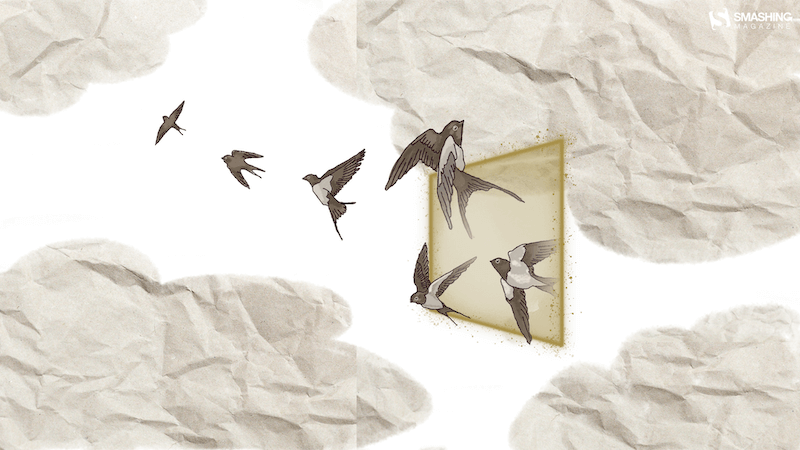
- Narrative Storytelling: Eline Claeys’ "Bird Migration Portal" provides a conceptual approach, referencing the migratory patterns of birds in October. This reflects a growing trend in digital art where the background serves as a narrative piece rather than a static image.
- Retro-Futurism: Frank Candamil’s "Roger That Rogue Rover" deviates from traditional seasonal themes, instead utilizing a retro-sci-fi aesthetic. This diversity in the collection ensures that it appeals to a broad demographic, including those who may not identify with traditional autumn or holiday motifs.
Broader Implications for the Digital Design Community
The sustained success of this project highlights a shift in how digital content is consumed and shared. By allowing for open submissions, the platform democratizes design. It provides emerging artists—who might otherwise lack a platform for exposure—with a professional venue. Furthermore, it creates a feedback loop: designers receive exposure, and users receive high-quality, free-to-use aesthetic assets.
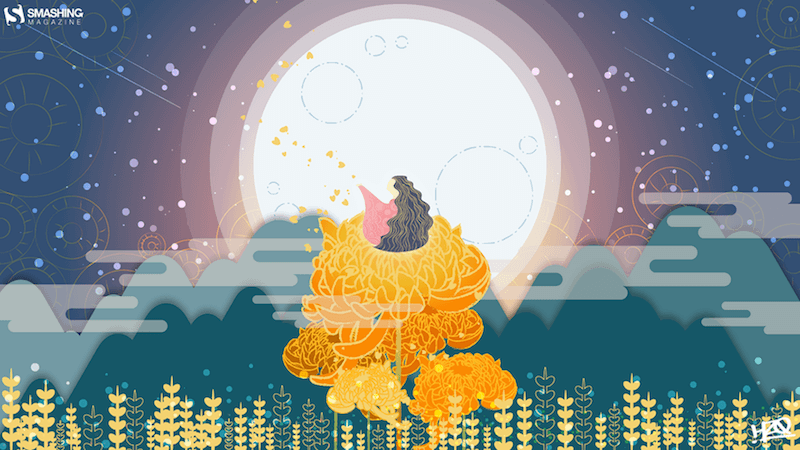
The inclusion of international artists also facilitates a global dialogue on design trends. For instance, the "Hanlu" wallpaper by Hong, ZI-Qing, which explores the Chinese term for "Cold Dew," introduces a cross-cultural perspective on the season that might be unfamiliar to Western audiences. Such contributions are vital in broadening the scope of the project beyond Eurocentric interpretations of autumn.
Professional Perspectives on Workspace Personalization
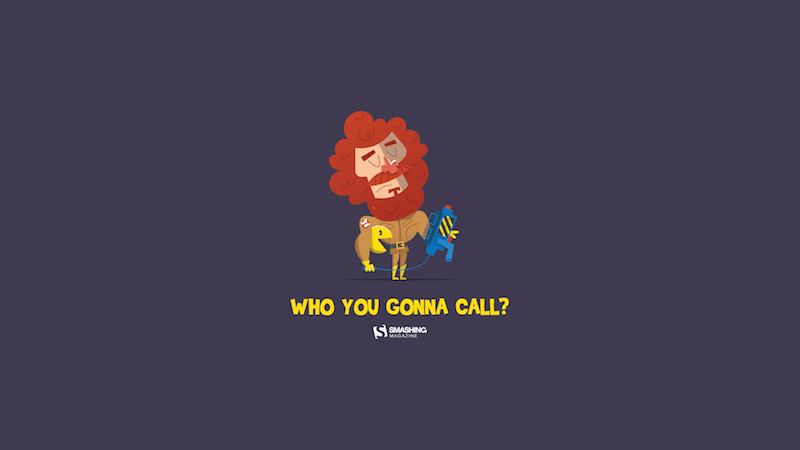
Industry experts in UI/UX and workplace ergonomics note that while the "wallpaper" seems like a trivial element of the operating system, it plays a role in "environmental framing." As remote work becomes increasingly prevalent, the lines between professional and private spaces have blurred. A digital wallpaper that reflects personal interests—whether it be a love for autumn, a passion for coffee culture, or a fondness for pop culture icons like the Ghostbusters—serves as a psychological anchor.
"The desktop is the new office wall," suggests an analyst familiar with digital workspace trends. "When we cannot personalize our physical cubicles, we turn to the screen. It becomes the only piece of the environment we truly control."
Future Outlook and Submission Guidelines
As the project looks toward the November cycle, the organizers maintain that the criteria for selection will continue to favor creativity and technical precision. The "Get Featured" initiative acts as a pipeline for new talent, ensuring that the Smashing Magazine archives remain a living, breathing library of contemporary design.
For aspiring designers looking to contribute, the process involves submitting high-resolution files that adhere to specific resolution guidelines, along with a brief narrative explaining the inspiration behind the piece. The editorial team emphasizes that storytelling—as evidenced by the provided descriptions of the October collection—is just as important as the visual execution.
The ongoing relevance of this project, more than a decade after its inception, serves as a testament to the enduring human desire to imprint personality onto our tools. As technology continues to advance, the wallpaper remains one of the most stable, accessible, and meaningful ways for individuals to bridge the gap between human expression and digital utility. The October 2026 collection is currently available for download, representing the latest iteration of this persistent digital tradition.