Unveiling Hybrid Inference and Advanced Gemini Models: Firebase Empowers Android Developers with Enhanced AI Capabilities

Firebase has recently introduced a suite of powerful updates designed to significantly enhance the integration of artificial intelligence within Android applications. These advancements include a new Hybrid Inference API for Firebase AI Logic, enabling developers to seamlessly leverage both on-device and cloud-based AI processing, alongside support for cutting-edge Gemini models, including the newly released Nano Banana models for sophisticated image generation. This strategic rollout signifies a concerted effort by Firebase to democratize advanced AI capabilities for a broader spectrum of Android developers, from hobbyists to enterprise-level application creators.
The core of this announcement revolves around the introduction of Hybrid Inference, a novel approach that allows Android applications to dynamically switch between Gemini Nano running locally on a device and more powerful, cloud-hosted Gemini models. This capability is made accessible through a unified Firebase API, simplifying the development process and offering developers unprecedented flexibility. The initial implementation of Hybrid Inference employs a rule-based routing mechanism, a foundational step that Firebase intends to build upon with more sophisticated routing options in the future. This approach addresses a key challenge in mobile AI development: balancing the need for real-time, low-latency responses with the computational demands of complex AI models. By allowing applications to intelligently decide where to execute AI tasks, developers can optimize for performance, cost, and user experience.
The on-device execution of the Hybrid Inference solution leverages ML Kit’s Prompt API, a testament to Google’s ongoing commitment to making on-device machine learning accessible and efficient. For cloud inference, the system supports all Gemini models available through Firebase AI Logic, encompassing both Vertex AI and the Firebase Developer API. This broad compatibility ensures that developers can seamlessly integrate with a wide array of Google’s most advanced AI models.
To integrate this new functionality, developers are instructed to include specific dependencies in their Android project’s build files. The firebase-ai and firebase-ai-ondevice libraries, with the latter currently in a beta stage (16.0.0-beta01), are essential for enabling hybrid inference. The inclusion of these dependencies opens the door to a more intelligent and adaptable AI integration within mobile applications.

The configuration of the GenerativeModel instance is a crucial step in utilizing hybrid inference. Developers can specify their preferred inference mode during initialization. The PREFER_ON_DEVICE mode, for instance, will prioritize running AI tasks on the user’s device using Gemini Nano. If Gemini Nano is not available or capable of handling the specific request, the system will gracefully fall back to cloud-based inference. Conversely, the PREFER_IN_CLOUD mode prioritizes cloud execution, with a fallback to on-device inference for scenarios where an internet connection might be unavailable, ensuring a robust user experience regardless of connectivity. This dynamic routing is a significant leap forward in creating AI-powered applications that are both performant and resilient.
The Firebase API for hybrid inference on Android is currently designated as experimental, a standard practice for introducing new technologies that require further testing and refinement in real-world applications. Firebase is actively encouraging developers to explore its capabilities, particularly those already utilizing Firebase AI Logic. The current limitations of on-device models are primarily focused on single-turn text generation tasks and processing single Bitmap image inputs. Detailed information regarding these limitations is readily available in the official Firebase documentation, allowing developers to make informed decisions about integration.
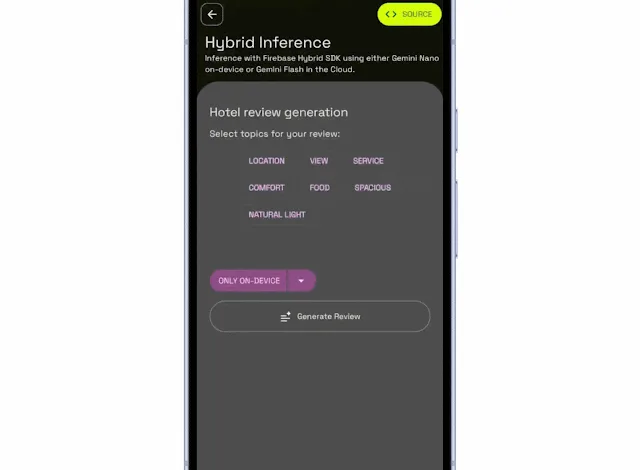
To further facilitate adoption and showcase the potential of this new technology, Firebase has released a new sample application within the AI Sample Catalog. This sample demonstrates the practical application of the Firebase API for hybrid inference by generating reviews based on selected topics and subsequently translating them into multiple languages. This hands-on example provides developers with a tangible starting point and a clear illustration of how to implement hybrid inference in their own projects. The availability of such sample code is invaluable for accelerating the learning curve and fostering innovation within the Android developer community.
Beyond the advancements in inference capabilities, Firebase is also introducing support for new and enhanced Gemini models, further expanding the creative and analytical potential for Android applications. Among these are the latest iterations of the Nano Banana models, which have garnered significant attention for their prowess in image generation.
The Nano Banana models, first introduced last year, have been a subject of ongoing development and refinement. The recent release includes two particularly noteworthy models: Nano Banana Pro and Nano Banana 2. Nano Banana Pro, also known as Gemini 3 Pro Image, is engineered for professional asset creation. Its capabilities extend to rendering high-fidelity text, with the remarkable ability to simulate specific fonts and various handwriting styles. This level of detail and control opens up new avenues for applications in graphic design, content creation, and personalized communication.
.png)
Complementing Nano Banana Pro is Nano Banana 2, or Gemini 3.1 Flash Image. This model serves as the high-efficiency counterpart, optimized for speed and high-volume use cases. Its versatility makes it suitable for a broad range of applications, including the creation of infographics, virtual stickers, and contextual illustrations. The Nano Banana models, in general, are characterized by their ability to harness real-world knowledge and deep reasoning capabilities to generate images that are not only precise but also rich in detail.
The impact of these new image generation models is already being demonstrated through updates to existing Firebase samples. The Magic Selfie application, which utilizes image generation to modify selfie backgrounds, has been updated to incorporate Nano Banana 2. In this enhanced version, the background segmentation is now handled directly by the image generation model itself. This streamlining of the implementation process not only simplifies development but also allows the advanced image generation capabilities of Nano Banana 2 to truly shine. Developers can explore the updated Magic Selfie sample on GitHub to witness these improvements firsthand.
In addition to the Nano Banana models, Firebase has also rolled out Gemini 3.1 Flash-Lite. This new version of the Gemini Flash-Lite family is particularly well-suited for Android developers due to its favorable balance of quality and latency, coupled with low inference costs. Previously, Gemini Flash-Lite models have been instrumental in various Android applications, such as real-time in-app messaging translation and generating recipes from images of dishes. The Gemini 3.1 Flash-Lite, currently in preview, promises to unlock even more advanced use cases, delivering latency comparable to its predecessor, Gemini 2.5 Flash-Lite. This continued evolution of the Gemini Flash-Lite series underscores Firebase’s commitment to providing cost-effective yet powerful AI solutions for mobile platforms.
The release of these new models and the Hybrid Inference API represents a significant step forward in making advanced AI accessible and practical for Android developers. The ability to intelligently route AI workloads between on-device and cloud resources offers a powerful toolkit for optimizing application performance, responsiveness, and resource utilization. Furthermore, the introduction of sophisticated image generation models like Nano Banana Pro and Nano Banana 2 empowers developers to create more visually engaging and interactive user experiences.
The broader implications of these updates are far-reaching. For businesses developing Android applications, these advancements translate into the potential for more intelligent, personalized, and engaging user experiences. Features that were once computationally prohibitive or required complex, specialized hardware can now be integrated more readily. This could lead to a new wave of AI-powered innovations across various sectors, from e-commerce and social media to productivity and entertainment.
.gif)
The focus on hybrid inference also addresses the growing concern for user privacy and data security. By enabling more processing to occur directly on the device, sensitive user data can be handled without the need for constant transmission to the cloud, offering a more secure and private experience. This aligns with the increasing demand for privacy-conscious applications.
The release timeline of these updates suggests a strategic roadmap from Firebase, indicating a sustained commitment to advancing AI capabilities for mobile platforms. The introduction of beta features, such as the firebase-ai-ondevice library, allows for community feedback and iterative improvement, ensuring that the final product is robust and meets the needs of developers. The ongoing availability of comprehensive documentation and sample applications further underscores Firebase’s dedication to supporting its developer ecosystem.
In conclusion, Firebase’s recent announcements mark a pivotal moment for Android AI development. The introduction of Hybrid Inference and the expansion of Gemini model support, particularly with the Nano Banana series, provide developers with unprecedented tools to build the next generation of intelligent mobile applications. By embracing these new capabilities, Android developers are well-positioned to unlock new levels of innovation, user engagement, and application sophistication. The ongoing evolution of AI in mobile environments, driven by platforms like Firebase, promises a future where AI is not just a feature but an integral and seamless part of the user experience. Developers are encouraged to explore the provided samples and documentation to harness the full potential of these exciting new advancements.