Next.js Formalizes Security Release Program to Address Evolving AI-Driven Vulnerability Landscape and Improve Enterprise Stability

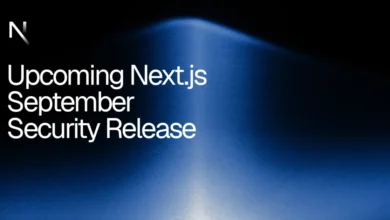
In a significant shift toward enterprise-grade reliability and proactive defense, Vercel has announced the formalization of a structured security release program for Next.js, the industry-leading React framework. This strategic move marks a departure from the framework’s historical reliance on ad-hoc patching, transitioning instead to a predictable, monthly cadence designed to allow organizations to better plan their security maintenance windows. The first of these scheduled updates, originally slated for July 20, 2026, is now confirmed for release on July 21, 2026. This upcoming update is set to address a total of nine vulnerabilities, including four high-severity and five medium-severity issues, affecting both Next.js versions 16.2 and 15.5.
The decision to formalize security protocols comes at a time when the web development ecosystem is facing an unprecedented surge in vulnerability discoveries. Vercel leadership noted that the volume of research is rising exponentially, largely driven by the integration of Large Language Models (LLMs) into security auditing tools. By establishing a regular schedule, the Next.js team aims to reduce the disruption caused by surprise patches while maintaining a rigorous defense against increasingly sophisticated exploitation techniques.
A Strategic Shift Toward Predictable Security Management
For years, Next.js maintained a reactive posture regarding security vulnerabilities. When a flaw was discovered, either through internal audits or external reporting, the team would develop a fix and release it immediately. While this ensured that patches reached the public as quickly as possible, it often created logistical hurdles for DevOps and security teams at large-scale enterprises. These teams frequently found themselves forced into emergency deployment cycles to mitigate risks, often with little to no advance notice.
The new program aligns Next.js with the best practices of other major open-source projects and platforms, such as Node.js and various Linux distributions. Under this new model, Vercel will provide advance notice of upcoming security releases through the official Next.js blog. These announcements will detail the expected timeline and the maximum severity of the vulnerabilities being addressed.
This "lead time" is critical for the broader infrastructure ecosystem. It allows hosting providers, Content Delivery Networks (CDNs), and platform partners to coordinate on "virtual patching"—deploying Web Application Firewall (WAF) rules and other mitigations to protect users even before they have a chance to update their underlying framework code.
The Catalyst: AI-Assisted Vulnerability Discovery
The primary driver behind this programmatic shift is the changing nature of cybersecurity research. The advent of AI-assisted discovery has fundamentally altered the speed at which zero-day vulnerabilities are identified. Vercel pointed to recent data from Mozilla as a bellwether for the industry. Mozilla recently disclosed that a single Firefox release contained 271 issues, all of which were surfaced by Anthropic’s Mythos Preview, an AI-driven security analysis tool.
To stay ahead of malicious actors who are undoubtedly using similar tools, Vercel has integrated the same class of advanced tooling into its own development lifecycle. The company utilizes "Deepsec," a proprietary suite of security tools developed by Vercel Labs, alongside an expanded bug bounty program on HackerOne. By automating the discovery of edge cases and complex logic flaws, Vercel aims to identify and remediate vulnerabilities before they can be weaponized in the wild.
The "React2Shell" exploit, which was responsibly disclosed and patched in December 2025, served as a proof-of-concept for Vercel’s maturing security program. The successful mitigation of React2Shell demonstrated that while the framework’s complexity is increasing, its internal security processes are evolving to match.
Chronology of the Next.js Security Evolution
The journey toward a formalized security program has been marked by several key milestones:
- December 2025: The disclosure of the React2Shell exploit. This event highlighted the potential for critical vulnerabilities in the intersection of server-side rendering and client-side hydration. Vercel’s rapid response and subsequent deep-dive investigation set the stage for more robust security auditing.
- Early 2026: Vercel Labs begins the deployment of Deepsec, utilizing LLM-assisted scanning to identify patterns of "sink and source" vulnerabilities that traditional static analysis might miss.
- Q2 2026: Expansion of the Vercel Open Source Bug Bounty program. Increased rewards and a broader scope attracted a higher tier of independent security researchers.
- July 20, 2026: The original target date for the first formalized security release.
- July 21, 2026: The rescheduled release date for the inaugural monthly security update, covering Next.js 16.2 and 15.5.
Technical Details of the July 2026 Release
The upcoming July 21 release is substantial in scope. It targets two primary branches of the framework: the current stable version (16.2) and the previous long-term support-adjacent version (15.5). This dual-version patching strategy ensures that organizations that have not yet migrated to the latest major version remain protected.
The release addresses nine vulnerabilities in total:
- High Severity (4): These typically involve vulnerabilities that could lead to unauthorized data access, server-side request forgery (SSRF), or remote code execution under specific configurations.
- Medium Severity (5): These often include cross-site scripting (XSS) risks, information disclosure through headers, or denial-of-service (DoS) vectors that require specific user interaction or environmental conditions.
Upon the release of the patches, Vercel will publish a detailed technical blog post. This post will include Common Vulnerabilities and Exposures (CVE) identifiers, allowing security teams to cross-reference the fixes with their internal compliance and tracking systems.
Emergency Protocols and Ad-Hoc Patches
While the monthly schedule is the new standard, Vercel remains committed to flexibility in the face of urgent threats. The company clarified that the formalized program does not preclude the release of ad-hoc patches. In scenarios where a vulnerability is being actively exploited in the wild, or if a "critical" severity flaw is discovered that poses an immediate and widespread risk, the team will bypass the monthly schedule to issue an emergency fix.
"We remain committed to securing your code as quickly as possible," the company stated. This hybrid approach—predictable for standard maintenance but agile for emergencies—is intended to provide the best of both worlds for the global developer community.
Broader Implications for the Web Development Ecosystem
The formalization of security releases for Next.js is a clear indicator of the framework’s dominance in the modern web stack. As Next.js becomes the foundation for everything from fintech applications to government portals, the stakes for security have never been higher.
Industry analysts suggest that this move will likely pressure other major framework maintainers to adopt similar schedules. "Predictability is a feature," says one independent security consultant. "For a CISO, knowing that a security patch is coming on the third Tuesday of the month is infinitely more manageable than a random GitHub notification on a Friday evening."
Furthermore, the emphasis on AI-driven discovery highlights a new arms race in software development. As tools like Anthropic’s Mythos and Vercel’s Deepsec become more prevalent, the window between the introduction of a bug and its discovery is shrinking. This necessitates a "security-by-design" approach where security is not an afterthought but a continuous component of the development lifecycle—from static analysis during code authoring to auditable package publication.
Community Participation and Future Outlook
Vercel continues to invite the global research community to participate in its security efforts. The Vercel Open Source Bug Bounty program on HackerOne remains the primary vehicle for external contributions. By incentivizing responsible disclosure, Vercel leverages a global pool of talent to supplement its internal research teams.
As Next.js moves forward with this new program, the focus will likely expand to include more granular security controls within the framework itself. Developers can expect continued investment in features that make secure coding the "path of least resistance," such as improved data sanitization defaults and more robust middleware security headers.
For organizations currently utilizing Next.js, the recommendation is clear: mark the monthly release windows on the calendar and ensure that CI/CD pipelines are prepared for rapid testing and deployment of these security-centric updates. The transition to a formal program is not just a change in schedule; it is a commitment to the long-term stability and safety of the modern web.
Questions regarding the new release program or specific vulnerability management concerns can be directed to Vercel’s dedicated security team at [email protected]. With the first formalized update arriving on July 21, the industry will be watching closely to see how this new era of framework maintenance unfolds.