Microsoft Addresses Record 570 Security Vulnerabilities in July Patch Tuesday, Cites AI Advancement for Surge

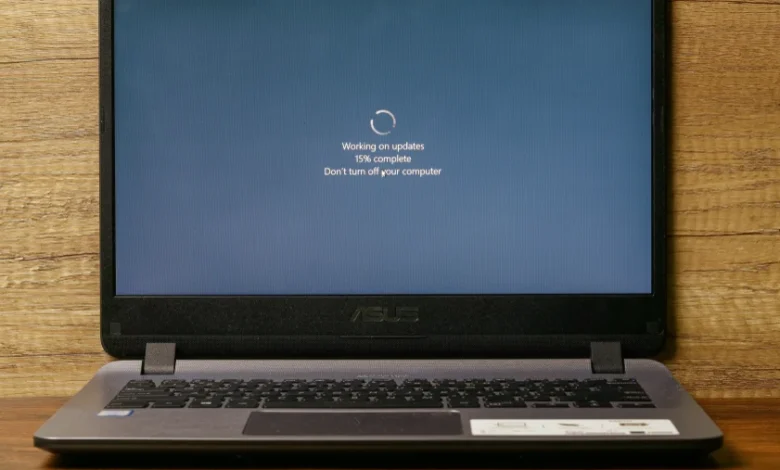
Microsoft Corp. today released software updates to plug at least 570 security holes in its Windows operating systems and other software, almost triple the number of vulnerabilities the software giant fixed in its record-smashing Patch Tuesday release last month. Microsoft attributed the burgeoning patch counts to vulnerability discoveries aided by artificial intelligence. This marks a significant escalation in the volume of security patches, signaling a new era in software vulnerability management where artificial intelligence is accelerating both the discovery of flaws and the potential for their exploitation.
The Scope of July’s Patch Tuesday: A Deep Dive into the Vulnerabilities
The July Patch Tuesday update, released on the second Tuesday of the month as per Microsoft’s established security schedule, is by far the largest single-day release of security fixes in the company’s history. A staggering 570 vulnerabilities were addressed across a wide array of Microsoft products, including the Windows operating system, Office suite, Azure cloud services, and various developer tools. This colossal number dwarfs previous records, including last month’s substantial release, and underscores a fundamental shift in the threat landscape and the way software vulnerabilities are being discovered.
Of the 570 vulnerabilities, nearly 60 were classified as "critical." This designation means that these flaws, if exploited, could allow malicious actors to gain remote control over a Windows device with minimal to no user interaction. The severity of these critical vulnerabilities necessitates immediate attention from users and organizations to mitigate the risk of widespread compromise.
Furthermore, Microsoft’s July update addressed three zero-day vulnerabilities. Zero-day flaws are particularly concerning because they are unknown to the vendor at the time of exploitation, meaning no patches are available to protect against them. Of these three, two were already being actively exploited in the wild, raising the stakes for users who might have already fallen victim to these advanced attacks.
Zero-Day Exploits and Elevation of Privilege Concerns
The exploitation of zero-day vulnerabilities represents the sharpest edge of cyber threats. The two actively exploited zero-day flaws patched this month present significant risks. One of these vulnerabilities allows an attacker to elevate their user privileges on a compromised Windows system. This means that an attacker who gains initial limited access to a system could use this flaw to gain administrative control, unlocking the door to sensitive data and deeper system manipulation.
This theme of privilege escalation is further amplified by the sheer volume of other elevation of privilege vulnerabilities patched in this release. Approximately 250 such flaws were addressed, indicating a widespread issue across various components of the Windows ecosystem. Among these are two specific vulnerabilities that have been assigned CVE identifiers:
- CVE-2026-56155: This vulnerability resides in Active Directory Federation Services (AD FS), a critical component for identity and access management in enterprise environments. A successful exploit could grant attackers elevated privileges within an organization’s network, potentially allowing them to impersonate legitimate users or gain access to sensitive resources.
- CVE-2026-56164: This flaw affects Microsoft SharePoint, a widely used collaboration platform. Similar to the AD FS vulnerability, this could enable attackers to escalate their privileges on systems hosting SharePoint, posing a risk to the data and operations managed by this platform.
The sheer number of privilege escalation vulnerabilities highlights a persistent challenge for Microsoft and its users: securing the intricate layers of permissions and access controls within complex operating systems and applications.
Another significant vulnerability addressed is CVE-2026-50661, a security feature bypass in Windows BitLocker. BitLocker is a full-disk encryption feature designed to protect sensitive data stored on a device. This bypass flaw, however, could allow attackers who have physical access to a device to circumvent BitLocker’s protections and gain access to encrypted data. While Microsoft has stated that this bug has been publicly detailed, they are not aware of any active exploitation. Nevertheless, the existence of such a bypass for a security feature designed to protect data is a serious concern for users who rely on BitLocker for data at rest security.
The AI Catalyst: Accelerating Vulnerability Discovery
Microsoft’s Executive Vice President, Pavan Davuluri, directly attributed the dramatic increase in patch counts to the growing capabilities of artificial intelligence (AI) in vulnerability discovery. In a blog post published on July 9th, Davuluri explained that Windows users should anticipate a "higher volume of security updates included in each security release" moving forward.
Davuluri elaborated, stating, "The pace of vulnerability discovery is changing with advances in AI making it possible to find more issues, faster, across more code, with new mechanisms that can accelerate both discovery and analysis." This statement suggests that AI tools are not only identifying more vulnerabilities but are also doing so with unprecedented speed and efficiency, allowing security researchers to probe larger codebases and uncover complex flaws that might have previously gone unnoticed or taken significantly longer to find.
The implications of AI in vulnerability discovery are twofold. On one hand, it empowers defenders like Microsoft to proactively identify and fix weaknesses before they can be exploited. On the other hand, it also lowers the barrier to entry for malicious actors who can leverage similar AI tools to discover and weaponize vulnerabilities at an accelerated pace.
Emerging Threats: Copilot Vulnerability and the Exploitability Index Debate
Among the vulnerabilities highlighted by security researchers is CVE-2026-48561, a critical remote code execution flaw in Microsoft Copilot, with a high CVSS threat score of 9.6. Jack Bicer, director of vulnerability research at Action1, drew attention to this flaw. According to Microsoft’s advisory, an attacker could exploit this bug by hosting a malicious website. When a user visits this site using Microsoft Edge for Android, the browser could be tricked into automatically sending crafted prompts to Copilot. This could allow an unauthorized attacker to execute arbitrary code on the user’s device.
This vulnerability underscores the evolving attack vectors that leverage the integration of AI-powered features into mainstream software. As AI tools like Copilot become more deeply embedded, they also become potential targets for exploitation.
The rapid advancement of AI in both discovery and exploitation has also brought into question the efficacy of traditional security assessments. Microsoft has long used an "exploitability index" to gauge the likelihood of a vulnerability being exploited by attackers. However, as AI-powered exploit development becomes more sophisticated, this index, which is largely based on human analysis, may struggle to keep pace.
Satnam Narang, senior staff research engineer at Tenable, argued that Microsoft’s exploitability index needs to adapt more rapidly to the "machine speed" of discovery. He pointed to the SharePoint zero-day vulnerability (CVE-2026-56164) as an example. Microsoft initially rated this flaw as "less likely" to be exploited. However, the vulnerability was promptly added to CISA’s Known Exploited Vulnerabilities list on July 1st, indicating that it was already under active attack.
Narang further cited findings from Anthropic’s Red Team, which demonstrated that their Mythos Preview model could generate proof-of-concept exploits for 13 out of 14 vulnerabilities that were rated as "Exploitation Less Likely" or "Exploitation Unlikely." This suggests a significant disconnect between human-centric exploitability assessments and the capabilities of AI-powered exploit development tools. "What this means is that our way of looking at Patch Tuesday has changed, because the exploitability index is centered around humans, not AI tools, and as these tools continue to improve, defense needs to improve alongside it," Narang stated.
A Broader Trend: Increased Patch Cadence Across the Industry
Microsoft’s record-breaking patch release is not an isolated incident but rather part of a larger industry trend. Chris Goettl, at Ivanti, observed that other major software vendors are also increasing their patch cadence. Adobe, for instance, announced a move to twice-monthly security bulletins, scheduled for the second and fourth Tuesday of each month, also citing AI as a factor in accelerating their patch cycles.
Companies like Cisco, Mozilla, and Oracle are also shipping updates more frequently. Google’s patch batches in June 2026 alone totaled over 900 security fixes, indicating a similar surge in vulnerability discovery and remediation across the tech landscape. This collective increase in patch frequency suggests a growing recognition within the industry of the escalating threat landscape and the need for more agile security practices.
Implications and Recommendations for Users
The sheer volume of vulnerabilities patched in this July’s update carries significant implications for both end-users and IT professionals.
For End Users:
- Timeliness is Crucial: While the volume of patches might seem overwhelming, applying them promptly is paramount to protecting your systems. The "critical" and "zero-day" vulnerabilities pose immediate risks.
- Backup Data: Before applying any major operating system updates, it is always a good practice to back up your Windows system and/or data. This provides a safety net in case any patches introduce unforeseen system stability issues.
- Consider a Waiting Period: Given the gigantic patch count, it might be prudent for end-users to wait a few days before applying these fixes. While Microsoft rigorously tests its patches, the increased complexity and volume of this release could potentially lead to unexpected compatibility issues or system instability. Monitoring community feedback and official Microsoft channels for any reported problems after the initial rollout can help inform this decision.
For Organizations and IT Professionals:
- Prioritization is Key: With such a large number of patches, IT departments must prioritize the deployment of critical and high-severity updates. Tools that can help assess vulnerability risk and automate patch deployment are essential.
- Re-evaluate Patch Management Strategies: The trend towards increased patch cadence and the impact of AI necessitate a re-evaluation of existing patch management strategies. Organizations may need to invest in more robust patch management solutions and adopt more aggressive patching schedules.
- Invest in Threat Intelligence: Staying informed about emerging threats and vulnerabilities is more critical than ever. Subscribing to security advisories from Microsoft, CISA, and reputable security research firms is vital.
- Review Exploitability Assessments: The debate around Microsoft’s exploitability index highlights the need for organizations to conduct their own risk assessments, taking into account the potential for AI-driven exploits. Relying solely on vendor ratings might not be sufficient.
- Security Awareness Training: Educating users about the importance of timely updates and safe browsing habits remains a cornerstone of any effective cybersecurity strategy.
The July 2026 Patch Tuesday release from Microsoft serves as a stark reminder of the dynamic and ever-evolving nature of cybersecurity. As AI continues to reshape the landscape of vulnerability discovery and exploitation, the industry as a whole must adapt and innovate to maintain a robust defense against increasingly sophisticated threats. The record-breaking volume of patches is not just a statistical anomaly but a signal of a fundamental shift, demanding a more proactive, agile, and AI-aware approach to software security from vendors and users alike.