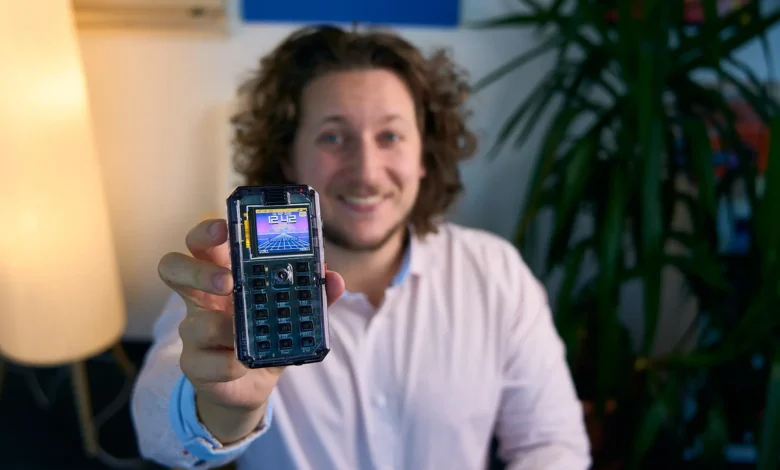
The landscape of personal electronics has long been characterized by closed ecosystems and opaque hardware, leaving the average consumer with little insight into the mechanisms that power their daily communication. CircuitMess, a Croatian technology firm established by engineer Albert Gajšak, has carved out a niche by challenging this status quo. Following the success of its 2018 MAKERphone campaign, which raised over $324,000 and delivered the Ringo mobile kit to more than 6,000 backers, the company has officially launched the MAKERphone 2.0 on Kickstarter. This second-generation device represents a significant evolution in educational hardware, specifically addressing the barrier to entry by removing the requirement for soldering, thereby making mobile electronics engineering accessible to a wider demographic.
The Evolution of the CircuitMess Ecosystem
The journey of CircuitMess began with a vision to democratize the "black box" of modern telecommunications. In 2018, the original MAKERphone required users to possess a soldering iron and a fundamental understanding of circuit board assembly. While this resonated deeply with hardcore hobbyists and STEM educators, it created a steep learning curve for novices. The Ringo phone, as it came to be known, served as a foundational device for learning about telecommunications protocols, hardware assembly, and basic C++ programming.
By 2026, the technology landscape has shifted. While 5G connectivity is the industry standard for flagship smartphones, the MAKERphone 2.0 adopts a more pragmatic approach. By utilizing the ESP32-S3 microcontroller, the device emphasizes modularity and educational potential over the raw processing power demanded by modern social media applications or high-definition streaming. The transition from a soldering-heavy build process to a modular, "snap-together" assembly reflects a broader design philosophy within the maker community: prioritizing the learning process—coding and hardware interaction—over the physical act of joining electronic components.
Technical Specifications and Hardware Architecture
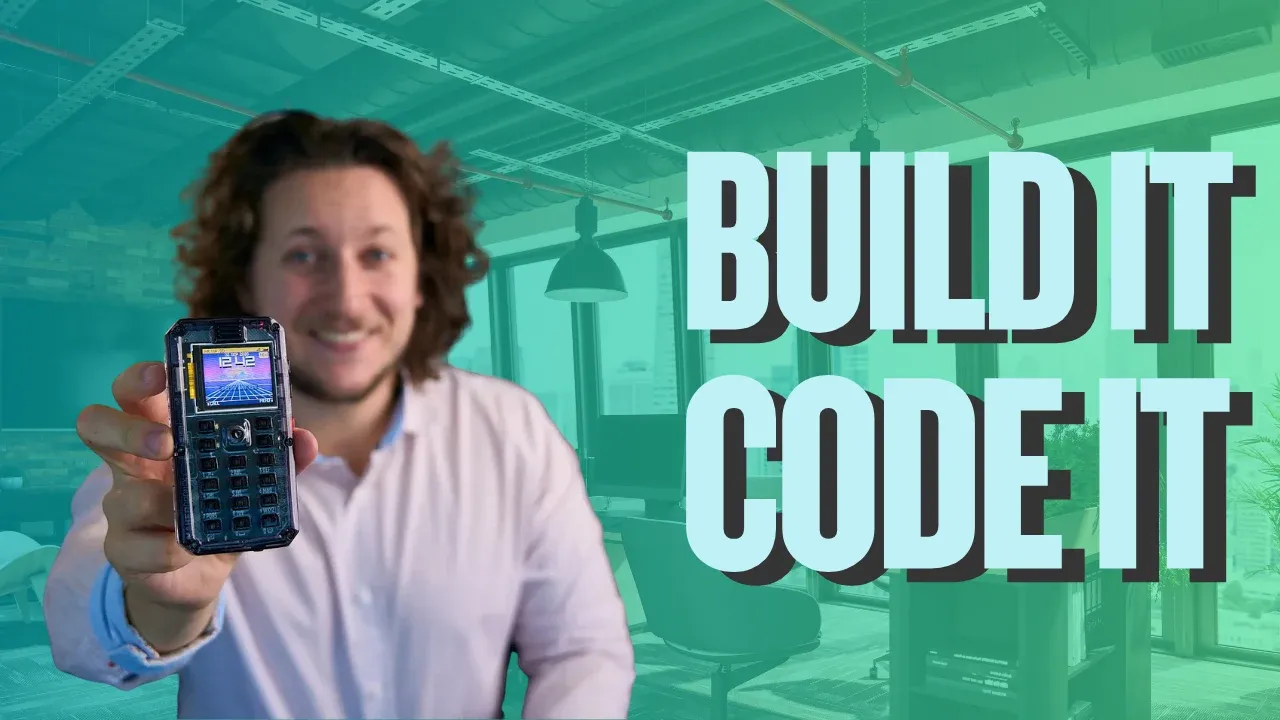
At the heart of the MAKERphone 2.0 lies the ESP32-S3, a low-power system-on-chip that has become a staple in the IoT (Internet of Things) and hobbyist sectors. This choice is deliberate; it provides sufficient computational headroom for custom applications, games, and sensor integration without the complexity associated with mobile application processors like those found in commercial smartphones.
Key technical attributes of the kit include:
- Connectivity: 4G LTE support, allowing for functional voice calls and SMS communication.
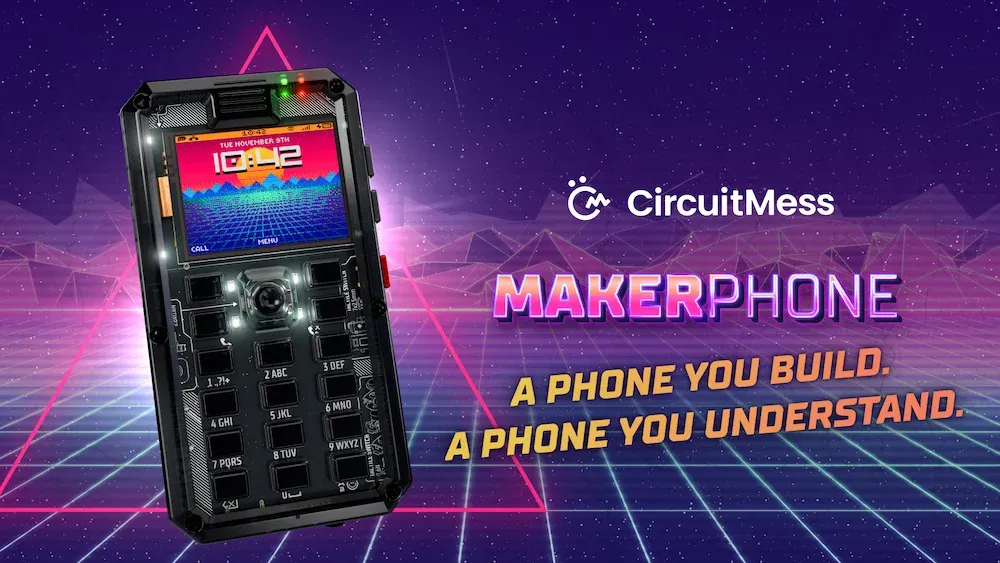
- Interface: A 1.77-inch high-visibility color display paired with a traditional physical keypad.
- Audio: A 2W integrated speaker and a dedicated headphone jack, preserving analog audio compatibility.
- Modularity: The chassis is designed to accept various bolt-on hardware modules. The base kit includes an infrared transmitter for appliance control, a camera module, an LED array, and environmental sensors for temperature and humidity.
- Expansion: A built-in perfboard section allows users to integrate custom sensors or additional circuitry, facilitating bespoke hardware engineering.
The device is powered by a rechargeable battery system that aligns with the power profile of the ESP32-S3, ensuring that the phone remains a functional, portable unit rather than a tethered development board.
The Rise of "Vibe Coding" and AI-Assisted Development
One of the most notable developments in the MAKERphone 2.0 ecosystem is the integration of AI-assisted programming tools. CircuitMess has introduced "VibeBoy," an interface designed to help users generate code through large language models (LLMs). This aligns with a wider industry trend where platforms like Seeed Studio and various Raspberry Pi-centric distributors are leveraging AI to bridge the gap between abstract concepts and functional code.

By utilizing MicroPython or Arduino C++, users can instruct the AI to write specific routines, which are then compiled and deployed to the phone. This pedagogical shift acknowledges that for many students and casual hobbyists, the barrier to entry is not the hardware itself, but the syntax of programming languages. By automating the boilerplate code, CircuitMess allows the user to focus on the logic of the application—such as how to trigger an LED based on an incoming SMS or how to map a button press to a game action.
Strategic Implications and the "Digital Minimalism" Movement
The release of the MAKERphone 2.0 occurs at a time when there is a growing, albeit niche, interest in "dumb phones" and digital minimalism. By intentionally opting for a 4G-only, non-smartphone experience, the device provides a controlled environment. It serves as an ideal platform for parents who wish to provide children with a communication tool that is incapable of supporting the addictive feedback loops of modern social media applications.
For the adult user, the MAKERphone 2.0 offers a "clean" communication device that is fully under the user’s control. Because the software is open-source and modular, the user is the administrator of the device in the truest sense. There is no bloatware, no data tracking, and no external app store governing the device’s utility. This shift toward autonomy is central to the project’s appeal, positioning it not as a consumer electronics competitor, but as an alternative philosophy of technology usage.
Financial Performance and Crowdfunding Dynamics
The MAKERphone 2.0 campaign has demonstrated significant market interest, having secured nearly 790% of its initial funding goal within the first few weeks of the campaign. The pricing strategy reflects a tiered structure, with "super early bird" backers gaining access to the kit at $119, while the standard retail price is set at $169. As of the current cycle, the most accessible tiers have been exhausted, with prices fluctuating based on availability and package bundles.
From a logistics standpoint, CircuitMess has navigated the complexities of global shipping by exempting specific regions—including the US, EU, UK, and Canada—from direct import fees, though the company notes that local VAT and regional taxes may still apply. The anticipated shipping window of July-August 2027 provides a timeline for project delivery, though potential backers are encouraged to view these dates as estimates rather than guaranteed delivery windows, consistent with the inherent nature of hardware crowdfunding.
Societal Impact and Future Prospects
The impact of such a device extends beyond the individual user. By providing a hardware platform that is explicitly designed to be taken apart, modified, and reprogrammed, CircuitMess is contributing to a culture of repair and technological literacy. In an era where devices are increasingly glued shut and software is locked behind proprietary walls, the MAKERphone 2.0 serves as a tangible protest against the "planned obsolescence" model.
The inclusion of a companion smart band—a secondary, programmable accessory that pairs via Bluetooth—further expands the pedagogical scope. It allows users to explore wearable technology, sensor data transmission, and cross-device communication. Whether this hardware will lead to a broader resurgence in DIY mobile development remains to be seen, but the initial response suggests a healthy appetite for products that invite the user to be an active participant in the design of their technology.
As the campaign progresses, the focus for the CircuitMess team will likely shift toward scaling production and refining the software support for the AI-coding tools. For students, engineers, and digital minimalists alike, the MAKERphone 2.0 stands as a unique intersection of nostalgia, education, and modern connectivity. It is a reminder that the tools we use every day are not magical, but rather, they are logical constructs that can be understood, built, and improved by anyone with the curiosity to try.
Related posts: