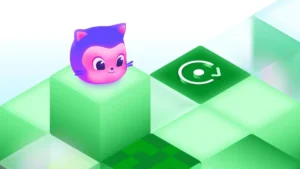
GitHub has officially announced the launch of Game Off 2026, marking the fourteenth consecutive year of its signature month-long game development jam. Scheduled to take place throughout November 2026, this year’s event invites solo developers, seasoned studios, and first-time programmers from across the global software development ecosystem to conceptualize, build, and ship original video games based around a single unifying theme: SHIFT.
Since its inception, Game Off has evolved from a grassroots community initiative into one of the most anticipated annual fixtures on the independent game development calendar. Over the past decade and a half, tens of thousands of participants have leveraged the platform to build everything from highly polished commercial-grade platformers to wonderfully weird, avant-garde experimental titles. The competition continues to serve as an accessible entry point for novices looking to break into game design, while simultaneously offering a robust sandbox for veteran developers to experiment with esoteric engines, hardware constraints, and novel mechanical frameworks.
The Core Theme: Interpreting SHIFT
The centerpiece of any game jam is its creative constraint, and GitHub has selected a particularly versatile anchor word for 2026. The theme for this year’s event is simply SHIFT, leaving participants with maximum creative latitude to explore the concept through mechanics, narrative, or technical implementation.
Organizers have noted that the theme can be approached from a myriad of angles. Developers might choose to build gameplay systems focused on mechanical transitions—such as shifting gears in a vehicle, shifting perspectives in a spatial puzzle game, toggling dimensions in a multiversal platformer, or shifting bits at a low programming level. Alternatively, the theme lends itself easily to narrative-driven experiences, such as simulating the grueling reality of working the night shift. For those seeking extreme constraints, participants could even challenge themselves to design a game where the only valid input mechanism is the physical Shift keys on a keyboard.
Beyond abstract interpretations, traditional genre tropes also provide fertile ground. Developers might explore shifting tectonic plates, shape-shifting extraterrestrial life forms, shifting political alliances in a strategy game, or shifting desert sands in a survival simulation. To maintain focus during the intensive month-long sprint, organizers strongly advise developers to avoid overcomplicating their scopes. A recommended pro tip for participants is to begin with a single core mechanic and a single playable level, ensuring the fundamentals are stable before attempting to introduce complex systems like multiverse navigation or procedural generation.
Leveraging Artificial Intelligence in the Brainstorming Phase
To assist participants who may find themselves facing creator’s block, GitHub has integrated resources utilizing its developer productivity tool, GitHub Copilot. Developers can utilize specialized prompts to jump-start their design process. For example, by instructing Copilot to act as an independent game designer, participants can generate original concept proposals complete with unique core mechanics, targeted genres, and distinct technical twists that can realistically be prototyped over a single weekend.
This integration highlights a broader trend within the modern software development landscape: the incorporation of generative AI as a collaborative partner in creative workflows. While the code, art, and final design must be assembled by the participants, leveraging AI assistants for ideation allows developers to bypass the initial friction of project inception and dive straight into implementation.
Chronology and Key Deadlines
The timeline for Game Off 2026 is structured to give developers adequate breathing room for conception, iteration, and submission, followed by a rigorous community-led evaluation phase.
- November 1, 2026: The game jam officially opens, and the development window commences. Participants can begin writing code, drafting assets, and pushing commits to their repositories.
- December 1, 2026 (13:37 PST): The official submission deadline. All completed games must be built and submitted to the official Game Off 2026 page on itch.io before this precise timestamp.
- December 1, 2026 – January 1, 2027: The community voting window. Once submissions close, the floor opens to all participants and registered community members to play, test, and evaluate the submitted titles.
- Early January 2027: Conclusion of voting and official announcement of winners across the GitHub Blog and official social media channels.
Participation Guidelines and Rules
In keeping with tradition, Game Off maintains a deliberately relaxed and inclusive set of rules designed to foster creativity rather than breed hyper-competitive anxiety. Participants are free to work entirely alone or form cross-functional teams comprising programmers, artists, musicians, and writers. There are no restrictions on the choice of underlying technology stack; developers are encouraged to use whatever programming languages, game engines, frameworks, or libraries best suit their creative vision.
To maintain a fair and enjoyable environment for everyone involved, a few foundational guidelines apply:
- Originality: The vast majority of the game’s code and core assets must be created during the month-long jam window. While pre-existing libraries, standard boilerplate code, and public domain or openly licensed assets (such as audio samples or font files) are permitted, submitting a fully finished pre-existing project violates the spirit of the event.
- Content Standards: Games must be appropriate for a broad audience. Titles containing gratuitous hate speech, harassment, or malicious code will be promptly disqualified.
- Open Collaboration: Participants are encouraged, though not strictly mandated, to utilize Git and GitHub for version control, allowing them to track their progress openly and showcase their development history.
Evaluation and Voting Mechanics
Unlike traditional industry awards judged by a closed panel of corporate executives or elite critics, Game Off places the power entirely in the hands of the community. Every participant who submits a game—and many who simply join as players—gains the ability to play, rate, and review the submitted entries.
Entries are systematically evaluated across several key performance and design categories, including:
- Overall Impression: The holistic quality, polish, and fun factor of the final product.
- Gameplay: The responsiveness, depth, and engagement of the core mechanics.
- Theme Interpretation: How cleverly and effectively the game incorporates the concept of SHIFT.
- Graphics/Visuals: The aesthetic appeal, art direction, and visual coherence.
- Audio/Sound Design: The effectiveness of the soundtrack, sound effects, and auditory feedback in enhancing the atmosphere.
This democratic approach ensures that hidden gems developed by solo creators using minimal assets have an equal chance of rising to the top alongside polished entries from larger collaborative teams.
Resources for Beginners and Open Source Hardware Enthusiasts
One of the defining characteristics of Game Off is its low barrier to entry. Every year, a significant percentage of participants use the event to write their very first line of game code or build their inaugural playable prototype. The community has historically celebrated technical diversity, with developers regularly building games not only for modern desktop and mobile platforms, but also for legacy hardware, vintage home computers, text-based terminals, graphing calculators, and obscure microcontrollers.
For developers seeking direction on what tools to adopt, the industry offers a wealth of robust open-source and commercial engines. Beginners frequently turn to accessible frameworks such as Godot, Unity, Unreal Engine, Pygame, LÖVE, or web-based tools like Phaser and kaboom.js. For those operating under extreme hardware constraints or leaning into retro aesthetics, specialized toolchains for developing homebrew software on vintage consoles remain popular choices.
Furthermore, community infrastructure is robustly supported. Participants looking for teammates, seeking feedback on work-in-progress builds, or simply wanting to commiserate over late-night debugging sessions can access the official Game Off 2026 community hub on itch.io or participate in the widely active community-run Discord servers.
Broader Implications for the Developer Community
Events like Game Off play a critical role in the broader software engineering ecosystem. In an industry where developers are often siloed into enterprise software development, cloud infrastructure management, or repetitive commercial feature implementation, game jams provide a vital psychological and professional outlet. They encourage rapid prototyping, creative problem-solving, collaborative teamwork under tight deadlines, and hands-on experimentation with new programming languages and frameworks.
Moreover, the integration of version control platforms like GitHub into the game jam workflow reinforces best practices in software engineering. By treating game development through the lens of continuous integration, branching, committing, and issue tracking, participants—particularly students and junior developers—gain invaluable, practical experience with tools that dominate the modern professional software engineering landscape.
As November approaches, the developer community is gearing up for another month of intense creation, sleep deprivation, and algorithmic breakthroughs. Whether participants spend the month shifting pixels, refactoring complex codebases, or scrambling to implement last-minute features in the final twenty-four hours before the deadline, they will be partaking in a shared global tradition of digital craftsmanship.
Developers interested in participating can sign up now on the official Game Off 2026 page, configure their repositories, and prepare to press Shift.
Related posts: