Sophos State of Ransomware in Financial Services 2026: A Sector Caught Between Declining Ransoms and Rising Operational Stress


The global financial services and insurance sector is navigating a complex paradox in the modern cyber-threat landscape: while the direct financial cost of ransom payments is trending downward, the operational burden of recovery and the psychological toll on IT staff have reached new, precarious heights. According to the sixth annual Sophos State of Ransomware in Financial Services report, released following a comprehensive survey of 177 IT and cybersecurity leaders conducted between January and March 2026, the industry is seeing a marked shift in how threat actors target institutions and how those institutions respond to the fallout.
While median ransom demands have plummeted by two-thirds compared to the previous year, and actual payments have continued a three-year downward trajectory, the sector remains uniquely vulnerable. Financial services organizations now face longer recovery timelines than any of their cross-sector peers, with the typical cost of recovery reaching double the median observed in other industries. This disparity suggests that while the "ransom" portion of an attack is becoming more manageable, the underlying systemic damage caused by modern ransomware campaigns is becoming increasingly difficult to remediate.
A Chronology of the Shift: From Exploitation to Identity Theft
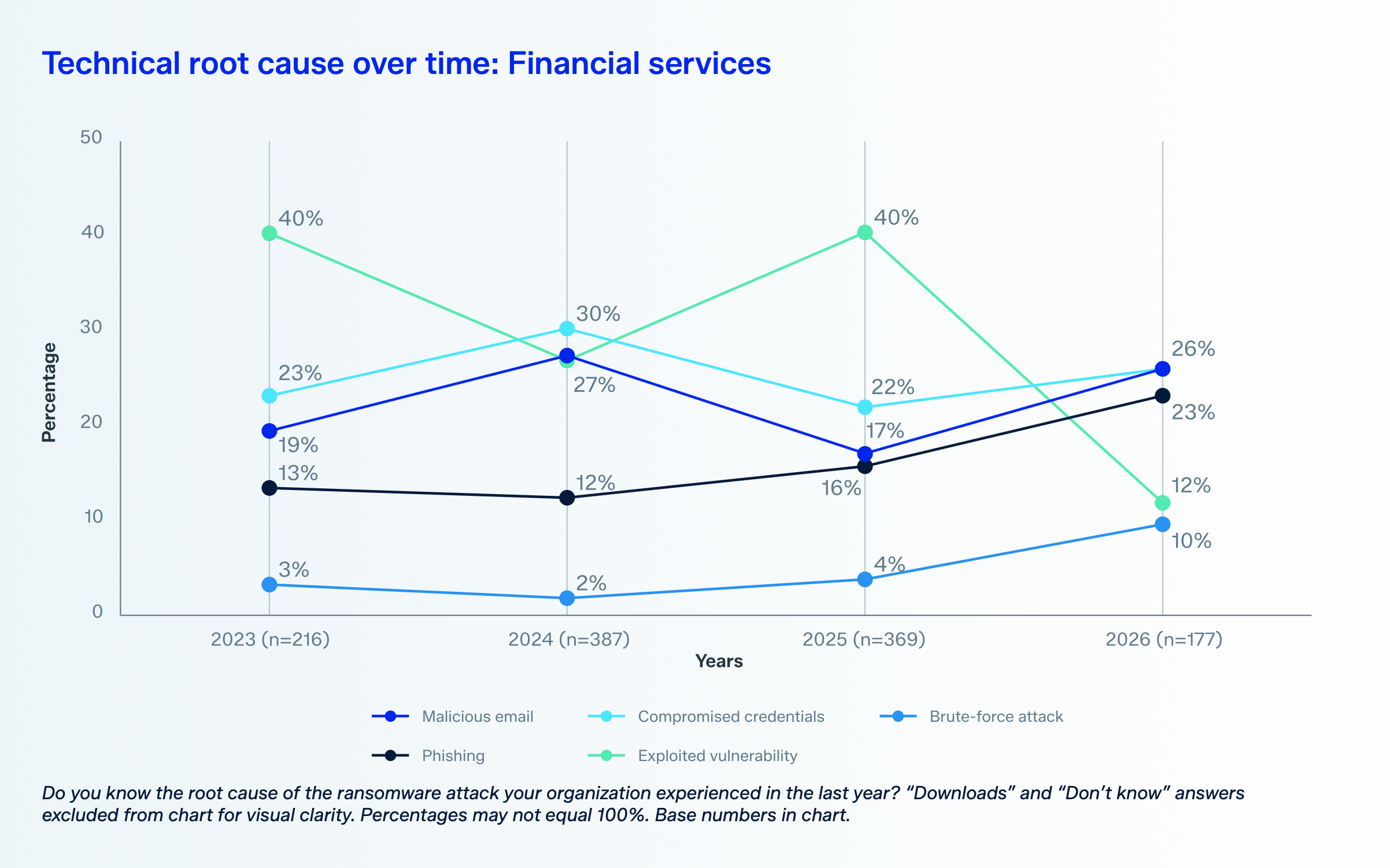
The methodology of ransomware attacks has undergone a significant transformation within the financial sector over the past 24 months. Historically, attackers relied heavily on the exploitation of software vulnerabilities—unpatched flaws in firewalls or remote access software—to gain a foothold in corporate networks. As recently as last year, exploited vulnerabilities accounted for 40% of the root causes for breaches.

However, the 2026 data reveals a dramatic pivot toward identity-based attacks. Currently, 85% of successful breaches against financial services firms are initiated through identity-based vectors, including malicious email, phishing, compromised credentials, and brute-force attempts. This represents a substantial surge compared to the 79% cross-sector average.
The shift toward identity-based vectors can be mapped as follows:
- Early 2024: Attackers focused heavily on software vulnerabilities and "zero-day" exploits.
- Mid-2025: A gradual transition occurred as multifactor authentication (MFA) adoption increased, forcing attackers to use more sophisticated credential-harvesting techniques.
- Early 2026: Malicious emails and compromised credentials emerged as the primary technical root causes, each accounting for 26% of attacks, followed closely by phishing at 23%. Brute-force attacks, while relatively rare in other sectors at 6%, targeted financial institutions at a rate of 10%.
This transition underscores a critical reality: as organizations harden their perimeters, attackers have shifted their focus to the human element and the credentials that serve as the "keys to the kingdom."
The Vulnerability Gap: Why Known Weaknesses Persist
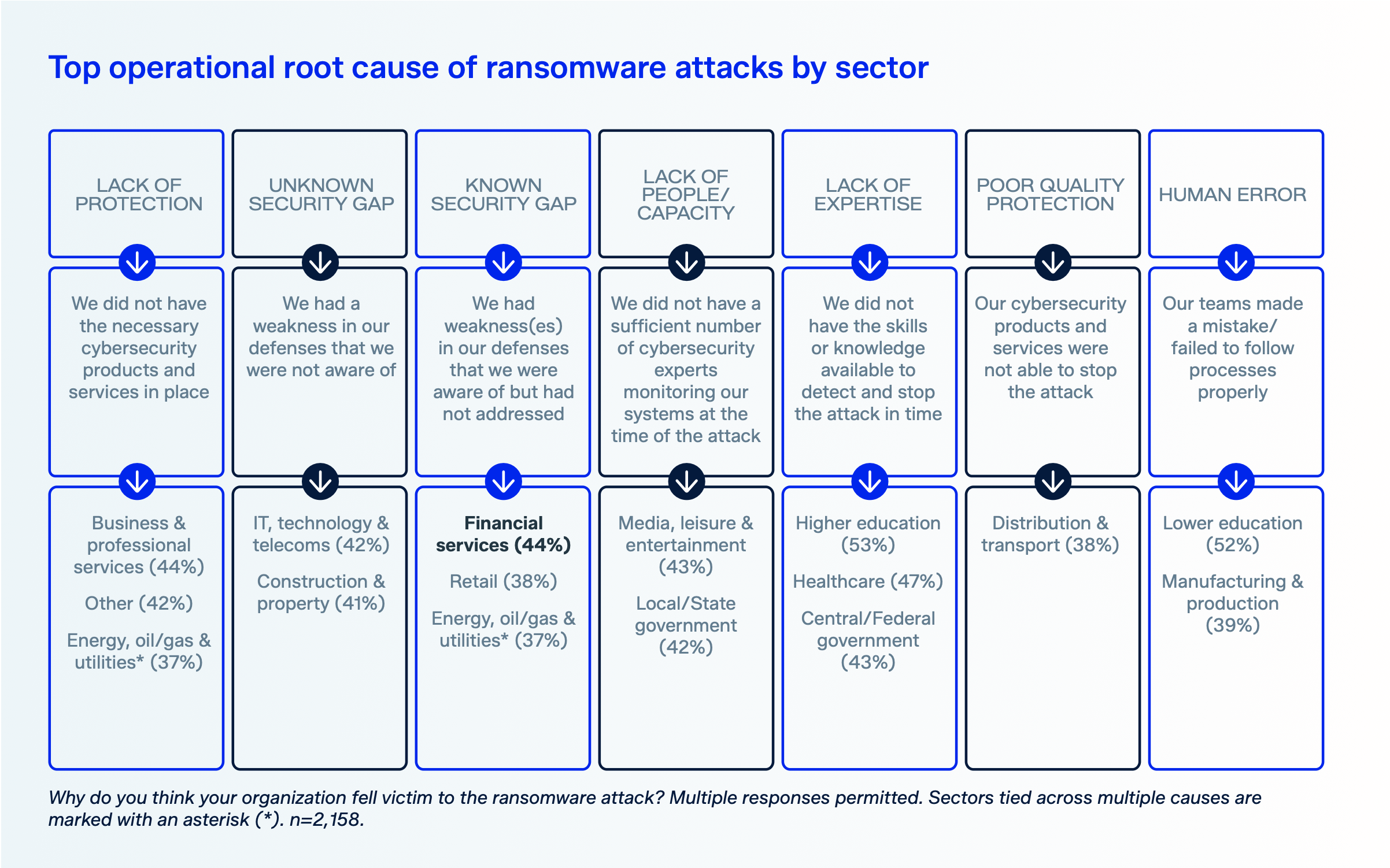
Perhaps the most troubling finding in the report is the prevalence of "known" security gaps. Nearly 44% of financial services organizations that suffered a breach attributed the incident to a security vulnerability that they were already aware of but had failed to remediate before the attack occurred. This figure is significantly higher than the 36% cross-sector average, suggesting that in the high-pressure environment of banking and insurance, the "patching backlog" has become a major existential risk.
When combined with unknown gaps (41%) and a general lack of protective controls (40%), it becomes clear that many successful ransomware incidents are not the result of highly sophisticated, unstoppable alien technology, but rather the failure to execute fundamental cyber-hygiene practices. The data suggests that financial institutions are often operating in a state of "known vulnerability," where the complexity of legacy infrastructure or the fear of service disruption prevents IT teams from closing doors that they know are unlocked.
The Financial Landscape: Higher Demands, Deeper Discounts
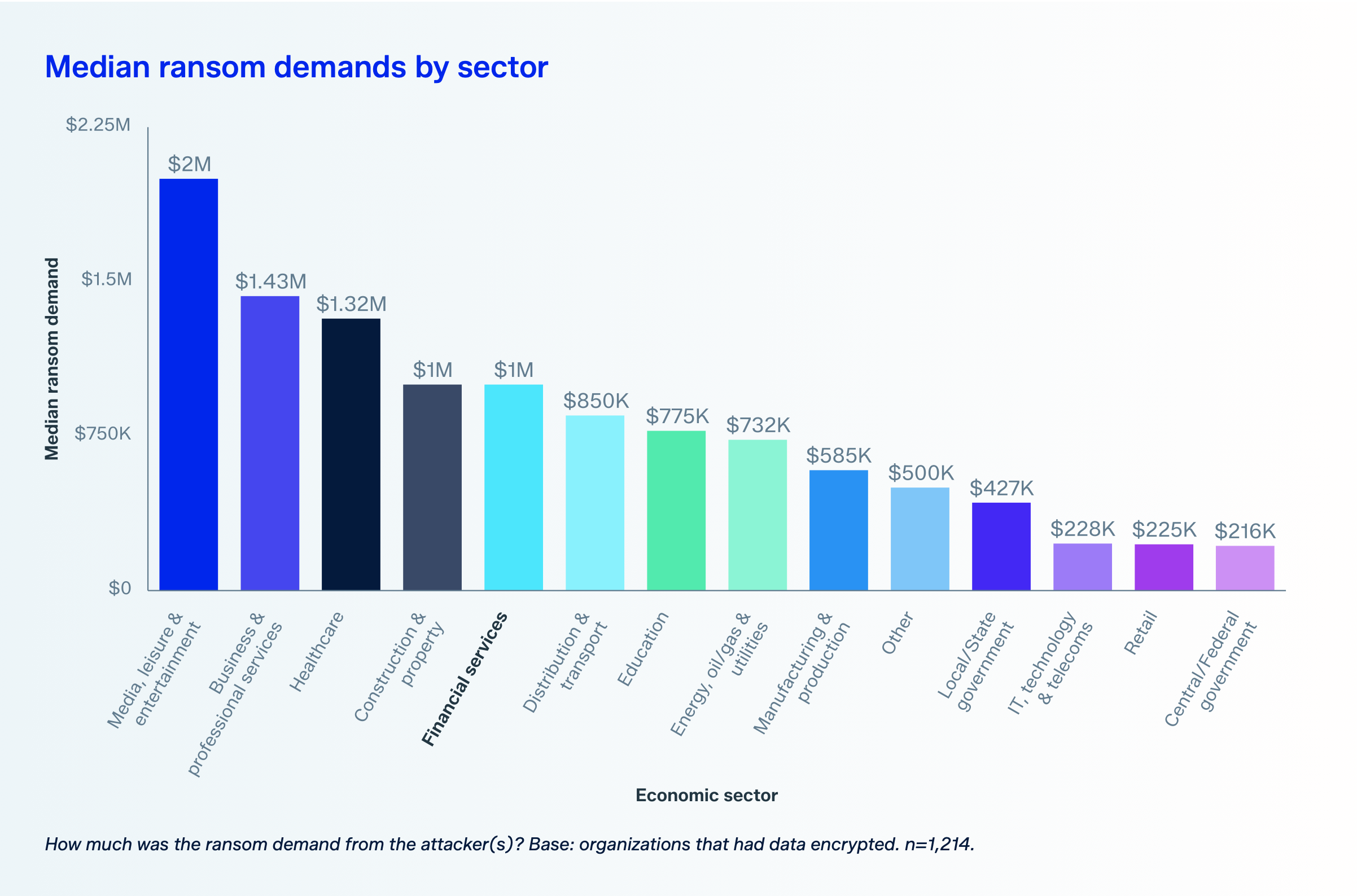
The economics of the ransomware industry within the financial sector are currently defined by high-value, high-stakes negotiations. The median ransom demand in the sector sits at $1 million, well above the $698,000 cross-sector median. Notably, 53% of all demands reported by financial institutions were for $1 million or more.
However, the "sticker price" of a ransom is rarely what is paid. The report highlights a two-year decline in actual payments, as firms become more adept at negotiation and less reliant on paying to regain access to data. Despite these lower payments, the "higher floor" on demands indicates that attackers still view the financial sector as a lucrative target, likely due to the extreme sensitivity of the data held and the regulatory pressure to restore services immediately.
The Double Extortion Trap
The tactics employed by threat groups have evolved to increase the pressure on victims. In 2026, 59% of attacks resulted in the successful encryption of data. Crucially, the subset of these attacks that involved "double extortion"—where data is both encrypted and stolen—has risen to 21%, up from 16% in 2024.
This trend is particularly dangerous for the financial sector. In a heavily regulated industry where data privacy laws like GDPR, CCPA, and various banking secrecy acts apply, the exfiltration of sensitive financial records creates a secondary crisis. Even if a firm successfully recovers its encrypted systems from backups, the threat of public disclosure of stolen client data remains a powerful lever for extortionists.
Operational Resilience and the Human Cost
The report’s most sobering metric concerns the human impact on IT and security teams. Financial services emerged as the most "stressed" sector in the study, with 52% of respondents reporting increased anxiety regarding future attacks. This figure is 11 points higher than the cross-sector average. The stress is likely a byproduct of the extended recovery timelines; financial firms are taking, on average, a full week longer to recover from incidents than they did in previous years.
While 75% of firms were able to restore their data from backups—a positive improvement from the 44% reported last year—the actual process of reconstruction and verification is proving to be a labor-intensive, time-consuming endeavor. The median recovery bill of $750,000, which excludes the cost of any ransom paid, highlights the massive resource drain required to scrub systems, verify integrity, and rebuild environments post-breach.
Analysis: Toward a "Defense System" Posture
The failure of existing defenses to prevent encryption, even when those defenses are technically operational, points to a lack of integration. The survey found that 96% of victims hit by credential-based attacks had MFA enabled, yet 70% were still successfully encrypted. Similarly, while firewalls flagged nearly half of the attacks (48%) before the ransomware was deployed, the majority of these incidents still resulted in successful encryption.
The implication is that security tools are currently operating in silos. An alert in the firewall is not automatically triggering an isolation protocol at the endpoint, and an identity-based anomaly is not being adequately correlated with network traffic. Cybersecurity experts contributing to the report argue that the industry must move toward a "defense system" posture. In this model, identity controls, email filtering, endpoint detection and response (EDR), and network security are unified into a single, responsive fabric.
Broader Implications for the Sector
The 2026 Sophos findings suggest that the financial services sector is in the midst of a transition period. The "low-hanging fruit" of vulnerabilities is being addressed, but the sophistication of identity-based attacks is outpacing current defensive architectures.
For Chief Information Security Officers (CISOs) in the sector, the findings provide a clear mandate:
- Prioritize the "Known": The 44% of breaches attributed to known gaps represent the most preventable risk. Strengthening patch management and vulnerability prioritization must take precedence over the acquisition of new, unproven tools.
- Unify the Stack: The data clearly shows that having tools is not the same as having a strategy. Moving toward an integrated "fusion" of security controls is essential to stop attacks before they reach the point of encryption.
- Invest in Resilience: Because recovery is taking longer and costing more, the focus must shift from purely "prevention" to "resilient restoration." This includes immutable, offline backups and the development of automated recovery playbooks to mitigate the extreme staff stress identified in the survey.
As the industry looks toward the next year, the decline in ransom payments offers a glimmer of hope that the financial incentive for attackers is being squeezed. However, until the sector can shorten its recovery timelines and address the persistent, known security gaps that continue to plague it, the threat of ransomware will remain a defining challenge for financial stability.