Federal Investigators Uncover Deep Collusion Between Ransomware Negotiators and the Notorious ShinyHunters Hacking Syndicate

In a watershed development for the global cybersecurity landscape, U.S. federal authorities have dismantled the inner workings of an unprecedented criminal partnership. Investigators have identified executives at prominent ransomware negotiation firms who allegedly maintained clandestine, high-level cooperation with the ShinyHunters hacking collective. This group, which has extracted over $70 million from victims in 2026 alone, appears to have benefited from the inside knowledge of individuals ostensibly hired to protect organizations from the very threat they were actively facilitating.
The investigation has reached a critical juncture following the recent breach of the FBI’s recruitment portal, fbijobs.gov. The attack, which exposed sensitive personnel files including Social Security numbers and psychological records, prompted a high-speed federal response that has now linked the syndicate to at least one U.S.-based consulting firm whose executives allegedly helped maintain "Shinywire," a dedicated extortion portal used to pressure victimized companies into payment.

A Chronology of Escalation: From France to Jordan
The origins of the ShinyHunters brand date back to 2019, when the operation was primarily based in France. Over the subsequent years, as original members faced law enforcement scrutiny and incarceration, the leadership mantle shifted. By 2025, intelligence indicated that control of the group had transitioned to a teenage hacker operating out of Amman, Jordan, known by the handle "Rey."
The infrastructure of the group underwent a significant transformation under Rey’s administration. By early 2026, the group had pivoted toward high-value targets, culminating in the September 15, 2026, arrest of Pepijn van der Stap in the Netherlands. Dutch authorities, utilizing flash-bang tactics to secure the suspect while he was active on encrypted communication channels, gained access to a trove of Signal messages. These logs revealed not only a suspected murder-for-hire plot orchestrated by Van der Stap but also a network of professional facilitators—the ransomware negotiators—who acted as intermediaries for the group.
The Role of Negotiators and the Conflict of Interest
The emergence of the "negotiation" industry was originally intended to provide a firewall for victimized businesses. However, federal charging documents and investigative findings reveal a disturbing trend: a "percentage-of-recovery" fee structure that incentivizes negotiators to prioritize the completion of a transaction over the security or ethical considerations of the victim.

On October 9, 2026, the FBI arrested Edward Dubrovsky, a 54-year-old Canadian cybersecurity executive. Court records indicate that Dubrovsky, who had previously authored professional literature on the necessity of engaging with cyber-extortionists, is now charged with interfering with interstate commerce through extortion. Federal investigators suggest that Dubrovsky’s communications with Van der Stap indicate he was aware of the FBI server breach long before it was publicized, yet he remained silent, effectively choosing to protect the interests of the hackers over the agency he was ostensibly helping to defend.
The conflict of interest is systemic. Mark Camillo, CEO of CyberAcuView, notes that when firms charge a percentage of the ransom as their fee, the incentives are fundamentally misaligned. A larger ransom payment results in a larger commission for the negotiator, effectively turning the victim’s consultant into a partner of the threat actor. This dynamic has drawn the attention of the Department of Justice, which has ramped up prosecutions of individuals like Zohar Pinhasi of MonsterCloud and Angelo Martino, both of whom were charged with defrauding clients by secretly coordinating with the hackers they were hired to thwart.
The Shinywire Extortion Ecosystem
The "Shinywire" website served as the centralized hub for the group’s operations from May 2026 until mid-October. The site functioned as a digital "hall of shame," listing nearly 100 organizations that had been compromised. Each entry served as a countdown clock, warning victims that if they did not engage in negotiations within seven days, their stolen data—ranging from medical records to proprietary technical schematics—would be dumped on public Tor-based forums.

Investigators believe that executives from prestigious U.S. consulting firms—some with workforces exceeding 1,000 employees—played an active role in maintaining this infrastructure. The implication is that these firms were not merely "advising" clients on how to pay; they were assisting the hackers in managing the payment pipeline to ensure the extortion process remained efficient and profitable.
Industry Context and the "Ghostbyte" Connection
The investigation has also shed light on older, perhaps foundational, connections between the cybersecurity consulting world and Russian-language ransomware affiliates. Evidence has emerged linking Daniel Tobok, a former CEO of the firm Cypfer, to the alias "Ghostbyte." Correspondence from 2018 involving the Dharma ransomware group shows the attackers explicitly directing a victim to reach out to a "ghostbyte" email address to facilitate a "guaranteed" transaction.
While Tobok has not been charged in connection with the current ShinyHunters probe, the documentation highlights a long-standing, murky relationship between certain security consultants and the criminal underground. Cypfer, in a statement to the press, has distanced itself from these activities, asserting that they do not facilitate ransomware payments and that they were unaware of the illicit activities of their former partners, including Dubrovsky.

Broader Implications for Cybersecurity Policy
The current crisis surrounding ShinyHunters and its colluding negotiators underscores a systemic vulnerability: the lack of transparency in the incident response sector. As federal agencies like the FBI and the Department of Justice intensify their focus on the "middlemen," the industry is facing a reckoning.
- Regulatory Scrutiny: The DOJ’s recent aggressive stance suggests that the "safe harbor" status once enjoyed by negotiation firms is evaporating. Firms that prioritize commission-based payments over forensic integrity face potential charges of wire fraud and conspiracy.
- Verification Failures: The PowerSchool incident, where a $2.85 million payment did not prevent subsequent extortion attempts, serves as a cautionary tale. It has been proven that there is no technical or legal guarantee that a hacker will delete stolen data upon receipt of payment.
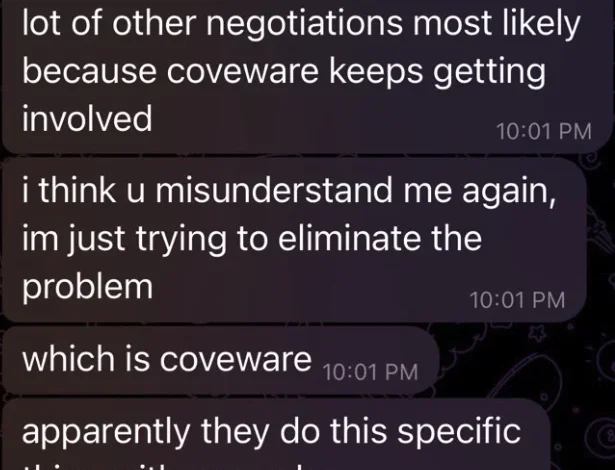
- The Rise of "Clean" Response: Industry leaders such as Coveware and Unit 221B have established a firm stance against paying ransoms, arguing that such payments only fuel the ecosystem and provide hackers with the resources to "eliminate the problem"—a direct reference to the harassment campaigns ShinyHunters launched against these firms for their anti-payment advocacy.
Looking Ahead
The arrest of key figures like Van der Stap, Dubrovsky, and the disruption of the Shinywire portal represent significant victories for law enforcement, but the threat remains persistent. The "Rey" persona—and the organizational structure he commanded—demonstrates that modern cybercrime has moved beyond amateurish vandalism into a sophisticated, corporate-like entity that leverages the legitimate consulting industry to sustain itself.
As the U.S. government continues to seal records and conduct further arrests, the cybersecurity industry must confront the reality that its own ranks have been infiltrated by those who profit from chaos. The path forward will likely involve mandatory reporting requirements for ransomware payments, increased oversight of incident response billing practices, and a fundamental shift in how the private sector manages the risks associated with data extortion. For now, the ShinyHunters case stands as a grim reminder that in the shadow of digital transformation, the most dangerous threat may not be the hacker at the keyboard, but the advisor in the boardroom.
Related posts: