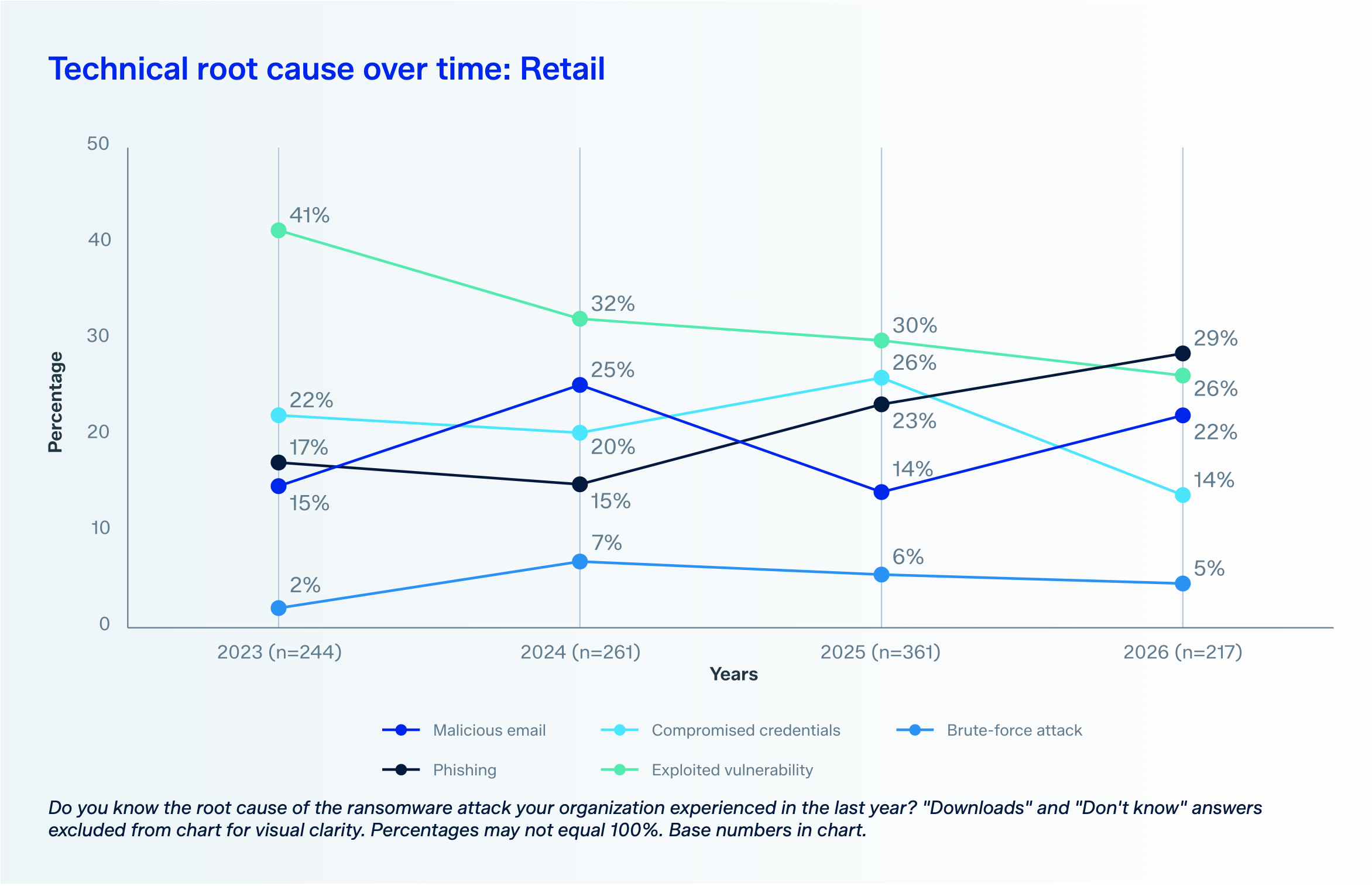
The retail industry currently finds itself in the crosshairs of a sophisticated and evolving threat landscape, according to the State of Identity Security 2026 report. While the global cybersecurity ecosystem has seen a slight decline in the use of exploited vulnerabilities as a primary attack vector, retail remains a notable outlier. In 2026, 26% of all cyberattacks targeting retail organizations originated from exploited vulnerabilities, a figure significantly higher than the 18% average observed across all other sectors. This data underscores a critical disparity in how digital infrastructure is defended within the retail space compared to more hardened industries like finance or healthcare.
The architectural weaknesses in retail systems are frequently leveraged through a combination of technical and operational failures. Phishing remains the dominant technical root cause, accounting for 29% of incidents, closely trailed by the aforementioned exploited vulnerabilities at 26% and malicious email campaigns at 22%. When these figures are aggregated, it becomes clear that identity-based vectors—which include brute force attacks, credential compromise, and social engineering—initiated a staggering 69% of all attacks against the retail sector. While this represents the lowest rate of identity-based initiation among all sectors studied, the absolute frequency remains a persistent drain on organizational resources and customer trust.
A Chronology of Vulnerability and Neglect
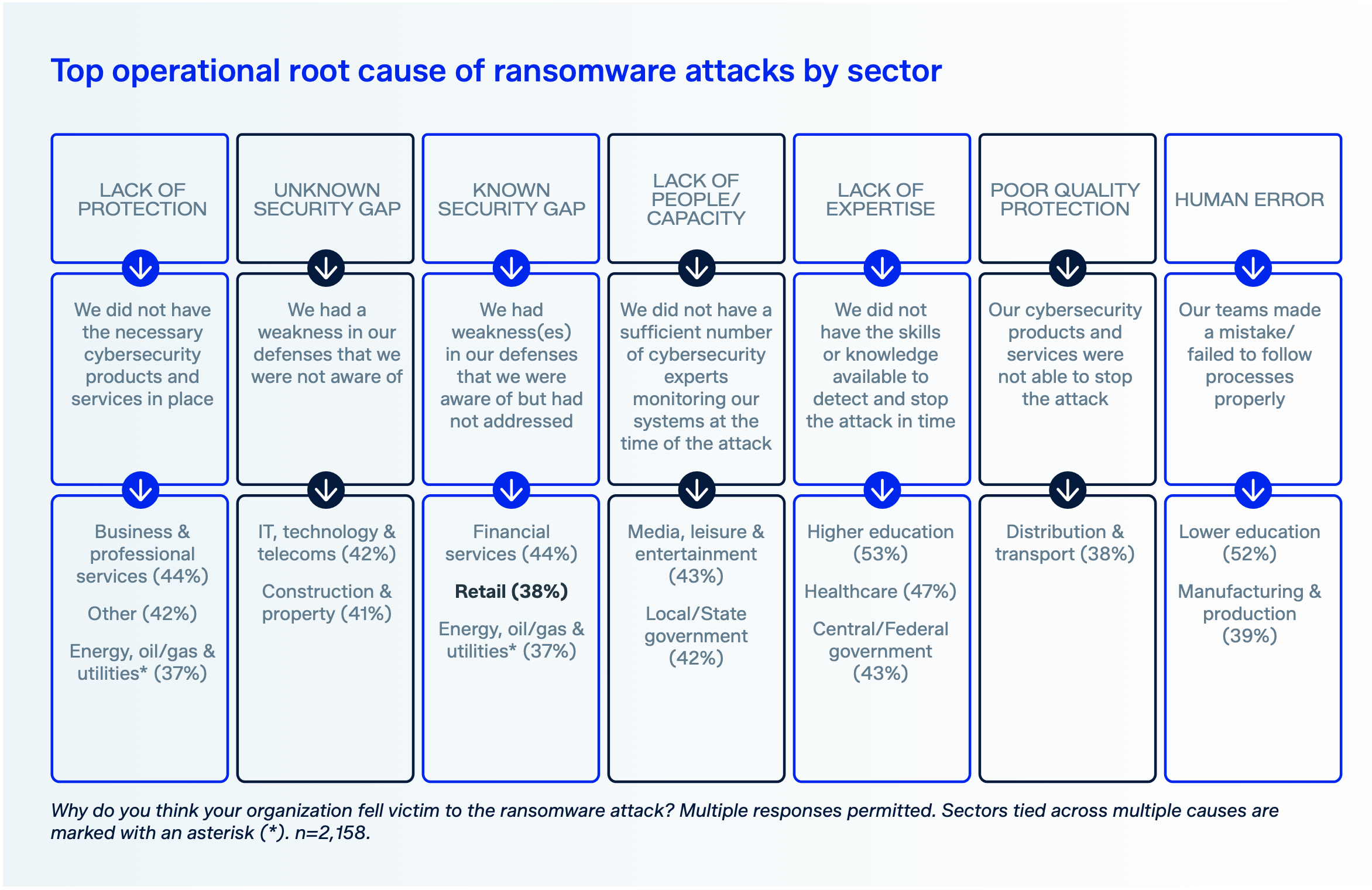
The current state of retail security is not merely the result of external aggression but is exacerbated by internal operational oversights. A pivotal finding in the 2026 data is that 38% of retail victims directly attributed their security breaches to known security gaps—vulnerabilities that had been identified by IT and security teams but remained unpatched or unmitigated at the time of the attack.

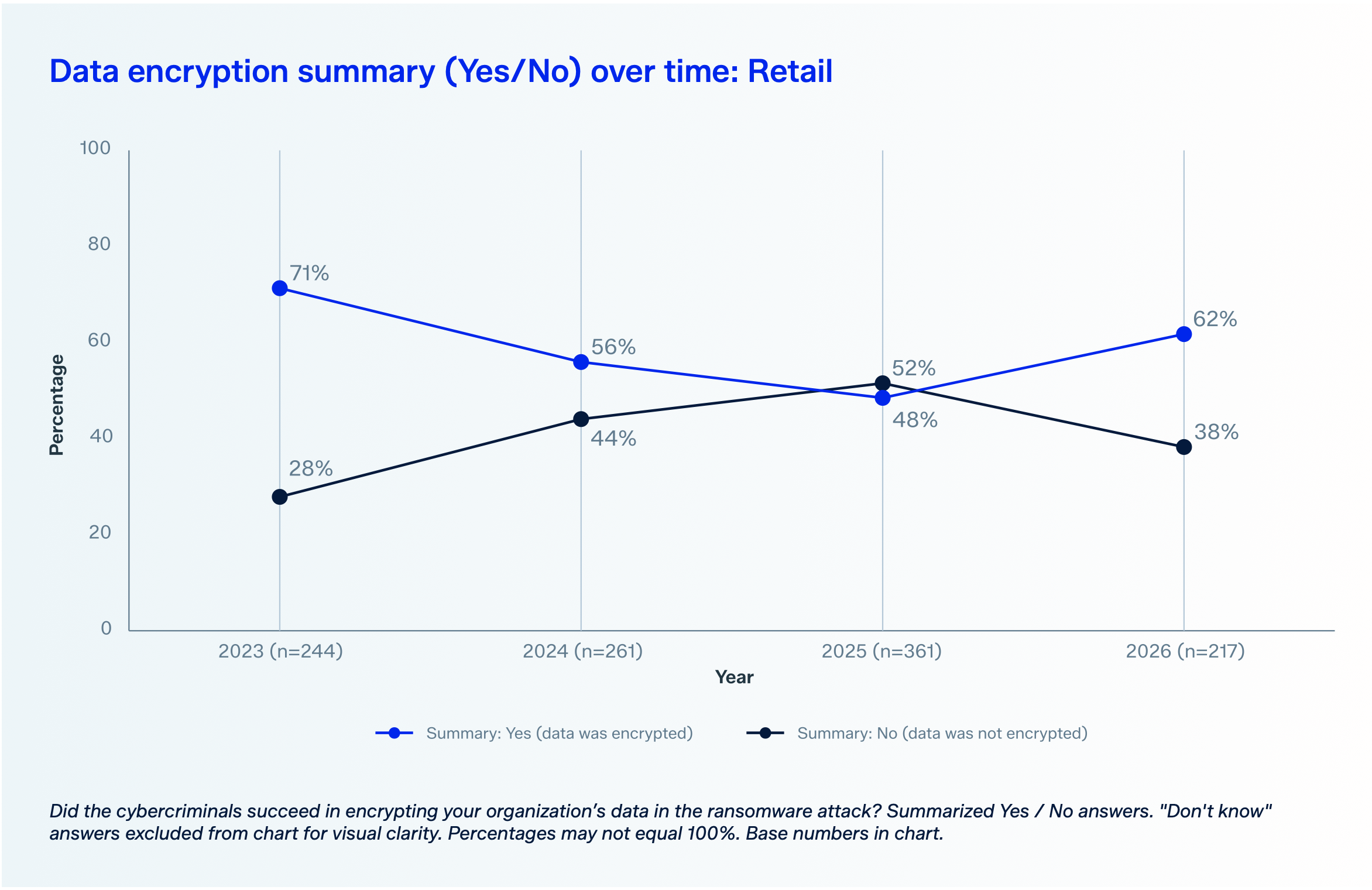
This operational trend highlights a widening gap between awareness and execution. Throughout the past two years, security professionals have observed a cycle of remediation that has failed to keep pace with the speed of adversarial innovation. In 2025, the industry saw a brief decline in the prevalence of data encryption during attacks, suggesting that defensive posture might have been improving. However, 2026 shattered this trend: 62% of retail attacks successfully resulted in data encryption, a significant jump from 48% the previous year and notably higher than the 56% cross-sector average.
The implications of this shift are profound. Beyond simple encryption, "double extortion"—the practice of both encrypting data and exfiltrating it for leverage—rose to 19% in 2026, up from 14% the year prior. For retailers, who hold the crown jewels of consumer data—including credit card numbers, loyalty program information, and personally identifiable information (PII)—this secondary layer of extortion creates a high-stakes environment where the pressure to pay is compounded by regulatory mandates such as GDPR or CCPA.
Financial Volatility and the Ransomware Paradox
The economic profile of retail ransomware attacks is characterized by extreme volatility. On one hand, the median ransom demand for the sector sits at a relatively modest $225,000, which is the second-lowest among all sectors and significantly lower than the $698,000 cross-sector median. However, this median figure masks a dangerous reality: the mean (average) demand in the retail sector reached $4.32 million in 2026, the highest of any industry analyzed.
This disparity suggests that attackers are employing a tiered strategy. They may target smaller, regional retailers with lower, "pay-it-and-go" demands while reserving multi-million-dollar requests for major, national, or international chains with higher liquidity and greater public-facing reputations to protect. Interestingly, the median ransom payment—the amount actually paid by victims—was $57,500. This massive delta between the average demand and the median payment indicates that retail organizations are becoming increasingly adept at negotiation, often leveraging forensic evidence and external counsel to drive down attacker demands significantly.
Despite the frequency of attacks, the sector has shown a resilient recovery trajectory. In 2026, 71% of retailers successfully restored their data from backups, an improvement from 62% in the previous year and well ahead of the 66% cross-sector average. This reliance on backup restoration rather than ransom payment signals a strategic pivot toward cyber-resilience over appeasement.
Operational Costs and the Burden of Recovery
While the strategy of relying on backups has reduced the need for ransom payments, the total cost of recovering from an attack continues to climb. The average cost to remediate an incident, excluding any potential ransom payments, rose to $1.76 million in 2026, up from $1.65 million in 2025. This cost growth reflects the increasing complexity of modern incident response, which requires extensive digital forensics, legal consultations, regulatory reporting, and public relations management.
However, the industry has made quantifiable gains in operational efficiency. The average time to full recovery dropped to 2.54 weeks in 2026, down from 3.16 weeks in 2025. Notably, 56% of retail victims reported a full recovery within one week. This is the fastest recovery rate recorded in five years of industry data and places the retail sector ahead of the 2.80-week cross-sector average.
The Failure of Siloed Defense Mechanisms
Perhaps the most alarming takeaway from the 2026 security assessment is the breakdown of defensive efficacy despite high levels of tool implementation. The data indicates that 97% of retail victims who suffered a credential-based attack had Multi-Factor Authentication (MFA) enabled. Despite this, over half of these organizations still had their data encrypted. Similarly, firewalls successfully flagged 59% of attacks before the ransomware payload could be deployed. Yet, even with these early warning signals, 60% of these organizations still suffered a successful encryption event, compared to 50% across other industries.
This phenomenon points to a critical failure in "defense-in-depth" strategies. While retailers are collecting the right telemetry and signals, their security stacks are not effectively communicating. A firewall might detect an anomaly, but if that signal is not automatically ingested by an endpoint protection system or an identity management platform, the window for intervention closes rapidly.
Cybersecurity experts suggest that the future of retail defense lies in a unified "fusion" posture. In this model, identity, email, endpoint, and network security controls do not operate in silos; instead, they function as a cohesive, automated system. When an anomaly is detected, the entire ecosystem reacts in concert—automatically isolating endpoints, revoking user sessions, and throttling network traffic before a threat actor can escalate their privileges.
Broader Implications and Strategic Recommendations
The 2026 data serves as a stark warning to retail boards and C-suite executives: the perimeter is no longer the primary battlefield. The focus has shifted toward the identity layer and the remediation of known vulnerabilities. The fact that 38% of breaches are attributed to known gaps that were left unaddressed is a clear indicator that the industry must shift its focus from buying new, flashy security tools to mastering the "hygiene" of cybersecurity.
Retailers are effectively winning the battle on ransom payments and recovery speed, but they are losing the battle on attack prevention. As long as retailers remain vulnerable to known, unpatched exploits and fail to bridge the gap between their disparate security tools, they will remain primary targets for sophisticated cyber-criminal syndicates.
To address these challenges, the industry must prioritize three strategic pillars:
- Aggressive Patch Management: Establishing a rigorous cadence for closing known security gaps, particularly for outward-facing infrastructure that serves as the entry point for most attackers.
- Unified Security Architecture: Moving away from disparate, non-integrated tools in favor of a platform-based approach where security signals are shared and acted upon in real-time.
- Identity Hardening: Recognizing that identity is the new perimeter, and implementing more robust, context-aware authentication processes that go beyond simple password-plus-MFA implementations.
In conclusion, while the retail sector has demonstrated impressive resilience in the face of persistent attacks, the cost of these incidents continues to mount. The path forward requires a shift in mindset: moving from a reactive state of recovery to a proactive state of integrated, automated defense. Without this shift, the retail sector will continue to be the most lucrative playground for cybercriminals who know exactly where the doors are left unlocked.