AWS Weekly Roundup: Generative AI In Agribusiness, Continuum Security, And Major Infrastructure Updates

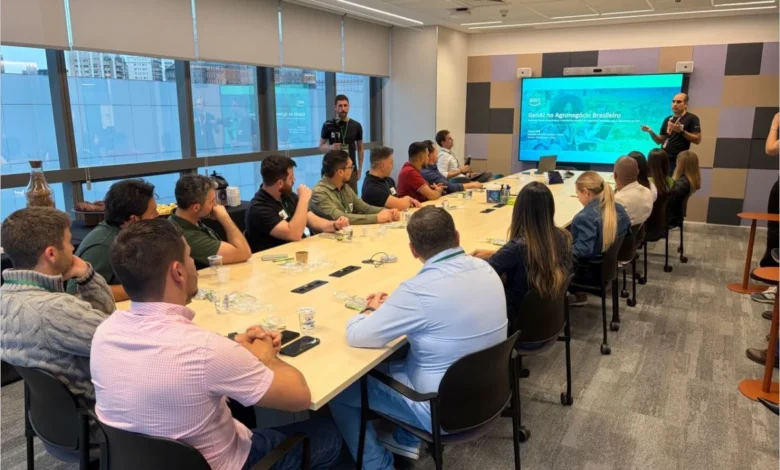
The intersection of traditional global industries and rapid technological innovation took center stage recently as Amazon Web Services (AWS) detailed a sweeping slate of infrastructure, security, and machine learning updates. Speaking before a delegation of commercial and technology leaders from the Brazilian agribusiness sector at the AWS regional headquarters in São Paulo, industry representatives emphasized that legacy markets are increasingly defined by how swiftly they integrate cutting-edge capabilities. Rather than debating the theoretical utility of artificial intelligence in agricultural operations, discussions focused heavily on deployment logistics: ensuring that critical operational data reaches end-users instantly—frequently via voice interfaces while navigating rural transit routes between isolated farming facilities.
This practical reality underscored the strategic importance of a major infrastructure upgrade to the Amazon Polly generative voice engine, which introduced fourteen new localized voices, including two distinct variants in Brazilian Portuguese. For field operators whose primary interface is auditory, advancements in natural speech synthesis represent a critical bridge between complex cloud workloads and hands-free enterprise execution. However, while human-computer interaction models continue to evolve in sectors like agriculture, the broader enterprise technology landscape faces immediate pressures regarding cybersecurity, container networking, and high-performance machine learning workflows.
Revolutionizing Vulnerability Management with AWS Continuum
Security operations faced a sharp escalation this week with the general availability of AWS Continuum, a transformative service designed to fundamentally alter how organizations handle software vulnerabilities. Traditional vulnerability management has long relied on disparate static scanners that output overwhelming lists of CVE identifiers and generic severity matrices, often leaving security teams buried in triage. AWS Continuum rearchitects this workflow as an automated, end-to-end lifecycle system.
The platform operates by constructing a dynamic context graph that maps software repositories directly against the organization’s live AWS resource footprint. When a vulnerability is identified, Continuum evaluates the proximity of the potential attack path to business-critical systems, assigning evidence-based risk levels rather than relying solely on static industry labels. Furthermore, the system safely reproduces exploitable findings within an isolated sandbox environment, generating verifiable proof-of-concept code so engineering teams can review concrete operational risks rather than abstract scores.
Once a vulnerability is verified and prioritized based on environmental context, Continuum automatically initiates a remediation workflow by drafting a pull request containing the required fix. To maintain strict governance, every remediation currently mandates explicit human authorization; administrative engineering teams must review and merge the pull request. AWS has indicated that future iterations will introduce autonomous remediation tiers gated by strict confidence thresholds. Currently, AWS Continuum is deployed in the US East (N. Virginia) and US West (Oregon) commercial regions.
The Shrinking Patch Window and Threat Intelligence Insights
The urgency behind automated vulnerability management was heavily emphasized by telemetry data released concurrently by Amazon Threat Intelligence. Citing real-world exploitation patterns observed through internal honeypot networks, researchers revealed that the traditional gap between vulnerability disclosure and active exploitation has effectively vanished.
Specifically, Amazon Threat Intelligence identified active exploitation attempts targeting the "PHP2Shell" vulnerability via MadPot telemetry on October 17. Crucially, this activity occurred four days prior to the public disclosure of CVE-2026-109618 and CVE-2026-109619. Furthermore, by the time official vulnerability details were published, active proof-of-concept exploit code was already circulating globally hours before the coordinated embargo lift.
This chronology delivers a stark operational warning to enterprise security architects: reliance on a patch window measured in days is obsolete. Modern incident response and vulnerability mitigation strategies must anchor their timelines to the earliest known exploitation indicators rather than official vendor disclosure dates. Alongside these findings, AWS published targeted mitigation guidelines utilizing AWS WAF (Web Application Firewall) to protect infrastructure against the PHP2Shell Remote Code Execution (RCE) vectors.
Streamlining Microservices Architecture with Amazon ECS Gateway
In the realm of cloud infrastructure and container orchestration, AWS introduced Amazon ECS Gateway, a service engineered to simplify the operational friction traditionally associated with exposing microservices. Managing ingress traffic, network topologies, and security boundaries often creates administrative bottlenecks between foundational platform engineering teams and application developers.
Amazon ECS Gateway resolves this division of labor by establishing a clear operational boundary. Platform teams configure a unified gateway encompassing organizational subnets, security groups, Transport Layer Security (TLS) certificates, listener configurations, and AWS WAF web access control lists. Application teams then integrate their services simply by attaching a designated gateway connector to their container service definitions.
Under the hood, Amazon ECS (Elastic Container Service) automatically provisions and manages the requisite ACM (AWS Certificate Manager) certificates, unique DNS hostnames, listener rules, target groups, and isolated security groups permitting inbound traffic exclusively from the designated Application Load Balancer (ALB). Economically and architecturally, the service scales efficiently: up to twenty-five individual services can share a single ALB, while ECS dynamically provisions load balancers upon initial connection and decommissions them when traffic ceases. Each cluster supports up to five gateways, with a single gateway capable of associating with up to 10,000 distinct clusters. Enterprises can adopt the gateway incrementally using standard service update APIs without disrupting existing load-balancing configurations. The service is available at no additional charge across all commercial regions supporting Amazon ECS.
Expanding Capabilities in Machine Learning, AI, and High-Performance Compute
The broader artificial intelligence ecosystem received substantial enhancements spanning audio synthesis, hardware acceleration, and model customization frameworks.
The Amazon Polly generative engine upgrade significantly expands its global footprint, increasing its catalog to 57 generative voices across 11 languages and 25 distinct locales. The update introduces 14 new voices spanning nine locales, marking the general availability of Hindi and Finnish language models for the first time. Brazilian Portuguese users benefit specifically from the addition of native voices Leo and Carolina. Implemented as a seamless, drop-in backend upgrade, the enhancement preserves existing API structures, voice identifiers, and pricing models while delivering markedly improved natural inflection and conversational pacing.

Simultaneously, AWS announced the public beta of TorchNeuron, an open-source PyTorch backend designed to provide native framework support for AWS Trainium hardware accelerators. By enabling developers to execute models on Trainium infrastructure simply by invoking .to('neuron'), the framework eliminates the need for extensive code rewrites while maintaining complete compatibility with eager execution modes and standard compilation toolchains. Integrated directly with the Neuron Kernel Interface for custom operator development, TorchNeuron supports both Trainium2 and Trainium3 hardware instances, reinforcing software portability across diverse custom silicon architectures.
Addressing the operational overhead of model post-training, AWS launched dedicated training session APIs within Amazon SageMaker AI. Organizations can now execute custom training loops, implement specialized loss functions, and define unique reward signals without directly managing underlying GPU fleets. SageMaker AI automates GPU allocation, distributed cluster execution, fault recovery, and checkpoint persistence, utilizing a consumption-based pricing model that pauses metering during evaluation phases. This release coincides with expanded model support for Muse Glimmer, Qwen 3.8, and Ministral 3.
Enhancing Enterprise Application Integration and Database Migration
Enterprise developers leveraging Amazon Bedrock gained access to structured output capabilities for Anthropic Claude models. Accessible across both bedrock-runtime and bedrock-mantle API endpoints, the feature guarantees schema-compliant JSON responses directly from large language models without requiring custom parsing scripts, client-side retry logic, or external validation layers. This reliability streamlines complex automation workflows such as extracting financial data from unstructured corporate reports, parsing clinical medical records, and routing multi-intent customer service requests.
In database and caching infrastructure, Amazon ElastiCache Serverless for Valkey introduced zero-downtime online migration capabilities. Organizations can now transition self-managed Valkey or Redis OSS databases running on Amazon EC2 directly into ElastiCache Serverless environments without incurring client-side connection errors or data loss. The migration pipeline handles synchronization natively, eliminating third-party replication dependencies and supporting automated or manual cutover workflows across commercial, China, and AWS GovCloud regions.
Additional ecosystem developments highlighted innovative approaches to agentic AI tooling and massive enterprise database migrations. The newly released AWS Agent Registry provides a managed catalog for Model Context Protocol (MCP) servers, autonomous agents, and specialized tool skills. This registry allows runtime orchestrators to discover approved functional capabilities dynamically rather than compiling static toolsets at build time, while enforcing strict credential security boundaries.
Furthermore, financial institutions continue to execute complex legacy migrations at scale, exemplified by a recent enterprise migration in which U.S. Bank successfully transitioned four mission-critical Oracle Exadata databases—totaling approximately 119 terabytes of relational data—to Amazon RDS for Oracle. Utilizing a configuration-driven pipeline combining Oracle XTTS, AWS DataSync, and Amazon EFS over a bandwidth-constrained Direct Connect link, the institution achieved initial baseline replication within seven days with zero data loss, averaging cutover windows of approximately four hours per database.
Looking Ahead to Upcoming Industry Events
As the technology calendar approaches the final quarter of the year, enterprise focus shifts toward upcoming industry gatherings. Registration and session catalog scheduling are currently live for AWS re:Invent, scheduled to take place from November 30 through December 4 in Las Vegas, featuring an extensive curriculum exceeding 2,200 specialized technical sessions. Regionally, the 2026 Brazilian community engagement cycle will conclude with AWS Community Day Brasil Norte, hosted in Belém. These events continue to serve as vital forums for collaborative engineering discourse, architecture reviews, and the ongoing global adoption of cloud-native systems.