S&P Global Ratings Weighs Potential Downgrade for Nvidia Amid Governance Concerns and Executive Succession Uncertainty

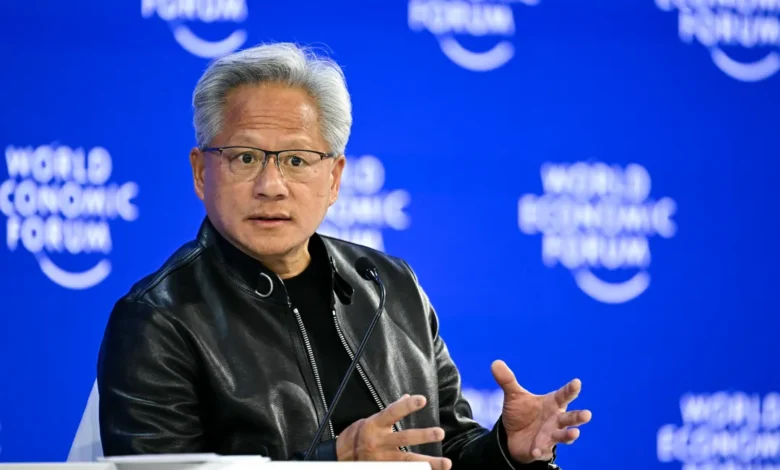
S&P Global Ratings has officially placed Nvidia on a watch list for a potential credit rating downgrade, citing significant concerns regarding the chipmaker’s corporate governance and management stability. While Nvidia remains a titan of the artificial intelligence sector with robust financial performance, the rating agency has signaled that the recent tumultuous period surrounding the ouster and subsequent reinstatement of CEO Jensen Huang has highlighted structural vulnerabilities within the organization. The potential move from a AA rating to AA- represents a shift in perception, moving from a position of absolute stability to one where oversight and succession planning are being brought into question by global financial regulators.
The announcement, delivered on November 25, 2026, marks a critical juncture for the company as it navigates both its market dominance and the complexities of its aggressive expansion into massive AI infrastructure projects. The rating agency has established a 90-day window to complete its comprehensive review, during which it will evaluate whether the company’s internal controls and leadership structure are sufficient to justify its current investment-grade standing.
The Catalyst: Executive Volatility and Governance Fragility
The primary driver for S&P’s scrutiny is the extraordinary volatility observed in Nvidia’s executive suite earlier this year. The abrupt departure of Jensen Huang, followed by his rapid return, exposed what market analysts describe as a "key man risk." This term refers to the extreme dependence of an organization on a single individual for its strategic direction, operational success, and market valuation.
Governance experts argue that the incident revealed a lack of institutional depth. When the board of a company with a market capitalization in the trillions of dollars appears caught off-guard by leadership shifts, it signals to credit agencies that the board may lack the requisite oversight mechanisms to manage a crisis effectively. S&P Global Ratings noted that "weak executive oversight and lack of succession planning" were the primary triggers for this review. For institutional investors and debt holders, this creates an atmosphere of unpredictability, which is the antithesis of the stability required for high credit ratings.
Chronology of the 2026 Leadership Crisis
To understand the current tension, one must look at the timeline of events that led to the present governance crisis:
- Q1 2026: Nvidia continues its dominant performance, fueled by the insatiable demand for H100 and next-generation AI accelerators. The company begins formalizing plans for massive capital allocation toward AI infrastructure.
- August 2026: Nvidia announces an ambitious $500 billion financing initiative designed to support "neocloud" providers and large-scale AI data center construction. The deal involves major financial institutions, including Goldman Sachs, Apollo, and Blackstone.
- Late Q3 2026: Internal friction regarding the scale of these infrastructure commitments leads to unexpected leadership tension.
- November 2026: The sudden ouster of Jensen Huang sends shockwaves through global markets, leading to an immediate liquidity crunch and volatility in Nvidia’s stock.
- Mid-November 2026: Following intense pressure from stakeholders and a lack of clear leadership direction, the board reinstates Huang.
- November 25, 2026: S&P Global Ratings issues its formal notice of a potential credit rating downgrade, citing the preceding weeks of management instability.
Financial Implications: The $500 Billion Backstop
The potential downgrade carries significant financial weight, particularly regarding Nvidia’s $500 billion AI infrastructure financing plan. Under the existing framework, Nvidia acts as a financial backstop for these massive projects. These neocloud companies, which are often startups or specialized infrastructure firms, lack the credit history to secure such vast loans on their own. Consequently, they rely on Nvidia’s AA rating to guarantee their debt.
If Nvidia’s rating is downgraded to AA-, the ripple effects will be immediate. The cost of borrowing for these infrastructure projects is tied directly to the credit rating of the guarantor. A lower rating effectively increases the risk profile of the loans, forcing lenders to demand higher interest rates. Furthermore, financial institutions—already wary after the recent leadership drama—are expected to demand increased collateral.

Reports from Bloomberg earlier this month suggested that even prior to the leadership shakeup, lenders were pressuring Nvidia to increase its guarantee beyond the original 25% commitment. With the current governance review underway, it is highly probable that the syndicate of banks—led by firms like Goldman Sachs and Blackstone—will move to tighten credit terms, potentially constraining Nvidia’s ability to deploy capital at the rate it originally envisioned.
Market Analysis: The Cost of Credit
While Nvidia is expected to remain firmly in investment-grade territory, even a minor downgrade has tangible costs. The "AA" category signifies a very strong capacity to meet financial commitments, but the "AA-" level indicates a slightly higher sensitivity to adverse economic conditions.
For a company that relies heavily on its reputation for operational excellence to maintain its premium valuation, the cost of this downgrade is as much about market sentiment as it is about interest rates. Debt markets function on trust; when a rating agency suggests that a company’s governance is "weak," it invites investors to demand a "governance premium" on the company’s bonds. This could lead to a widening of yield spreads on Nvidia’s debt, effectively making it more expensive for the company to issue new corporate bonds to fund its R&D or expansion efforts.
The Broader Impact on the AI Ecosystem
Nvidia’s role in the global AI ecosystem is unique. It is not merely a component manufacturer; it is the architect of the modern AI infrastructure stack. By backstopping the debt of the companies building the world’s AI clouds, Nvidia has become a central bank of sorts for the artificial intelligence industry.
A downgrade of the guarantor of the AI revolution could have a dampening effect on the entire sector. If the costs of building new AI data centers rise due to more expensive financing, the pace of AI infrastructure rollout could slow. Smaller firms, in particular, may find the barrier to entry significantly higher if their primary benefactor, Nvidia, is no longer able to provide low-cost credit guarantees.
Official Responses and Future Outlook
As of this writing, Nvidia has provided limited commentary on the S&P review, likely waiting for the board to formalize a new, more robust governance structure. The company is under significant pressure to provide transparency regarding its succession plans. Investors are looking for evidence of a "bench" of leadership talent that can carry the company forward, effectively decoupling the company’s success from the presence of any single individual.
Financial analysts suggest that the next 90 days will be a test of the board’s resolve. To maintain its current rating, Nvidia must likely demonstrate:
- Strengthened Board Oversight: A more transparent process for executive decision-making and independent board review.
- Formalized Succession Planning: A clear, publicly communicated plan for leadership transition that mitigates "key man risk."
- Revised Infrastructure Strategy: A more conservative approach to its financial guarantees that aligns with the company’s long-term credit stability rather than short-term market expansion.
The S&P review is a stark reminder that in the world of high finance, even the most innovative and profitable companies are subject to the rigors of corporate governance. As the AI sector matures, the era of "growth at all costs" is being replaced by a more disciplined approach that demands structural integrity, ethical oversight, and financial stability. Whether Nvidia can adapt to these expectations will be the defining story of its next fiscal year. For now, the global markets remain in a holding pattern, awaiting the resolution of the rating agency’s assessment and the company’s next move in restoring investor confidence.