The Evolution of Media Archiving: From P2P Networks to Modern Command-Line Tools Like yt-dlp


The landscape of digital media consumption and local archiving has undergone a profound transformation over the past three decades. In the nascent days of consumer broadband, peer-to-peer (P2P) file-sharing networks such as Napster, Kazaa, and LimeWire, alongside early torrent clients, defined an era where downloading MP3s, movies, and digital documents was a ubiquitous practice for internet users. Today, however, the digital ecosystem is heavily centralized. Modern websites employ sophisticated delivery mechanisms, including encrypted media streams, dynamic fragment URLs, and blob URLs, designed to restrict direct content retention and preserve strict streaming business models. Despite these protective barriers, the open-source community has continued to develop advanced command-line utilities capable of navigating modern web architecture. Among these, the utility known as yt-dlp has emerged as the definitive standard for extracting and archiving video and audio content from platforms like YouTube, replacing older tools like youtube-dl and filling a critical niche for researchers, developers, and digital archivists.
The Historical Context of Digital Media Archiving
To understand the current reliance on specialized command-line tools for media preservation, one must examine the technological evolution of the internet. During the late 1990s and early 2000s, digital content was predominantly distributed as static files. Audio files were saved as standard MP3s, and video files typically existed as monolithic AVI or MPEG files stored on accessible web servers or shared across distributed P2P networks. The barrier to downloading was largely limited by network bandwidth rather than technical obfuscation by content hosts.
As broadband penetration increased and media streaming technologies matured around 2010, major content platforms transitioned away from static file delivery. Companies adopted adaptive bitrate streaming protocols, such as HTTP Live Streaming (HLS) and Dynamic Adaptive Streaming over HTTP (DASH). These protocols break media files down into hundreds of tiny, encrypted or time-sensitive segments, serving them to the client browser dynamically. Furthermore, modern web applications utilize JavaScript frameworks and blob URLs—binary large objects stored in the browser’s volatile memory—to render video and audio without exposing a direct, downloadable file path. These security and distribution measures effectively ended the era of casual right-click-and-save archiving for mainstream users, necessitating the creation of sophisticated scraping and parsing utilities.
The Rise, Fall, and Transition of Download Utilities

As platforms implemented increasingly complex streaming protocols, the software required to interact with them had to evolve concurrently. For many years, youtube-dl served as the ubiquitous open-source utility for downloading videos from YouTube and hundreds of other supported websites. Written in Python, the tool operated by parsing the source code of a target webpage, extracting the underlying media stream URLs, and reconstructing the video or audio files locally.
However, due to the high frequency of updates to Google’s YouTube platform—which frequently alters its site architecture, obfuscation methods, and signature algorithms to deter automated scraping—maintenance of youtube-dl frequently lagged. This resulted in prolonged periods where the tool failed to function correctly. Consequently, the developer community rallied around a fork of the project named yt-dlp.
yt-dlp quickly surpassed the original software by incorporating faster download speeds, more robust extraction algorithms, active maintenance, and support for a wider array of embedded subtitles, metadata, and site extractors. Today, it stands as the preeminent tool for command-line media retrieval, utilized by data scientists archiving public datasets, educators compiling offline course materials, and everyday users seeking offline access to long-form content.
Technical Mechanics: How yt-dlp Operates
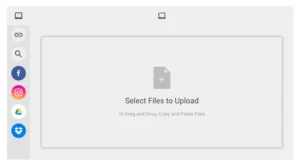
Operating primarily through a command-line interface, yt-dlp interacts directly with web architecture by simulating client requests, executing JavaScript code interpreters locally when necessary, and negotiating the highest-quality streams available from a host platform. Unlike graphical user interface (GUI) web extensions that often rely on browser memory limits or third-party web services prone to data harvesting and intrusive advertising, yt-dlp provides a direct, transparent pipeline between the source platform and local storage.
For advanced archiving projects, the utility supports granular control over batch downloads. For instance, to download an entire content repository or creator channel, a user executes a targeted command specifying the channel URL:
yt-dlp https://www.youtube.com/@beetlejuicearchives3490
Beyond full-video archival, modern workflows frequently prioritize audio extraction, particularly for long-form podcasts, lectures, and musical performances. By integrating external dependencies such as FFmpeg—a leading open-source multimedia framework—yt-dlp can automatically convert downloaded video streams into compressed audio formats on the fly. Users requiring only the auditory data stream execute the utility with specific modifier arguments:
yt-dlp -x --audio-format mp3 https://www.youtube.com/@beetlejuicearchives3490
In this syntax, the -x flag instructs the program to extract audio-only tracks, while --audio-format mp3 directs FFmpeg to transcode the resulting stream into the widely compatible MP3 audio standard.
Data, Trends, and the Shift Toward Offline Preparedness
Recent statistical analyses of consumer media consumption highlight a dual trend: while total time spent on streaming platforms continues to rise, there is a concurrent increase in demand for offline availability. According to data from digital research groups, mobile users frequently encounter connectivity dead zones during transit, international travel, or remote outdoor activities. Relying solely on continuous cellular data streaming proves inefficient, expensive, and technically unreliable in low-coverage regions.

Furthermore, digital libraries and independent archives face the constant threat of "link rot"—the phenomenon wherein web pages, videos, and entire channels are deleted, privatized, or subjected to platform policy shifts without prior notice. Archival advocates point out that relying exclusively on cloud-based availability leaves cultural and informational resources vulnerable to corporate restructuring. Tools like yt-dlp empower individuals to maintain localized, sovereign backups of educational seminars, historical documentaries, and independent media productions, ensuring long-term accessibility independent of third-party platform stability.
Legal, Ethical, and Industry Implications
The resurgence and widespread adoption of command-line download tools occupy a complex space within modern intellectual property law and digital rights management (DRM). While platforms explicitly prohibit unauthorized downloading in their standardized Terms of Service, the legality of using such software depends heavily on the jurisdiction, the nature of the copyrighted material, and the intended use case.
Copyright frameworks in many regions, including the United States, provide provisions for fair use, personal time-shifting, and educational archiving. However, content creators and media conglomerates consistently express concern over unauthorized distribution and monetization bypassing. Major streaming providers invest heavily in DRM infrastructure to protect revenue streams derived from subscription models and targeted advertising. When users bypass these delivery mechanisms via open-source tools, it challenges the traditional gatekeeping models enforced by digital platforms.
Legal scholars note that the development and distribution of tools like yt-dlp are generally protected under open-source software and free speech principles, as the software code itself has dual-use capabilities. It can be employed for illicit copyright infringement, but it is equally valid for legitimate research, accessibility enhancements, journalism, and personal archiving. Consequently, legal battles typically target commercial entities that profit from unauthorized distribution rather than open-source developers or individual end-users practicing personal archiving.
Future Outlook for Digital Archiving and Media Access

As the digital ecosystem continues to evolve, the friction between open access advocates and centralized platforms is expected to intensify. Emerging technologies, such as advanced machine-learning-based content protection and encrypted streaming standards, will likely force open-source developers to continuously adapt their extraction methodologies.
At the same time, the fundamental human desire to preserve digital culture, education, and entertainment ensures a persistent demand for reliable archival utilities. Whether utilized by academics compiling linguistic corpuses, travelers preparing for disconnected journeys, or digital historians safeguarding ephemeral media, tools like yt-dlp demonstrate the enduring necessity of open-source software in maintaining user agency over digital consumption. As long as centralized platforms maintain restrictive silos, command-line preservation tools will remain an indispensable component of the modern internet toolkit.
Related posts: