JetBrains Runtime enables Vulkan rendering by default in native Wayland sessions for Linux IDEs

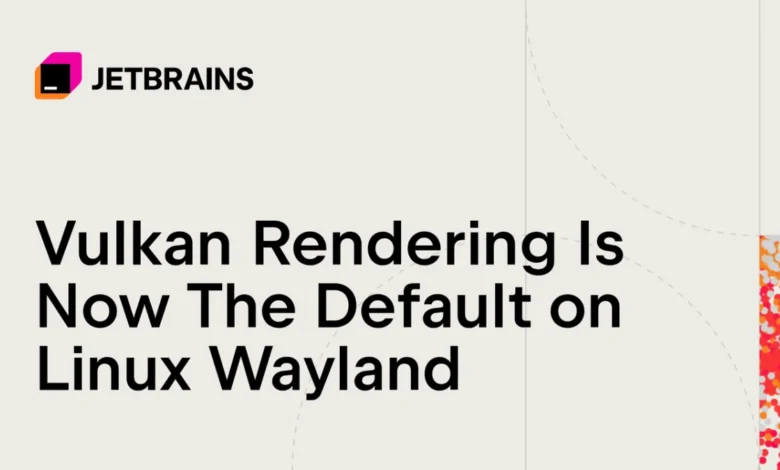
The landscape of Linux desktop computing is undergoing a significant transition as the display server protocol Wayland continues to supersede the aging X11 architecture. JetBrains, a leading provider of professional development tools, has announced that its integrated development environments (IDEs) will now utilize the Vulkan graphics API as the default rendering pipeline for native Wayland sessions, effective with the release of version 2026.3. This milestone follows a sustained, years-long effort to migrate the JetBrains Runtime (JBR)—the proprietary OpenJDK distribution that powers the company’s suite of products—toward a more performant and modern graphical interface.
The Evolution of Linux Rendering at JetBrains
The integration of Vulkan into the JetBrains ecosystem represents the culmination of a deliberate strategy initiated in early 2026. Prior to this, the company’s IDEs—including IntelliJ IDEA, PyCharm, and WebStorm—relied on software rendering when running in native Wayland mode. Under the software-rendering paradigm, the system’s CPU was responsible for the exhaustive task of drawing UI elements, including lines, curves, text, and complex popups.
The timeline of this transition highlights the complexity of modernizing cross-platform software. In early 2026, JetBrains introduced native Wayland support as an experimental feature, later promoting it to a default setting in the 2026.1 release. By offloading the rendering workload from the CPU to the GPU via the Vulkan API, the development team aims to rectify the "laggy" experience often reported by Linux users, particularly those working on high-resolution displays or utilizing fractional scaling.
Technical Context: Why Vulkan Matters
To understand the necessity of this shift, one must examine the limitations of the previous software-rendering approach. When an IDE operates in a software-rendered mode, the window image is buffered in system RAM. The CPU must process every UI primitive into pixels, a task that consumes significant computational cycles. While JetBrains optimized this pipeline extensively over the last decade, the inherent bottleneck remained: CPU-bound rendering is fundamentally less efficient than GPU-accelerated rendering.
This inefficiency becomes acutely visible during high-demand operations. Actions such as rapid typing, scrolling through thousands of lines of code, or displaying context-sensitive popups require frequent screen refreshes. When fractional scaling is introduced—where the display is set to a non-integer scale factor, such as 125% or 150%—the renderer must compose a vastly higher number of pixels. Without GPU acceleration, this process can lead to stuttering and increased power consumption, as the CPU works disproportionately hard to maintain a smooth frame rate.
Vulkan is a low-overhead, cross-platform graphics API that provides high-performance access to modern GPUs. By leveraging Vulkan, JetBrains IDEs can now hand off the heavy lifting of UI composition to the graphics hardware. This does not change the visual appearance of the IDE, but it significantly enhances the responsiveness and energy efficiency of the interface, bringing the Linux experience closer to the performance standards users expect on macOS and Windows.
Implementation and User Configuration
For the majority of users running native Linux Wayland sessions, the transition to Vulkan will be seamless. As of version 2026.3, the change is automated; no configuration adjustments are necessary for standard installations. However, users who previously configured their environment to circumvent Wayland issues by forcing the use of the X11 toolkit will need to manually update their settings.
Specifically, users who previously added the -Dsun.awt.toolkit.name=XToolkit flag to their Help | Edit custom VM options file must remove this line and restart the IDE to enable native Wayland and Vulkan support. JetBrains has emphasized that this update only affects Linux users in Wayland sessions; X11 users and those on other operating systems remain on their existing rendering paths.
For users who encounter issues—such as rendering artifacts, flickering, or unexpected instability—the company has provided a fallback mechanism. By adding the JVM option -Dsun.java2d.vulkan=false to their custom VM options, users can revert to the previous software rendering pipeline while maintaining a Wayland session.
Broader Implications for the Linux Ecosystem
The decision by JetBrains to adopt Vulkan as a default rendering engine carries weight beyond the immediate performance benefits for its users. It signals a broader industry trend where major software vendors are finally treating the Wayland transition as a priority rather than an experimental footnote.
Furthermore, this development highlights the evolving requirements of OpenJDK. While the current implementation is focused on JetBrains IDEs, the long-term goal of the JetBrains Runtime team is to make these Vulkan-based improvements available for broader OpenJDK use. This could potentially benefit the entire Java ecosystem, allowing other Java-based desktop applications on Linux to achieve native-level performance.
However, the transition is not without its challenges. The Linux desktop market is highly fragmented, with varying desktop environments (GNOME, KDE Plasma, Sway, etc.) and a multitude of graphics drivers (NVIDIA, AMD, Intel). Even with extensive internal testing, the diversity of hardware and software configurations means that some edge cases will inevitably arise. JetBrains has established a robust feedback loop through its YouTrack issue-tracking system, encouraging users to submit detailed reports—including logs and system information—to help developers refine the Vulkan implementation.
Future Roadmap and Continuous Improvement
Looking ahead, the roadmap for the JetBrains Runtime includes deeper integration of GPU acceleration for antialiased geometry. This is expected to further reduce the number of UI operations that fall back to the CPU, effectively offloading more of the "drawing" process to the GPU.
While Remote Development mode is currently excluded from the default Vulkan support, JetBrains has confirmed that it is actively working on compatibility updates. Plans are already in motion to integrate Vulkan into remote sessions in a forthcoming 2026.3 bug-fix release. Beyond this, the engineering team is exploring the possibility of bringing Vulkan-based rendering to X11 sessions, potentially extending the performance benefits to users who are not yet ready or able to migrate to Wayland.
The impact of this update on the average developer is expected to be a marked increase in interface fluidity. By reducing the reliance on the CPU for UI rendering, developers should observe less system-wide sluggishness during intense coding sessions. This improvement in responsiveness is a critical step in ensuring that Linux remains a competitive and viable platform for professional-grade software development.
Conclusion
The shift to Vulkan in the JetBrains Runtime is a significant technical achievement that addresses the fundamental performance challenges of the Linux Wayland desktop. By prioritizing GPU-accelerated rendering, JetBrains has demonstrated a commitment to the Linux community, ensuring that their tools can leverage modern hardware capabilities. As the ecosystem continues to stabilize, the focus will likely shift from initial implementation to optimization and compatibility, ensuring that the responsiveness of the IDE is maintained across an increasingly diverse range of hardware configurations. The success of this transition will not only define the immediate future of JetBrains IDEs on Linux but will also serve as a blueprint for how complex, high-performance applications can thrive in the modern Wayland environment.