Major Security Breach Compromises 178 High-Traffic Websites via Optimizely Supply Chain Attack

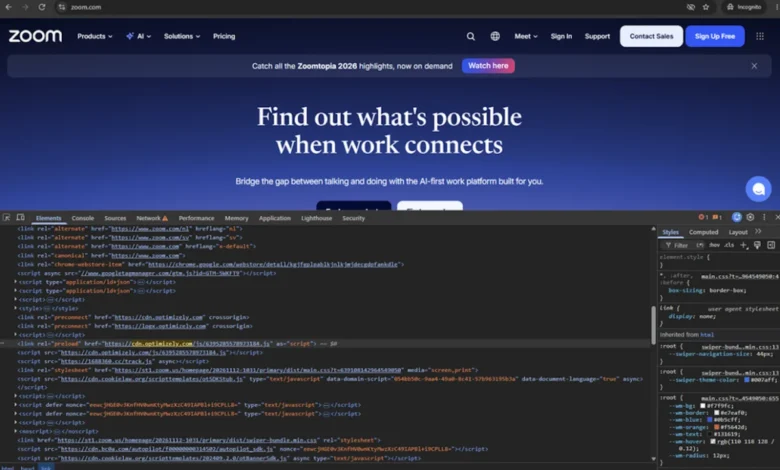
The digital landscape faced a significant security crisis on November 16, 2026, when a sophisticated supply chain attack exploited the Optimizely experimentation platform to distribute malicious software to visitors of at least 178 prominent web destinations. Major organizations, including media giants like the BBC and CNN, as well as financial and enterprise entities such as Equifax, Ledger, and Zoom, inadvertently served malicious JavaScript payloads to their users. This incident has reignited urgent debates regarding the risks of third-party software dependencies and the lack of robust security enforcement mechanisms across the modern web.
Chronology of the Incident
The breach originated within the infrastructure of Optimizely, a widely used vendor for website A/B testing and user experience customization. According to analysis provided by the security firm Report URI, the unauthorized injection of malicious code began on November 16. The attackers demonstrated a high level of sophistication, dynamically rebuilding the malicious payload at least 26 times throughout the day to evade signature-based detection systems.
By the time the intrusion was identified and contained, the malicious script had been delivered to hundreds of thousands of users globally. The payload was not merely a passive tracking tool; it was a multi-functional malware kit designed to exfiltrate sensitive data, including payment card information, browser cookies, and high-resolution screenshots. Furthermore, the malware featured logic to intercept and manipulate cryptocurrency transactions, silently replacing legitimate payment addresses with those controlled by the threat actors.
Optimizely’s internal response team identified the unauthorized access and the subsequent manipulation of customer projects shortly after the activity was detected. By November 17, the company initiated a comprehensive remediation protocol. This included the revocation of compromised user tokens, the termination of active administrative sessions, and the deployment of patches to the vulnerable paths within their experimentation platform. Optimizely also collaborated with Cloudflare to implement additional filtering layers to prevent further delivery of the malicious scripts.
The Anatomy of the Attack: Zero-Click Exploitation
The severity of this incident was compounded by the inclusion of advanced exploit kits targeting mobile users. Researchers identified code strings within the malicious payload associated with “DarkSword” and “Coruna,” which are known for exploiting zero-click vulnerabilities in legacy Apple iOS devices. By chaining together approximately six distinct security flaws, these kits could theoretically seize complete control of an unpatched iPhone or iPad without the user ever interacting with a malicious link or file.
This methodology highlights a growing trend in cybercrime: leveraging trusted third-party providers as a launchpad to bypass perimeter defenses. Because the malicious code was executed via a legitimate script tag from a trusted vendor, traditional security software often failed to flag the activity as anomalous.
The Fragility of Third-Party Dependencies
The incident underscores a systemic vulnerability inherent in the modern web: the over-reliance on third-party JavaScript. According to the 2025 Web Almanac published by the HTTP Archive, the median homepage today loads at least 22 distinct JavaScript files. Each of these files represents a potential vector for a supply chain attack.
Zach Edwards, a researcher at Infoblox and co-founder of the ad-tracking analysis service DecryptAds, explains that the design of tools like Optimizely necessitates high-level permissions. To function correctly, these snippets are often injected at the very top of a page’s code to ensure they execute before the page renders, thereby bypassing standard consent dialogs.
"To make the product work as expected, this code is set up to fire immediately on-page load," Edwards noted. "Most of the impacted clients would immediately serve up the payload as soon as someone loaded the page, meaning the attack didn’t require any user interaction or consent to trigger."

The Role of Content Security Policies (CSP)
One of the most concerning findings in the wake of the breach is the pervasive lack of Content Security Policies (CSPs) among top-tier websites. A CSP is a security layer that allows site administrators to restrict the domains from which a browser is permitted to load resources. If a website had a strict CSP in place, it could have prevented the browser from executing the malicious scripts even after the Optimizely platform was compromised.
Data from Report URI indicates that of the 178 affected sites, 68 lacked any CSP implementation whatsoever. Another 50 sites utilized CSPs that were either misconfigured or too permissive, failing to block the malicious traffic. Only 24 sites—roughly 15 percent of those impacted—possessed security policies robust enough to neutralize the threat.
Scott Helme, a researcher at Report URI, has long advocated for the wider adoption of CSPs, describing the current state of web security as the "Wild West." Helme’s project, crawler.ninja, which monitors the security posture of the top million websites, suggests that fewer than 10 percent of the web’s busiest sites have effectively implemented these protections.
Implications and Industry Response
The Optimizely breach serves as a wake-up call for enterprise security teams. The incident resulted in an estimated $7,500 in stolen cryptocurrency and an indeterminate amount of payment card data theft, but security analysts warn that the potential for long-term damage is much higher.
Optimizely has since issued a formal report detailing the technical aspects of the breach. In a statement, the company emphasized that the incident was restricted to specific customer projects and that they are currently working with third-party forensic experts to conduct a comprehensive post-mortem. "We have implemented additional protections to prevent malicious code from being delivered in Cloudflare," the company stated, confirming that the vulnerability has been fully addressed.
However, the broader implications remain: how can organizations maintain the functionality of dynamic, third-party-dependent websites while mitigating the risks of a compromised supply chain?
Shifting Security Responsibilities
For the average internet user, the incident demonstrates that traditional defenses such as antivirus software are no longer sufficient against modern, script-based attacks. Security experts increasingly recommend the use of ad-blocking and script-blocking browser extensions as a primary line of defense. These tools act as a "firewall for the browser," preventing unauthorized or unknown JavaScript files from executing on the user’s device.
For website operators, the path forward involves a rigorous re-evaluation of their third-party dependencies. Experts suggest the following best practices:
- Strict CSP Enforcement: Implementing and regularly auditing Content Security Policies to whitelist only essential domains.
- Subresource Integrity (SRI): Utilizing SRI tags to ensure that fetched files have not been tampered with or modified.
- Dependency Auditing: Regularly auditing the third-party services integrated into a site to determine if the functionality provided is worth the security risk.
- Zero-Trust Architecture: Moving toward a model where external scripts are sandboxed and restricted in their ability to interact with sensitive DOM elements or user data.
As the digital ecosystem continues to evolve, the integration of third-party services will likely remain a necessity for competitive user experiences. However, the events of November 2026 underscore a critical lesson: in a hyper-connected web, trust is not a static state. Every script loaded from an external source is an extension of the host’s security perimeter, and without rigorous oversight, the largest brands in the world remain vulnerable to the smallest, most targeted exploits. As AI-assisted code generation becomes more prevalent, the speed and scale at which these attacks can be developed and deployed will only continue to accelerate, making proactive security posture more essential than ever.