Streamlining Digital Asset Management: How Modern Developers Are Overcoming File Handling Complexities with Cloud Utilities

In the contemporary digital landscape, managing user-generated and external media stands as one of the most persistent operational hurdles for software engineers and web developers. As applications scale, the variety of file formats, dimensions, and submission states expands exponentially, turning what should be a routine background process into a resource-intensive development bottleneck. Historically, teams either had to build exhaustive, bespoke infrastructure to handle file ingestion, processing, and delivery, or piece together disparate third-party tools. Today, however, the industry is witnessing a structural shift toward comprehensive cloud-based file management utilities designed to handle the entire lifecycle of digital assets from source to consumer.
The Challenge of Modern Media Ingestion
Web applications no longer deal strictly with standardized JPEGs or locally uploaded documents. Users routinely submit media originating from cloud storage providers, social media platforms, mobile devices, and external APIs in wildly inconsistent sizes, resolutions, and extensions. Attempting to code custom ingestion pipelines for every conceivable edge case demands significant engineering hours, ongoing maintenance, and robust server infrastructure.
When files arrive in non-standard states, developers face immediate friction. An image uploaded via a mobile browser might be four thousand pixels wide, severely impacting page load speeds if rendered raw. A document submitted in an obscure format might require specialized conversion libraries before it can be viewed within a dashboard. This operational drag has fueled the adoption of specialized infrastructure-as-a-service platforms, such as Filestack, which abstract away the underlying complexities of cloud storage, file parsing, and content delivery networks.
Onboarding and Developer Integration
The journey toward modern file management typically begins with evaluation and prototyping. Industry-standard developer utilities generally offer tiered access models, featuring extended trial periods that allow engineering teams to stress-test APIs against production-level workloads. Once an account is provisioned, access to comprehensive software development kits (SDKs) and robust documentation becomes critical for rapid deployment.
For development teams, comprehensive technical documentation serves as the cornerstone of efficient integration. Clear code samples, precise parameter definitions, and detailed usage guidelines reduce implementation times from weeks to mere hours. Modern cloud utilities provide multi-language support, ensuring that backend and frontend developers alike can interact with the service using familiar paradigms, whether they are writing client-side JavaScript or managing server-side scripts in Python.
Front-End Uploading and UI Components
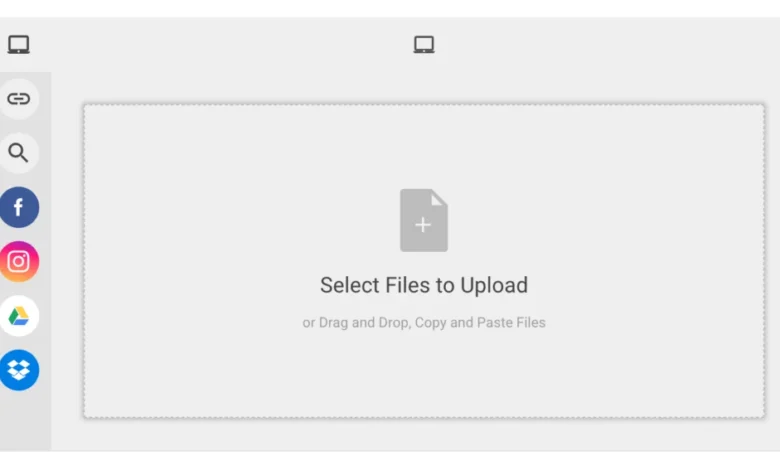
Enabling seamless file ingestion on the client side requires interfaces that are both intuitive for end-users and robust against malformed data. Modern file pickers are engineered to drop directly into existing web architectures with minimal code, instantly rendering polished, feature-complete user interfaces.
// Initializing the file picker via client-side JavaScript
const client = filestack.init("your_api_key");
const picker = client.picker();
picker.open();
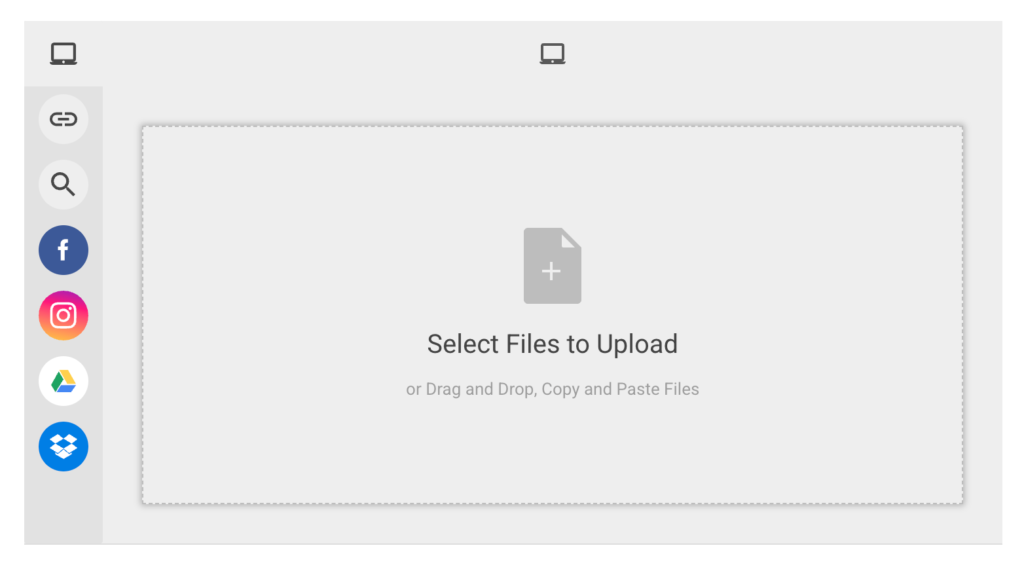
The resulting UI components do far more than accept local files from a desktop directory. Contemporary file management pickers integrate natively with more than twenty distinct cloud and social platforms, including Google Drive, Dropbox, GitHub, Facebook, and Instagram. This multi-source connectivity drastically improves user experience by allowing individuals to import assets directly from their preferred cloud storage or social media accounts without manually downloading and re-uploading files. Furthermore, native drag-and-drop functionality ensures that desktop users can transfer assets effortlessly.
Backend Ingestion and Cloud Storage Routing
While frontend pickers suit user-facing applications, many enterprise workflows require automated, server-side file ingestion. Automated pipelines often ingest assets from external webhooks, batch processing jobs, or direct API integrations. To accommodate backend-heavy architectures, comprehensive APIs provide robust libraries for languages such as Python, allowing engineers to route, tag, and store files directly into enterprise-grade cloud storage buckets like Amazon S3.
from filestack import Client

# Establishing a secure server-side connection
client = Client("your_api_key")

store_params =
    'location': 's3',
    'path': 'secure_vault/client_uploads/',
    'upload_tags':
          "department": "engineering",
          "verified": "true"


# Uploading and routing the asset programmatically
filelink = client.upload(filepath='path/to/source_image.jpg', store_params=store_params)
By defining storage parameters and metadata tags programmatically during the ingestion phase, organizations maintain strict compliance, categorization, and security controls over incoming digital assets before any transformation or delivery occurs.
Real-Time and Asynchronous File Transformation
Once a file is successfully uploaded and stored, the next critical phase involves transformation. Because users submit files of arbitrary dimensions, color profiles, and formats, standardizing these assets is vital for maintaining visual consistency and optimal performance across applications. Modern transformation engines operate dynamically, executing modifications in real time via URL parameters or asynchronously through synchronized server workflows.
Image manipulation, for instance, can be achieved instantaneously by appending specific instructions directly to the content delivery network (CDN) URL. A developer needing to standardize an image width can do so with a simple path modification:
https://cdn.filestackcontent.com/resize=width:300/pdn7PhZdT02GoYZCVYeFBeyond basic resizing, advanced transformation pipelines allow for complex visual adjustments, including automated cropping, format conversion, watermark application, optical character recognition (OCR), and security filtering. Chaining multiple transformation parameters together enables the dynamic generation of specialized assets tailored to specific viewing contexts—such as generating high-resolution thumbnails for desktop displays and compressed, low-bandwidth variants for mobile applications.
https://cdn.filestackcontent.com/resize=width:300/sepia=tone:80/polaroid/pdn7PhZdT02GoYZCVYeFIn addition to programmatic transformations, modern platforms frequently offer user-facing transformation interfaces. These interactive UI modules empower end-users to crop, filter, and adjust their own media prior to final submission, reducing the administrative burden on moderation teams and ensuring that incoming assets already meet application specifications.
Optimizing Delivery via Content Delivery Networks
The final, and perhaps most commercially significant, phase of the media lifecycle is delivery. The speed with which digital assets render on a client device directly influences user retention, engagement metrics, and conversion rates. Slow-loading images or lagging video playback frequently lead to user abandonment, making the performance of the underlying delivery infrastructure a critical business concern.
To mitigate latency, modern file management architectures leverage globally distributed Content Delivery Networks (CDNs). When a transformed or stored asset is requested for the first time, the CDN caches the file locally across edge servers worldwide. Subsequent requests for the same unique asset URL are served instantly from the nearest edge cache, drastically reducing Time to First Byte (TTFB) and offloading request traffic from origin servers.
Industry standards typically dictate an edge-caching window of thirty days for standardized and transformed URLs, after which assets are re-validated and re-cached upon subsequent request. This caching strategy strikes an optimal balance between maintaining immediate delivery performance and ensuring that updated assets propagate through the network efficiently.
Broader Industry Implications and Future Outlook
The maturation of end-to-end media management utilities reflects a broader industry trend toward microservices and specialized cloud infrastructure. As web and mobile applications demand increasingly rich media experiences—ranging from high-definition video streaming to dynamic document rendering—engineering teams are recognizing that building in-house file processing pipelines is neither cost-effective nor strategically core to their business objectives.
By outsourcing ingestion, transformation, and delivery to specialized platforms, organizations reduce technical debt, accelerate time-to-market for new features, and ensure that their applications remain performant under heavy traffic loads. As artificial intelligence and machine learning models continue to integrate into developer toolchains—enabling automated content tagging, smart cropping, and advanced security screening—the role of intelligent file management utilities will only become more central to modern software engineering.