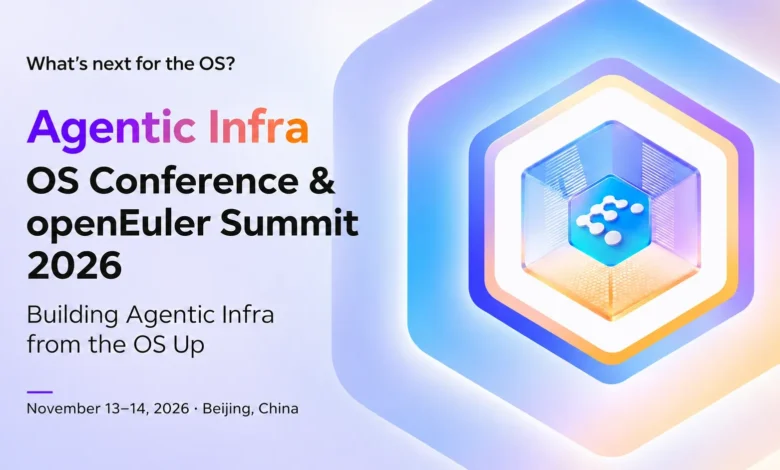
This two-day assembly marks a pivotal moment for the open-source community and enterprise infrastructure developers as they pivot toward the realities of an AI-first operational landscape. By bringing together industry leaders, kernel maintainers, and cloud-native architects, the event serves as a focal point for discussing how traditional operating system architectures must evolve to support the high-density, high-concurrency requirements of AI agents and large-scale computing clusters.
The Evolution of the Operating System in the AI Era
The operating system, long considered the foundational layer of computing, is undergoing its most significant transformation since the rise of cloud virtualization. Traditional kernels were designed to manage local hardware resources for discrete applications. However, the rise of "agentic" workloads—AI systems that execute multi-step tasks, manage persistent memory, and autonomously interact with various software tools—has rendered legacy process management insufficient.
Current industry trends suggest that AI agents are not merely applications running atop an OS; they are becoming consumers of OS-level abstractions. These agents require granular control over memory management, secure execution environments (sandboxing), and high-speed communication between distributed nodes. The upcoming conference addresses this shift directly, positing that the operating system must become an "Agentic Infrastructure" capable of orchestrating intelligent compute workloads as reliably as it manages files and processes.
SuperPoD OS: Scaling for the AI Horizon
A significant portion of the summit will focus on SuperPoD OS, an initiative born out of the need to manage massive-scale, tightly integrated AI computing clusters. In the context of large language models (LLMs) and training clusters, a "SuperPoD" represents a massive collection of GPUs and supporting infrastructure. Coordinating these resources requires an OS capable of low-latency communication, memory pooling, and rapid fault recovery.
The technical groundwork for these discussions was laid with the release of openEuler 24.03 LTS SP4 earlier this year. Built on the Linux 6.6 kernel, this release introduced several critical components that are now being pressure-tested in real-world enterprise environments:
- UnifiedBus: A communication architecture designed to reduce latency between distributed computing nodes.
- Memory Pooling: Techniques that allow multiple AI workloads to share memory resources efficiently, preventing the fragmentation that typically plagues high-demand AI environments.
- NPU Resource Partitioning: Ensuring that AI accelerators can be shared securely and predictably among different users or agent instances.
- Fault Localization: Automated systems that detect and isolate errors within the cluster, preventing a single GPU failure from cascading across an entire training run.
During the summit, attendees will see firsthand how companies like JD.com are leveraging these advancements. As China’s largest direct-sales retailer, JD.com has deployed openEuler-based SuperPoD systems to handle its complex advertising and recommendation algorithms. By offloading resource orchestration to the OS level, the company has reportedly achieved higher utilization rates for its hardware, a critical factor in the cost-benefit analysis of massive AI deployments.
Establishing Secure Agentic Infrastructure
Beyond the raw power of cluster management, the conference will dive deep into the security and reliability of agentic infrastructure. As AI agents gain the ability to interact with databases, execute code, and perform network requests, they represent a new attack vector. The challenge lies in providing these agents with the "compute power" they need while maintaining strict security boundaries.
Meituan, a leader in the food delivery and local services sector, is scheduled to present on its implementation of OS-level sandboxing for AI agents. This session is expected to be a highlight for developers interested in the practicalities of production-ready AI. By utilizing the kernel-level isolation features introduced in the latest openEuler iterations, organizations can create "safe zones" where agents can execute untrusted code or perform iterative logic without risking the integrity of the host system.
This approach addresses the "memory-holding" problem of agents. Because agents maintain state across long-running loops, they create persistent memory footprints. If an OS is not designed to manage these footprints, it leads to memory leaks and system instability. The conference sessions on OS-level KV-cache management and state persistence will provide a technical roadmap for developers struggling with these exact issues.

A Chronology of the openEuler Ecosystem
The openEuler project has seen exponential growth since its inception, moving from a domestic Linux distribution to a global open-source powerhouse.
- 2019: The project is launched, aiming to provide a secure and robust base for digital infrastructure in the ARM-based computing space.
- 2021: Open-source contribution numbers begin to climb as the community shifts focus toward cloud-native and serverless support.
- 2024: The 24.03 LTS SP4 release marks a turning point, signaling the project’s pivot toward AI-native infrastructure.
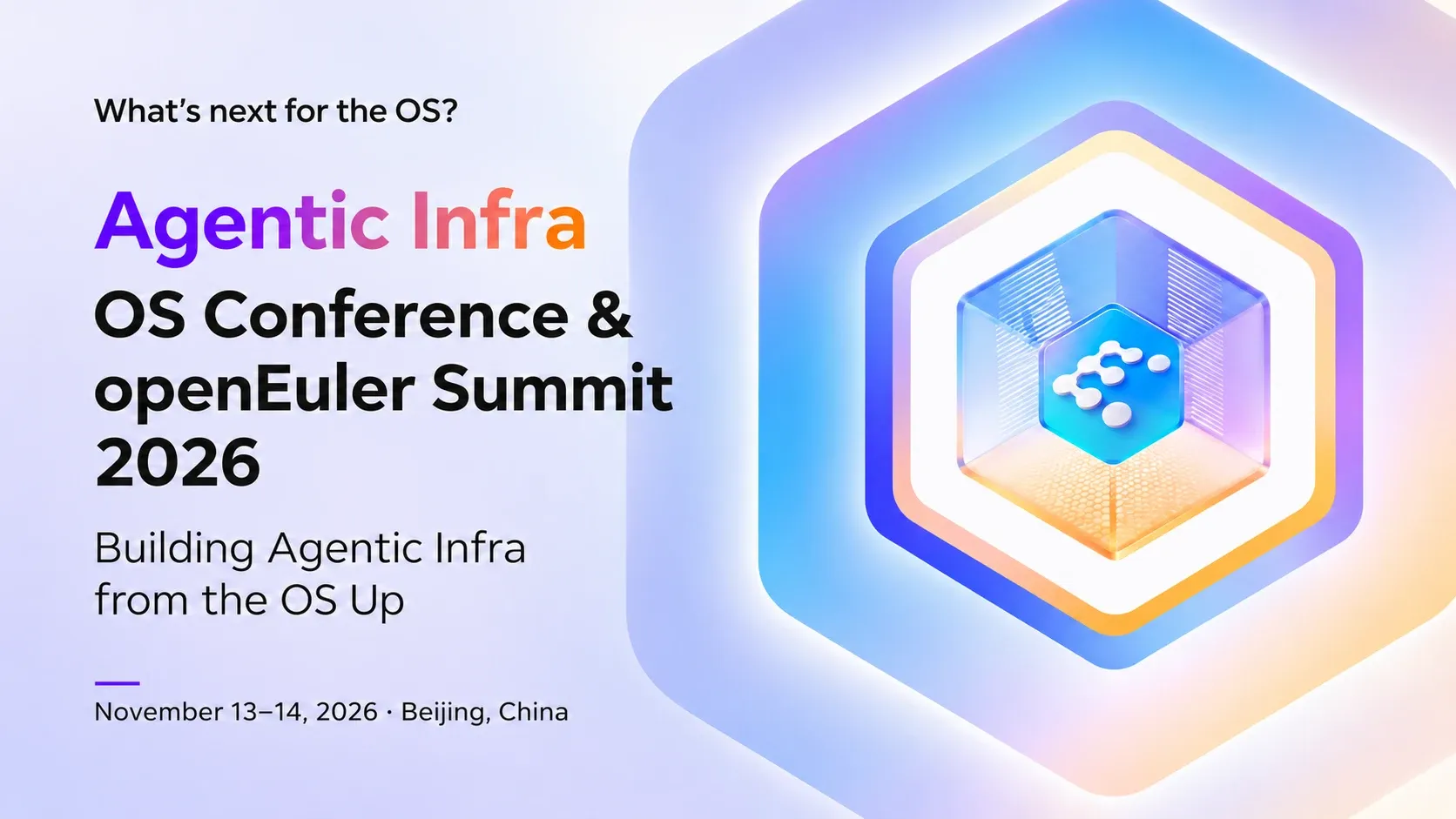
- 2026 (November 13-14): The Agentic Infra OS Conference & openEuler Summit 2026 acts as the industry’s first major gathering dedicated specifically to the intersection of AI agent orchestration and OS design.
The 2024 release was a milestone, bolstered by the contributions of 2,006 developers across 39 member organizations. This community-driven approach has allowed the project to innovate faster than traditional, siloed development models. The summit is intended to capture this momentum, bringing in fresh voices and establishing the standards that will likely govern the next generation of AI-enabled data centers.
The Broader Impact: Why This Matters
The shift toward "Agentic Infra" is not limited to the openEuler ecosystem; it is a global phenomenon. As the industry moves from the "Chatbot era" to the "Agent era," infrastructure teams are realizing that their current Linux-based stacks are being pushed to their limits.
If operating systems do not evolve to treat AI agents as first-class citizens, companies will be forced to build proprietary, bloated software layers on top of their kernels to manage AI performance. The openEuler community’s efforts to integrate these capabilities directly into the kernel and core OS libraries offer a more efficient, standardized path forward. By standardizing resource partitioning, secure execution, and cluster communication, the project aims to reduce the "infrastructure tax" that currently slows down AI development.
Attendance and Participation
The event is structured to cater to both high-level strategic planning and deep-dive technical engineering. Day one, the Agentic Infra OS Conference, is focused on industry keynotes and high-level architectural trends. It includes invitation-only tracks specifically designed for leaders in the financial and internet-service sectors, where the stakes for AI reliability are highest.
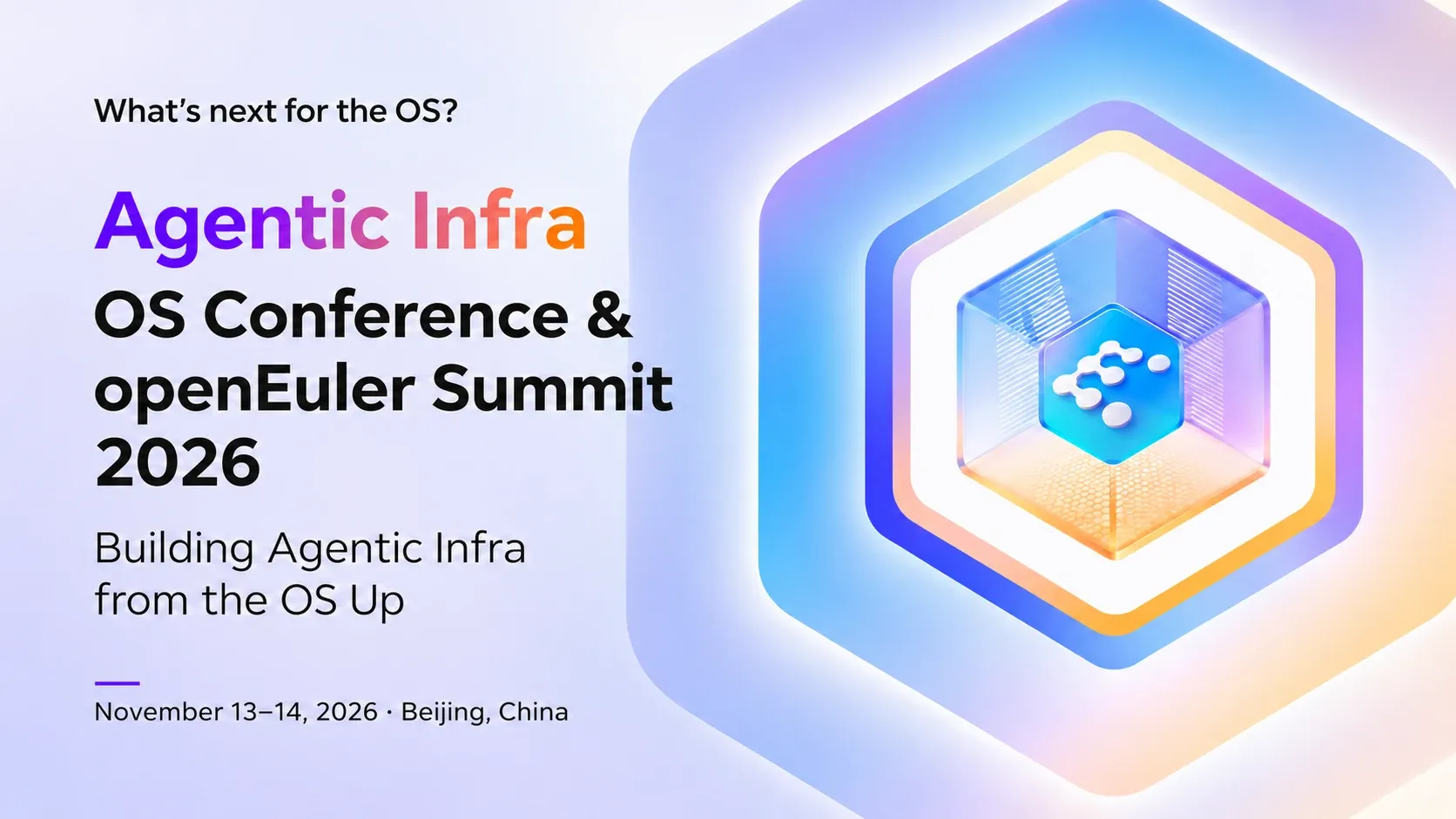
Day two, the openEuler Summit, shifts focus to the community. This day will feature over 30 sessions, including technical workshops on kernel development, edge computing, and AI-optimized compiler design. With a 1,000-square-meter demonstration zone, attendees will have the opportunity to engage with the hardware and software prototypes discussed in the presentations.
For developers and systems engineers, this summit represents more than just a series of talks—it is an opportunity to contribute to the design of the next decade of infrastructure. As the line between AI software and operating system software continues to blur, the insights gathered in Beijing will likely ripple out into the global open-source community, influencing how Linux-based systems are built for years to come.
Those interested in participating—whether as engineers looking to optimize their clusters or as observers monitoring the evolution of AI infrastructure—can find the full agenda and registration details on the official openEuler summit website. As the event concludes, further reporting will be necessary to synthesize the technical breakthroughs and community consensus reached during these two days of intensive collaboration.