Domicile Introduces a Novel Wayland Compositor Built on Chromium for Web-Based Desktop Environments


The Linux landscape has long been defined by its modularity, with desktop environments typically built upon established display protocols and windowing toolkits like GTK or Qt. However, a new project titled Domicile is challenging the traditional architectural paradigms of Linux desktop shells. By utilizing a specialized, patched build of the Chromium rendering engine to serve as the foundation for the desktop experience, Domicile enables users to build their entire graphical interface using web technologies. While the concept of "web-based desktops" is not new—having been explored through projects like ChromeOS or various Electron-based shells—Domicile represents a significant departure by operating as a native Wayland compositor that treats system windows as DOM elements.

The Architectural Framework of Domicile
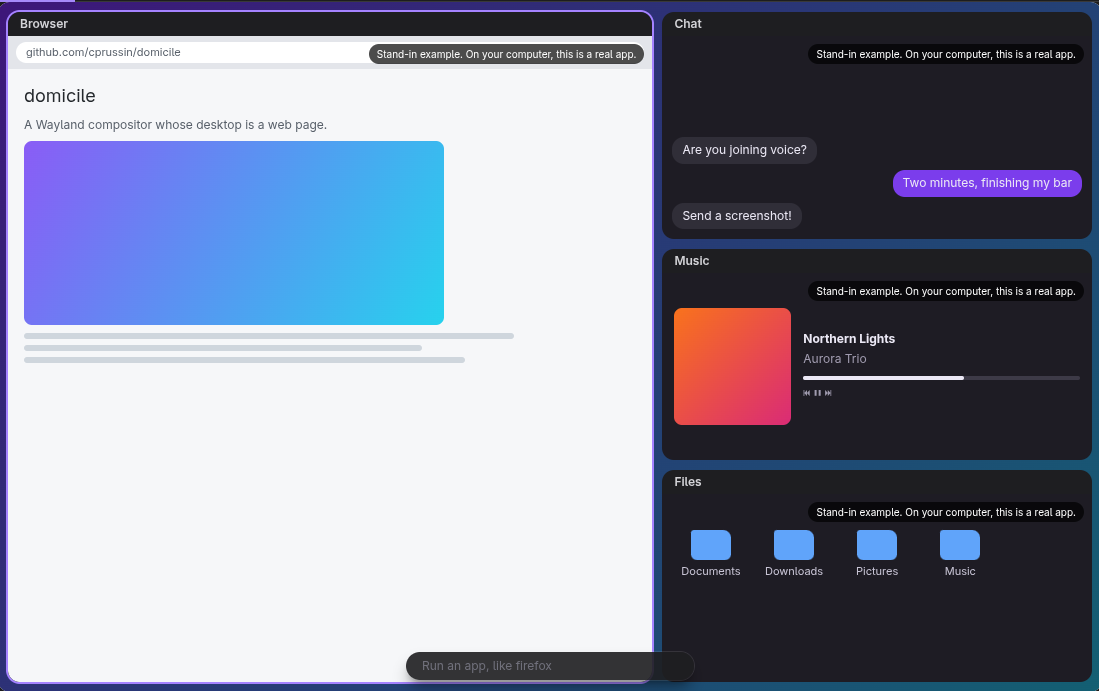
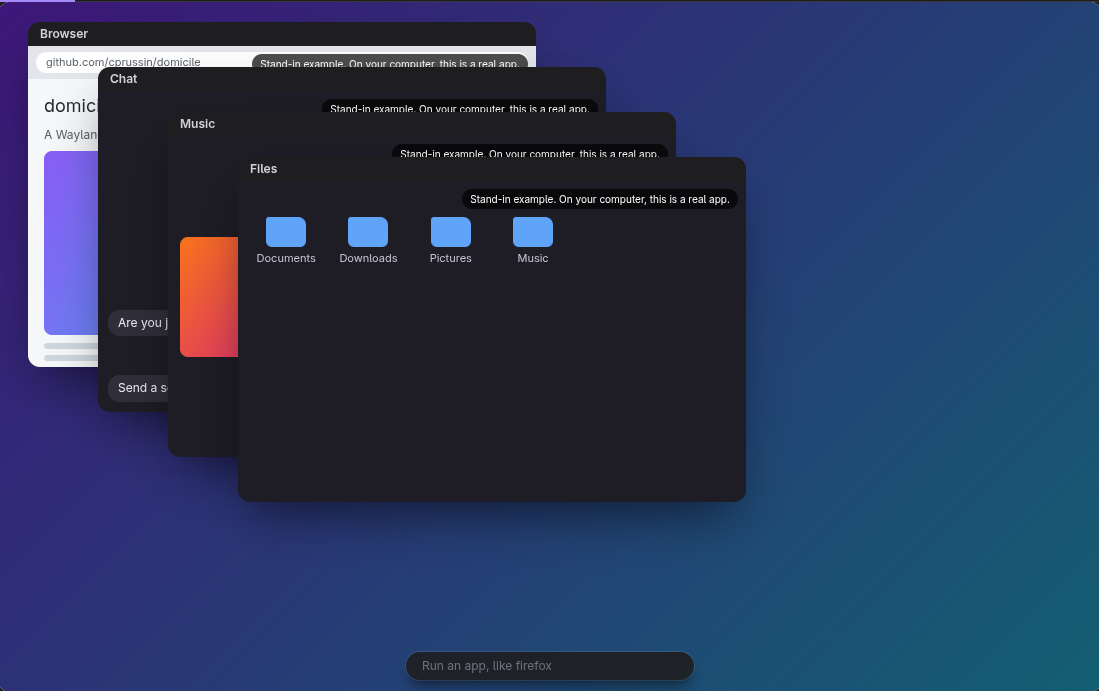
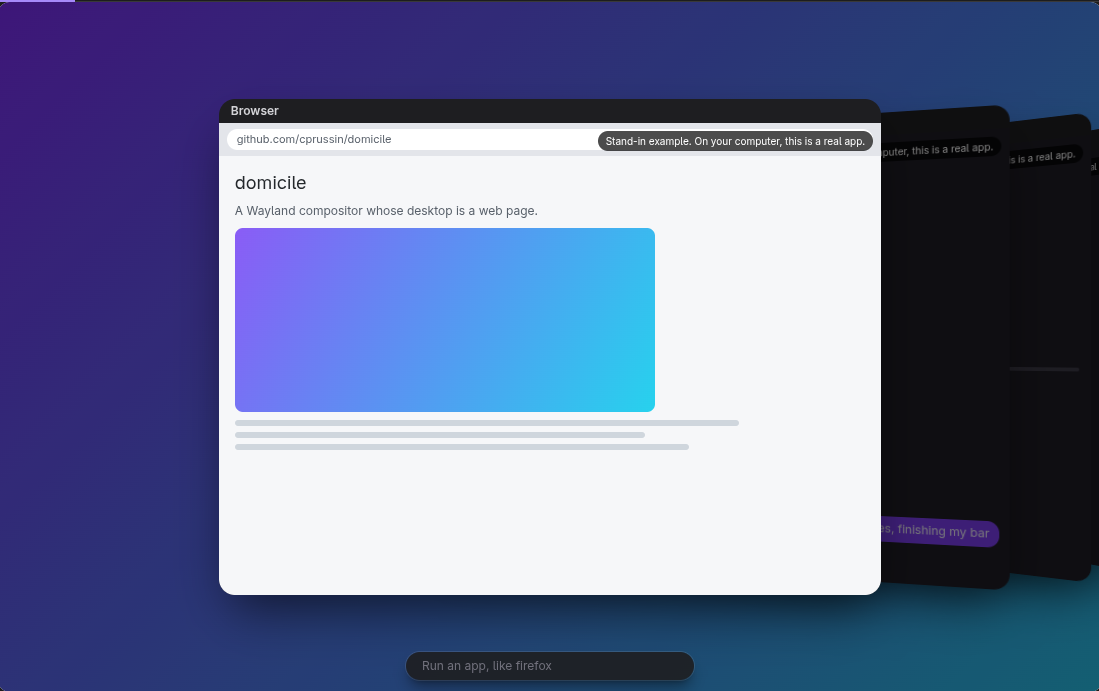
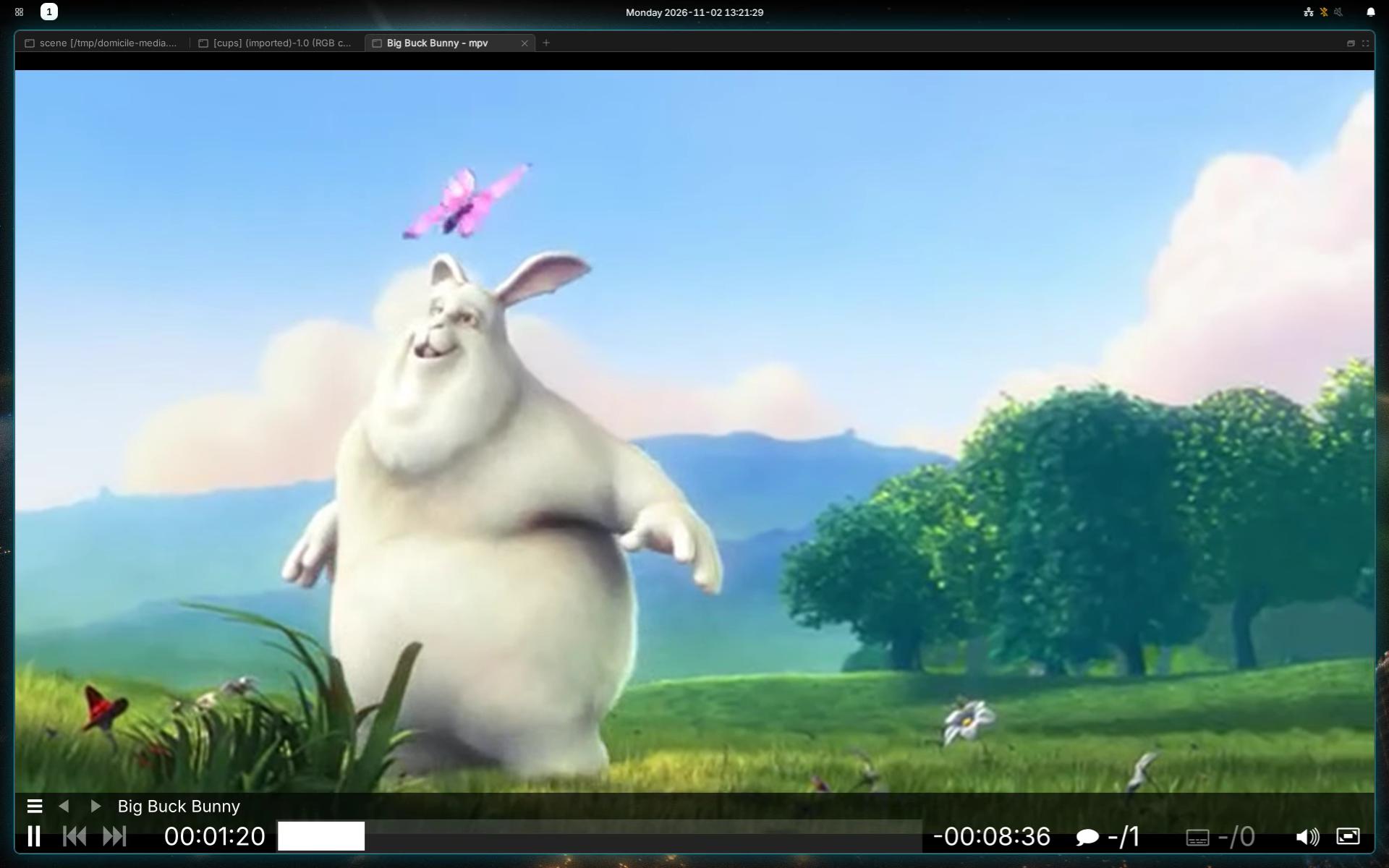
At its core, Domicile functions as a Wayland compositor written in Rust. Unlike conventional compositors such as Sway or KWin, which manage window placement through C++ or C logic, Domicile offloads the rendering and layout management to the Chromium engine. When a native application is launched within this environment, the Wayland protocol intercepts the surface data and injects it directly into Chromium’s rendering pipeline. This allows windows—whether they are native desktop applications or web-rendered components—to be treated as unified objects within a webpage.
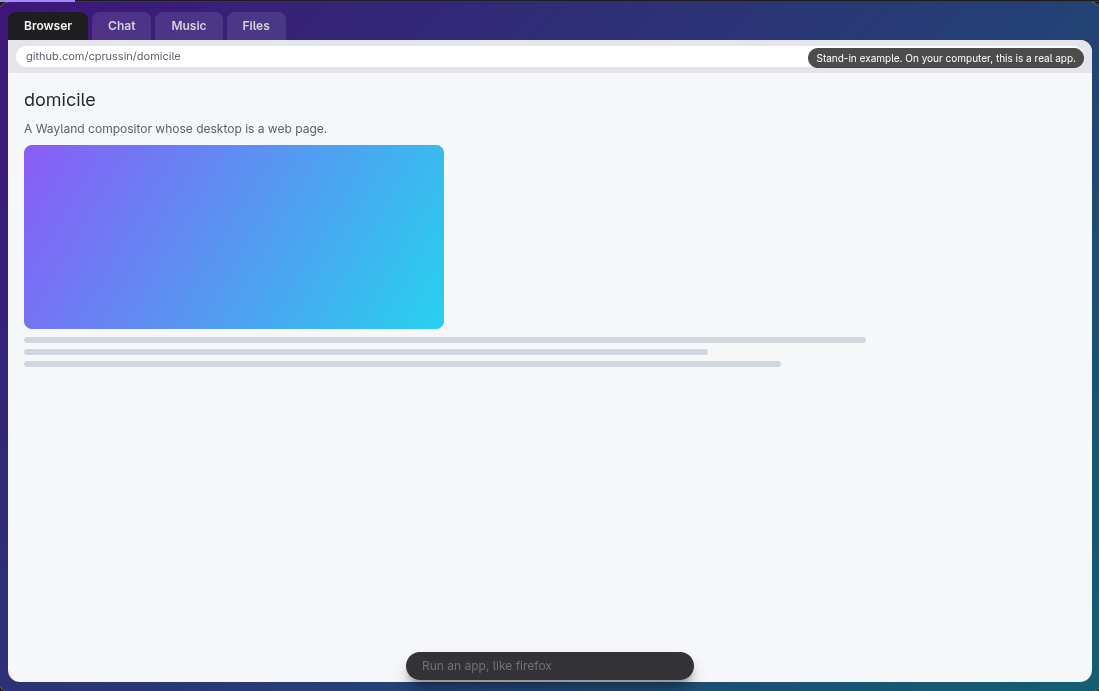
This design choice facilitates a high degree of customizability. Because the desktop shell is essentially a web page, users can define their window management logic, such as tiling, floating, or stacking, using standard CSS. If a user wishes to rearrange their workspace, they do not need to recompile the desktop environment or edit complex configuration files; they simply modify the CSS or JavaScript controlling the shell. Furthermore, Domicile allows for "hot-swapping" the shell, meaning a user can reload their entire desktop interface without terminating the active native applications, as the state of the windows is decoupled from the rendering shell.

Historical Context and the Chromium Dependency
The reliance on Chromium is perhaps the most controversial aspect of the project. Within the open-source community, there is a persistent skepticism regarding the "Chromium-ization" of the web and desktop software, primarily due to concerns over Google’s influence on web standards and the heavy memory footprint associated with the Blink rendering engine.
Despite this, Domicile justifies the choice by citing the maturity of Chromium’s rendering performance and its robust support for extensions. The compositor supports Manifest V3 extensions, allowing users to integrate browser-based utilities directly into their desktop environment. However, this architectural decision creates a hard dependency on x86_64 architecture. Currently, the project lacks ARM builds, which limits its adoption on increasingly popular ARM-based laptops and single-board computers. Additionally, because Domicile does not include an XWayland compatibility layer, users are restricted to native Wayland applications. Legacy X11 applications, which still make up a significant portion of the Linux ecosystem, are incompatible with this environment.
Manganese: The Reference Implementation
To demonstrate the capabilities of the Domicile compositor, the development team has released "Manganese," a pre-configured tiling shell. Designed to provide a familiar experience for users of i3 or Sway, Manganese utilizes the Super key for window management and supports standard tiling features including horizontal and vertical splits, tabbed views, and a workspace scratchpad.
Manganese functions as a complete, out-of-the-box desktop solution. It includes necessary system utilities such as a launcher, a clipboard history manager, a notification daemon, and a screen-locking mechanism. Each of these components is distributed as a modular package, allowing users to swap the default launcher for a custom-built web-based alternative without disrupting the underlying compositor or the active session. This modularity is facilitated by the npm ecosystem, meaning that developers can package desktop widgets or shells and distribute them via standard JavaScript package managers.
Technical Limitations and Security Implications
While the ability to treat the desktop as a webpage offers unprecedented flexibility, it introduces specific technical constraints. First and foremost is the security model. By moving the desktop shell into a browser-based environment, the attack surface shifts. While the compositor handles sensitive tasks like screen sharing, notifications, and the lock screen through isolated native code, the interface itself is subject to the vulnerabilities inherent in the Chromium rendering engine.
Furthermore, the project’s reliance on AI-assisted development has been a point of discussion. The creators have acknowledged the use of AI tools throughout the codebase’s construction, a practice that is becoming increasingly common in small-team open-source projects but remains a point of contention for some developers who prioritize human-audited codebases. The project is licensed under the MIT license, with the Chromium-related components adhering to their respective upstream licenses, ensuring a level of legal transparency.
Market Adoption and Installation
Domicile is currently available for several major Linux distributions, including Fedora, openSUSE, Debian, Ubuntu, and Arch Linux. For users integrated into the NixOS ecosystem, a dedicated flake is provided, simplifying the integration of the compositor into a declarative configuration.
The installation process requires a distinct departure from standard desktop installation flows. After installing the monolithic Domicile package, users must define their preferred shell in a configuration file before selecting "Domicile" at the display manager login screen. This setup assumes a level of technical proficiency typical of tiling window manager users, suggesting that the initial target audience is the advanced Linux enthusiast rather than the general consumer.
Broader Implications for Desktop Environments
The emergence of Domicile signals a potential trend in the evolution of Linux desktops: the "Web-ification" of the UI layer. As web standards continue to mature and hardware becomes increasingly powerful, the overhead of rendering a desktop through a browser engine is becoming less of a performance bottleneck. If Domicile gains traction, it could influence other projects to adopt web-based shell architectures, potentially blurring the lines between the operating system and the web browser.
However, the project faces significant hurdles. The lack of XWayland support is a critical barrier to entry for the majority of Linux users who rely on older applications. Moreover, the performance impact of maintaining an entire desktop session within a Chromium instance—especially regarding RAM consumption—remains a subject of ongoing scrutiny.
Future Outlook
As the Linux desktop space continues to diversify, Domicile offers a unique, albeit experimental, alternative to the established GNOME and KDE Plasma environments. By providing a platform where CSS and JavaScript are the primary tools for UI design, the developers have lowered the barrier to entry for web developers who wish to create desktop interfaces. Whether this approach will satisfy the needs of the wider Linux community—or whether the dependency on Chromium will prove too restrictive—remains to be seen.
For now, Domicile remains an intriguing case study in how modern web technologies can be leveraged to reimagine fundamental system components. As it moves out of its initial release phase, the community will likely monitor its performance metrics, memory optimization, and, crucially, the long-term maintainability of its patched Chromium build. For those interested in testing the limits of desktop customization, Domicile represents one of the most radical departures from tradition in recent years.