GitHub Octoverse 2026: Unprecedented AI-Driven Momentum Propels Global Software Development to Historic Highs

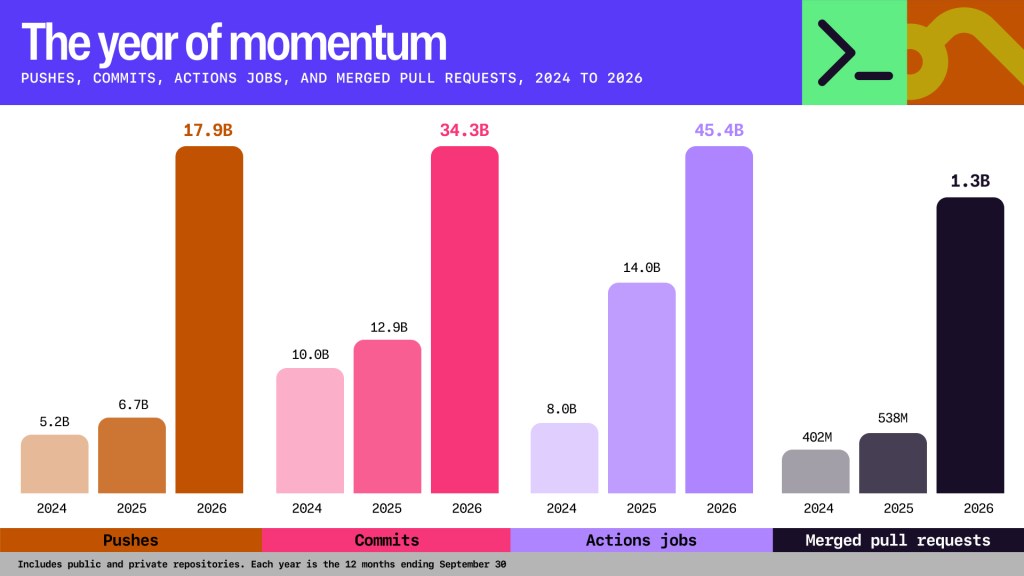
The global software development landscape experienced an extraordinary transformation over the past twelve months, defined by an unprecedented surge in coding activity, the mainstream adoption of autonomous agents, and a profound expansion into non-traditional industries. According to the newly released 2026 Octoverse report published by GitHub, developers pushed code to the platform a staggering 17.9 billion times between October 2025 and September 2026. This singular figure surpasses the cumulative push totals of 2024 and 2025 combined, illustrating an inflection point in how software is conceptualized, built, and deployed across the globe.
The findings underscore a fundamental shift away from traditional, manual coding paradigms toward an ecosystem heavily augmented by artificial intelligence. Analysts note that this acceleration is not merely a reflection of a larger developer population, but rather a direct result of productivity multipliers introduced by advanced AI models, robust developer harnesses, and autonomous workflows that span multiple days and complex cloud infrastructures.
A Rapid Inflection Point: The 2026 Chronology
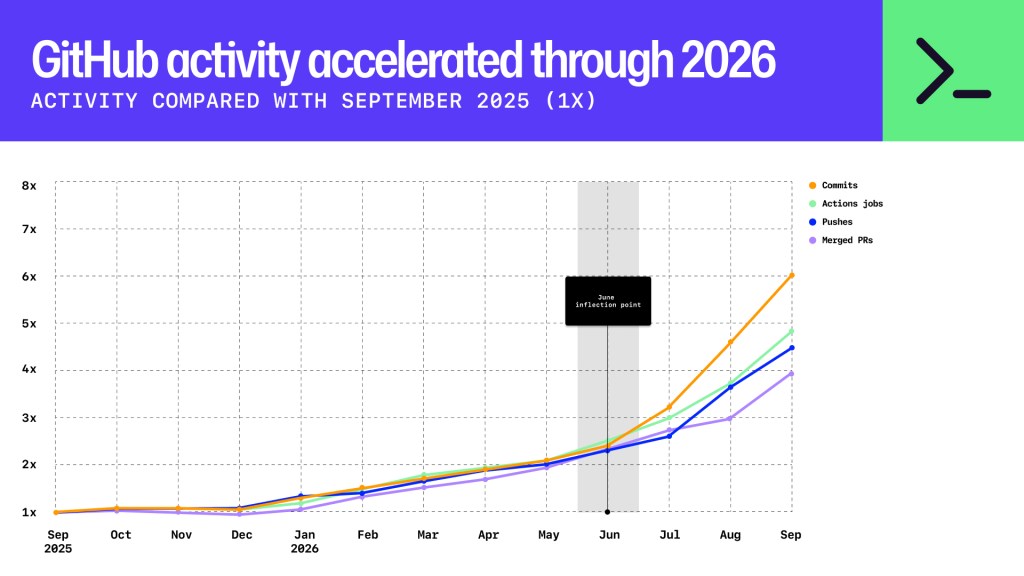
The trajectory of developer activity throughout 2026 followed a distinct chronological curve, characterized by steady growth in the early months followed by a dramatic upward bend starting in June. Observers and industry analysts trace this mid-year surge to the convergence of several critical technological leaps: the maturation of underlying large language models, the widespread integration of persistent agentic workflows, and the ability of agents to execute tasks asynchronously across both local environments and remote cloud architectures.
In the early months of the year, developers increasingly experimented with AI not just as a conversational assistant for code completion, but as an autonomous partner capable of drafting multi-file pull requests and managing routine dependency updates. By June, this experimentation had scaled into enterprise-wide and open-source production routines. Telemetry data from GitHub reveals that monthly activity climbed precipitously following this period, driving metrics across the board to heights previously deemed unattainable by standard forecasting models.
By the close of the tracking period on September 30, 2026, cumulative commits across all repository types had soared to 34.3 billion—more than triple the figures recorded just two years prior. Simultaneously, merged pull requests climbed to 1.3 billion, averaging an astounding 3.5 million merged changes per day.
Quantitative Breakdown: Momentum Across Metrics
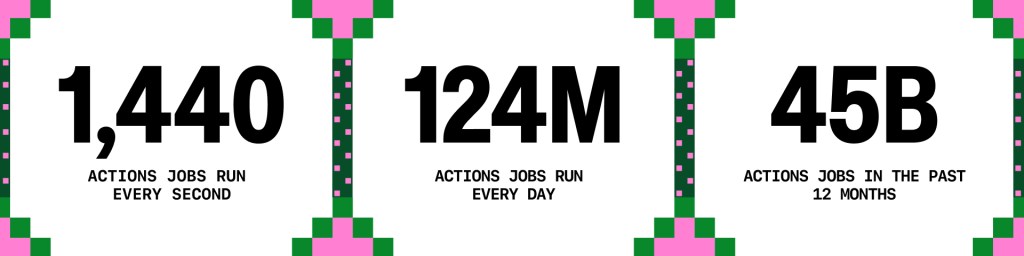
The quantitative scale of the 2026 Octoverse report highlights a profound acceleration in both human output and automated execution. GitHub Actions, the platform’s continuous integration and deployment engine, handled a staggering 45.4 billion jobs over the 12-month period. This equates to an average of 1,440 jobs executed every second, or 124 million jobs daily—representing a threefold increase over the previous year’s volume.
Security maintenance and dependency management also scaled dramatically through automation. Developers merged upwards of 30 million Dependabot pull requests, effectively doubling the pace of 2025 and significantly mitigating the deployment of known vulnerabilities across open-source and enterprise supply chains. Push protection systems, designed to intercept exposed credentials such as API keys and passwords before they hit public view, performed 5.8 billion scans, nearly quadrupling the security screening volume of the prior year.
Furthermore, the integration of autonomous agents drastically altered repository dynamics. New repositories established with an agent configuration file logged, on average, eight times as many commits as newly created repositories lacking such automation. This disparity highlights a stark divergence in velocity between teams that embrace AI-first workflows from inception and those operating under conventional methods.
Global Expansion and Regional Growth Drivers
Beyond raw code volume, GitHub’s developer community expanded to encompass over 225 million registered users worldwide. Geographic distribution patterns indicate robust growth across traditional technology hubs as well as emerging markets, fueled by localized investments in digital infrastructure, fintech, and governmental talent initiatives.
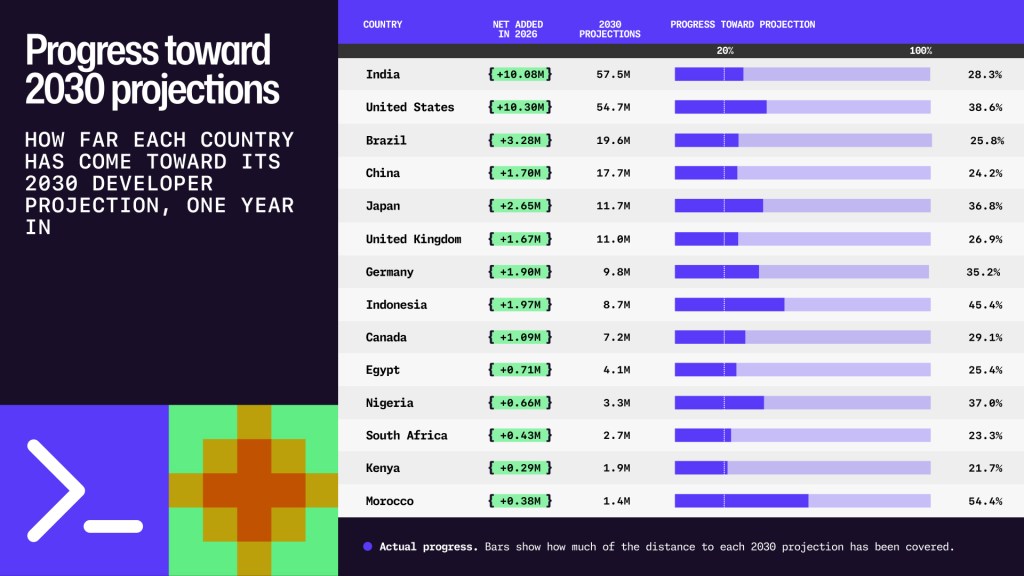
The United States and India maintained their positions as the two largest developer communities, boasting 38.3 million and 32.0 million developers respectively, with each region adding upwards of 10 million new users over the past year. Brazil secured the third-highest national growth, adding 3.28 million developers, driven largely by a mature and rapidly expanding fintech sector.
Regional analysis within the Octoverse report outlines distinct catalysts for growth across major global zones:
- The Americas: Pushed forward by sophisticated fintech ecosystems, digital payment infrastructures, and steady artificial intelligence investments, particularly in Brazil and Canada.
- Europe, Middle East, and Africa (EMEA): Characterized by heavy enterprise AI adoption within Germany’s industrial manufacturing sector, thriving deep-tech startups in France and Spain, and a rapidly expanding ecosystem of coding bootcamps and agritech initiatives in Kenya, Nigeria, South Africa, and Morocco.
- Asia-Pacific (APAC): Propelled by substantial government investments in sovereign AI infrastructure and talent cultivation, with Indonesia experiencing a booming digital economy and South Korea implementing extensive state-backed AI training programs.
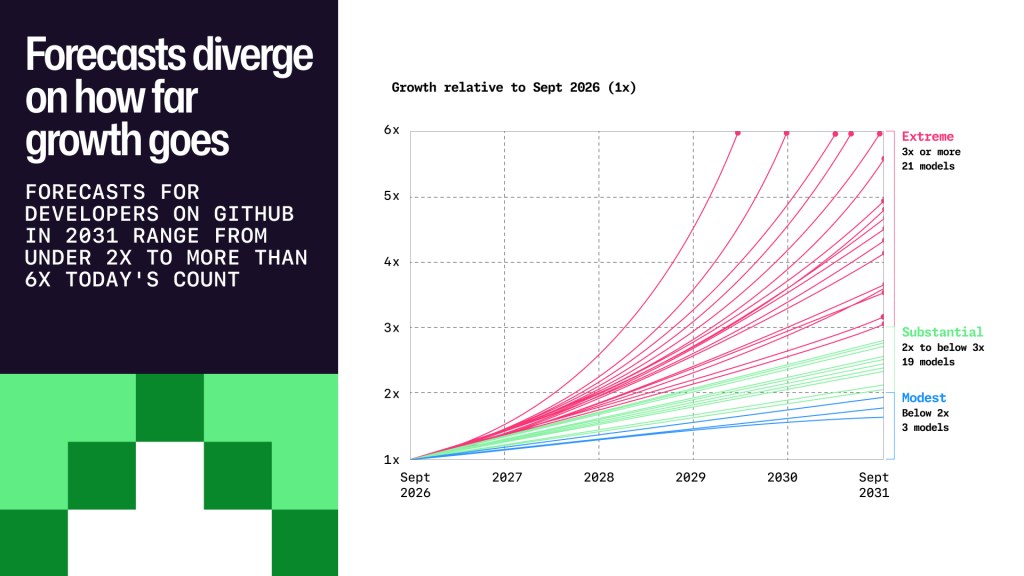
Remarkably, this growth has severely outpaced previous long-term forecasting models. One year into GitHub’s projected five-year window toward 2030, nearly every monitored country has already closed at least a fifth of its projected distance toward its 2030 developer population targets. The United States has achieved 38.6% of its projected decadal growth, while India has completed 28.3%. Consequently, researchers running updated time-series and regression models for the next half-decade project that global developer counts could easily double or triple by 2031.
AI Penetration Across Non-Traditional Industries
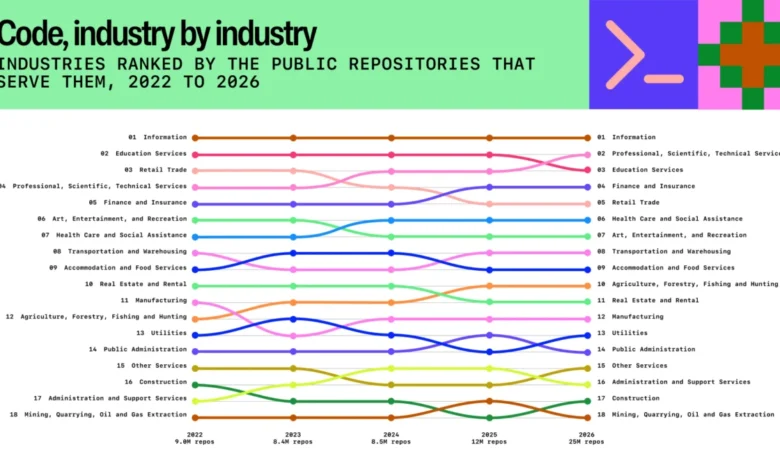
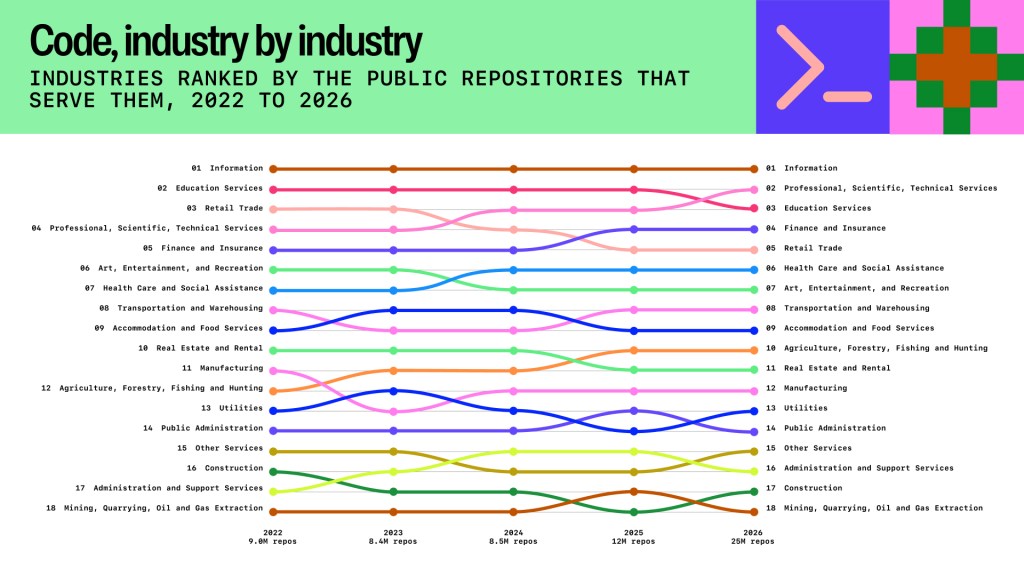
One of the most significant revelations of the 2026 report is the expansion of software development into sectors historically distanced from traditional tech development. Utilizing the North American Industry Classification System (NAICS), natural language processing models evaluated random samples of public repositories created between 2022 and 2026 to categorize them by economic sector.
The data reveals that industries outside the traditional software and information sectors are rapidly integrating open-source code and AI tooling:
- Professional, Scientific, and Technical Services climbed to second place overall among industrial repository categories, trailing only information technology.
- Administrative and support services, mining, quarrying, and oil and gas extraction exhibited exponential growth, expanding exponentially from small initial baselines as field professionals utilize coding agents to automate data analysis and operational workflows.
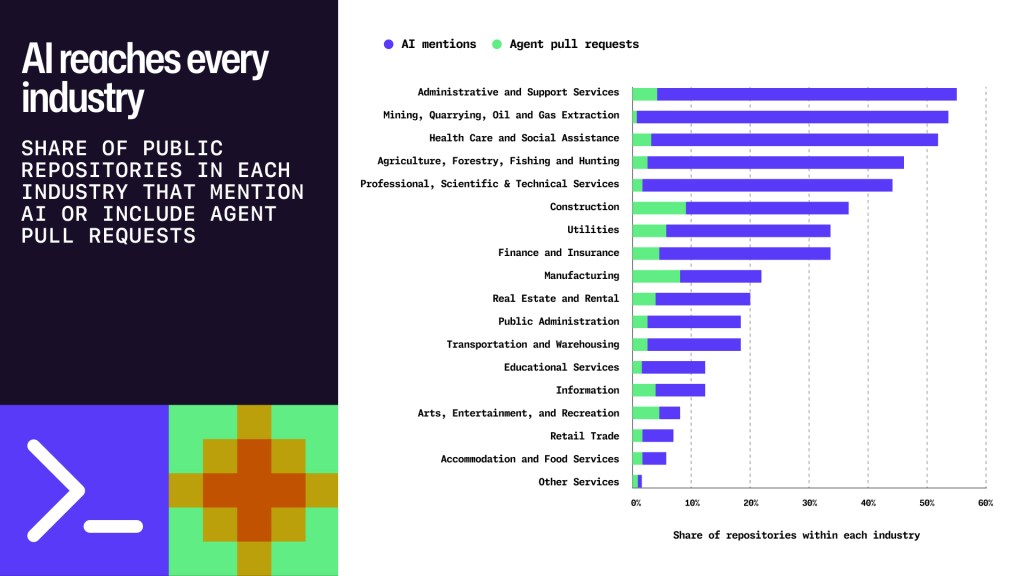
- Agriculture, forestry, fishing, health care, and construction demonstrated substantial integration of artificial intelligence. In sectors like health care and agriculture, over 40% of public repositories explicitly reference AI integration, reflecting a concerted effort by domain experts—such as pathologists, agronomists, and industrial engineers—to build custom computational tools.
Notable open-source projects originating from these non-traditional sectors include automated pipelines for analyzing tissue sample digital scans in medical research, machine learning models that classify animal behavior for agricultural monitoring, and open toolkits designed to optimize waste heat recovery in heavy industrial manufacturing plants.
Evolution of Developer Workflows and Model Orchestration
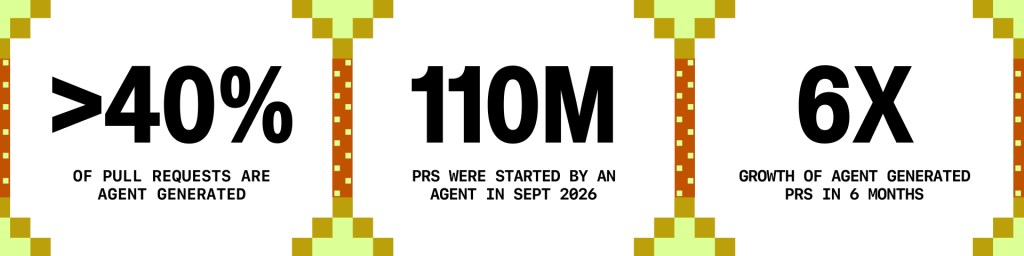
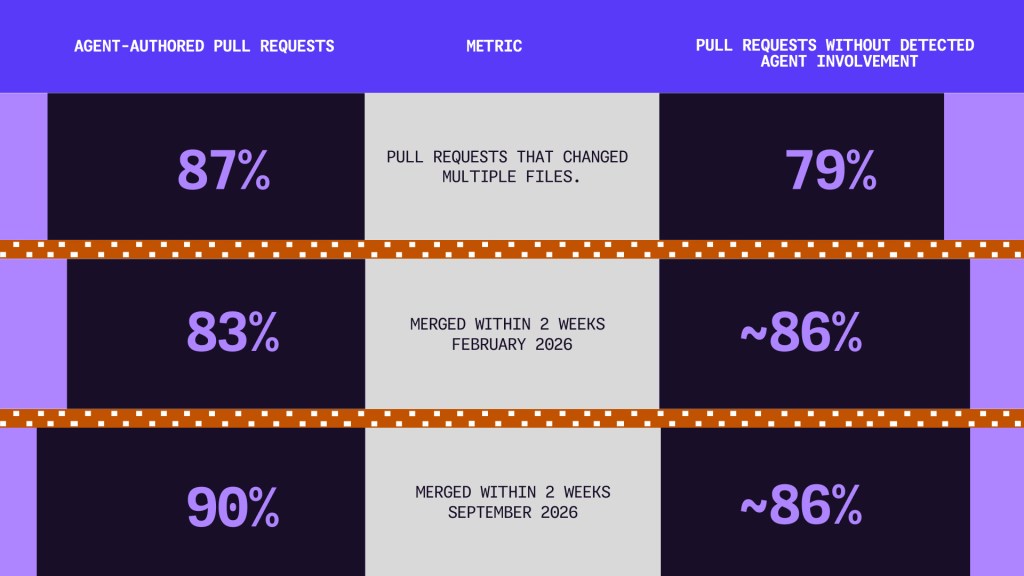
The daily workflow of the modern developer has undergone a structural revolution. By September 2026, over 40% of all pull requests on GitHub originated from an agent-generated first draft, representing a staggering 110 million pull requests in that month alone—a sixfold increase compared to March figures. These agent-authored pull requests demonstrate a high degree of complexity, with approximately 87% modifying multiple files simultaneously, and achieving an impressive 90% merge rate within a two-week window.
Among monthly active users of GitHub Copilot, adoption of advanced agentic features reached 55%, up from 35% the previous year. The most pronounced expansion occurred within autonomous cloud agent modes, where developers assign overarching tasks for independent execution, registering a 230% year-over-year increase.
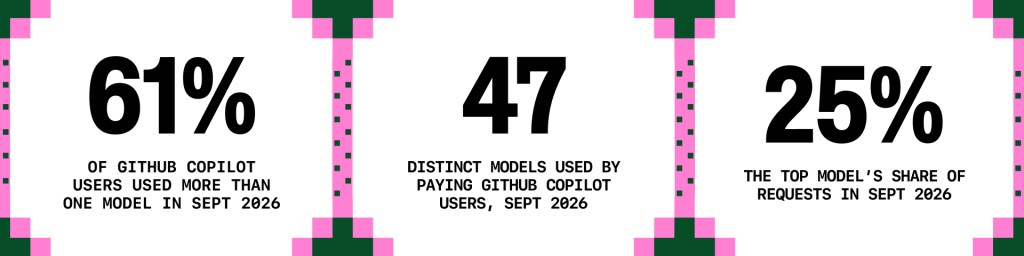
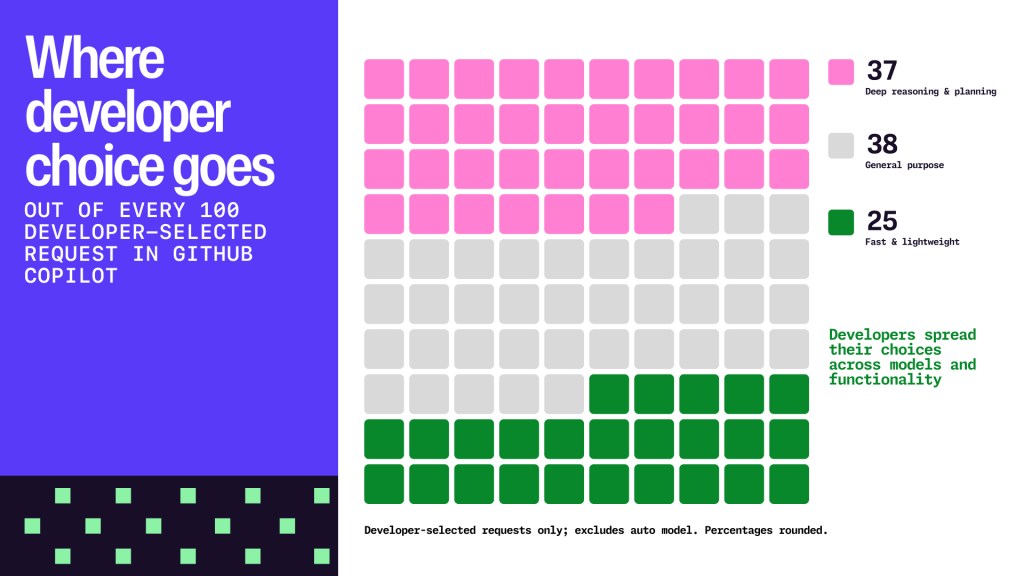
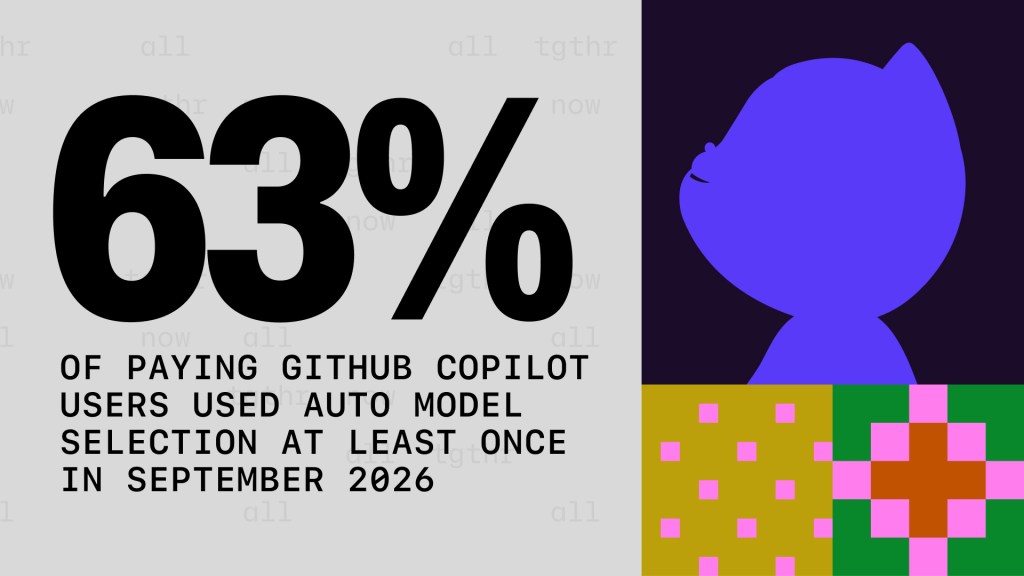
To manage this complex array of tasks, developers increasingly embraced multi-model orchestration. Data from September 2026 indicates that 61% of paying Copilot users actively utilized more than one distinct AI model across their sessions, selecting from a pool of 47 available models. Requests were distributed nearly evenly across structural categories: 38% to general-purpose models, 37% to deep reasoning and planning models, and 25 to fast, lightweight models. Furthermore, 63% of paying users utilized automated model selection features to dynamically route tasks based on complexity, speed, and cost efficiency.
Language Adoption and Open Source Dynamics
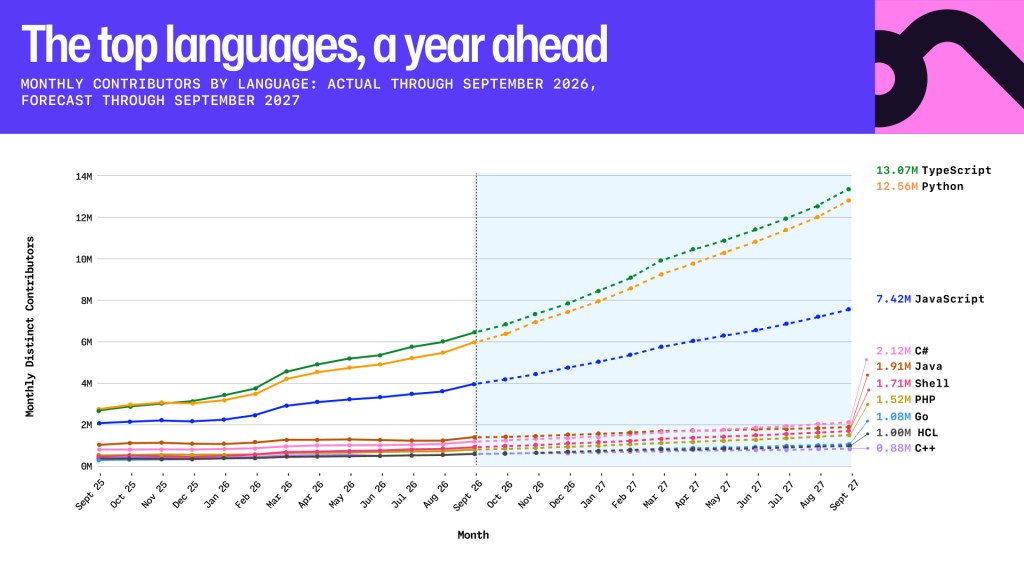
In the realm of programming languages, TypeScript maintained its position as the most widely used language by contributors on GitHub, followed by Python in second place and JavaScript in third. TypeScript and Python each attracted over 3 million new monthly contributors over the past twelve months, with TypeScript approaching a projected 13 million monthly active users by late 2027. Rust continued its meteoric rise, doubling its community size year-over-year and exhibiting the highest percentage growth among major languages.
Correlation analysis between language growth and AI utilization indicates that languages experiencing the fastest community expansion—such as TypeScript, Python, and Rust—also exhibit the highest proportions of AI-assisted pull requests, ranging between 40% and 44%. Analysts suggest that developers working within these ecosystems benefit from robust typing systems and automated test verification, making agent-generated code easier to review and validate.
The open-source ecosystem similarly reflected this dual focus on foundational infrastructure and advanced tooling. Fastest-growing community-led repositories highlighted foundational inference engines and runtime environments such as llama.cpp, vLLM, and PyTorch, while vendor-led projects prominently featured AI coding assistants, specialized developer environments, and multi-agent orchestration frameworks.
Implications and Future Outlook
The 2026 Octoverse report paints a clear picture of an industry entering a period of hyper-acceleration. The fusion of generative artificial intelligence, autonomous agent execution, and a rapidly widening global talent pool has fundamentally altered the economics of software creation.
While the tools available to developers have evolved dramatically—shifting routine implementation tasks to automated agents and multi-model orchestration systems—the core responsibility of defining intent, ensuring safety, and validating quality remains firmly in human hands. As industries from agriculture to heavy manufacturing adopt open-source workflows, the barrier between conceptualizing a technological solution and bringing it to reality has been permanently lowered, setting a new baseline for global innovation as the decade progresses toward 2030.
Related posts: