UK Imposes Landmark Sanctions on Cryptocurrency Platform Cryptomus to Curb Russian Financial Evasion

In a significant escalation of international efforts to disrupt the shadow financial networks supporting Russia’s wartime economy, the United Kingdom government officially imposed stringent economic sanctions on the cryptocurrency payment processor Cryptomus on October 8, 2026. The move, which marks a pivotal shift in how Western authorities address the proliferation of illicit digital asset services, freezes all assets held by the company within British jurisdictions and prohibits any UK-based entity from conducting business with the platform or its associated aliases.
The sanctions extend beyond Cryptomus itself, targeting a web of interconnected virtual payment services, including VexPay, TokenSpot, and the Tsunami Payments service. According to the UK Treasury, these entities have functioned as essential conduits for high-risk financial activities, including money laundering, the facilitation of ransomware payments, the funding of narcotics trade, and the operation of darknet marketplaces. By providing a "chameleonic" financial infrastructure, these platforms have allegedly played a critical role in helping the Russian government and its sanctioned financial institutions circumvent international banking restrictions, thereby sustaining operations that would otherwise be paralyzed by traditional financial oversight.
A Chronology of Evasion and Rebranding
The rise of Cryptomus and its subsequent regulatory downfall represents a multi-year cat-and-mouse game between global law enforcement and a sophisticated network of digital money launderers. The platform, which has operated under several corporate identities—most notably Certa Payments and Xeltox Enterprises—first emerged in 2022. Since its inception, the service has prioritized speed and anonymity, quickly becoming a preferred choice for cybercriminal syndicates looking to off-ramp illicit cryptocurrency into fiat currency.
The timeline of the platform’s operations reveals a pattern of tactical rebranding in response to regulatory pressure:
- 2022: Cryptomus begins operations, quickly establishing itself as a major processor for Russian crypto exchanges and cybercrime-as-a-service providers.
- December 2024: Investigations reveal the deep integration of Cryptomus into the Russian financial ecosystem, highlighting how the platform bridges the gap between illicit crypto assets and legitimate Russian bank accounts.
- 2025: Canadian authorities levy a record-breaking CAD $176 million fine against Cryptomus for severe anti-money laundering (AML) and know-your-customer (KYC) violations.
- Late 2025: In a move to bypass the Canadian penalty, the organization launches "Heleket" as a parallel, no-KYC payment service, while simultaneously appealing the Canadian fine.
- April 2026: Blockchain analytics firm TRM Labs releases data showing that the platform had processed over $7 billion in transactions, including funds linked to human trafficking and child sexual abuse material (CSAM).
- October 8, 2026: The United Kingdom issues formal sanctions against Cryptomus, Heleket, and associated platforms, effectively declaring them pariahs within the British financial system.
Data-Driven Analysis of Illicit Flows
The scale of the operation is staggering. According to blockchain analysis firm Chainalysis, the infrastructure supporting Cryptomus and Heleket evolved into one of the most prolific hubs for illicit financial activity in the digital asset space. In their post-sanction analysis, Chainalysis noted that the combined services were facilitating more illicit volume than many of the specialized "mixers" previously targeted by global regulators.

Data indicates that the number of illicit counterparties—entities interacting with these platforms for criminal purposes—surged to over 900 in a single month during late 2025. This surge coincided with the platform’s decision to bifurcate its services: while the main Cryptomus site introduced stricter KYC requirements to stave off further regulatory heat, the newly launched Heleket service continued to operate without any identity verification, serving as a "safe haven" for criminal actors.
The implications of this volume are profound. TRM Labs reported that the platform’s cumulative transaction volume reached the $7 billion threshold by mid-2026. This capital was not merely moving between anonymous wallets; it was being used to fund terrorist financing networks and facilitate human trafficking, marking the platform as a systemic threat to global security.
The "Five Eyes" Precedent and Enforcement Challenges
The UK’s action is particularly notable for its geopolitical implications. Richard Sanders, a prominent blockchain investigator who spent months mapping the platform’s infrastructure, highlights that this is the first documented instance of a "Five Eyes" nation sanctioning a cryptocurrency entity that was incorporated within another Five Eyes jurisdiction (specifically Canada).
Sanders has argued that the shift from fines to sanctions is a critical evolution in enforcement strategy. "A fine doesn’t stop a cryptocurrency payment processor from processing payments," Sanders stated. "Sanctions kill the operation. The distinction matters."
The difficulty in enforcing the previous Canadian fine against Cryptomus stemmed from the platform’s lack of a physical presence. The company shared a Vancouver address with dozens of other entities, none of which appeared to operate from that location. By moving to sanction the platform, the UK has essentially severed its access to the global financial system, rendering the platform’s assets unreachable and making it impossible for legitimate businesses—such as liquidity providers or banking partners—to interact with them without risking their own legal standing.
The Illusion of Regulation: Phony Authorities and "Western Sahara"
Perhaps the most surreal element of the Cryptomus investigation is the platform’s reliance on a manufactured regulatory framework. The investigation into the platform’s parent company, Certa Payments, revealed that its sole shareholder was a 25-year-old Ukrainian national. This individual was also the director of the "WS Management and Advisory Corporation."

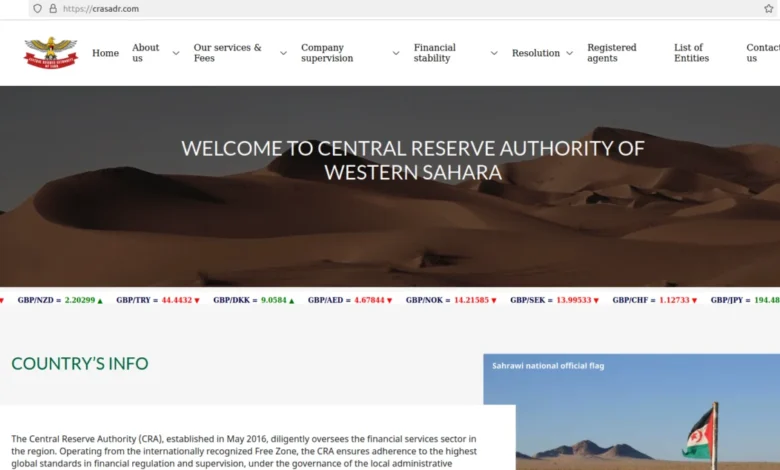
This corporation, under the guise of an official regulatory body, claimed to oversee licensing for cryptocurrency, foreign exchange, and online gaming businesses in the Western Sahara—a disputed territory in northwest Africa. The regulatory body’s website, crasadr.com, provided a veneer of legitimacy to these illicit businesses, offering "licenses" that were effectively worthless but provided a sense of security to criminal clients.
Technical analysis further confirmed the deception: the domain for the Central Reserve Authority of the Western Sahara was hosted on the same server as several of Certa Payments’ own sites. This self-referential ecosystem allowed the criminals to "regulate" themselves, creating a loop where the platform issued its own licenses, oversaw its own compliance, and effectively operated in a regulatory vacuum of its own making.
Broader Impact and Future Implications
The impact of the UK’s October 8 announcement was immediate. Telegram support bots associated with the platform reportedly began informing users that the service was suddenly unable to process transactions, signaling a rapid collapse of their operational capabilities.
For the broader cryptocurrency industry, the sanctioning of Cryptomus sends a clear message: the days of "jurisdiction shopping" and hiding behind shell companies in obscure or disputed territories are drawing to a close. International regulators are increasingly utilizing advanced blockchain analytics to pierce the veil of anonymity, tracking the flow of funds through these platforms and identifying the real-world nodes—such as bank accounts and stablecoin issuers—that allow these services to exist.
As the international community continues to grapple with the role of digital assets in state-sponsored cyber warfare, the Cryptomus case will likely serve as a blueprint for future interventions. By coordinating across the Five Eyes alliance, governments are demonstrating that they can effectively dismantle even the most resilient, multi-layered criminal payment processors. However, as the rapid emergence of the "Heleket" brand proved, the challenge remains to anticipate the next iteration of these services before they can reach the multi-billion-dollar scale that made Cryptomus such a potent tool for global illicit finance.
The UK’s decisive action has not only crippled a major criminal pipeline but has also set a new standard for trans-Atlantic cooperation in the digital age, effectively signaling that no amount of technical obfuscation or corporate rebranding will shield entities that serve as the financial backbone for sanctioned regimes and criminal syndicates.