Textual-Cogs Expands Python TUI Development Ecosystem with New Directory and Open File Dialogs

The Python open-source development community has received a notable addition to its command-line interface tooling ecosystem with the release of version 0.0.5 of textual-cogs, a specialized library of reusable dialogs and widgets designed for the Textual framework. Developed by software author and educator Michael Driscoll during the writing of his book, Creating TUI Applications with Textual and Python, the package aims to bridge the gap between traditional graphical user interface (GUI) paradigms and modern terminal user interface (TUI) design. The latest updates introduce critical navigation components—specifically a directory selection dialog and an open file dialog—that closely mirror established desktop GUI patterns, thereby lowering the barrier to entry for developers transitioning from libraries such as wxPython to modern terminal environments.
The journey toward the creation of textual-cogs began as Driscoll embarked on documenting the nuances of building sophisticated terminal applications using Textual, a rapid application development framework for Python that enables developers to build rich applications in the terminal using a syntax reminiscent of modern web development and desktop toolkits. Recognizing that many developers transitioning to TUI development miss the out-of-the-box utility components found in traditional desktop frameworks, Driscoll initiated the textual-cogs repository on GitHub to house modular, reusable interface elements. Initially populated with basic dialog structures and a save-file utility, the project has steadily evolved through incremental version releases. Version 0.0.4, deployed to repositories in late May, introduced the long-awaited open file dialog to complement the existing save functionality. This was swiftly followed by version 0.0.5, which rolled out the directory dialog feature, allowing terminal applications to handle complex file-system interactions with native-like ergonomics.
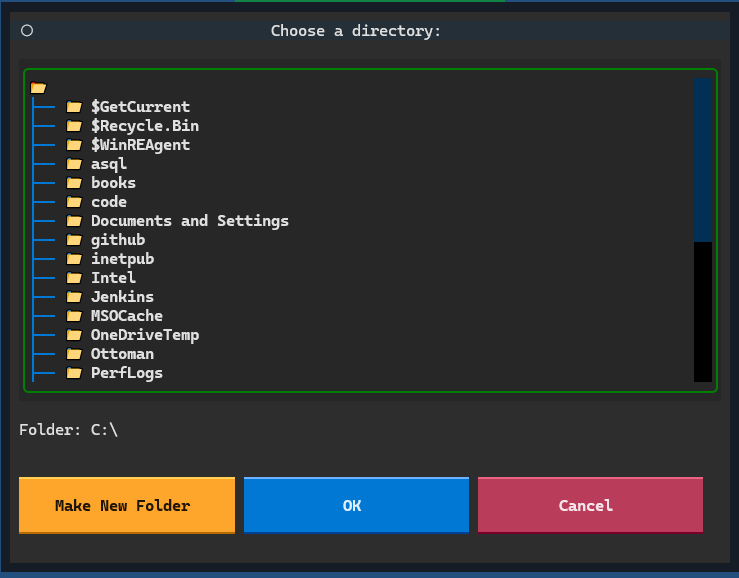
At the core of the newly introduced features in textual-cogs v0.0.5 is the Directory Dialog, architecturally comparable to the classic wx.DirDialog found in wxPython. This component provides users with an intuitive, hierarchical view of their directory structures within the terminal window, granting the ability to traverse paths, select specific folders for operational targeting, and even create new directories on the fly directly from the modal interface. This functionality addresses a historical pain point in TUI design, where developers previously had to write custom, boilerplate file-system navigation logic for every new terminal utility. By encapsulating these routines into a single, importable widget, textual-cogs significantly accelerates the development lifecycle for command-line software engineering teams.
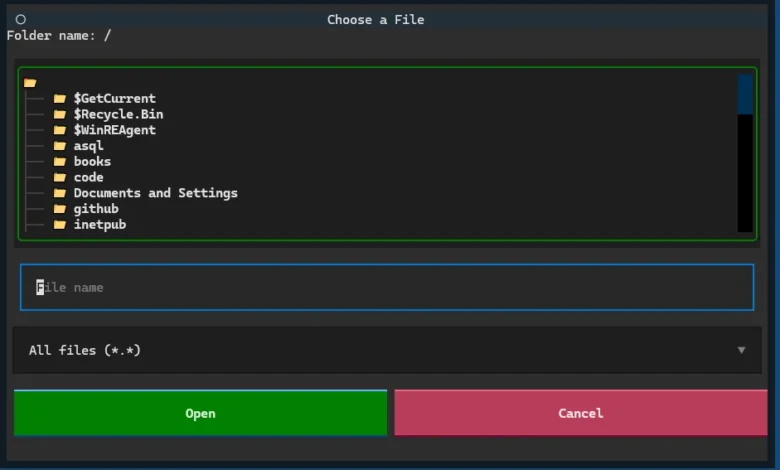
Preceding this in the v0.0.4 release, the Open File Dialog filled a critical functional gap within the library’s utility suite. While textual-cogs already featured a robust save-file dialog—allowing applications to prompt users for destination paths—the omission of a standardized open file mechanism limited its applicability in document-editing, configuration-loading, and data-importing terminal applications. The new open file dialog presents a streamlined, filtered view of file systems, enabling end-users to locate and load existing files efficiently. Together, the directory and open file dialogs establish a comprehensive file-management toolkit for the Textual ecosystem, reducing the overhead required to build data-intensive terminal applications.
Installation and integration of textual-cogs have been streamlined to fit modern Python packaging standards. Developers can incorporate the library into their virtual environments using standard dependency management tools such as pip or uv. The installation command remains uniform across supported package managers:
python -m pip install textual-cogs
This simplicity in distribution reflects a broader industry trend toward lightweight, modular dependencies in Python development, where developers prefer granular, single-purpose helper packages over monolithic UI frameworks.
The broader implications of tools like textual-cogs extend far beyond individual developer convenience, pointing toward a renaissance in terminal-based computing. Over the past several years, the software engineering landscape has witnessed a resurgence in appreciation for command-line tools, driven by the popularity of remote development environments, containerization, cloud-native infrastructure, and performance-conscious workflows. Developers increasingly spend their working hours inside terminal multiplexers, integrated development environment terminal panes, and SSH sessions. Traditional GUIs, while powerful, often introduce friction when context-switching away from the terminal.
Frameworks like Textual have revolutionized this space by bringing CSS-like styling, reactive data binding, and event-driven architecture to the command line. However, the ecosystem surrounding these foundational frameworks relies heavily on community-driven auxiliary libraries to mature. Packages like textual-cogs act as force multipliers, providing the higher-level abstractions necessary to build enterprise-grade terminal applications—such as database clients, log analyzers, container management dashboards, and file explorers—without forcing every engineering team to reinvent standard UI components from scratch.
From an economic and productivity standpoint, the modularization of TUI components reduces development overhead and standardizes user experience across terminal applications. Just as the widespread adoption of standardized widget libraries in web development (such as Material-UI or Bootstrap) accelerated the delivery of web applications, component libraries for TUI frameworks help establish consistent interaction patterns in the terminal. When users encounter familiar dialog behaviors—such as arrow-key navigation, standard shortcut keys for folder creation, and predictable modal layering—the cognitive load of operating terminal software drops precipitously.
As the textual-cogs project looks toward future updates, the roadmap includes expanding beyond dialog-centric components to incorporate a wider variety of specialized widgets. While the repository currently centers on file system interactions and modal dialogs, the architectural foundation permits the seamless addition of composite UI elements tailored to data visualization, form handling, and administrative control panels.
Industry observers note that as Python continues to dominate fields such as data science, artificial intelligence backend engineering, and systems administration, the demand for sophisticated tooling that operates efficiently within constrained terminal environments will only grow. Projects like textual-cogs, born out of practical documentation and real-world development needs, exemplify the strength of the open-source model in rapidly addressing niche engineering requirements. By lowering the barrier to creating polished, user-friendly terminal interfaces, such libraries empower a new generation of developers to build command-line applications that rival traditional desktop software in both capability and elegance.