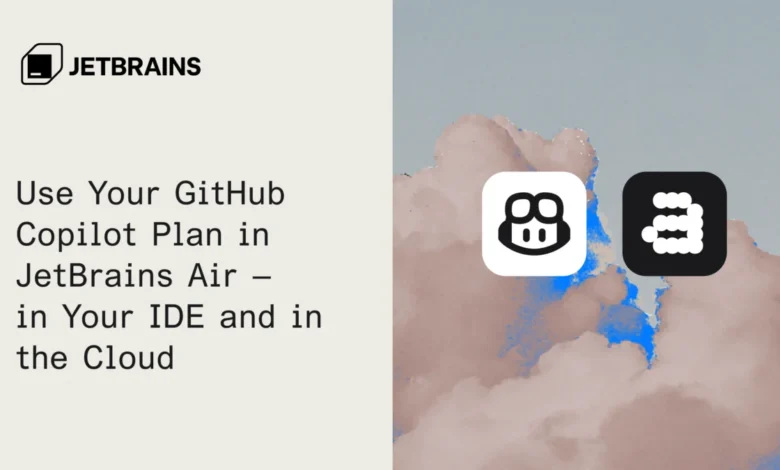
JetBrains has officially integrated GitHub Copilot into its agentic development environment, JetBrains Air, marking a significant convergence of two of the software development industry’s most prominent AI-assisted toolsets. This integration allows developers to leverage their existing GitHub Copilot subscriptions to execute automated coding tasks directly within the JetBrains ecosystem, both locally in an Integrated Development Environment (IDE) and via remote, cloud-based sandboxed environments. By utilizing the Agent Client Protocol (ACP), JetBrains Air enables developers to orchestrate GitHub Copilot alongside other leading AI agents like Claude, Codex, and Junie, creating a unified interface for complex software engineering workflows.
The Evolution of Agentic Development
The rise of agentic development environments represents a paradigm shift from traditional "copilot" models, which primarily offer code suggestions, to autonomous systems capable of executing multi-step tasks. JetBrains Air was launched to address the need for an environment where agents can perform iterative work—such as debugging, refactoring, and dependency management—without requiring constant human intervention.
The integration of GitHub Copilot into Air is a strategic move to bridge the gap between popular AI assistants and robust, autonomous infrastructure. Previously, developers often faced a fragmented experience, using GitHub Copilot for real-time autocomplete and switching to different tools for task-based automation. By centralizing these capabilities, JetBrains is positioning Air as an orchestration layer for the modern developer’s toolkit. This collaboration leverages the official GitHub Copilot CLI, ensuring that developers receive the same model performance and reliability they expect from the standard GitHub Copilot experience, now augmented by the task-management capabilities of the Air platform.
Technical Implementation: The Agent Client Protocol
At the core of this integration is the Agent Client Protocol (ACP). Developed by JetBrains, the ACP is an open-standard communication framework designed to facilitate interoperability between different AI agents and the development environment. By adopting ACP, GitHub Copilot acts as a modular component within the Air ecosystem.
When a developer initiates a task, the Air environment communicates with the GitHub Copilot CLI. Because the connection is mediated through the ACP, the agent operates in a consistent manner regardless of whether it is running on a local workstation or within a cloud-based Docker container. This technical architecture ensures that the state of the code, the environment variables, and the task parameters remain synchronized. Furthermore, this approach allows for a "plug-and-play" experience where developers can switch between different AI models based on the requirements of a specific project, such as leveraging Claude for architecture refactoring and GitHub Copilot for routine bug fixes.
Cloud-Based Sandboxing and Remote Execution
One of the most compelling features of this integration is the ability to run GitHub Copilot tasks in the cloud via Air Teams. For complex tasks—such as updating legacy dependencies or executing extensive test suites—the process can be computationally intensive and time-consuming.
In the Air cloud environment, each task is provisioned its own isolated virtual machine. This sandboxing is critical for security and reliability; because the agent operates within a transient Docker container, it can perform operations like package installation, system building, and unit testing without affecting the host machine or polluting the developer’s local workspace. Once the task is complete, the environment is torn down, leaving no residual files or configuration changes. This "disposable infrastructure" model is increasingly popular in DevOps-heavy workflows, as it provides a clean state for every interaction, effectively eliminating the "works on my machine" class of errors.
Workflow Integration and Automation
The integration supports a variety of operational modes, from manual task initiation to event-driven automation. Developers can trigger a GitHub Copilot task directly from their IDE—such as IntelliJ IDEA—or via the web-based Air dashboard.
For teams looking to optimize their CI/CD pipelines, Air enables the scheduling of these tasks. Common use cases include:
- Automated Dependency Updates: Scheduling weekly runs where the agent identifies and updates out-of-date packages, creating a pull request for human review.
- Pull Request Analysis: Triggering an agentic review on every new pull request, allowing Copilot to suggest code improvements or identify potential regressions before a human engineer opens the code.
- Flaky Test Remediation: Offloading the repetitive task of re-running and debugging flaky tests to an agent, which can iterate on the code until the test suite stabilizes.
While these automations provide significant efficiency gains, they also require careful management of resources. Because these tasks consume credits from the user’s existing GitHub Copilot plan, high-frequency automations—such as triggering a full agentic analysis on every single code commit—could lead to unexpected consumption of monthly limits. JetBrains notes that the system does not currently provide native budget warnings, meaning developers must monitor their usage via the GitHub dashboard to avoid service interruptions.
Strategic Implications for the Developer Ecosystem
The partnership between JetBrains and GitHub represents a broader industry trend toward "agentic interoperability." For years, software development platforms functioned as silos, with proprietary AI tools locked into specific environments. By opening the protocol to allow third-party agents like GitHub Copilot to function within Air, JetBrains is signaling a move toward a more modular and agnostic future.
Industry analysts observe that this move addresses two major pain points in AI adoption: cost efficiency and tool fatigue. By allowing developers to utilize their existing, paid-for GitHub Copilot plans within a more capable agentic environment, organizations can maximize the return on investment for their AI spend. Furthermore, it simplifies the developer experience by reducing the number of interfaces an engineer must navigate.
However, the shift to autonomous agents also introduces new considerations regarding security and governance. Running AI agents in the cloud requires clear policies on data access and environment variables. JetBrains’ emphasis on sandboxed, single-use containers is a proactive response to these concerns, ensuring that while the agent has the power to modify code, it does so within a strictly defined and ephemeral scope.
Future Outlook
As the capabilities of Large Language Models (LLMs) continue to advance, the role of agentic environments like JetBrains Air will likely expand. Future iterations may include more sophisticated feedback loops, allowing agents to self-correct based on compiler errors or runtime feedback from the cloud environment.
The successful integration of GitHub Copilot serves as a validation of the ACP framework. If other vendors follow suit, the industry may see the emergence of a standardized "Agent Marketplace," where developers can dynamically assign tasks to the most suitable model based on cost, performance, and domain-specific accuracy. For now, the integration provides a robust foundation for teams looking to move beyond simple code completion and toward a future of fully autonomous, AI-driven software maintenance. Developers are encouraged to begin with low-risk, well-defined tasks to familiarize themselves with the workflow, as this will help in establishing a predictable rhythm for resource and credit consumption.