Streamlining Digital Asset Management: How Modern File Infrastructure is Reshaping Web Development and Media Delivery

In the contemporary digital landscape, managing user-generated media and external files represents one of the most persistent operational hurdles for software engineers and web developers. As applications scale, the variety of file formats, dimensions, and submission states from disparate sources can quickly overwhelm native server infrastructures. Historically, developers were forced to architect complex, bespoke pipelines from scratch—writing custom code for ingestion, third-party cloud storage synchronization, server-side processing libraries, and Content Delivery Network (CDN) routing. Today, however, the industry has increasingly shifted toward specialized utility platforms designed to abstract this complexity. Among these, Filestack has emerged as a prominent enterprise solution, offering an end-to-end framework for uploading, transforming, and delivering digital assets with optimal performance.
The Architectural Evolution of Media Handling
The evolution of web development over the past two decades has mirrored the explosive growth of rich media on the internet. In the early days of web design, static images and basic document uploads required minimal server overhead. However, the rise of high-resolution digital photography, mobile video recording, and multi-platform user authentication has transformed every standard web application into a potential media powerhouse.
Developers are no longer simply handling simple JPEG or PNG files uploaded from a local hard drive. Instead, modern web applications routinely ingest multi-gigabyte video files, complex PDF documents, and HEIC images captured from smartphones, alongside remote assets pulled directly from cloud storage lockers and social media networks. Building an internal architecture capable of securely receiving, validating, virus-scanning, resizing, and delivering these diverse assets demands significant engineering hours and ongoing infrastructure maintenance.
This operational bottleneck has driven the demand for specialized File as a Service (FaaS) providers. By delegating the ingestion and transformation pipelines to dedicated external utilities, organizations can redirect internal engineering talent toward core product development rather than infrastructure plumbing.
The Onboarding and Integration Journey
For development teams evaluating media management platforms, the initial technical evaluation phase typically begins with an exploratory sandbox environment. Modern service providers generally facilitate this through frictionless onboarding models, offering time-gated trial periods with full feature parity. Upon registering for a developer account, engineers are granted immediate access to comprehensive software development kits (SDKs) and robust documentation repositories.
Detailed, developer-centric documentation serves as a critical differentiator in the enterprise software market. Comprehensive API references, copy-and-paste code samples, and step-by-step integration guides drastically reduce the time-to-first-upload for newly onboarded engineering teams. Whether an application is built on modern front-end frameworks like React and Vue or heavy back-end architectures utilizing Python, Node.js, or Ruby, standardized libraries ensure that file infrastructure can be integrated within hours rather than weeks.
Client-Side Versus Server-Side Ingestion Mechanics
A core strength of advanced media management platforms lies in their flexibility regarding ingestion architecture. Developers can choose between client-side direct uploads, which bypass the application’s primary web server to reduce bandwidth costs and latency, or secure server-side pipelines.
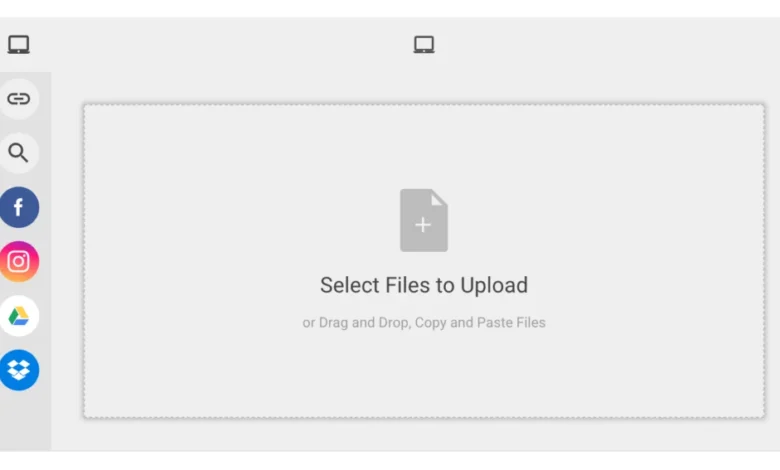
Client-side uploading is typically initiated through lightweight JavaScript modules that instantiate a pre-built user interface component, commonly referred to as a picker. A basic implementation requires minimal code:
const client = filestack.init("apikey");
const picker = client.picker();
picker.open();
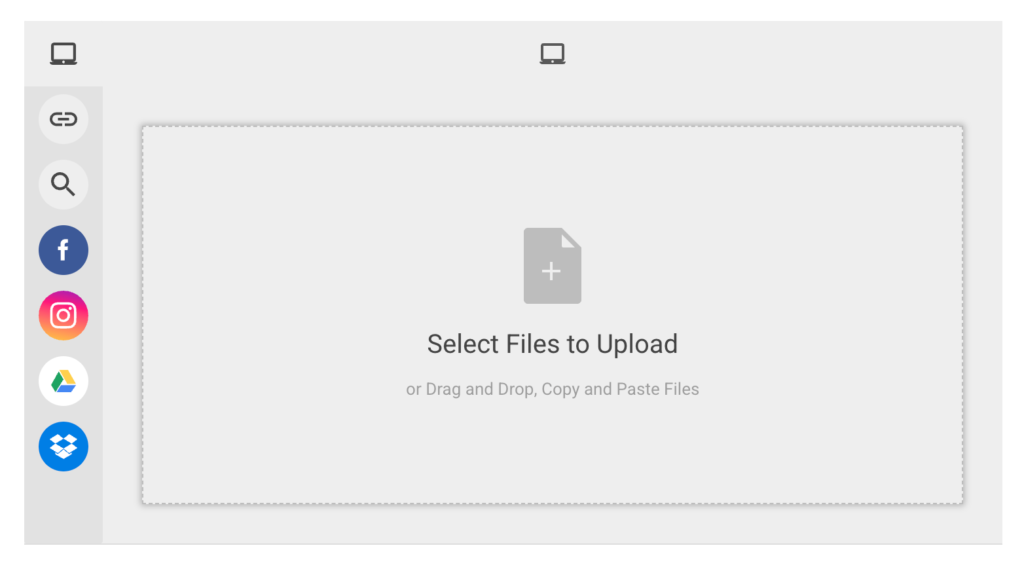
Executing this logic generates an intuitive, highly functional graphical user interface that handles file selection, drag-and-drop operations, and real-time upload progress tracking natively within the browser.
Beyond local file selection, modern upload pickers frequently integrate with over twenty popular third-party cloud storage and social media services, including Google Drive, Dropbox, GitHub, Facebook, and Instagram. This deep integration allows end-users to import existing digital assets seamlessly without needing to download files locally before uploading them to the host application.
Conversely, scenarios requiring strict backend governance or automated batch processing favor server-side libraries. For instance, developers operating within Python environments can execute direct server-side uploads while defining granular storage parameters, target cloud buckets, and custom metadata tags:
from filestack import Client

client = Client(APIKEY)

store_params =
    'location': 's3',
    'path': 'folder/subfolder/',
    'upload_tags':
          "foo":"bar"


filelink = client.upload(filepath='path/to/filename.jpg', store_params=store_params)
This dual-path capability ensures that applications can enforce security protocols and compliance standards regardless of whether the asset originates from an end-user interface or an automated backend cron job.
Real-Time Transformation and Processing Pipelines
Once digital assets are successfully ingested, the subsequent challenge involves normalizing disparate files into uniform formats suitable for presentation across various device viewports. Because users upload media in arbitrary dimensions, color profiles, and aspect ratios, manual intervention is entirely unfeasible at scale.
Advanced media utilities address this by offering dynamic, URL-based transformation engines capable of processing images, documents, and videos in real time or via asynchronous background workflows. Rather than storing dozens of pre-rendered derivative images for every uploaded asset, modern systems generate transformations on demand through structured URL parameters.
For example, resizing an image to a standardized width can be executed by appending explicit instructions to the core CDN asset URL:
https://cdn.filestackcontent.com/resize=width:300/pdn7PhZdT02GoYZCVYeFFurthermore, chaining multiple transformation parameters allows developers to apply complex visual filters, rotational adjustments, and artistic borders instantaneously:
https://cdn.filestackcontent.com/resize=width:300/sepia=tone:80/polaroid/pdn7PhZdT02GoYZCVYeFBeyond basic image resizing and color grading, modern transformation suites support intelligent cropping, facial recognition for automated thumbnail centering, optical character recognition (OCR) for document parsing, and dynamic video transcoding. These capabilities ensure that media can be optimized for specific user contexts—delivering lightweight WebP or AVIF images to mobile browsers while serving high-resolution assets to desktop displays. In addition to programmatic URL manipulation, many platforms provide embeddable transformation user interfaces, empowering non-technical end-users to crop and edit their own media prior to final submission.
The Economics and Mechanics of Optimized Delivery
The final and most visible phase of the media lifecycle is delivery. Regardless of how efficiently a file is ingested or transformed, the speed at which it renders on a client device directly influences user retention, engagement metrics, and overall business conversion rates. Milliseconds of latency in image rendering can lead to measurable user abandonment, particularly on mobile e-commerce platforms.
To mitigate latency, modern file infrastructure relies heavily on distributed Content Delivery Networks (CDNs). When a transformed or stored asset is requested for the first time, the CDN caches the response at edge locations geographically proximal to the end-user.
Industry-standard caching policies dictate that unique URL requests remain cached within the CDN network for a predetermined duration—frequently 30 days—before requiring re-validation against the primary origin storage. This caching strategy drastically reduces Time to First Byte (TTFB) and offloads significant bandwidth pressure from originating cloud buckets, resulting in more resilient application performance during traffic spikes.
Broader Industry Implications and Future Outlook
The proliferation of File as Service utilities highlights a broader macroeconomic trend within software engineering: the relentless outsourcing of non-core operational infrastructure. As user expectations for rich, instantaneous digital experiences continue to escalate, development teams face mounting pressure to deliver feature-rich applications under aggressive timelines.
By adopting specialized platforms to manage the complex lifecycle of digital assets, organizations reduce their technical debt, enhance application security through centralized vulnerability management, and optimize operational expenditures related to cloud data egress. As artificial intelligence and machine learning models become increasingly integrated into media processing pipelines—enabling automated tagging, smart compression, and real-time content moderation—the strategic value of robust file infrastructure will only continue to grow within the modern software ecosystem.