Accelerating Legacy Modernization: How Agentic AI Transforms AS/400 Business Rule Extraction from Months to Days

The rapid modernization of enterprise IT environments is often stalled by a single, persistent bottleneck: the opaque complexity of legacy AS/400 systems. For decades, global organizations have relied on RPG and COBOL codebases to manage critical order fulfillment, inventory management, and shipping logistics. However, as the original architects of these systems retire and the talent pool with niche RPG expertise shrinks, companies face an escalating technical debt crisis. Traditional methods of "business rule extraction"—the process of documenting how a legacy system actually functions—have historically been manual, labor-intensive, and prone to human error, often consuming four to six weeks per system and requiring up to 80 person-hours of expert time.
A new development in agentic AI, specifically the platform Kiro, is fundamentally altering this timeline. By deploying an autonomous, AI-powered development environment that operates across IDE, CLI, and web surfaces, organizations are now compressing the documentation phase of modernization projects from months into mere days. This technological shift allows firms to bypass the manual drudgery of code analysis and move directly into the strategic implementation phase of cloud-native transformation.
The challenge of legacy systems is not merely the age of the hardware, but the fragmentation of business logic. In a typical AS/400 environment, shipping rules, tax calculations, and warehouse allocation logic are scattered across thousands of lines of code, often spanning interconnected programs that lack comprehensive, centralized documentation. When an organization decides to move to a modern cloud infrastructure, the inability to clearly define these rules becomes a primary point of failure. If the rules are not extracted with 100% accuracy, the modernized system will inevitably mirror the flaws of its predecessor.
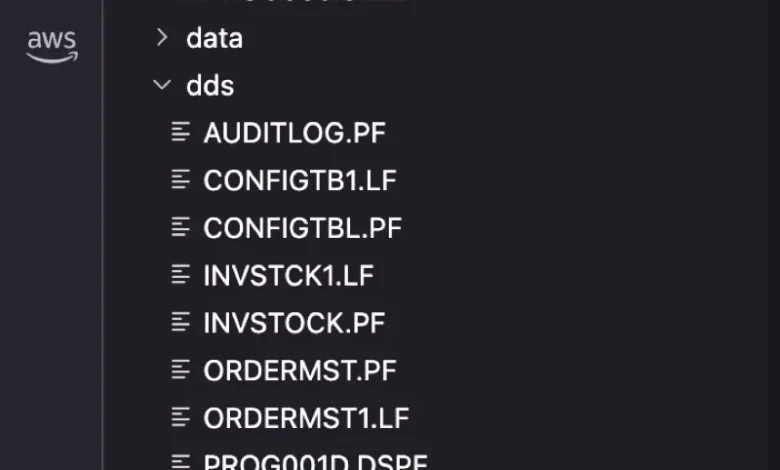
The chronological workflow of a standard modernization project using Kiro begins with the configuration of "steering files." These act as the behavioral guardrails for the AI. By defining the project context—such as the specific directory structures for RPGLE and CLLE files and the technical standards for documentation—engineers can ensure that the AI focuses on high-value targets. For instance, instructing the AI to map cryptic Data Description Specification (DDS) field names to human-readable business terms provides the immediate foundation for a data dictionary.
Following configuration, the process moves into the execution of a "Kiro Spec." This phase involves a series of discrete, high-precision tasks. First, the AI parses the existing physical and logical file definitions to understand the data architecture. Second, it traverses the program call chains, mapping out exactly how PROG001 interacts with PROG005, and how parameters are passed across the system. Finally, it extracts the business logic itself, pulling 10 to 20 lines of code context for every rule identified. This context is critical; it allows a human subject matter expert (SME) to review the extracted rule against the original source code, ensuring that the AI’s interpretation of complex subroutines is accurate.
The data supporting this shift in methodology is compelling. In a recent pilot project involving a five-program order fulfillment system comprising roughly 40,000 lines of code, the manual effort required would have historically reached up to 80 person-hours. With the integration of Kiro, the total effort was reduced to 12 hours—an efficiency gain of nearly 85%. More importantly, the project timeline was compressed from a six-week discovery phase to just three days. When projected across an entire enterprise portfolio of ten or more systems, the cumulative savings in both time and engineering resources represent a significant fiscal and operational advantage.
The implications of this shift extend beyond mere time savings. The primary quality improvement lies in the uniformity of documentation. Manual extraction is subject to the interpretive bias of the individual analyst; one writer might describe a stock allocation subroutine differently than another. AI-driven extraction, however, applies a consistent set of rules and templates across the entire codebase. This produces a "single source of truth" for the business logic, which is essential for developers tasked with building the replacement system in modern languages like Java, Python, or Go.
Furthermore, the "multiplier effect" of this approach is substantial. Because the templates and steering files created for the first system are reusable, subsequent systems can be analyzed with even greater speed. Once an organization has standardized its extraction templates, the per-system effort drops significantly, allowing for a phased, programmatic approach to total mainframe retirement.
Despite the automation, the role of the human expert remains paramount. Kiro functions as a force multiplier, not a total replacement for institutional knowledge. The AI excels at pattern recognition, tracing execution paths, and identifying dependencies, but the final validation of complex business logic requires an SME who understands the historical context of the system. In the described workflow, the 12-hour total effort is heavily weighted toward human review. This ensures that the modernization project is built on a foundation of validated intelligence, mitigating the risks associated with "black-box" migrations.
From an architectural standpoint, the extraction of configuration-driven behavior is perhaps the most difficult aspect of mainframe modernization. Many AS/400 systems rely on external tables or hard-coded constants that alter program behavior at runtime. By analyzing these "CHAIN" and conditional branching patterns, Kiro enables the AI to map current configuration values to their resulting business behaviors. This mapping is vital for companies that need to replicate complex, multi-tiered shipping or pricing logic in a new environment without losing nuance.
The broader impact of this technology is the democratization of modernization. Historically, only the largest enterprises with massive budgets and dedicated legacy teams could afford the luxury of a comprehensive, multi-year migration. The ability to perform high-fidelity rule extraction in days lowers the barrier to entry, enabling mid-sized organizations to modernize their critical infrastructure. This could lead to a wave of digital transformation across sectors like retail, logistics, and manufacturing, where AS/400 systems remain the quiet engines of daily operation.
As the industry moves forward, the combination of agentic AI and structured, rule-based extraction will likely become the industry standard for modernization. Organizations that continue to rely on manual, multi-month discovery phases will find themselves at a competitive disadvantage compared to those that leverage AI to accelerate the move to the cloud. By reducing the "discovery tax" associated with legacy systems, companies can reallocate their engineering talent toward innovation rather than archaeological code analysis.
Industry observers note that while the tools are changing, the fundamental goal remains the same: ensuring business continuity while upgrading the underlying technology. The consensus among modernization experts is that the "AI-first" approach is no longer a luxury but a necessity for organizations facing the dual pressures of talent attrition and the need for agility in a cloud-first market.
For organizations currently stalled in the planning phase, the recommendation from recent successful implementations is to start small. By selecting a single, isolated module of the AS/400 environment, teams can test the efficacy of the steering files and validate the accuracy of the extracted documentation before scaling the process to larger, more integrated systems. This iterative approach allows for the refinement of templates and the calibration of the AI to the specific idiosyncrasies of the organization’s legacy code.
Ultimately, the goal of this technology is to strip away the fear of the "unknown" that often plagues legacy modernization. By turning thousands of lines of cryptic, interconnected RPG code into a clean, well-documented technical specification, businesses can finally look at their legacy systems as a library of knowledge rather than a mountain of technical debt. This clarity is the first, and perhaps most important, step in building the infrastructure of the next generation. As the toolsets mature and more organizations share their successful implementation patterns—such as those available in open-source repositories—the risks associated with legacy modernization will continue to diminish, further accelerating the inevitable transition to modern, scalable computing environments.