Microsoft’s Financial Entanglement with OpenAI Deepens as Revenue Contribution Reaches Record Highs

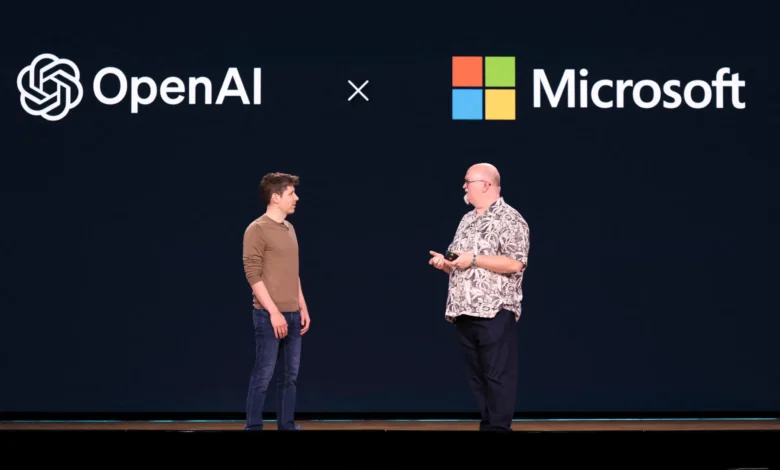
Microsoft Corporation has reported a staggering $10 billion in revenue derived from its commercial arrangements with OpenAI for the fiscal quarter ending September 30, 2026. This figure, disclosed in a recent regulatory filing, accounts for nearly 11% of the software giant’s total quarterly revenue of $92.3 billion. The data underscores a paradoxical business landscape where the two entities, once defined by a tightly knit, exclusive partnership, are increasingly operating as direct market competitors while simultaneously maintaining a massive, multi-billion-dollar financial dependency.
The fiscal year for Microsoft began on July 1, 2026, marking the September quarter as the first of fiscal 2027. When contrasted with the total revenue generated from OpenAI throughout the entirety of the 2026 fiscal year—which amounted to $24.1 billion—the current quarterly pace suggests an annualized run rate of approximately $40 billion. This trajectory highlights not only the explosive growth of artificial intelligence adoption across enterprise sectors but also the sheer scale of the capital flowing between the two organizations.
A Complex Financial Ledger
Beyond the raw revenue figures, the regulatory disclosures reveal growing outstanding receivables from OpenAI. As of the end of September, OpenAI owed Microsoft $7.2 billion, an increase from the $6 billion reported at the end of June 2026. Financial analysts emphasize that these receivables represent payments owed for previous transactions, such as cloud infrastructure usage and joint services, rather than a new revenue stream.
The ambiguity regarding the exact nature of these payments remains a point of interest for market observers. While the $10 billion figure is comprehensive, it does not explicitly decouple revenue-sharing payments from the direct fees OpenAI pays for Microsoft’s Azure cloud computing services. Historically, these payments have been a blend of high-margin infrastructure consumption and contractual profit-sharing agreements. Leaked documents from late 2025 indicated that Microsoft had collected over $865 million in net revenue-sharing payments during the first nine months of that year alone, providing a baseline for the structure of their financial cooperation.
Chronology of a Transforming Alliance
The relationship between Microsoft and OpenAI has undergone significant evolution since the initial multi-billion-dollar investments. To understand the current financial dynamic, one must look at the timeline of their shifting strategic alignment:
- 2019–2023: Microsoft solidifies its position as the primary strategic partner and cloud provider for OpenAI, investing over $13 billion to gain access to proprietary models and integrate them into the Microsoft 365 and Azure ecosystems.
- May 2025: Reports emerge that OpenAI is seeking to renegotiate terms, including a reduction in the revenue-sharing percentage owed to Microsoft, as the startup scales its own commercial operations.
- October 2025: The partnership undergoes a major restructuring. Microsoft relinquishes its exclusive control over OpenAI’s technical roadmap, allowing the startup to pursue partnerships with other cloud providers. In a massive compensatory move, OpenAI commits to $250 billion in future Azure service purchases over the coming decade.
- April 2026: A new contractual framework is established, extending the revenue-sharing obligations through 2030, albeit subject to specific caps and performance thresholds.
- July–September 2026: Microsoft begins training internal sales teams to actively compete against OpenAI and Anthropic, signaling a pivot toward a more aggressive, independent market stance.
The Dynamics of Revenue Sharing and Equity Dilution
Central to this partnership is the revenue-sharing mechanism. While never publicly confirmed by either party, industry reports suggest that OpenAI shares approximately 20% of its revenue with Microsoft. This arrangement was a cornerstone of the initial investment rounds, designed to ensure that as OpenAI’s models became the industry standard, Microsoft would capture a significant portion of the upside.
Simultaneously, Microsoft’s equity stake in OpenAI has shown a consistent, albeit slow, downward trend. Following the recapitalization in October 2025, Microsoft held roughly 27% of the organization. By June 2026, that figure had slipped to 25%, and by the close of the September 2026 quarter, it settled at approximately 24%. While Microsoft has not issued a formal explanation for this dilution, market analysts attribute it to the issuance of new equity to employees and external investors as OpenAI continues its aggressive expansion and hiring efforts.
Competitive Friction in the Cloud Era
The most striking development in this quarter’s report is the juxtaposition of $10 billion in revenue alongside the intensifying competition between the two firms. Microsoft’s leadership has moved to ensure that its salesforce is prepared to challenge OpenAI’s offerings in the enterprise space. This shift is driven by the realization that AI has moved from a novelty to a critical infrastructure layer.
For Microsoft, the goal is clear: capture the market at every level. The company is simultaneously collecting billions from OpenAI’s growth while building its own internal AI product lines that compete directly with OpenAI’s flagship offerings. This "co-opetition" is perhaps the most significant business experiment in the history of the software industry. By acting as the "picks and shovels" provider for the AI revolution through Azure, Microsoft ensures that regardless of which AI model prevails—be it an OpenAI product or a home-grown Microsoft solution—the underlying infrastructure spend benefits their bottom line.
Implications for Stakeholders and Regulators
The scale of this relationship is likely to draw continued scrutiny from global regulators, particularly those focused on antitrust and market concentration. The fact that a single vendor—Microsoft—is both the primary financier and the primary infrastructure provider for the leader in generative AI creates a unique form of market gravity.
For investors, the primary concern is the sustainability of this revenue. If OpenAI’s growth slows or if it successfully migrates significant portions of its workload to competing cloud providers, Microsoft’s quarterly revenue could face downward pressure. However, the $250 billion commitment in Azure services through 2035 provides a long-term buffer that suggests the two entities are inextricably linked for the foreseeable future.
Furthermore, the "theft of labor" narrative surrounding AI scraping and the legal challenges facing the industry add a layer of systemic risk. Microsoft’s exposure to these issues is not merely through its own AI tools but through its massive investment in OpenAI. As legal battles over training data and intellectual property intensify, the financial ties between these two entities will likely be subjected to even greater transparency requirements.
Looking Ahead: The Fiscal 2027 Outlook
As Microsoft moves further into the 2027 fiscal year, the company’s ability to maintain this $10-billion-per-quarter pace will depend on OpenAI’s ability to convert its high user engagement into sustainable, high-margin enterprise revenue. If OpenAI continues to scale its API services and consumer subscriptions, Microsoft stands to benefit exponentially.
However, the shift toward a less exclusive arrangement signifies that the era of "easy" integration between the two companies is over. The coming quarters will likely show a more nuanced ledger where Microsoft attempts to balance the role of a supportive partner with the role of a disruptive competitor. For now, the financial reality remains absolute: Microsoft is currently the greatest beneficiary of the AI gold rush, not just through its own innovation, but through its deep, lucrative, and increasingly complicated bond with the very startup it helped bring to prominence.
While the official statements remain diplomatic, the data tells a story of two giants navigating a landscape where their interests are aligned by billions of dollars, yet increasingly divided by the competitive demands of the global technology market. The next three years, leading up to the 2030 revenue-sharing expiration, will be decisive in determining whether this partnership remains a cornerstone of the tech industry or fractures under the weight of its own success.
Related posts: