Managing user-generated content and external media assets has long remained one of the most persistent bottlenecks in modern web and mobile application development. As digital platforms scale, developers face the complex challenge of ingesting files of arbitrary sizes, formats, and resolutions submitted from an array of disparate sources. Historically, engineering teams were forced to construct bespoke infrastructure from scratch—combining custom backend upload scripts, third-party cloud storage buckets, asynchronous queue workers for image and video processing, and content delivery networks (CDNs) for optimized distribution. Today, however, specialized developer-first utility platforms like Filestack have transformed this cumbersome operational overhead into an integrated, end-to-end service pipeline.
The modern imperative for seamless media management stems from the exponential growth of rich-media applications. Users today expect instantaneous file uploads, flawless mobile responsiveness, and high-resolution visual displays without encountering latency or formatting errors. When applications fail to process user-submitted media efficiently, bounce rates increase and user engagement drops. Consequently, infrastructure solutions that automate ingestion, manipulation, and delivery have become foundational components of contemporary software architecture.
The Evolution of Media Pipelines and Developer Workflows
Building a resilient media pipeline traditionally requires significant capital expenditure and ongoing maintenance. Engineers must provision cloud storage instances, configure security policies, implement multi-part upload logic to handle network interruptions, and write custom code using libraries like ImageMagick or FFmpeg to handle resizing, cropping, and transcoding. Furthermore, scaling these systems to handle millions of assets requires sophisticated load balancing and caching strategies.
Platforms designed to abstract this complexity have redefined how teams approach file handling. By offering robust APIs and client-side libraries, these services allow developers to bypass the arduous task of building infrastructure infrastructure from the ground up. The onboarding process for such utility ecosystems is typically engineered to minimize friction, offering trial periods and comprehensive technical documentation complete with code samples, SDKs, and integration guides for major programming languages.
Advanced Ingestion: Client-Side Pickers and Server-Side Integrations
The entry point of any media management workflow is file ingestion. Modern applications must accommodate two primary ingestion vectors: user-facing front-end interfaces and automated back-end systems.
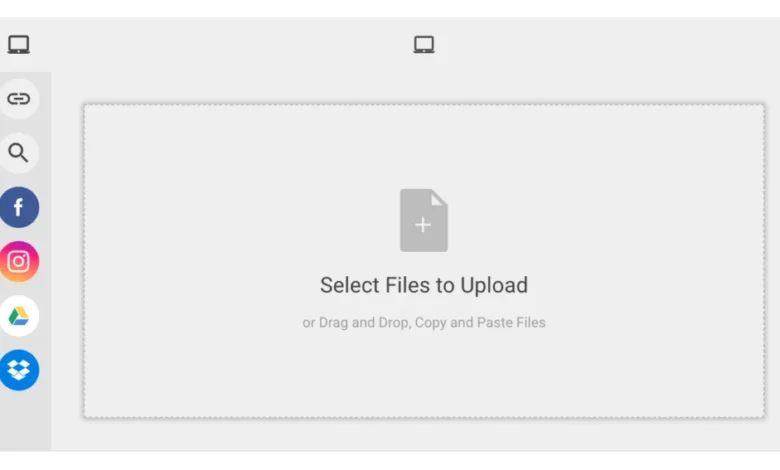
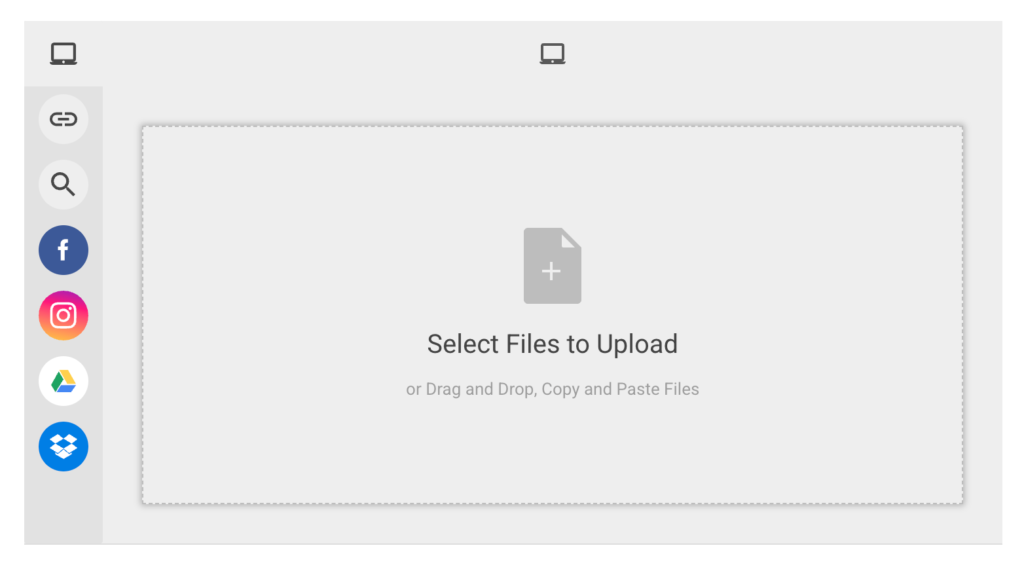
On the client side, user experience depends heavily on intuitive design and broad connectivity. Modern file-picker components integrate directly with more than twenty popular cloud storage providers and social media platforms, including Google Drive, Dropbox, GitHub, Facebook, and Instagram. This versatility allows users to import assets directly from their preferred cloud storage or social accounts without needing to download and re-upload files locally. Furthermore, drag-and-drop functionality has become a baseline expectation for desktop interfaces, significantly reducing user friction.
From a technical implementation standpoint, initializing a client-side picker requires minimal boilerplate code. Using standard JavaScript initialization protocols, developers can invoke a fully featured, highly secure upload widget with just a few lines of code:
const client = filestack.init("apikey");
const picker = client.picker();
picker.open();
Conversely, back-end ingestion workflows often require programmatic automation, such as batch processing, migration scripts, or server-to-server file transfers. For backend environments, robust Python libraries and equivalent SDKs for Node.js, PHP, Ruby, and Java allow engineers to route uploaded files directly to enterprise cloud storage solutions like Amazon S3 while simultaneously attaching rich metadata and custom upload tags. A typical server-side upload configuration illustrates this level of programmatic control:
from filestack import Client

client = Client(APIKEY)

store_params =
    'location': 's3',
    'path': 'folder/subfolder/',
    'upload_tags':
          "foo":"bar"


filelink = client.upload(filepath='path/to/filename.jpg', store_params=store_params)
Real-Time Transformations and Dynamic Media Processing
Once files are successfully ingested, the subsequent challenge involves asset transformation. Because users routinely upload media in varying dimensions, color profiles, and compression formats, developers must standardize these assets before rendering them on the front end. Traditional workflows rely on pre-processing uploaded files into fixed sizes upon ingestion, a method that often results in wasted storage space and inflexible design constraints when UI layouts change.
Modern utility platforms introduce dynamic, real-time transformation capabilities. Transformations are no longer restricted to static pre-processing; instead, they can be executed on-the-fly via URL manipulation parameters or synchronized processing workflows. This capability extends across multiple media types, including high-definition video, raster and vector images, and complex document formats like PDFs.
Image manipulation, for instance, can be achieved dynamically by modifying URL path parameters. Developers can alter image dimensions, apply complex color filters, rotate orientations, or generate stylistic borders instantaneously:
// Resize an image to have a width of 300px
https://cdn.filestackcontent.com/resize=width:300/pdn7PhZdT02GoYZCVYeF

// Add a color filter, rotate the image, and add a "polaroid" border to the image
https://cdn.filestackcontent.com/resize=width:300/sepia=tone:80/polaroid/pdn7PhZdT02GoYZCVYeF
Beyond programmatic URL transformations, many modern platforms also offer user-facing transformation interfaces. These interactive UI components empower end-users to crop, filter, and adjust their own media assets directly within the application workflow before final submission, enhancing user autonomy and reducing administrative review overhead.
High-Performance Delivery and CDN Caching Strategies
The final phase of the media lifecycle—delivery—is arguably the most critical for end-user satisfaction. Even the most efficiently processed assets lose their utility if network delivery is sluggish or unreliable. Content Delivery Networks (CDNs) serve as the backbone of modern web performance, caching assets across globally distributed edge servers to minimize latency and reduce origin server load.
Advanced media delivery networks employ sophisticated caching mechanisms to optimize performance. When a transformed or stored asset URL is requested for the first time, the CDN caches the response at edge locations globally. Standard caching protocols typically maintain these assets for an optimized duration—frequently 30 days—before re-evaluating or re-fetching the source if modifications occur. This caching strategy ensures that subsequent requests for identical media assets resolve instantaneously, directly improving core web vitals metrics such as Largest Contentful Paint (LCP) and overall site performance.
Broader Industry Implications and Future Outlook
The shift toward outsourced, API-driven media management infrastructure reflects a broader macroeconomic and architectural trend within software engineering: the unbundling of non-core infrastructure. As application complexity increases, engineering organizations increasingly prioritize core product logic over maintaining utility infrastructure.
By leveraging specialized platforms for file ingestion, real-time transformation, and global delivery, companies reduce technical debt, accelerate time-to-market, and ensure high availability across multi-region deployments. As internet bandwidth continues to expand and the demand for ultra-high-definition video, immersive 3D assets, and dynamic web content accelerates, the reliance on robust, scalable media utility ecosystems will remain a cornerstone of modern digital architecture.