Citrix NetScaler Zero-Day Vulnerabilities Exploited in the Wild Spark Urgent Security Patching Requirements

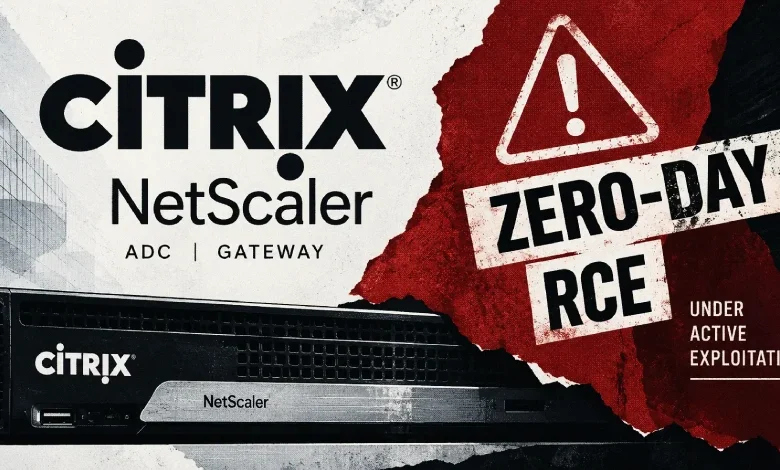
On September 27, 2026, Citrix officially confirmed that two critical remote code execution (RCE) vulnerabilities within its NetScaler Application Delivery Controller (ADC) and NetScaler Gateway products have been actively exploited in the wild. This disclosure arrived amidst a flurry of industry concern, following reports from security researchers and panicked network administrators who had begun preemptively disconnecting their infrastructure from the internet. The vulnerabilities, identified as CVE-2026-88771 and CVE-2026-88772, pose a severe threat to enterprise security, as they allow unauthorized actors to execute arbitrary code on affected appliances, potentially granting full control over critical network edge devices.
The Anatomy of the Threat
NetScaler ADC and NetScaler Gateway serve as the backbone for many global enterprise network architectures. These appliances are strategically positioned at the network perimeter, handling essential functions such as SSL VPN termination, load balancing, and complex user authentication protocols. Because these devices are inherently internet-facing, they are high-value targets for threat actors seeking an initial foothold into corporate environments.
The criticality of these specific flaws is underscored by their ability to bypass standard security configurations. Citrix noted that at least one of the identified vulnerabilities affects every deployment on a vulnerable version, including those utilizing default security settings. This "zero-day" nature—meaning the vulnerabilities were being weaponized by attackers before a vendor-supplied patch was available—has left countless organizations vulnerable to data exfiltration, lateral movement, and the deployment of persistent backdoors.
Chronology of the Disclosure
The timeline of this event highlights the rapid escalation from private research to public emergency:
- Late September 2026: Rumors of unpatched RCE vulnerabilities circulating in the cybersecurity research community began to gain traction.
- September 26, 2026 (Early): The security firm watchTowr publicly signaled on social media that it was investigating reports of credible, unpatched RCE flaws affecting NetScaler appliances.
- September 26, 2026 (Mid-day): Network administrators began reporting on public forums, including Reddit, that their IT security providers were instructing them to immediately take their NetScaler appliances offline to prevent potential compromise.
- September 26, 2026 (22:19 UTC): watchTowr released a follow-up statement confirming the existence of two distinct RCE flaws discovered during forensic analysis, anticipating that official vendor patches would arrive early the following week.
- September 27, 2026: Citrix issued an official security bulletin, formally acknowledging the flaws (CVE-2026-88771 and CVE-2026-88772) and releasing emergency firmware updates.
Official Response and Remediation
In its formal communication, Cloud Software Group, the parent company of Citrix, urged all customers to apply the necessary patches immediately. The bulletin specifically identifies affected versions and provides a roadmap for upgrading to secure builds. Notably, the update process is complicated by the fact that the 13.1 product branch recently reached its "End of Maintenance" milestone on September 15, 2026. Despite this, the severity of the threat has necessitated a prompt response from the vendor to protect remaining legacy deployments.

Citrix has not yet released specific indicators of compromise (IoC) or forensic evidence regarding the threat actors behind these attacks. The lack of public information regarding the identity of the attackers or the duration of the campaign suggests that the exploit may have been used in targeted, sophisticated operations prior to the public disclosure.
Broader Implications and Historical Context
The exploitation of edge devices like NetScaler has become a recurring theme in the cybersecurity landscape. In August 2025, a similar incident involving a different NetScaler flaw led to widespread exploitation, prompting the Netherlands’ National Cyber Security Centre (NCSC) to intervene with detailed guidance and forensic scripts.
The current situation highlights a fundamental limitation in incident response: applying a patch is not always sufficient. As seen in previous years, if an attacker has already gained administrative access through a zero-day, a patch will prevent future access but will not necessarily eject the intruder or remove the persistent backdoors they may have installed.
Security analysts advise that administrators must go beyond simply upgrading firmware. Organizations should:
- Monitor for unauthorized activity: Review logs for unusual user logins, unauthorized command execution, and unexpected configuration changes.
- Audit administrative credentials: Assume that any account credentials processed by the device during the period of vulnerability may have been compromised and should be reset.
- Implement segmentation: Limit the exposure of administrative interfaces to the public internet, ensuring that management consoles are accessible only via secured jump hosts or VPNs with multi-factor authentication (MFA).
Forensic Challenges for Defenders
One of the most concerning aspects of this event is the lack of a known "workaround." Because the vulnerability is inherent to the software’s handling of specific requests, administrators have no choice but to rely on the vendor’s binary updates. Furthermore, since the exploits occurred prior to the release of patches, the integrity of many systems remains in question.
For organizations that suspect they may have been compromised, the guidance provided by the Dutch NCSC in 2025 remains a relevant, if limited, resource. Their open-source forensic scripts were designed to analyze live systems for suspicious file modifications and core dump anomalies. While these tools do not offer a guarantee of total system cleanliness, they provide a necessary layer of visibility that standard logging often misses.

The Escalating Risk to Network Edge Infrastructure
The reliance on centralized appliances like NetScaler creates a "single point of failure" in terms of security. When a vulnerability is found in such a device, the blast radius is significant. The recent events underscore a broader trend: as enterprises continue to move toward hybrid work and cloud-integrated infrastructures, the network edge has become the primary battleground for state-sponsored and criminal cyber syndicates alike.
Cybersecurity experts suggest that the "time-to-patch" metric is becoming less relevant in an era where zero-day exploits are increasingly common. Instead, organizations must adopt a "zero-trust" posture, assuming that their perimeter defenses—no matter how robust—could be circumvented at any time. This includes the deployment of robust internal monitoring, behavioral analytics, and strict egress filtering to prevent attackers from communicating with their command-and-control (C2) servers if they do manage to infiltrate the network.
Moving Forward
As of late September 2026, the investigation into these NetScaler vulnerabilities is ongoing. Both the cybersecurity community and the affected organizations are waiting for further technical deep-dives into the exploit chains used. For now, the priority remains the immediate patching of all internet-facing instances.
Cloud Software Group and the broader cybersecurity industry are likely to face increased scrutiny regarding the security development lifecycle (SDL) of edge appliances. As these devices continue to hold the keys to the kingdom, the demand for greater transparency, more rigorous penetration testing, and faster disclosure timelines will only intensify.
For administrators currently managing these systems, the mandate is clear: the patching cycle must be prioritized above all other maintenance tasks. The risks associated with leaving a NetScaler device unpatched in the current environment—where known exploits are actively being utilized—far outweigh the operational disruption caused by an emergency reboot. As the digital perimeter continues to blur, the resilience of these critical gatekeepers will remain the deciding factor in maintaining the security of the modern enterprise.
Related posts: