The landscape of local, agentic artificial intelligence took a significant step forward this week as the JetBrains team behind the Junie project unveiled a major update to its local model deployment architecture. By merging the strengths of the Qwen3.6 and Qwen3.8 models, developers have successfully bridged the gap between high-level reasoning capabilities and the practical speed requirements of local development environments. This release, which introduces the Qwen3.8-3.6-27B-blend model, addresses a persistent friction point in the industry: the trade-off between the depth of an AI’s thought process and the latency of its output.
The Evolution of Local Coding Agents
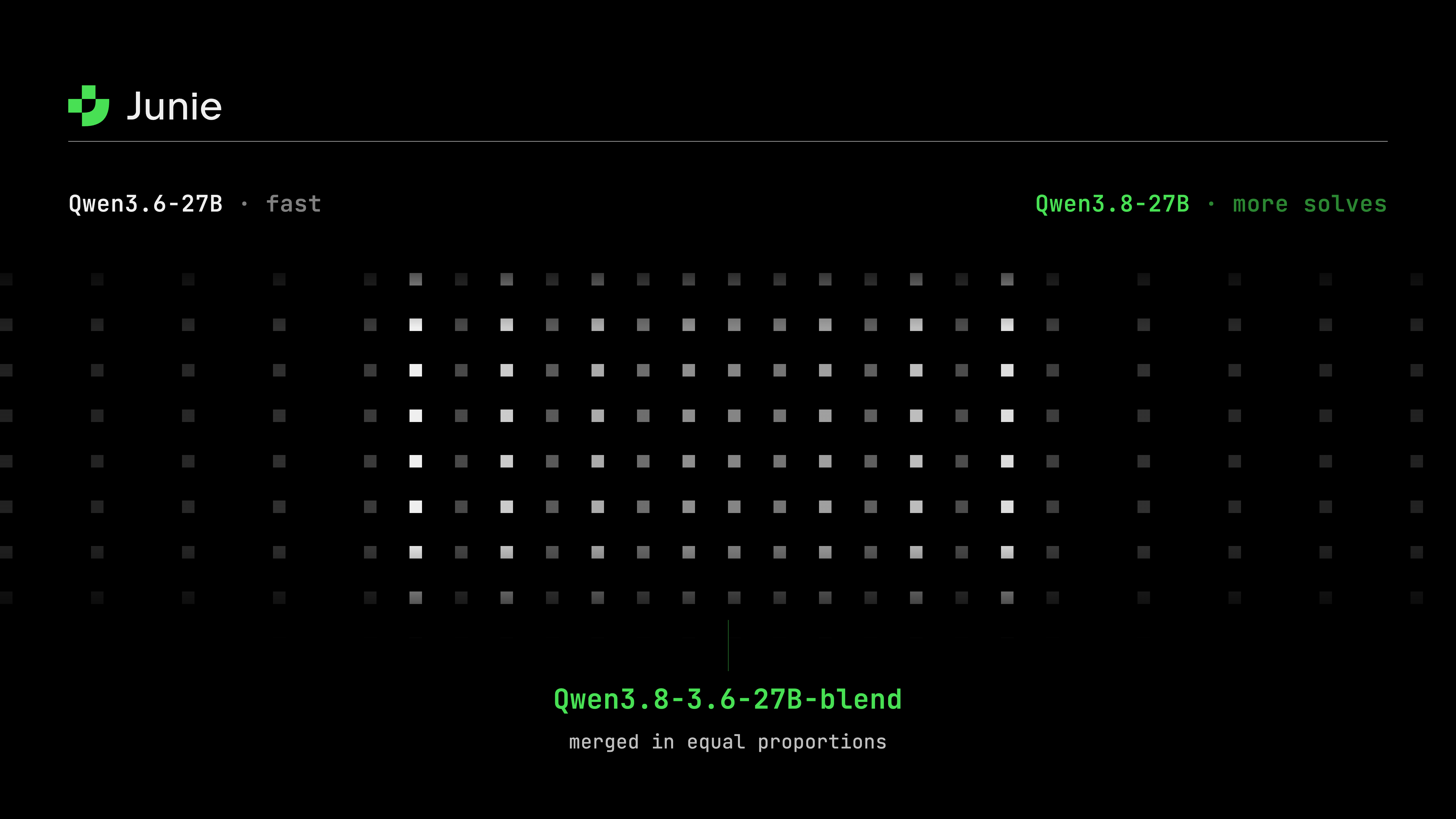
The trajectory of Junie Local has been defined by a constant balancing act. In the initial launch in August 2026, users were forced to choose between two distinct operational modes. The Qwen3.6 model offered a lightweight, rapid response time suitable for standard laptop hardware, but it often lacked the reasoning depth required for complex architectural tasks. Conversely, the Qwen3.8 model provided the sophistication needed to navigate large, intricate codebases, yet it required active reasoning processes that increased task duration by approximately 400%.
For developers, this choice presented a significant dilemma: wait for a precise, reliable response, or receive an immediate but potentially flawed suggestion. The new blend model represents a strategic shift from choosing between models to optimizing for the most efficient path. By merging the weights of these two versions in equal proportions, the engineering team has produced a hybrid 27-billion-parameter model that does not require additional post-training or fine-tuning, maintaining the structural integrity of the original Qwen architecture while delivering superior performance metrics.

Performance Metrics and Data Efficiency
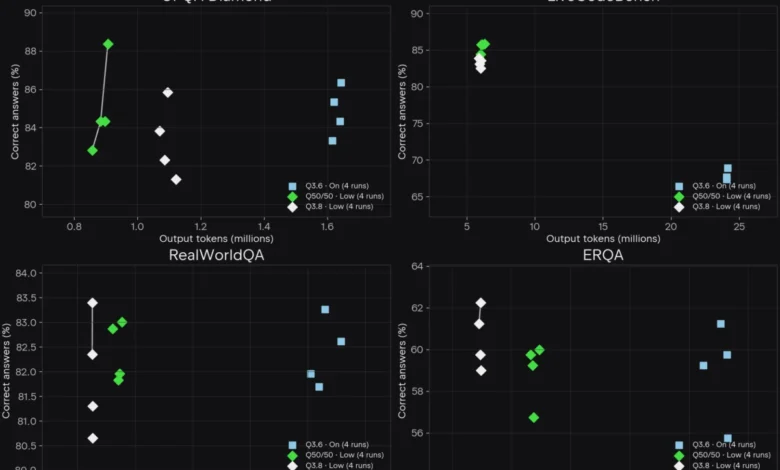
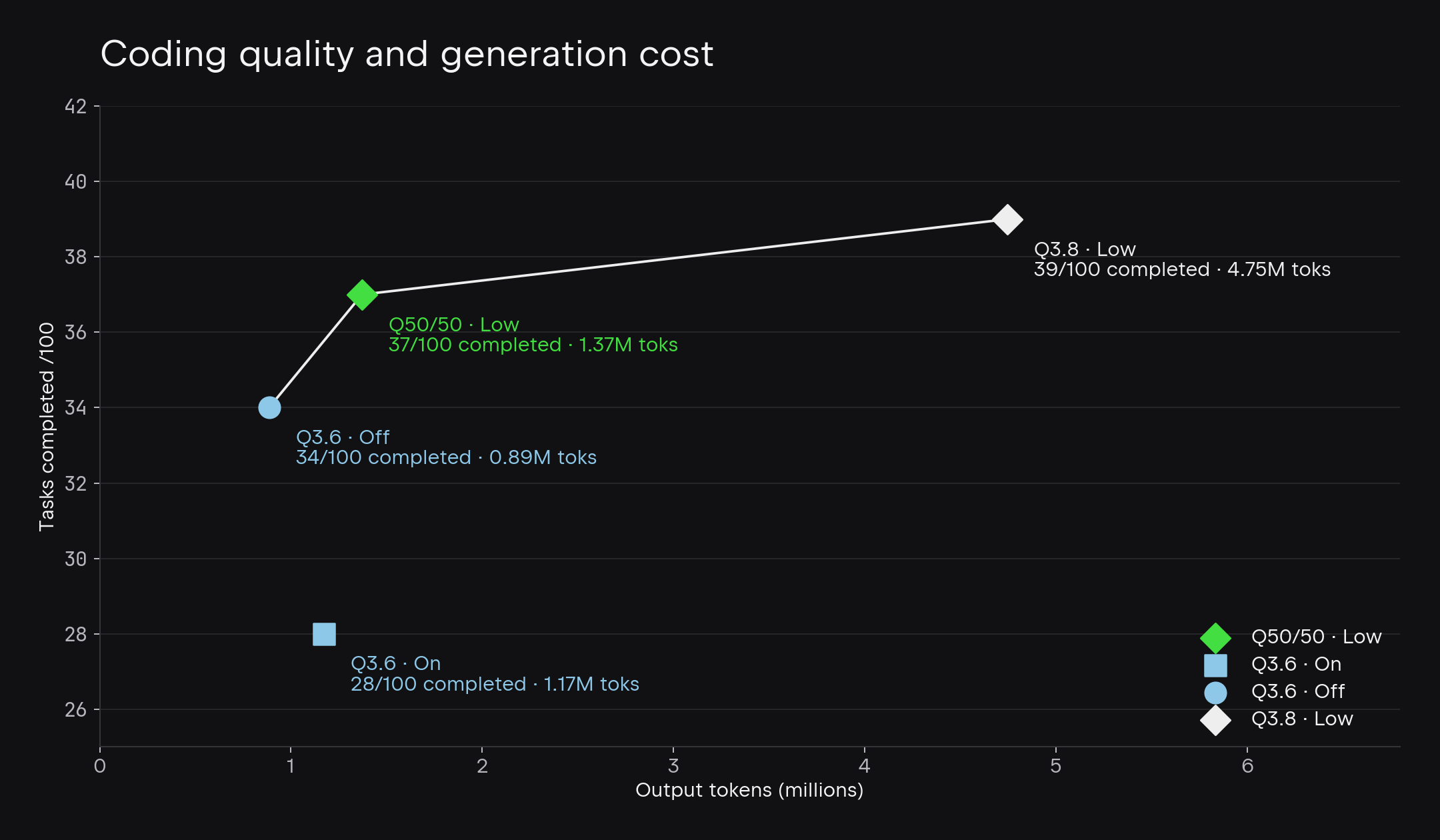
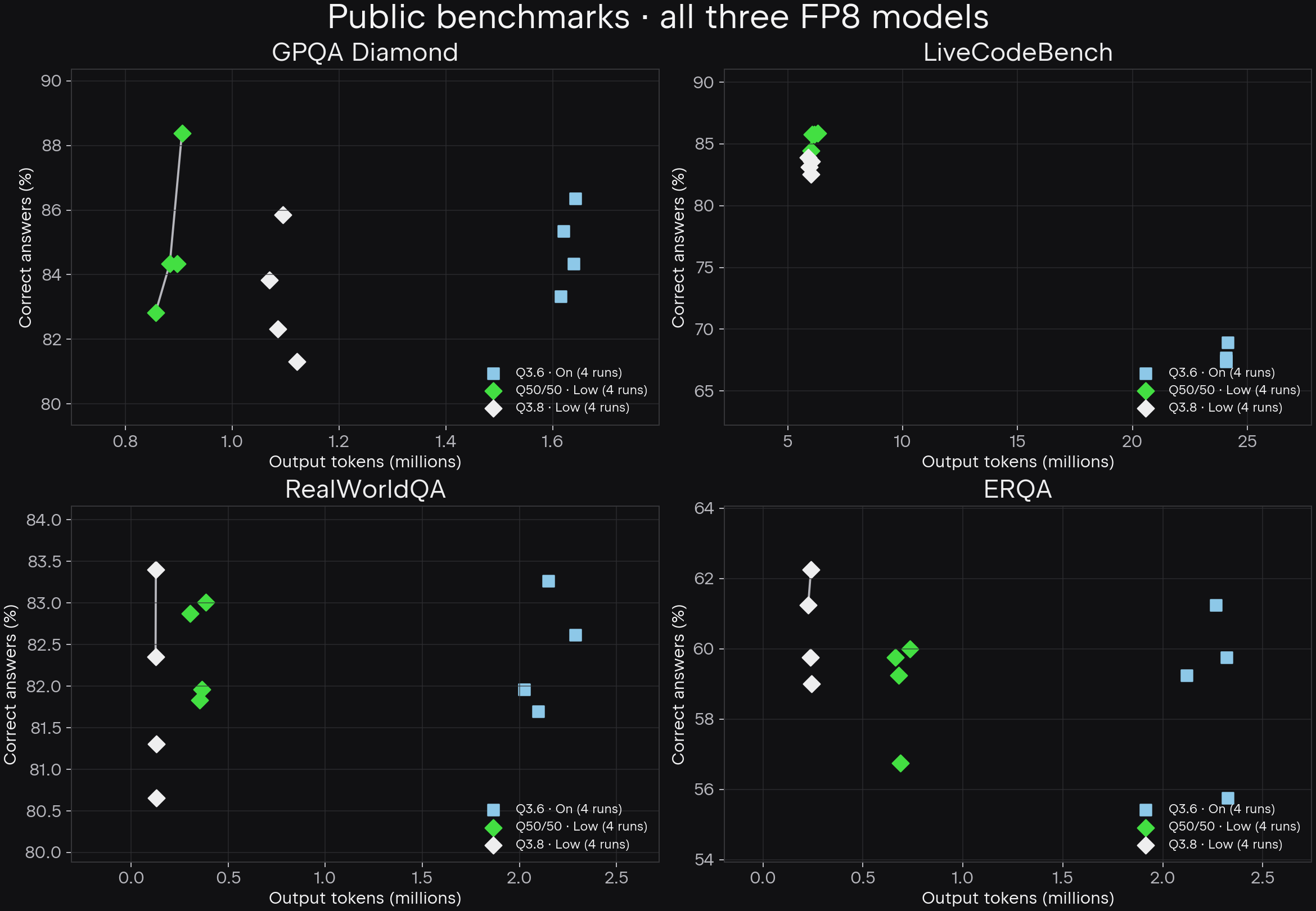
Internal evaluations conducted by the JetBrains team demonstrate that the blend model effectively outpaces its predecessors in both task completion and resource utilization. In a controlled, 100-task internal coding benchmark, the blend model successfully completed 37 tasks. For comparison, the Qwen3.6 model, operating without reasoning, completed 34, while the Qwen3.8 model—the gold standard for complex tasks—completed 39.
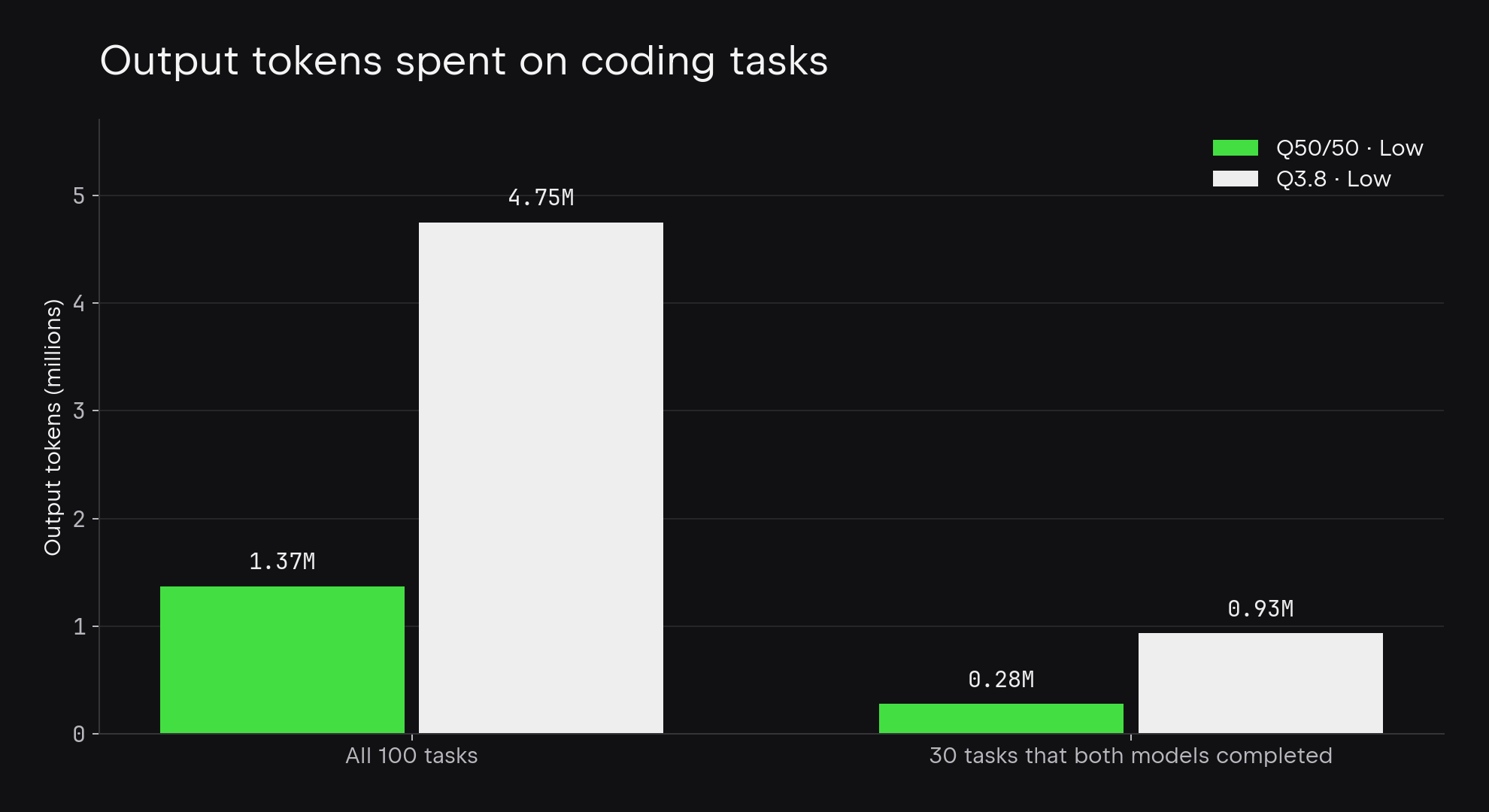
While the raw solve count for the blend model is competitive, the most striking data point lies in its token efficiency. The blend model generated 71% fewer output tokens than Qwen3.8 while achieving nearly identical task success rates. This reduction is not merely a result of the model failing early; when analyzing 30 specific tasks completed by both models, the blend model utilized only 279,000 tokens, compared to the 935,000 tokens required by Qwen3.8. This efficiency implies that the blend model is capable of reaching a correct conclusion with significantly less "thinking" overhead, reducing the computational load on the user’s hardware.
Technological Hurdles: Speculative Decoding and GPU Optimization
A critical component of this update is the refinement of the runtime environment, specifically regarding multi-token prediction (MTP). MTP utilizes a small subnetwork—the MTP head—to suggest multiple upcoming tokens for the main model to verify in parallel. While this technology is designed to accelerate generation, its implementation is sensitive to GPU overhead.
Research conducted during the development phase highlighted a classic optimization paradox. When the team increased the MTP head’s proposal capacity to four tokens per round, the GPU workload required to draft and verify those tokens actually neutralized the speed gains, resulting in a 36% speedup compared to the 60% speedup achieved by proposing only two tokens. Furthermore, the team investigated the bit-depth of the MTP head, testing both four-bit (Q4) and eight-bit (Q8) configurations. Data indicated that the Q8 head provided no consistent speed advantage despite the increased memory footprint, leading the team to standardize on the Q4 configuration for the production release.
Perhaps the most significant technical discovery involved the scaling of latency during long-session coding tasks. Profiling revealed that as the context window expanded from 16K to 128K, the time required for attention calculations during token verification surged from 8.4 ms to 40.2 ms per round. This identifies a clear bottleneck: while the models are getting smarter, the underlying hardware interaction, specifically attention computation, remains the primary hurdle for maintaining responsiveness in extended coding sessions.
Addressing Numeric Instability
The development process was not without its anomalies. Early internal testing showed erratic performance degradations that were absent during real-world usage. Upon investigation, engineers discovered that the issue stemmed from the use of static random seeds in the evaluation framework. By forcing every request to use the same seed, the team inadvertently introduced numeric instability. The model, when provided with a consistent, static environment, was prone to "looping" or being steered toward unsuccessful actions even when the input context had changed. By implementing a dynamic seed advancement strategy—where the seed updates with every agent step and reflection attempt—the team maintained the ability to reproduce test results while eliminating the artificial bias that hindered model performance.
Industry Implications and Broader Access
The implications of this update extend beyond the immediate performance gains for individual developers. The success of the simple 50/50 weight merge suggests that developers can achieve significant performance optimization without the immense energy and financial costs associated with full-scale model retraining or reinforcement learning. This provides a sustainable path forward for open-source AI, where community-driven experimentation can yield high-impact results using existing hardware.
Furthermore, the expansion of Junie Local to Windows—specifically through experimental support for NVIDIA RTX cards with 24GB of VRAM or more—signifies a move toward platform-agnostic local AI. By leveraging the nightly build architecture, JetBrains is crowdsourcing the refinement of its Windows implementation, allowing for rapid iterations based on real-world hardware variance.
Future Outlook
Despite these advancements, the team acknowledges that the model is still prone to "overthinking" in scenarios where it lacks sufficient information. Future research is already underway to address these remaining inefficiencies, with a particular focus on teaching models to identify and select shorter, more efficient reasoning traces. Preliminary findings suggest that as much as 24.5% of the current token usage during successful reasoning could be eliminated if the model were conditioned to pursue shorter logical paths.
As Junie Local continues to evolve, the shift toward more efficient, locally executable models like the Qwen3.8-3.6-27B-blend represents a necessary maturation of the agentic AI field. By focusing on the intersection of hardware efficiency, token optimization, and intelligent model merging, the project provides a blueprint for how complex artificial intelligence can be integrated into the daily workflows of developers without the need for massive cloud infrastructure. Users looking to adopt these updates can now do so via the latest Junie release, with the open-source community invited to track further developments on platforms such as Hugging Face. As the industry moves forward, the focus will undoubtedly shift from simply increasing parameter counts to maximizing the "intelligence-per-token" ratio, a goal that this update has demonstrably moved closer to reality.