The Evolution of Local Agentic AI
The deployment of AI agents on local machines has historically been hampered by hardware constraints and the overhead of deep-reasoning chains. In the inaugural launch of Junie Local in August 2026, users were forced to choose between two versions of the Qwen model architecture. Qwen3.6 offered high-velocity responses suitable for quick tasks, while Qwen3.8, capable of advanced reasoning, was relegated to slower, more deliberate workflows. The performance gap was significant; enabling reasoning in the larger model typically quadrupled the time required to complete a task.
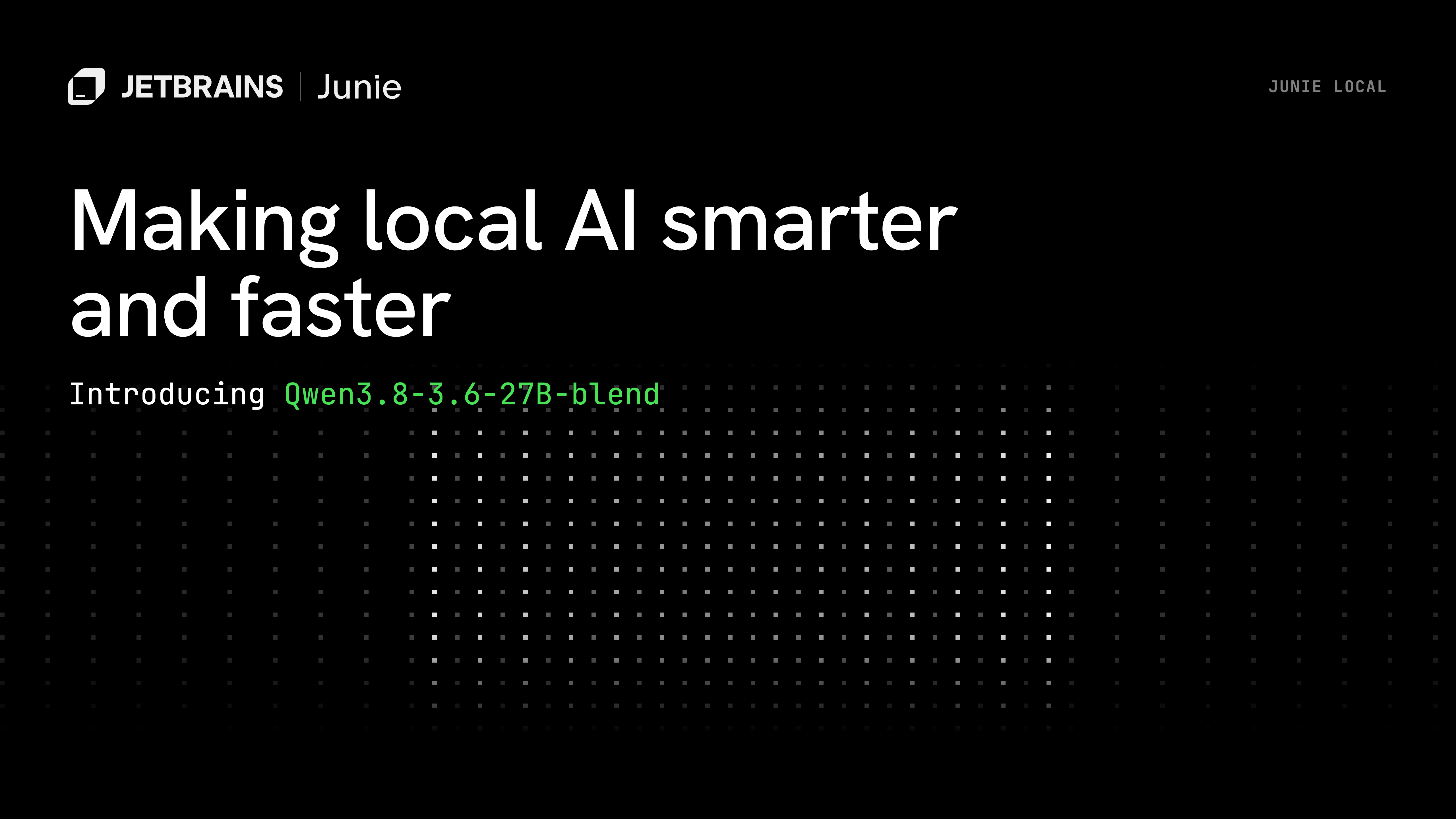
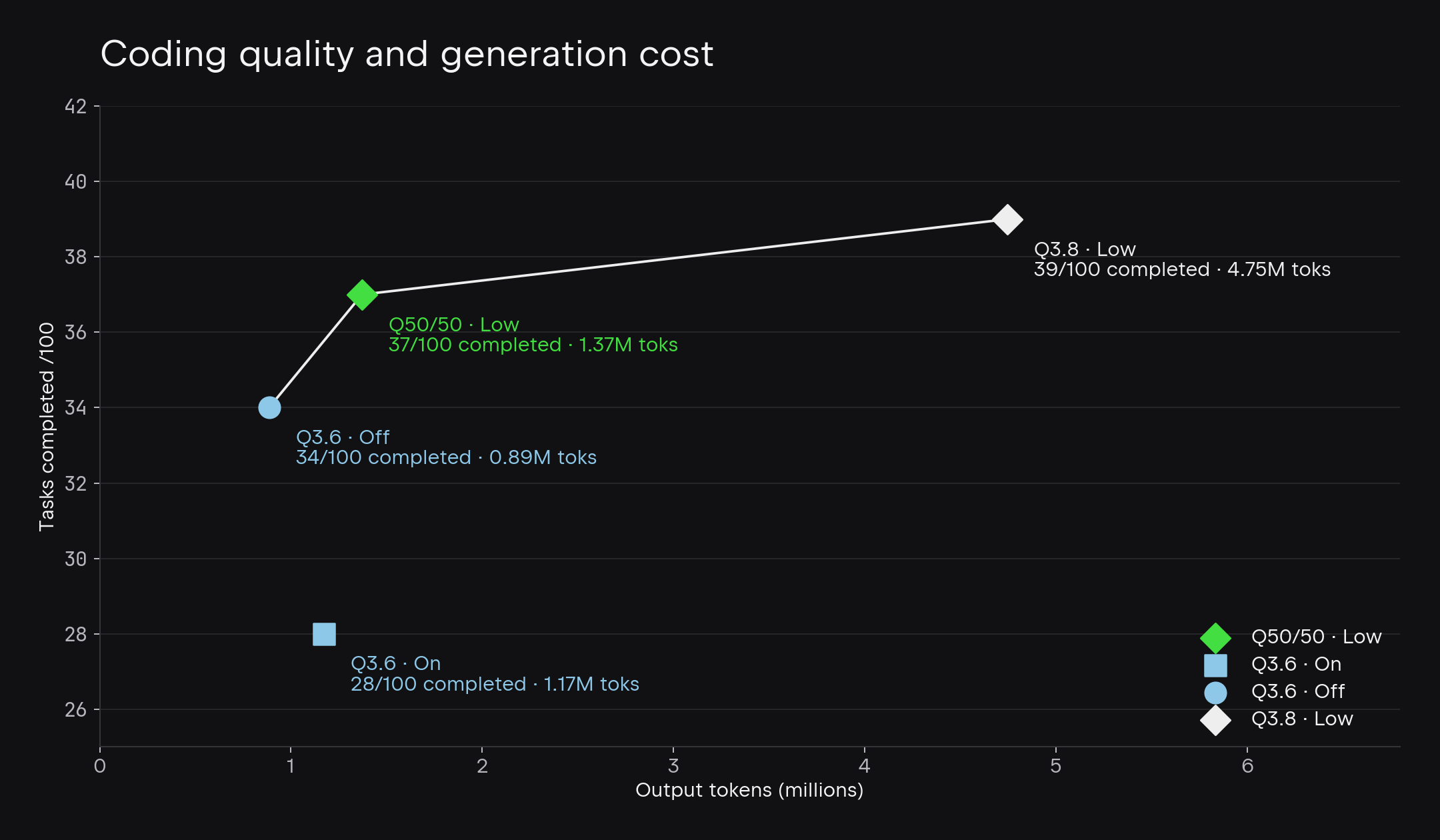
This latest update seeks to harmonize these divergent performance profiles. The introduction of the Qwen3.8-3.6-27B-blend model—a 50/50 weighted merger of the two prior iterations—allows for a more balanced agent. According to internal benchmarks, the blended model successfully bridges the performance delta, completing more tasks than the speed-optimized Qwen3.6 while simultaneously reducing output token generation by 71% compared to the more resource-intensive Qwen3.8.
Technical Methodology: The Art of Model Merging
The development team opted for a weight-merging strategy, a technique that has gained traction in the open-source community for its efficiency compared to traditional fine-tuning or distillation. Because both Qwen3.8 and Qwen3.6 share an identical fundamental architecture, the researchers were able to perform a direct, linear interpolation of their weights. This approach avoids the massive computational costs associated with retraining or post-training, resulting in a 27-billion-parameter model that retains the specialized knowledge of its parent iterations without the need for additional data cycles.

This "simple merge" produced results that exceeded initial expectations. Subsequent rigorous testing across various coding scenarios confirmed that the model is not merely a middle-ground compromise but a more efficient synthesis of its predecessors. By avoiding redundant reasoning steps—a common pitfall in larger, more complex models—the blend maintains high accuracy while significantly lowering the computational load on the host machine’s GPU.
Comparative Performance and Benchmarking
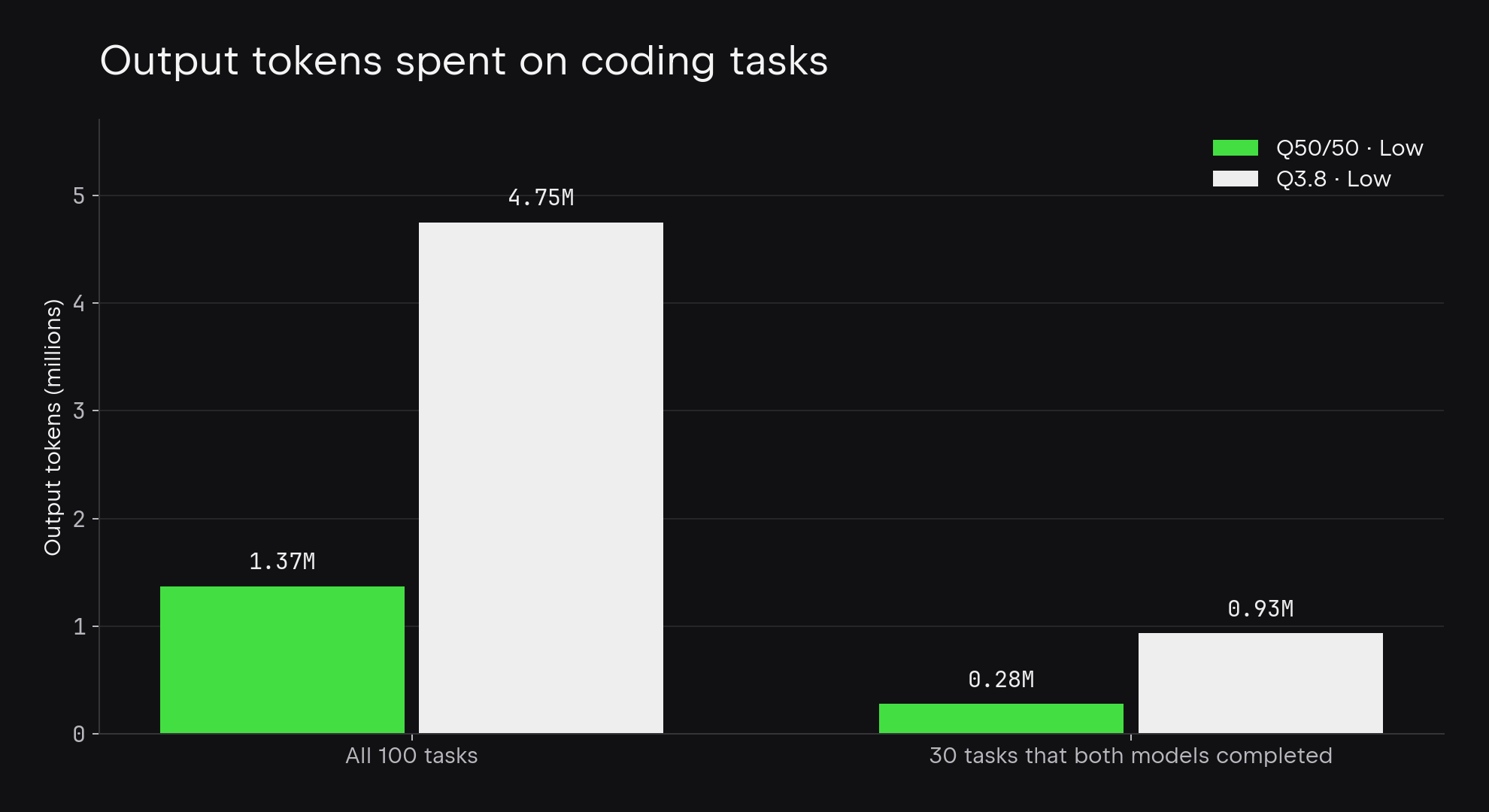
To validate these improvements, the team conducted a 100-task internal coding benchmark. The results were telling: the blend model achieved 37 successful completions, narrowly outperforming the 34 tasks solved by Qwen3.6 and approaching the 39 tasks completed by Qwen3.8. The efficiency gain, however, is the most salient metric. When analyzing the 30 tasks successfully completed by both the blend and Qwen3.8, the blend model utilized only 279,000 output tokens, compared to 935,000 tokens for the latter—a reduction in overhead of approximately 70%.
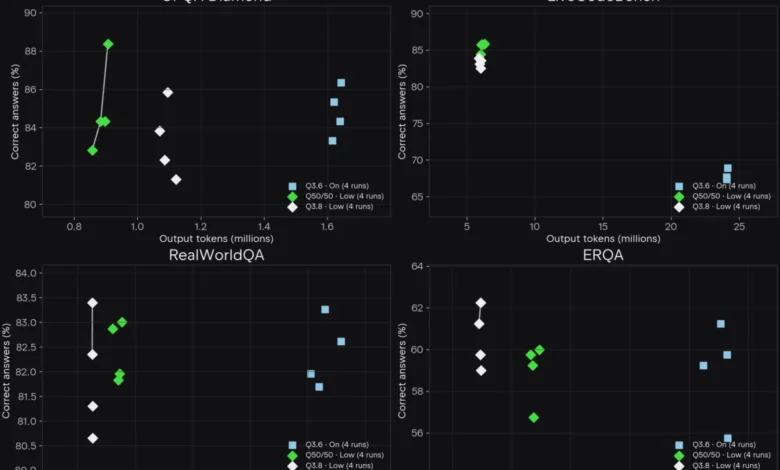
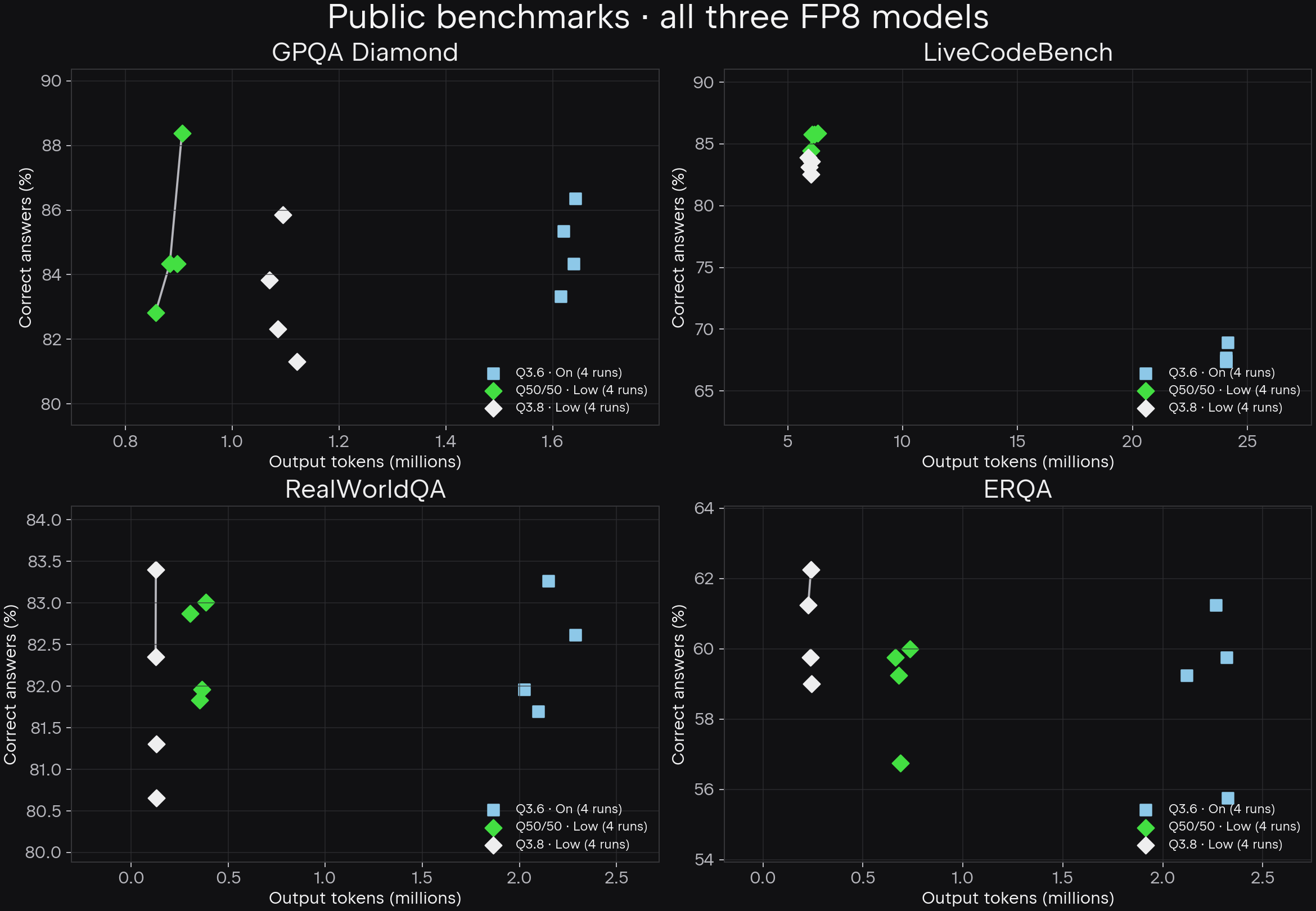
Further validation was performed using the LiveCodeBench suite. Across four consecutive evaluation runs, the blend model yielded an average success rate of 85.47%, compared to 83.29% for Qwen3.8. Most strikingly, the blend model achieved these figures while consuming approximately 6.14 million output tokens per pass, compared to the 24.1 million tokens required by the standard Qwen3.6 model. These metrics suggest that the blend model is optimized for "high-density" logic, where it reaches the correct conclusion in fewer steps.
Optimizing Runtime and Multi-Token Prediction
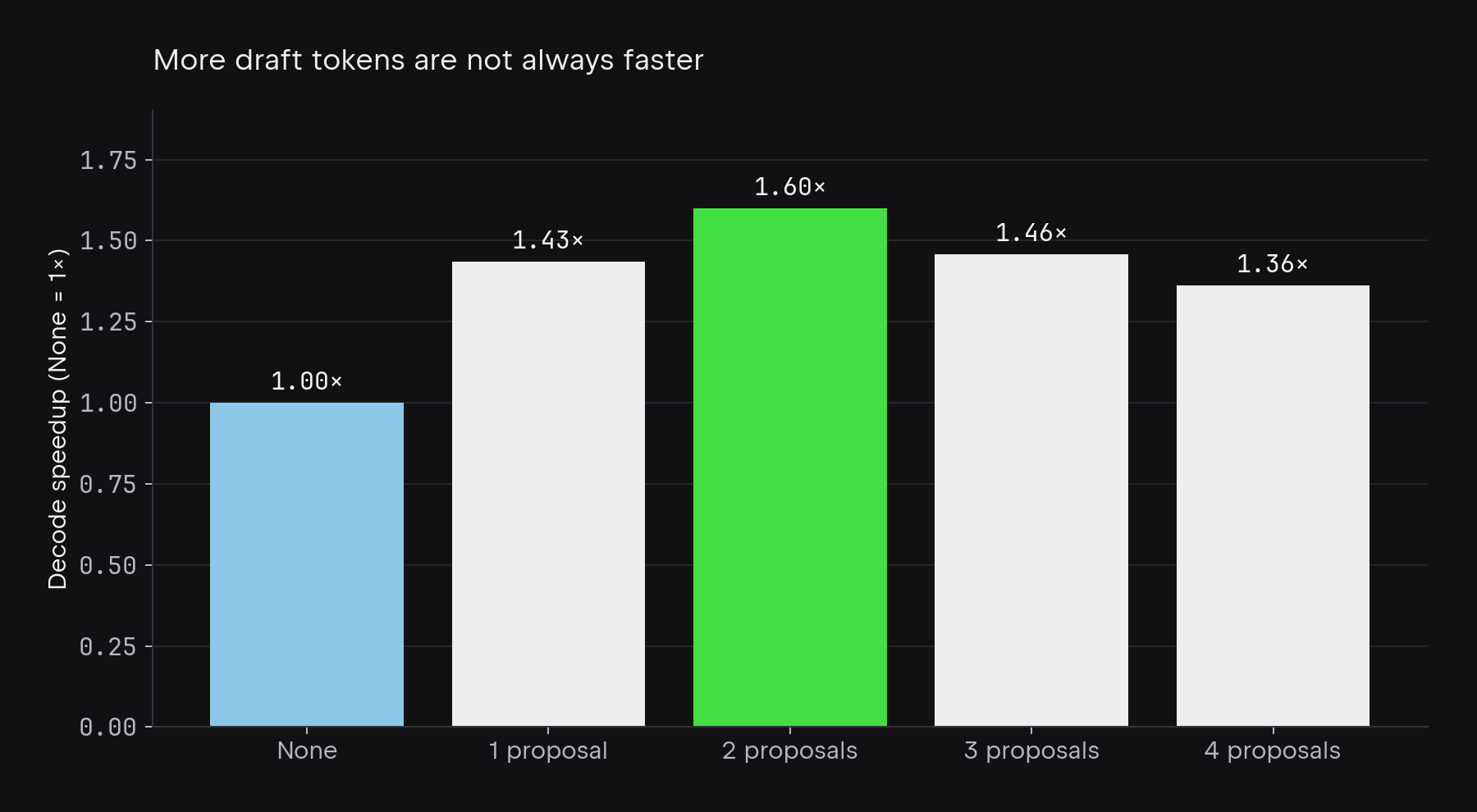
Beyond the model architecture, the efficiency of local AI is inextricably linked to the runtime environment. The current iteration of Junie Local utilizes Multi-Token Prediction (MTP), where a specialized subnetwork proposes multiple future tokens for the primary model to verify in parallel. This mechanism is designed to accelerate generation speeds, provided the "draft" tokens are accepted.
However, the team’s research highlights a delicate balance in GPU utilization. Increasing the number of tokens proposed by the MTP head does not always result in a linear speed increase. On M5 MacBook Pro hardware, proposing two tokens per round yielded a 60% boost in speed. Increasing this to four tokens, however, saw the performance gain dip to 36% due to the increased overhead of drafting and verifying those proposals.
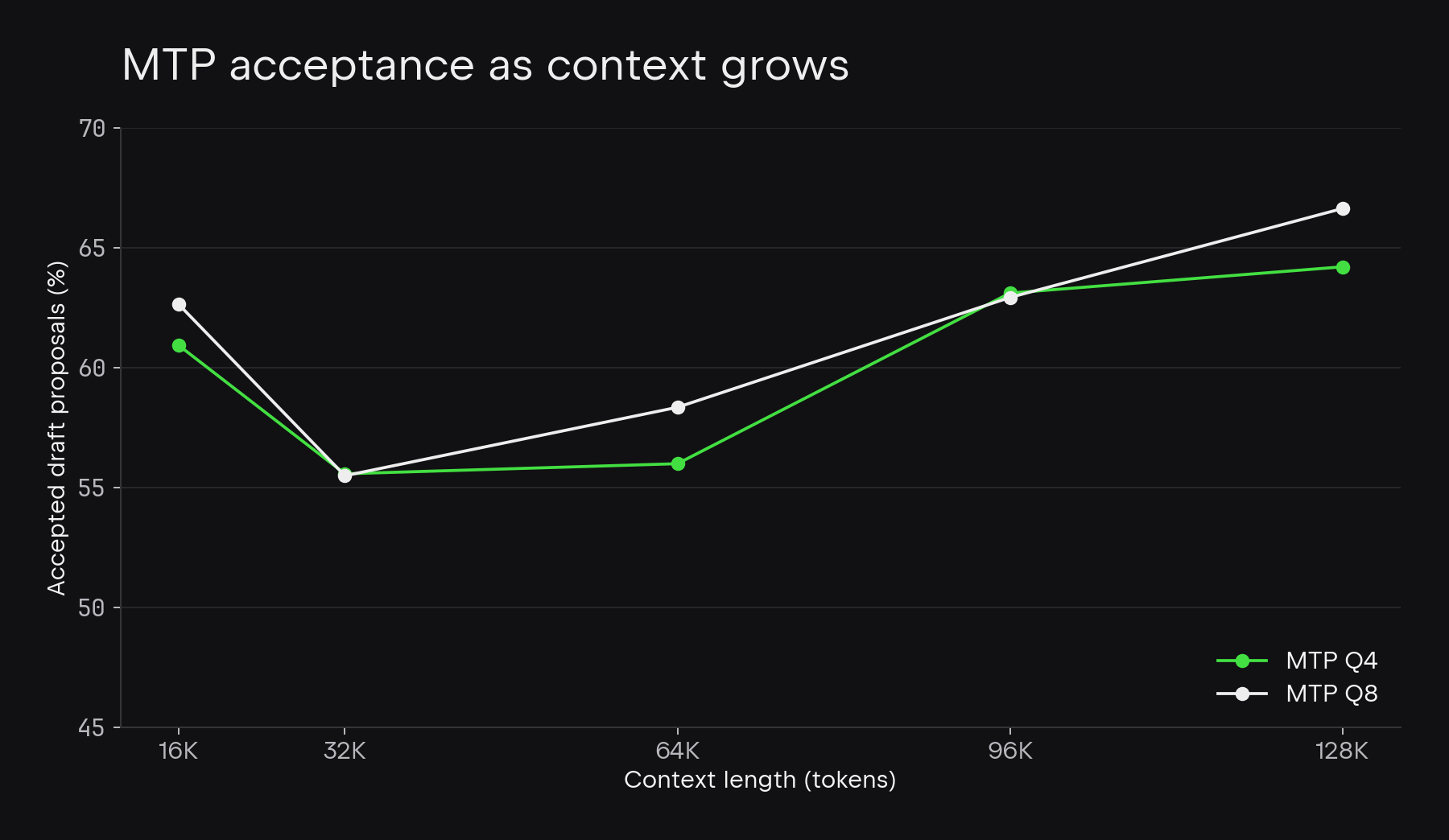
The research also touched upon bit-depth optimization. By comparing a 4-bit (Q4) MTP head against an 8-bit (Q8) counterpart, developers found that the higher bit-depth provided no tangible speed advantage. The acceptance rates were nearly identical (63.0% for Q4 vs 63.6% for Q8), leading the team to standardize on the Q4 head to conserve memory and maintain responsiveness. Profiling revealed that as context windows expand, attention calculation—rather than feed-forward or DeltaNet computations—becomes the primary bottleneck for latency, suggesting that future research must focus on optimizing long-context attention mechanisms to maintain parity in speed.
Addressing Stochastic Instability
A notable discovery during the testing phase involved the impact of random seeds on model behavior. Researchers initially struggled to reproduce performance degradation observed in real-world use compared to controlled lab environments. It was discovered that by reusing identical random seeds for evaluation, the model was essentially "locking in" to certain suboptimal paths.
When a model is forced to re-run the same seed, it gains a numeric bias that can steer it toward an incorrect solution even if the prompt context is slightly modified. This instability was found to be more pronounced in Qwen3.8 than in the other models. To mitigate this, the engineering team implemented a dynamic seed-advancement protocol. By updating the seed with every agentic step and reflection attempt, the model is now permitted to explore multiple paths, resulting in more robust and reproducible evaluations.
Broader Implications for the Developer Ecosystem
The release of the Qwen3.8-3.6-27B-blend model signals a broader trend in the software industry: the "democratization of intelligence" through local execution. By reducing the hardware requirements and token overhead, tools like Junie Local are becoming viable for enterprise-grade coding tasks that were previously restricted to cloud-based APIs.
The implications for data privacy and latency are substantial. For organizations dealing with proprietary codebases, the ability to run high-reasoning agents locally—without sending data to third-party servers—addresses the primary barrier to AI adoption in regulated industries. Furthermore, the experimental support for NVIDIA RTX cards on Windows, introduced in the latest nightly build, marks an expansion of this capability beyond the Apple Silicon ecosystem.
Future Outlook and Refinements
Despite the success of the blend model, the development team acknowledges that challenges remain. The model occasionally demonstrates "overthinking" tendencies, where it exhausts resources on a single, failing approach. The current recommendation for users is to manually intervene by providing a narrower scope if the agent becomes trapped in a feedback loop.
Looking ahead, the research pipeline remains robust. The team is currently investigating methods to teach models to adopt shorter, more efficient Chain-of-Thought (CoT) traces. Preliminary data suggests that, for many tasks, a shorter reasoning path exists that could potentially reduce token consumption by an additional 24.5% without sacrificing accuracy. As these research efforts transition into production releases, the expectation is that local AI will continue to narrow the performance gap with massive, cloud-hosted models, ultimately providing developers with an unparalleled combination of speed, cost-efficiency, and privacy.
The Qwen3.8-3.6-27B-blend model is currently available for integration via the Junie command-line interface, providing an immediate upgrade for users currently operating within the Junie Local environment. As the industry moves toward more efficient, specialized model architectures, this blend serves as a critical proof-of-concept for the future of local-first agentic computing.