In an understated move that signals a significant shift in its hardware software strategy, Valve has released the source code for Lepton, a specialized compatibility layer designed to facilitate the execution of Android-based gaming titles on Linux-based environments. While the gaming conglomerate did not issue a formal press release regarding the disclosure, the availability of the project via Valve’s GitLab instance has provided a critical look into the technical underpinnings of the upcoming Steam Frame hardware. By open-sourcing this component, Valve is establishing a framework that allows developers to bridge the gap between Android’s mobile-centric ecosystem and the proprietary Linux environment powering their next-generation VR-focused hardware.
Contextualizing the Steam Frame and Lepton
The Steam Frame, Valve’s latest venture into the hardware space, has been positioned as a device that aims to leverage the vast library of Android games for an immersive VR experience. However, running Android applications directly on a Linux kernel is inherently complex due to differences in kernel architecture, graphics drivers, and system services. This is where Lepton enters the stack. Unlike traditional Android emulators, which often attempt to simulate an entire operating system, Lepton functions as a highly optimized, containerized compatibility layer.
The primary function of Lepton is to isolate Android applications within a Linux container, allowing the Steam client to act as the orchestrator. For the average consumer, the process will remain entirely transparent; the Steam interface will launch these games as if they were native applications, abstracting the underlying container management, resource allocation, and library translation away from the user. For developers, however, Lepton provides the necessary hooks to port Android VR titles—a market segment that has historically been siloed—directly onto the Steam Frame.
Technical Architecture and Open Source Foundations
The release of Lepton is not a standalone effort but rather a culmination of existing open-source advancements. The repository reveals a modular architecture that relies on established projects to handle the heavy lifting of translation and system emulation.
At the core of the Android image is Waydroid, a project that enables a full Android system to run within a Linux container using namespace isolation. Lepton builds upon this by integrating specific patches and modifications to ensure compatibility with the Steam Frame’s hardware requirements. LineageOS provides the base Android system image, which is then stripped down to a minimal runtime environment. Underlying this stack is the Android Open Source Project (AOSP), serving as the foundational source tree. Additionally, the inclusion of Boringdroid suggests that Valve is incorporating specialized optimizations for desktop-like behavior within the Android environment, ensuring that these mobile titles perform predictably on the Steam Frame’s hardware.
Licensing and Intellectual Property Structure
Valve has adopted a bifurcated licensing strategy for the Lepton project, reflecting the diverse nature of the code involved. The repository’s documentation explicitly separates the codebase into two distinct categories:
- The Compatibility Tool: The software component responsible for bridging the Steam client and the Android container is licensed under the MIT license. This permissive approach is intended to encourage broader adoption and allow for easier integration into other Linux-based distribution efforts.
- The Android Root Filesystem: Because the image contains code derived from various upstream projects—including LineageOS, Waydroid, and AOSP—it is governed by the GNU General Public License version 3.0 (GPL-3.0). This ensures that any derivative work that modifies the root filesystem must remain open, preserving the copyleft nature of the foundational Android components.
This dual-license approach is a pragmatic move by Valve to satisfy the legal requirements of the various open-source communities contributing to the project while maintaining control over their proprietary interface tools.
A Chronology of Valve’s Linux-First Approach
Valve’s commitment to Linux has been a multi-year transformation that has fundamentally altered the PC gaming landscape. The following timeline illustrates the progression of this strategy:
- 2013: Valve introduces SteamOS, a Debian-based operating system, along with the Steam Machine initiative.
- 2018: The launch of Proton, a compatibility layer based on Wine, revolutionizes Linux gaming by allowing thousands of Windows titles to run on Linux.
- 2022: The Steam Deck launches, proving that a handheld Linux gaming device can achieve massive commercial success.
- 2026 (September): Valve introduces the Steam Frame, a specialized device focusing on Android integration.
- 2026 (Late September): The source code for Lepton is published, providing developers with the tools to port Android VR titles to the new hardware.
This trajectory demonstrates that Valve is not merely building hardware but is systematically constructing an entire software ecosystem that relies on the flexibility of Linux to maintain platform independence.

Implications for Game Developers and the Industry
The release of Lepton has profound implications for developers. By providing a standardized containerized environment, Valve is effectively lowering the barrier to entry for Android developers looking to expand their reach to PC-based VR. Historically, porting an Android app to a different operating system required significant refactoring of the graphics stack and input handling. With Lepton, developers can focus on optimizing for the Steam Frame’s specific hardware without needing to rewrite the application from the ground up for a native Linux environment.
Furthermore, the release of Lepton alongside FEX—a high-performance x86-to-ARM translation layer—positions the Steam Frame as a highly versatile device. The combination of these tools suggests that Valve is creating a "compatibility-first" architecture that can bridge the gap between disparate instruction sets and operating systems. This strategy effectively creates a future-proof stack where the underlying hardware architecture becomes secondary to the software compatibility layers.
Analysis: Why This Matters for Open Source
Valve’s decision to open-source Lepton serves as a significant contribution to the Linux community. By building on top of existing projects like Waydroid and LineageOS rather than creating a proprietary silo, Valve ensures that the improvements they make to these systems are upstreamed back to the projects. This creates a symbiotic relationship: the open-source community benefits from the optimizations and testing Valve performs at scale, while Valve benefits from a more robust, stable, and feature-rich foundation provided by the community.
Moreover, the transparency of the Lepton repository allows for community audits of the security and performance of the Android-on-Linux stack. In an era where many tech companies are tightening control over their ecosystems, Valve’s "open-by-default" approach to its software stack stands out as a departure from the industry trend of walled gardens.
The Road Ahead
As the Steam Frame nears its retail release, the community will be watching closely to see how effectively Lepton handles the performance demands of high-fidelity VR gaming. The current iteration of Lepton is intentionally minimalist; it avoids running unnecessary Android background services to save on system overhead and memory usage. Every application is constrained to its own container, preventing cross-app interference and providing a level of sandboxing that is essential for stability.
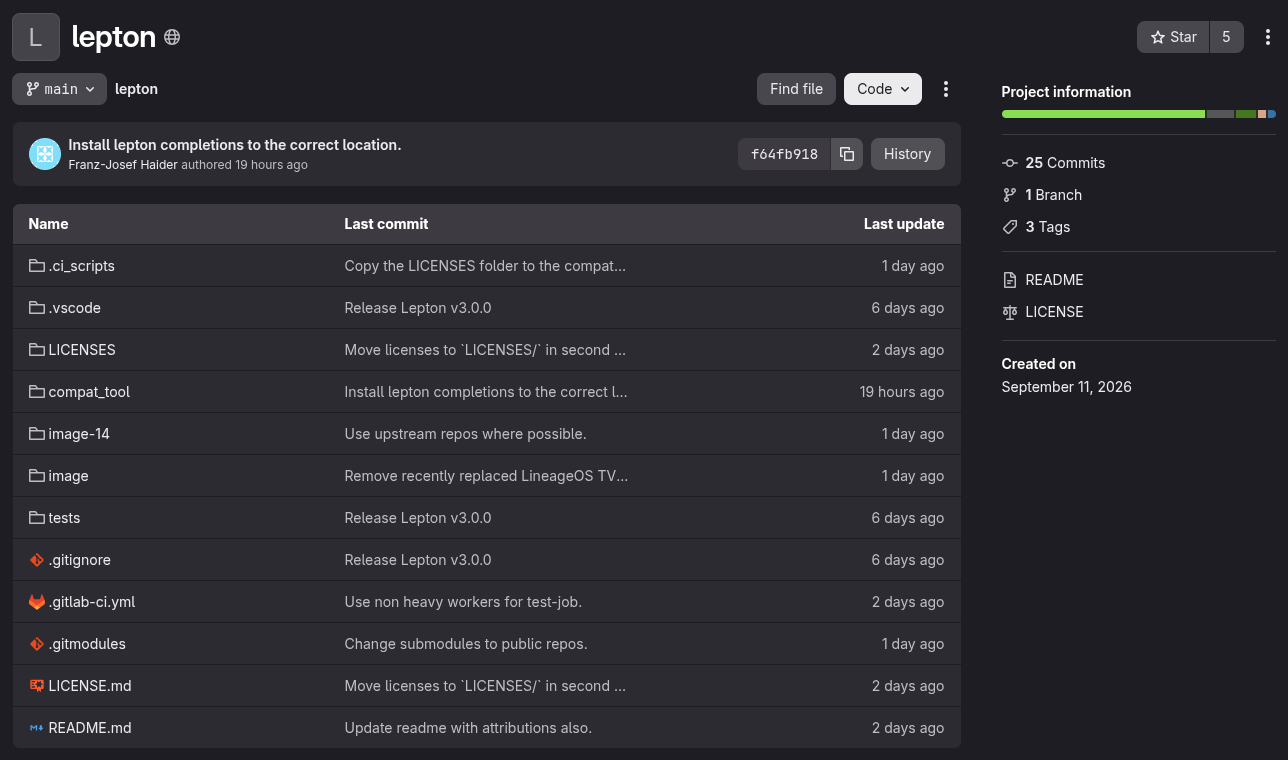
While Valve has not yet provided a detailed roadmap for future updates, the public nature of the GitLab repository indicates that the company is prepared for a collaborative development cycle. Developers interested in the platform can now review the build scripts, understand the container lifecycle, and begin experimenting with the toolchain ahead of the device’s commercial availability.
Ultimately, the release of Lepton marks the next chapter in Valve’s ongoing mission to decouple the PC gaming experience from the limitations of any single operating system. Whether the Steam Frame succeeds as a hardware product or not, the tools developed for it are likely to have a lasting impact on the Linux ecosystem, further cementing Linux as the premier platform for gaming innovation. As Valve continues to refine its stack, the distinction between "Android gaming" and "PC gaming" continues to blur, offering a more unified experience for the end user and a more accessible market for the developer.