Amazon Web Services Acquires DuckLabs to Supercharge Cloud Analytics and AI Data Processing


Amazon Web Services (AWS) has officially announced a definitive agreement to acquire DuckLabs, the Amsterdam-based software development firm primarily recognized as the creator and core maintainer of DuckDB. This high-performance, in-process analytical database management system has captured significant market share among data engineers and developers. Under the terms of the transaction, DuckDB will remain an open-source project governed by its independent foundation and distributed under the permissive MIT license. Co-founders Hannes Mühleisen and Mark Raasveldt are set to remain with the initiative, continuing to steer its technical roadmap and open-source evolution.
The strategic acquisition marks a pivotal moment in cloud architecture. By integrating DuckLabs’ engineering talent and technology, AWS aims to blend DuckDB’s localized, lightning-fast query execution capabilities with the massive enterprise scalability of native cloud services. The resulting integration is expected to span several foundational AWS offerings, including Amazon S3, Amazon Redshift, Amazon Athena, Amazon EMR, AWS Glue, and Amazon SageMaker.
Core Mechanics and Technological Synergy
DuckDB has built its reputation on a distinct architectural approach that deviates from traditional client-server database models. Designed specifically for Online Analytical Processing (OLAP) workloads, DuckDB operates as an in-process database. This means the database engine runs within the host application’s address space rather than as a separate server process. Consequently, it eliminates network overhead and serialization bottlenecks, enabling blistering execution speeds for datasets typically measuring a terabyte or less.
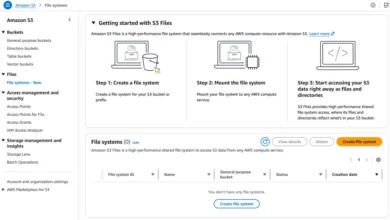
Furthermore, DuckDB natively queries structured file formats such as Apache Parquet, CSV, and JSON directly on local storage or cloud object stores like Amazon S3. This capability allows data practitioners to perform complex analytical operations without the friction of traditional extract, transform, and load (ETL) pipelines.
In recent years, the rise of autonomous AI agents has created fresh demands on data infrastructure. AI agents frequently probe, experiment with, and iterate through unstructured and structured datasets in a manner analogous to human data scientists. DuckDB’s ability to execute immediate, ad-hoc queries locally makes it an ideal data engine for AI agent workflows operating within cloud environments. By incorporating DuckDB into its ecosystem, AWS positions itself to better support high-frequency, programmatic data exploration required by modern generative artificial intelligence and machine learning applications.
Strategic Rationale and Executive Perspectives
The acquisition reflects a broader shift in the economics and physics of enterprise data analytics. As data volumes expand exponentially, organizations increasingly demand flexibility, moving away from rigid, monolithic warehouse architectures toward modular, hybrid approaches that combine local execution speed with cloud-scale durability.
Industry leaders have pointed to the changing paradigms of data management as a primary driver behind the deal. In a detailed essay published on All Things Distributed titled DuckDB and the changing physics of analytics, Andy Warfield, Vice President and Distinguished Engineer at AWS, outlined the shifting dynamics of modern compute and storage workloads. Warfield emphasized that bringing DuckDB closer to core AWS data services will fundamentally alter how developers interact with large repositories of information, reducing latency and optimizing compute costs for everyday analytical tasks.
While cloud data warehouses like Amazon Redshift remain unmatched for petabyte-scale, highly concurrent enterprise reporting, smaller analytical workloads often suffer from the administrative and latency overhead of distributed query engines. DuckDB bridges this gap by offering unmatched efficiency for localized tasks. By weaving this capability directly into Amazon S3, Athena, and SageMaker, AWS intends to provide a seamless continuum where workloads can execute locally when advantageous or scale out to distributed clusters when dataset sizes demand enterprise-grade infrastructure.
Industry Context and the Open-Source Commitment
The open-source community has expressed cautious optimism regarding the acquisition, primarily due to structured safeguards ensuring DuckDB’s independence. Open-source analytical databases have increasingly become strategic assets for major cloud providers, as customers demand interoperability and freedom from proprietary lock-in. By maintaining DuckDB under the MIT license and preserving the oversight of an independent foundation, AWS and DuckLabs aim to reassure developers that the project will remain accessible, collaborative, and community-driven.
DuckLabs was founded by Hannes Mühleisen and Mark Raasveldt following years of academic and industrial research into vectorized query execution. The database quickly gained traction for its vectorized query processing engine, which processes batches of values simultaneously rather than individual rows, maximizing modern CPU cache utilization and SIMD (Single Instruction, Multiple Data) instructions.
Anticipated Timeline and Integration Roadmap
Although financial terms of the transaction have not been disclosed, the definitive agreement has been signed by both parties, with regulatory approvals and closing conditions anticipated in the coming months.
Following the formal close of the acquisition, the integration roadmap will focus on three primary pillars:
- Developer Experience: Enhancing native connectors and toolchains between DuckDB and core AWS data lakes stored in Amazon S3.
- Analytics Optimization: Integrating DuckDB’s execution engine with Amazon Athena and Amazon Redshift to accelerate localized query fragments.
- AI and Machine Learning Workflows: Equipping Amazon SageMaker and AWS Glue environments with high-speed in-process querying to streamline feature engineering and AI agent data loops.
As enterprises continue to navigate complex data estates characterized by distributed cloud storage, local compute requirements, and AI-driven automation, the integration of DuckDB into the AWS ecosystem stands out as a transformative development. By marrying the speed of in-process analytics with the boundless scale of cloud infrastructure, AWS is setting a new benchmark for performance, efficiency, and developer empowerment in the modern data landscape.