Anthropic CEO Meets with Top Trump Officials as Tensions with Pentagon Persist Over Supply Chain Risk Designation

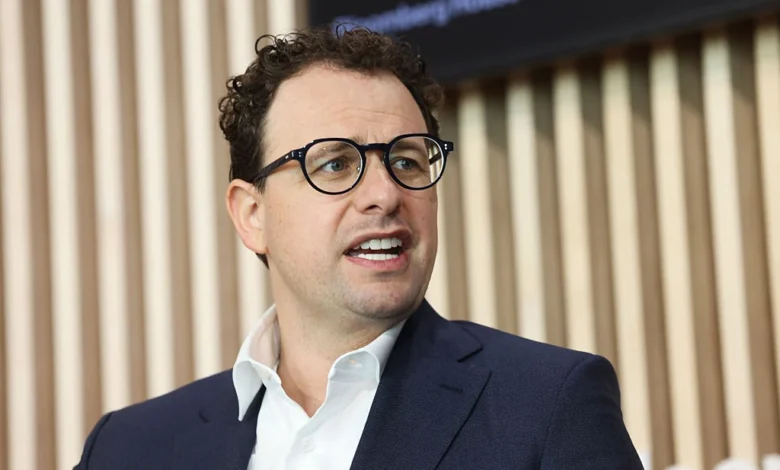
The burgeoning relationship between the artificial intelligence startup Anthropic and the Trump administration has reached a critical juncture, characterized by a stark divergence in how different branches of the federal government view the company’s role in national security. Despite the Department of Defense recently labeling Anthropic as a "supply-chain risk"—a designation typically reserved for entities associated with foreign adversaries—high-level officials within the White House and the Treasury Department appear to be moving in the opposite direction. This internal friction highlights a complex struggle within the executive branch over how to balance ethical AI development with the aggressive pursuit of technological dominance in the global AI race.
The tension reached a new peak on Friday when Anthropic CEO Dario Amodei held a high-stakes meeting with White House Chief of Staff Susie Wiles and Treasury Secretary Scott Bessent. According to official statements, the meeting was framed as an "introductory" but "productive" session aimed at finding common ground. The White House described the discussion as a constructive dialogue regarding shared approaches and protocols to address the challenges inherent in scaling generative AI technology. For Anthropic, the meeting represents a significant diplomatic victory, signaling that the company still has a seat at the table with the most influential figures in the Trump administration, even as its legal battle with the Pentagon intensifies.
The Divergence of Agency Perspectives
The rift within the administration is perhaps the most striking aspect of the current situation. While the Pentagon has effectively blacklisted Anthropic, other key figures are actively promoting the company’s technology. Reports indicate that Treasury Secretary Scott Bessent and Federal Reserve Chair Jerome Powell have been encouraging the leadership of major American financial institutions to test Anthropic’s latest model, known as Mythos. This endorsement suggests that the economic and financial wings of the government view Anthropic’s safety-first approach as an asset rather than a liability, particularly for sensitive banking operations that require high levels of reliability and "hallucination" prevention.
An administration source cited by Axios noted that "every agency" except for the Department of Defense is eager to utilize Anthropic’s technology. This internal disagreement suggests a lack of a unified federal policy regarding AI procurement and safety standards. The Treasury and the Federal Reserve appear to prioritize the efficiency and advanced capabilities of the Mythos model to maintain the stability and competitiveness of the U.S. financial sector. Conversely, the Department of Defense remains focused on the company’s refusal to lift certain ethical safeguards, which the military argues hinders the development of fully autonomous systems.
The Origins of the Pentagon Dispute
The conflict between Anthropic and the Department of Defense began in early 2026 during negotiations over the military’s use of the company’s large language models. Anthropic, which was founded by former OpenAI employees on the principle of "Constitutional AI," insisted on maintaining strict safeguards. Specifically, the company sought to prohibit the use of its technology for fully autonomous lethal weapons systems and mass domestic surveillance. Anthropic’s leadership has long argued that without these guardrails, AI could be weaponized in ways that are uncontrollable or violate fundamental civil liberties.
The Pentagon, however, viewed these restrictions as a barrier to achieving parity with adversaries like China, who are reportedly moving forward with AI-integrated weaponry without similar ethical constraints. When negotiations broke down, the Department of Defense took the unprecedented step of designating Anthropic a supply-chain risk under Section 889 of the National Defense Authorization Act. This label is a powerful tool that can effectively prohibit any federal agency or government contractor from using the designated company’s products.
In the wake of this breakdown, Anthropic’s primary competitor, OpenAI, moved quickly to fill the vacuum. OpenAI announced a comprehensive partnership with the Pentagon, signaling a willingness to adapt its models for military applications. While this deal bolstered OpenAI’s standing with the defense establishment, it also sparked a public backlash, with some consumers and privacy advocates migrating to Anthropic’s Claude and Mythos platforms in protest.
A Timeline of the Anthropic-Government Conflict
The escalation of tensions has followed a rapid chronology throughout the first half of 2026:
- January 2026: Anthropic enters negotiations with the Pentagon regarding the integration of its Claude models into defense logistics and intelligence analysis.
- February 2026: Negotiations stall as Anthropic refuses to waive ethical restrictions on autonomous kinetic force.
- March 1, 2026: OpenAI announces a major contract with the Department of Defense. Anthropic’s "Claude" app sees a surge in downloads as users seek "ethical" alternatives.
- March 5, 2026: The Pentagon officially labels Anthropic a "supply-chain risk," citing concerns over the company’s "unwillingness to meet mission-critical operational requirements."
- March 9, 2026: Anthropic files a lawsuit against the Department of Defense, challenging the designation as arbitrary and capricious.
- April 12, 2026: Reports surface that Treasury Secretary Scott Bessent and Fed Chair Jerome Powell are encouraging banks to use Anthropic’s Mythos model for risk management and fraud detection.
- April 14, 2026: Anthropic co-founder Jack Clark confirms the company is briefing the Trump administration on the Mythos model, describing the Pentagon issue as a "narrow contracting dispute."
- April 17, 2026: Dario Amodei meets with Susie Wiles and Scott Bessent at the White House to discuss cybersecurity and the national AI race.
The Legal Battle and "Narrow Contracting Disputes"
Anthropic’s legal challenge against the Department of Defense is currently working its way through the federal court system. The company argues that the "supply-chain risk" designation is a misuse of national security authorities intended to punish the company for its policy positions rather than to address any actual threat to the United States. Anthropic’s legal team contends that because the company is headquartered in San Francisco and its primary investors are American and allied-nation entities, the label is factually unsupported.
Jack Clark, Anthropic’s co-founder and Head of Policy, has sought to downplay the severity of the rift. He has characterized the ongoing litigation as a technical disagreement over contract terms rather than a fundamental break with the U.S. government. By framing the issue as a "narrow contracting dispute," Anthropic is attempting to silo its problems with the Pentagon, preventing them from bleeding into its relationships with other departments. This strategy appears to be working, as evidenced by the high-level access Amodei received at the White House this week.
The Mythos Model and the AI Race
At the heart of the administration’s interest in Anthropic is the "Mythos" model. While technical details remain proprietary, industry analysts suggest that Mythos represents a significant leap forward in reasoning capabilities and factual accuracy. For the Trump administration, maintaining a lead over China in AI development is a top-tier national security priority.
In his statement following the White House meeting, Amodei emphasized Anthropic’s commitment to "America’s lead in the AI race." This rhetoric aligns with the administration’s broader economic and geopolitical goals. The Treasury Department, in particular, is interested in how Mythos can be used to modernize the U.S. financial system, making it more resilient to cyberattacks and more efficient in processing complex data.
The administration’s "productive and constructive" dialogue with Anthropic suggests that they view the company’s expertise in AI safety not as a hindrance, but as a necessary component of a secure national AI infrastructure. "We discussed opportunities for collaboration, as well as shared approaches and protocols to address the challenges associated with scaling this technology," the White House statement read. This indicates a desire to establish a framework for AI development that balances rapid scaling with the mitigation of systemic risks, such as those posed to the electrical grid or financial markets.
Broader Implications and Industry Analysis
The split between the Pentagon and the rest of the Trump administration over Anthropic creates a precarious precedent for the AI industry. It suggests that AI companies may face a fragmented regulatory environment where their products are welcomed by civil agencies but shunned by the military—or vice versa—based on their internal safety protocols.
For the broader tech sector, the Anthropic case serves as a litmus test for "Constitutional AI." If Anthropic can successfully navigate this period of friction and maintain its influence within the White House and the Treasury, it will prove that a safety-first, ethically-constrained business model is viable even in a highly politicized environment. However, if the Pentagon’s "supply-chain risk" designation stands, it could cripple Anthropic’s ability to compete for massive federal "all-of-government" contracts, potentially handing a monopoly on government AI to more compliant competitors.
Furthermore, the involvement of Scott Bessent and Jerome Powell underscores the shifting definition of national security. In the 21st century, economic stability and the integrity of the financial system are as vital to national security as military hardware. By championing Anthropic’s Mythos model for the banking sector, these officials are signaling that the "risk" of falling behind in AI-driven economic efficiency outweighs the "risk" cited by the Pentagon regarding autonomous weapons safeguards.
As the legal battle continues and the Mythos model begins its rollout in the private sector, the eyes of the tech world remain fixed on the relationship between Dario Amodei’s team and the White House. The outcome will likely determine the future of how the U.S. government procures transformative technology and whether ethical guardrails will be viewed as a national security asset or a strategic liability. For now, Anthropic remains in a unique position: an official "risk" to the nation’s defense, yet a vital partner in the nation’s economic and technological future.
Related posts: