Graduate Student Resolves Critical Infinite Loop Bug in Enlightenment E16 Window Manager Originating in 2006

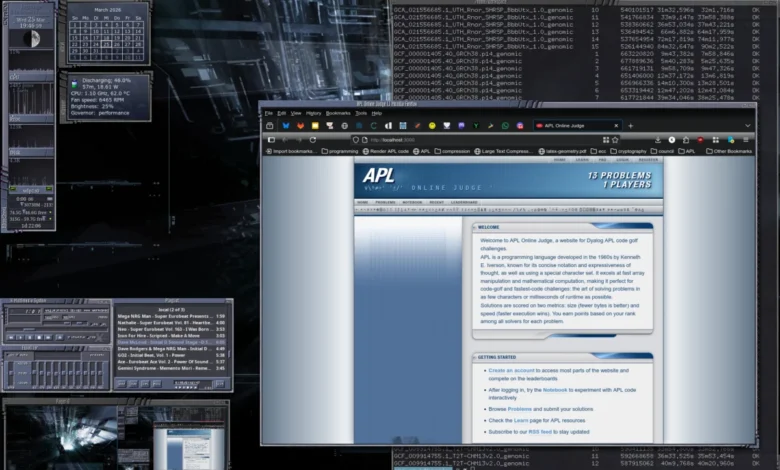
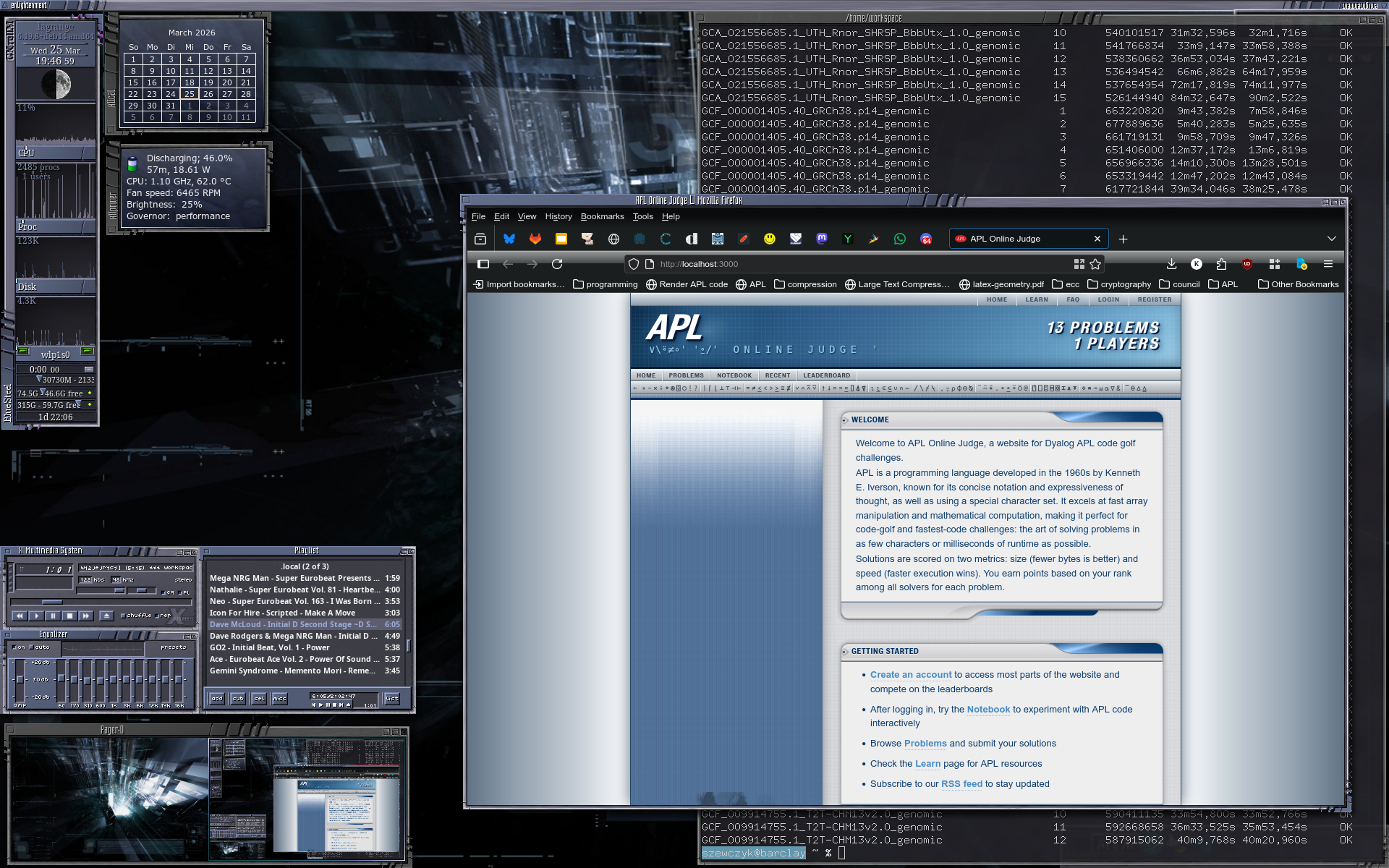
Kamila Szewczyk, a 21-year-old graduate student at Saarland University in Germany, has successfully identified and patched a long-standing software defect within the Enlightenment E16 window manager, a bug that had remained undetected in the codebase for eighteen years. The flaw, which dates back to 2006, was discovered during a routine academic task, highlighting the enduring nature of legacy open-source software and the critical role of community-driven maintenance. Szewczyk, who utilizes the vintage window manager as her primary daily operating environment, traced the issue to a faulty implementation of a numerical algorithm used for window title management, which could lead to a total system freeze under specific conditions.
The discovery occurred while Szewczyk was preparing lecture materials for a course she instructs at Saarland University, an institution renowned for its contributions to computer science and informatics. While opening a series of PDF documents typeset in LaTeX using the Atril document viewer, the desktop environment became entirely unresponsive. Unlike transient glitches that often plague complex modern systems, this particular failure was consistently reproducible. In the realm of software engineering, a reproducible "show-stopping" bug provides a rare opportunity for deep forensic analysis, prompting Szewczyk to delve into the decades-old source code of Enlightenment E16 to find the root cause.
The Historical Context of Enlightenment E16
To understand the significance of this fix, one must examine the history of the Enlightenment project. Enlightenment, often referred to simply as "E," is a window manager for the X Window System. First released in 1997 by Carsten "Rasterman" Haitzler, it arrived during a formative era for the Linux desktop. In the late 1990s, most window managers were strictly utilitarian, such as TWM or FVWM. Enlightenment distinguished itself by offering unprecedented levels of visual customization, transparency effects, and complex animations, earning a reputation for "eye candy" that predated the compositing revolutions of macOS and Windows Vista.

Enlightenment E16 was released in 1999 and represented the pinnacle of the project’s initial design philosophy. It was highly efficient yet visually striking, allowing users to create elaborate "themes" that could transform the desktop into something resembling a futuristic terminal or a classic workstation. However, as the Linux ecosystem evolved, the Enlightenment team decided to embark on a radical path. In 2000, work began on Enlightenment E17, which was envisioned not just as a window manager but as a complete desktop shell built upon a new modular framework known as the Enlightenment Foundation Libraries (EFL).
The development of E17 became legendary in the software world for its duration, spanning twelve years before reaching a stable release in December 2012. During this long transition, a subset of the user base remained loyal to the E16 codebase, preferring its stability and specific workflow over the more modern, yet more complex, E17. This led to a fork in the project’s trajectory: while the main Enlightenment team moved toward E17 and subsequent versions (currently reaching E26), a dedicated group of maintainers continued to polish and update E16. Today, E16 remains a viable, albeit niche, choice for users seeking a lightweight and highly configurable environment, and it is still maintained as a standalone project, reaching version 1.0.30 in 2024.
Technical Analysis of the 18-Year-Old Defect
The bug identified by Szewczyk is rooted in the way E16 handles the truncation of window titles. When a window title—such as the filename of a PDF displayed in a document viewer—is too long to fit within the designated title bar area, the window manager must calculate where and how to shorten the string. According to Szewczyk’s technical breakdown, the E16 codebase utilized a variation of Newton’s method (also known as the Newton-Raphson method) to determine the optimal scaling or truncation point for the text.
Newton’s method is a root-finding algorithm that produces successively better approximations to the roots of a real-valued function. In the context of a graphical user interface, such algorithms are sometimes employed to handle complex layout constraints or font scaling where a direct linear calculation is insufficient. However, the implementation within E16 lacked a fundamental safety mechanism: an iteration limit.

The bug was triggered when specific long filenames, particularly those containing complex characters or structures generated by LaTeX, were passed to the window manager. The algorithm would enter a state where it could not converge on a solution, and because there was no "break" condition or maximum number of allowed iterations, the process entered an infinite loop. Since the window manager is responsible for handling all user input and screen drawing, an infinite loop in its core logic effectively locks the entire graphical session, necessitating a hard reboot or a remote kill command from another terminal.
Chronologically, the code responsible for this logic was introduced into the E16 repository in 2006. At that time, Szewczyk was only two years old. The bug survived nearly two decades of use, likely because the specific combination of font rendering, window width, and string length required to trigger the non-convergence was rare enough to escape the notice of the general user base.
The Role of the Modern Developer in Legacy Maintenance
The resolution of this bug underscores a unique phenomenon in the open-source community: the "daily driving" of legacy software by younger generations of developers. While many of her peers utilize modern environments like GNOME, KDE Plasma, or tiling window managers like Sway, Szewczyk’s preference for E16 provides her with a perspective that bridges the gap between 1990s software philosophy and modern development standards.
Upon identifying the cause, Szewczyk developed a patch that introduces a cap on the number of iterations the truncation algorithm can perform. By ensuring the loop terminates regardless of whether an "ideal" root is found, the window manager remains responsive, even if the resulting title truncation is slightly less than mathematically perfect. She has published the fix on her personal technical blog and communicated the findings to the broader community.
The reaction from the Linux community has been one of both amusement and respect. On platforms such as Reddit and various Linux mailing lists, users noted that this incident exemplifies the "Linus’s Law" of software development: "Given enough eyeballs, all bugs are shallow." In this case, it took eighteen years for the right set of "eyeballs"—belonging to a user who was both a daily driver of the software and a skilled computer science researcher—to find the flaw.
Broader Implications for Software Sustainability
This event raises important questions regarding the sustainability and security of long-lived software projects. The Linux ecosystem is built upon layers of code that often date back several decades. While the Linux kernel itself is subject to rigorous and constant auditing, peripheral components like window managers, libraries, and utilities often receive less scrutiny once they reach a "stable" or "feature-complete" status.
The Enlightenment E16 bug demonstrates that "stable" does not necessarily mean "bug-free." It suggests that as hardware becomes faster and use cases evolve—such as the very long, complex filenames common in modern LaTeX workflows—old code may be pushed into edge cases that were never anticipated by the original authors in the late 90s or mid-2000s.
Furthermore, the incident highlights the importance of "software archaeology." As the original authors of foundational software age or move on to other projects, the responsibility for maintaining these systems falls to a new generation. The fact that a 21-year-old student could dive into a 2006 codebase and provide a professional-grade fix is a testament to the readability and accessibility of well-written C code, which remains the backbone of the Linux desktop.

Conclusion and Future Outlook for E16
Following the publication of the fix, it is expected that the patch will be integrated into the official E16 maintenance branch. For the small but dedicated community of Enlightenment users, particularly those using distributions like Bodhi Linux (which uses the Moksha fork) or Pentoo, the fix provides a significant boost to system reliability.
For Kamila Szewczyk, the fix is more than just a technical achievement; it is a contribution to the tools she uses every day. Her work serves as a reminder that the open-source spirit is not solely about the "newest" or "most popular" software, but about the individual’s power to inspect, understand, and improve the technology they rely on. As the Linux desktop continues to evolve toward Wayland and more automated display protocols, legacy X11 window managers like E16 continue to serve as vital links to the history of computing, maintained by those who value their unique aesthetic and functional contributions.
The story of the 2006 Enlightenment bug serves as a final lesson in the importance of edge-case testing and the necessity of iteration limits in numerical methods. It also proves that in the world of open source, no bug is truly immortal, provided there is a user curious enough to look under the hood.
Related posts: