Vercel Schedules Out-of-Band Next.js Security Update to Patch Critical Upstream Vulnerabilities


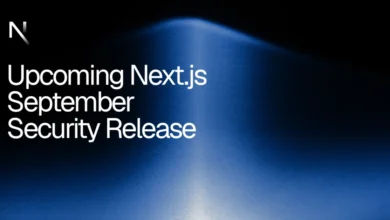
Next.js maintainers at Vercel have officially announced plans to release an out-of-band security update on Wednesday, October 14, 2026, designed to address three distinct vulnerabilities located within the framework’s upstream dependencies. According to the preliminary security advisory, the upcoming patch will resolve two security flaws classified as Critical and one rated as High severity. Two of these crucial fixes were originally scheduled for inclusion in the September security release but were intentionally postponed due to ongoing upstream coordination with dependency maintainers and security researchers.
The forthcoming release underscores the complex nature of modern software supply chains, where framework developers must frequently synchronize disclosures and patches with the maintainers of foundational libraries. Vercel has confirmed that comprehensive advisories will be published simultaneously with the software update. These documentation pages will provide developers and system administrators with granular details regarding the precise technical impact of the flaws, a comprehensive list of affected Next.js versions, and step-by-step upgrade instructions to secure production environments. Given the critical severity assigned to a majority of the targeted vulnerabilities, cybersecurity professionals and enterprise IT teams are strongly advised to apply the patched versions as soon as they become publicly available.
Understanding the Mechanics of Upstream Dependencies in Modern Frameworks
To fully comprehend the significance of this upcoming out-of-band patch, it is essential to examine the structural architecture of modern web development frameworks like Next.js. Built on top of the Node.js ecosystem, Next.js relies on an intricate web of hundreds of direct and transitive open-source dependencies. These third-party libraries handle various lower-level operations, ranging from HTTP parsing and server-side rendering execution to complex data manipulation and routing protocols.
While this modular approach allows developers to build feature-rich web applications with remarkable speed, it also introduces unique security challenges. When a vulnerability is discovered in an upstream dependency, it can inadvertently expose downstream applications—such as those built with Next.js—to potential exploitation, even if the framework’s core application code is entirely secure. The process of mitigating such vulnerabilities requires careful coordination. Maintainers must wait for the upstream library authors to develop, test, and release their own foundational patches before the framework team can integrate those fixes, run extensive regression testing, and distribute a secure release to the broader developer community. This multi-layered dependency chain explains why certain fixes must occasionally be delayed or handled via out-of-band releases outside of the standard monthly or quarterly maintenance schedule.
Chronology and Background Leading to the October 2026 Patch
The trajectory leading to the October 14, 2026 security release began weeks prior during routine security audits and vulnerability disclosures handled through Vercel’s coordinated vulnerability disclosure program. In late August and early September, security researchers identified several high-risk weaknesses in libraries utilized by the Next.js ecosystem.
During the preparation phase for the standard September 2026 security release, maintainers evaluated these newly discovered upstream flaws. However, because the patches were still undergoing rigorous testing by upstream maintainers or required synchronized disclosure timelines to prevent premature exploitation in the wild, the Vercel security team made the strategic decision to postpone two of the critical fixes. This delay ensured that when the patches are finally made public, robust, thoroughly tested, and stable solutions would be readily available to the community, minimizing the risk of secondary regressions or incomplete mitigations.
Throughout late September and early October, maintainers worked closely with upstream authors to finalize the code changes. Once the upstream patches reached maturity, Vercel scheduled the out-of-band release for Wednesday, October 14, 2026, bypassing the normal release cycle to ensure that enterprise users and independent developers could secure their infrastructure without waiting for the next regularly scheduled milestone.
Vercel Security Program and Open Source Bug Bounty Framework
The identification of these upstream vulnerabilities highlights the ongoing success and operational framework of Vercel’s product security initiatives. Vercel maintains a robust security program designed to safeguard Next.js and its broader ecosystem of open-source tools. A cornerstone of this strategy is Vercel’s Open Source Bug Bounty program, hosted on the HackerOne platform.
The bug bounty program invites independent security researchers, ethical hackers, and vulnerability analysts to examine Next.js and related repositories for security flaws. By incentivizing external audits through financial rewards and professional recognition, Vercel leverages the collective expertise of the global security research community. This crowdsourced approach allows the organization to uncover complex edge cases and architectural weaknesses that might otherwise escape internal code reviews.
Researchers who discover vulnerabilities within eligible frameworks are encouraged to submit their findings directly through the HackerOne platform, where they undergo a standardized triage process. Vercel’s security team collaborates directly with these researchers to validate the claims, assess risk levels, and coordinate responsible disclosure timelines. Organizations or individuals with broader questions, compliance concerns, or inquiries regarding vulnerability management protocols are directed to contact the team directly via email at [email protected].
Broader Industry Implications and the Rise of Supply Chain Vulnerabilities
The announcement of an out-of-band patch for upstream dependency issues reflects a broader, industry-wide trend concerning software supply chain security. In recent years, cybercriminals and advanced threat actors have increasingly shifted their focus away from heavily fortified application perimeters and toward the vulnerable underbelly of open-source software dependencies.
Because modern web applications are assembled like digital skyscrapers—using thousands of pre-built, third-party components—a single compromised or flawed library can create a cascading domino effect, impacting millions of deployments worldwide. Incidents involving widely used upstream dependencies have demonstrated how critical infrastructure can be rattled by a single vulnerability hidden deep within a dependency tree.
For enterprise organizations utilizing Next.js to power mission-critical web applications, e-commerce platforms, and customer portals, this reality necessitates a shift in vulnerability management strategies. Traditional security postures that rely solely on scanning proprietary application code are no longer sufficient. Organizations must implement comprehensive Software Bill of Materials (SBOM) tracking, automated dependency scanning tools, and continuous monitoring pipelines capable of detecting when upstream libraries require urgent updates.
Actionable Guidance for Developers and System Administrators
As the October 14, 2026 release date approaches, developers and IT operations teams should prepare their infrastructure to execute swift updates. While the exact technical details, Common Vulnerability Scoring System (CVSS) scores, and affected version ranges will not be fully disclosed until the advisory goes live, organizations can take proactive preparatory steps.
First, engineering teams should audit their current Next.js deployments and catalog all active versions across production, staging, and development environments. Utilizing dependency management tools such as npm audit, yarn audit, or automated GitHub Dependabot alerts can provide a clear map of current dependency trees and streamline the identification process once the advisory is published.
Second, teams should establish a rapid-response deployment pipeline. Because the update addresses two Critical and one High severity vulnerability, delaying implementation could leave applications exposed to automated scanning and exploitation by malicious actors. Having staging environments prepared to quickly ingest, test, and deploy the patched packages will significantly reduce the window of vulnerability.
Finally, administrators are reminded to rely exclusively on official communication channels. The full advisories, upgrade instructions, and verified patch files will be hosted directly through official Vercel documentation and GitHub release channels. Developers should exercise caution and verify cryptographic signatures or package hashes where applicable to ensure the integrity of their updated builds.
Conclusion and Future Outlook
The forthcoming October 14, 2026 security release serves as both a reminder of the inherent complexities of open-source software maintenance and an example of proactive vulnerability management. By coordinating with upstream maintainers, leveraging crowdsourced security research through HackerOne, and providing transparent, timely advisories to the developer community, Vercel continues to prioritize the resilience and integrity of the Next.js ecosystem.
As the digital landscape evolves and software supply chains grow increasingly intricate, the ability of framework maintainers and enterprise users to collaborate, communicate, and execute rapid patches remains the primary defense against sophisticated cyber threats. The upcoming patch cycle reinforces the critical need for continuous vigilance, automated dependency tracking, and a proactive posture toward software security across the entire web development industry.