Unlocking Maximum Productivity: How Parallel AI Agents in the GitHub Copilot App Are Transforming Software Development

The modern software development landscape has long wrestled with the paradox of multitasking. While developers are expected to deliver features, fix bugs, optimize performance, and maintain rigorous testing standards at unprecedented speeds, human cognitive bandwidth remains a finite resource. Context switching—the act of jumping between disparate tasks such as writing code, running accessibility audits, and executing test suites—has historically been cited as a primary drain on engineering efficiency. Industry estimates suggest that developers lose up to 20 percent of their daily productivity simply to the friction of reloading mental context when moving from one task to another.
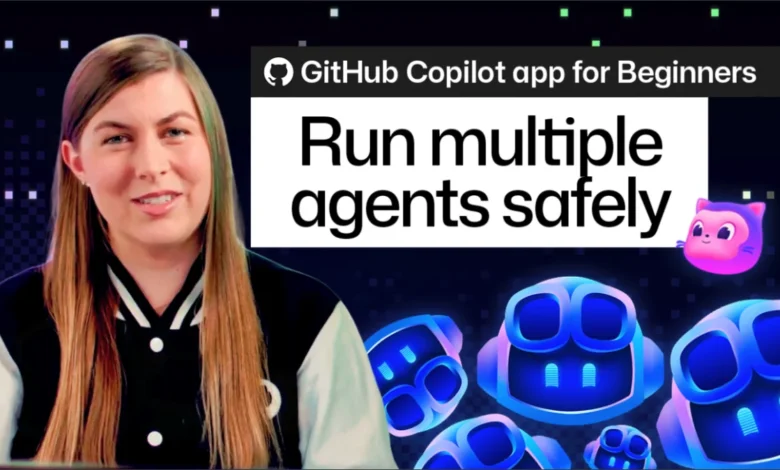
Enter the era of multi-agent artificial intelligence orchestration. With recent architectural updates to the GitHub Copilot app, developers are no longer constrained to a linear, single-threaded approach when interacting with AI coding assistants. By introducing parallel agent capabilities powered by isolated Git worktrees and independent context management, GitHub is fundamentally shifting how engineers manage complex workflows. What once resembled a chaotic kitchen crowded with too many cooks has now been organized into a streamlined, concurrent production line.
Understanding the Mechanics of Parallel Agent Sessions
To appreciate the significance of this development, one must examine the underlying mechanics that prevent parallel AI agents from colliding or overwriting each other’s progress. In the context of the GitHub Copilot app, an agent session represents a distinct, end-to-end task assigned to the artificial intelligence.
Through the platform’s dedicated sessions view, a developer can initiate, monitor, and manage multiple concurrent tasks. Each active session is visually represented via an individual card detailing the task title and the agent’s real-time progress. Crucially, these sessions do not share a single operational thread; they operate in complete isolation from one another.
The cornerstone of this isolation is the integration of Git worktrees. In traditional version control, working on multiple features simultaneously often requires stashing changes, checking out new branches, or managing multiple clunky local repositories. The GitHub Copilot app automates this complexity by spinning up dedicated Git worktrees for individual agent sessions. Because each agent operates within its own bounded environment, multiple tasks—such as refactoring legacy code, generating unit tests, and implementing user interface updates—can execute concurrently without risking merge conflicts or cross-contamination of the codebase.
Furthermore, each session retains its own dedicated context window. When a developer switches between agent cards in the user interface, the respective session resumes precisely where it was left off, eliminating the need to re-explain project constraints, dependencies, or architectural guidelines. This architectural choice drastically reduces the cognitive load associated with multitasking, allowing engineers to transition from active creators to high-level reviewers and decision-makers.
A Practical Demonstration: The Tailspin Toys Repository
To visualize the real-world impact of parallel agent sessions, consider a standard development scenario utilizing a sample repository named tailspin-toys. In a conventional workflow, an engineer might face a backlog consisting of three distinct objectives: implementing a funded sort feature, conducting a comprehensive accessibility review, and executing a full suite of automated tests.
Historically, tackling these tasks required a sequential approach. The developer would initiate the funded sort feature, wait for the AI or manual implementation to conclude, verify the code, commit the changes, and only then move on to the accessibility review, repeating the entire cycle before finally kicking off the test suite. This serial process could easily consume hours of active waiting and minor administrative oversight.
With the GitHub Copilot app’s parallel agent architecture, this sequence collapses into a single, simultaneous operation. The developer initiates the first session by prompting Copilot to build the funded sort feature. Immediately thereafter, without waiting for the first task to resolve, the engineer opens a second session to request an accessibility audit. Finally, a third session is launched to execute and evaluate project tests.
Rather than babysitting individual terminal windows or progress bars, the developer can monitor the status of all three tasks via the centralized session dashboard. Once the agents complete their respective assignments, the engineer steps in to review the generated code, run final validations, and merge the results. Alternatively, the developer can step away from the workstation entirely, confident that the autonomous agents are executing their instructions safely within isolated worktrees.
Industry Context and the Evolution of AI Coding Assistants
The release of parallel agent capabilities in the GitHub Copilot app arrives at a critical juncture in the evolution of software development tools. Over the past three years, generative AI has transitioned from a novel text-completion utility into an integral component of the software development lifecycle (SDLC). Early iterations of AI coding assistants focused primarily on line-by-line code completion and conversational chat interfaces, which, while helpful, still required the human developer to manually apply, test, and integrate every suggested snippet.

As foundation models have grown more capable and context windows have expanded, the industry has naturally pivoted toward agentic workflows—systems capable of planning, executing, and iterating on multi-step engineering tasks with minimal human intervention. However, as developers began deploying these agents on complex, real-world repositories, bottlenecks quickly emerged. Running a single heavy agent session often monopolized the developer’s attention, locking the interface or requiring constant oversight to ensure the model did not veer off-course.
By solving the concurrency problem through Git worktrees and session isolation, GitHub has addressed one of the primary friction points of agentic AI adoption. Industry analysts note that this capability bridges the gap between AI as a conversational novelty and AI as a scalable, enterprise-grade productivity multiplier. Developers are no longer forced to wait for an AI to finish debugging a backend service before asking it to write documentation for a frontend component; both tasks occur simultaneously, mirroring the collaborative nature of a human engineering team.
Expert Perspectives and Developer Reception
Initial responses from early adopters and developer advocacy circles highlight a psychological shift when moving from serial to parallel AI workflows. Kayla Cinnamon, Senior AI Developer Tools Advocate, notes that experiencing parallel agents for the first time often marks the exact moment when the technology stops feeling intimidating and starts feeling genuinely empowering.
"Running multiple AI agents on the same project initially seems like pure chaos—too many cooks in the development kitchen," notes technical documentation released alongside the feature rollout. "But when those agents work separately and refuse to interfere with each other, the paradigm shifts entirely. You suddenly realize you are no longer managing a tool; you are managing a team."
Software engineering productivity studies frequently emphasize that the true cost of interruption is not just the time spent on the secondary task, but the recovery time required to re-engage with the primary problem. By enabling developers to queue up independent tasks that run safely in the background, the GitHub Copilot app minimizes disruptive context-switching. Engineers report feeling less scattered because the application preserves the precise mental state and contextual parameters of every ongoing task.
Broader Implications for the Software Development Lifecycle
The normalization of parallel AI agents carries profound implications for the future speed and scale of software delivery. As engineering teams adopt these concurrent workflows, several structural shifts are anticipated across the industry:
-
Acceleration of Technical Debt Remediation: Routine maintenance tasks—such as updating dependencies, improving accessibility compliance, and writing unit tests—are frequently deprioritized due to looming feature deadlines. With parallel agents handling these chores in the background alongside primary feature development, maintaining code health becomes a frictionless background process rather than a disruptive chore.
-
Redefining the Developer Role: As AI agents assume responsibility for executing multi-step tasks across isolated branches, the daily routine of a software engineer will increasingly center on architectural oversight, code review, and strategic decision-making. The ability to effectively orchestrate multiple AI agents simultaneously may soon become a core competency expected of modern developers.
-
Enhanced Quality Assurance Integration: Continuous integration and testing can be initiated dynamically as micro-tasks within isolated sessions, allowing developers to catch regressions and compliance issues much earlier in the development cycle before code ever reaches a shared staging environment.
Getting Started with Parallel Agent Sessions
For engineering teams looking to transition to concurrent AI workflows, experts recommend starting small. The GitHub Copilot app provides a low-stakes environment to experiment with parallel sessions by launching two minor, non-critical tasks simultaneously—such as generating documentation for a utility function while concurrently refactoring a small CSS stylesheet.
This gradual approach allows developers to build trust in the isolation mechanisms, observe how Git worktrees manage local changes, and adapt to the rhythm of reviewing multiple completed agent sessions at once. As familiarity grows, scaling up to complex, multi-repository tasks becomes a natural extension of the developer’s daily routine.
Ultimately, the introduction of parallel agent capabilities in the GitHub Copilot app represents a mature step forward for artificial intelligence in software engineering. By transforming chaotic multitasking into structured, isolated concurrency, the platform enables developers to reclaim their time, reduce cognitive fatigue, and focus on what matters most: building exceptional software.