The Expiration of the Final MPEG-4 Visual Patent Marks the End of a Twenty-Six Year Licensing Era for Digital Video Technology

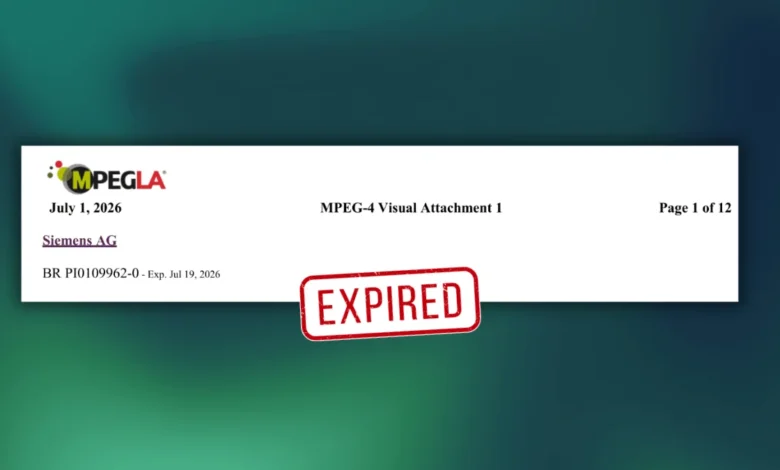
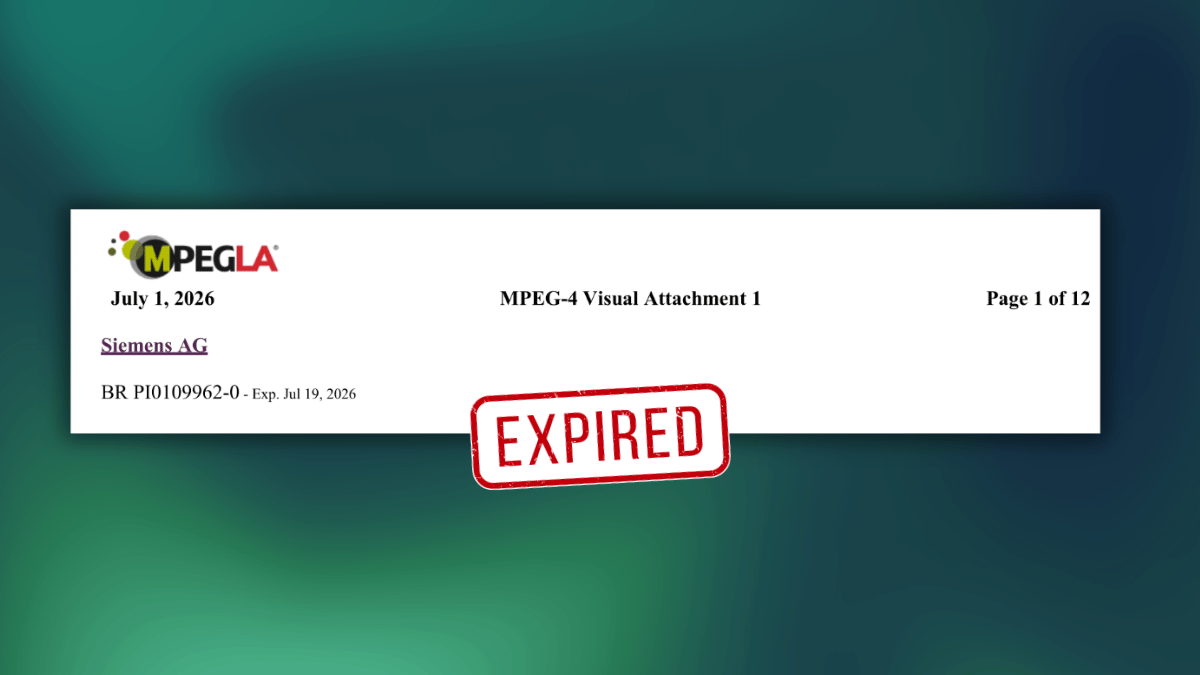
On July 19, 2026, the global technology sector reached a quiet but monumental milestone as the last remaining patent within the MPEG-4 Visual Patent Portfolio License officially expired. This event signifies the end of a complex licensing regime that has governed one of the most influential video compression standards in the history of digital media. The final patent, held by Siemens AG and registered in Brazil as BR PI0109962-0, was the last hurdle in a decades-long journey toward the complete public domain status of the MPEG-4 Part 2 Visual standard.
The MPEG-4 Visual Patent Portfolio License, which had been in effect since January 1, 2000, was managed by the VIA Licensing Alliance—formerly known as MPEG LA. For over a quarter of a century, this portfolio provided a centralized licensing solution for essential patents owned by more than 30 major corporations, including industry giants such as Canon, LG, Microsoft, Panasonic, Sony, and Toshiba. With the expiration of the Siemens patent in Brazil, the VIA Licensing Alliance has officially retired the portfolio, removing the dedicated licensing webpage on July 18, 2026, just one day prior to the final expiration date.
The Technical Significance of MPEG-4 Part 2
To understand the weight of this expiration, it is necessary to distinguish between the various components of the MPEG-4 suite. MPEG-4 is not a single technology but a collection of standards. While many consumers associate "MP4" with a file format, that specific container format is defined under MPEG-4 Part 14. The patents that expired in July 2026 specifically concern MPEG-4 Part 2, also known as MPEG-4 Visual.
MPEG-4 Part 2 was a revolutionary step forward in video compression when it was first introduced in the late 1990s. It was designed to provide high-quality video at lower bitrates, making it ideal for the burgeoning internet, mobile devices, and digital broadcasting. It gained widespread popularity through third-party implementations such as DivX and Xvid, which became the standard for video sharing in the early 2000s. Unlike its successor, H.264 (MPEG-4 Part 10 or AVC), which eventually became the dominant global standard, MPEG-4 Part 2 laid the groundwork for how motion compensation and object-based coding could be handled in a digital environment.
The standard was developed by the Moving Picture Experts Group (MPEG), a joint working group of the International Organization for Standardization (ISO) and the International Electrotechnical Commission (IEC). While MPEG handles the technical specifications, it does not manage the intellectual property. This created a need for patent pools, where companies could obtain a single license to use all essential patents from multiple holders, rather than negotiating individual deals with dozens of different entities.
A Chronology of Patent Expirations
The path to the July 2026 expiration was a staggered process, reflecting the varying filing dates and jurisdictional laws across the globe. Most patents in the MPEG-4 Visual portfolio had already lapsed years prior.
The final patent, BR PI0109962-0, titled "process for storing and processing image information from successive images over time," was a Brazilian filing by Siemens AG. While Siemens had filed similar patents in the United States and Europe, those versions reached their end-of-life much earlier. The European equivalent, EP 1,279,291, expired on April 9, 2021, affecting its validity in major markets like Germany, France, and the United Kingdom. In the United States, Siemens patents US 6,636,637 and US 7,068,721 expired in January 2018 and March 2022, respectively.
Other major contributors to the pool saw their intellectual property rights wind down in a similar fashion. Koninklijke Philips N.V. saw its US patent 6,959,046 expire in December 2022. The final U.S.-based patent in the pool, US 7,395,211, held by Dolby Laboratories Licensing Corporation, expired on November 14, 2023. Because patent terms are generally 20 years from the date of filing, and because the Brazilian patent office (INPI) experienced significant backlogs and specific legal provisions regarding patent terms at the turn of the millennium, the Siemens patent in Brazil remained the sole outlier, keeping the entire licensing portfolio active until mid-2026.
The Economic and Legal Impact of the Expiry
The dissolution of the MPEG-4 Visual Patent Portfolio has immediate and tangible implications for hardware manufacturers, software developers, and content providers. For twenty-six years, any entity producing a product that encoded or decoded MPEG-4 Part 2 video was theoretically required to pay per-unit royalties. These fees applied to a vast array of devices, including digital cameras, security systems, smartphones, and media players.
Furthermore, the license included "participation fees" for subscription-based video services and "title-by-title" fees for video-on-demand services. While many of these fees had been reduced or waived for small-scale implementations over the years, the legal obligation remained a significant administrative and financial burden for large-scale operators. With the expiration of the Siemens patent, these royalty obligations have ceased to exist.
Industry analysts suggest that the financial impact on the licensors—companies like Sony and Microsoft—will be negligible at this stage, as MPEG-4 Part 2 has largely been superseded by more efficient codecs like H.264 (AVC), H.265 (HEVC), and the royalty-free AV1. However, for the open-source community, the expiration is a landmark victory. Historically, Linux distributions and open-source software projects faced legal uncertainty when shipping codecs that were encumbered by patents. While projects like FFmpeg and VLC provided support for these formats, commercial entities shipping Linux-based products often had to disable certain features or pay for licenses to avoid litigation. Now, MPEG-4 Part 2 can be integrated into any software stack globally without the threat of patent infringement claims from the VIA Licensing Alliance members.
Broader Industry Implications and the Shift Toward Royalty-Free Standards
The sunsetting of the MPEG-4 Visual license highlights a broader shift in the technology landscape regarding intellectual property. The "patent pool" model, while efficient in reducing "patent thickets," has faced increasing criticism from developers who favor royalty-free alternatives. The complexity of licensing HEVC (H.265), which involved multiple competing patent pools, led to the formation of the Alliance for Open Media (AOMedia) and the development of the AV1 codec.
The expiration of MPEG-4 Part 2 patents serves as a reminder of the long-term lifecycle of technology standards. Even as a technology becomes obsolete in the eyes of cutting-edge developers, its legal footprint remains until the very last patent expires. This "long tail" of intellectual property often complicates the maintenance of legacy systems and the preservation of digital archives.
With MPEG-4 Part 2 now fully in the public domain, it joins other foundational technologies like the MP3 audio format, which saw its final patents expire in 2017. This transition allows for the permanent, unrestricted use of the technology in archival playback and ensures that the digital history recorded in this format remains accessible without legal gatekeeping.
Official Responses and Future Outlook
While the VIA Licensing Alliance has not issued a formal celebratory statement, the immediate removal of the licensing documentation from its website speaks to the finality of the situation. Major licensees, including Apple, Canonical, and The Walt Disney Company, have previously moved toward newer standards, but the clearing of the legal ledger provides a simplified compliance environment for their legacy catalogs.
Legal experts in intellectual property suggest that while the specific pool managed by VIA-LA is gone, companies should remain diligent. It is theoretically possible for "submarine patents"—essential patents not included in the original pool—to exist, though such a scenario is highly unlikely for a standard as old and thoroughly vetted as MPEG-4 Part 2.
As the industry moves toward the adoption of VVC (Versatile Video Coding) and further iterations of royalty-free codecs, the history of MPEG-4 Visual stands as a case study in how patent licensing shaped the early internet. It was a standard that enabled the first wave of digital video consumption, survived the transition to mobile computing, and now, in its final expiration, provides a clear path for the future of open-source media compatibility.
The end of the MPEG-4 Visual patent era is not just a legal formality; it is the closing of a chapter on the formative years of the digital age. It represents a transition from a world where video compression was a highly guarded corporate asset to one where the foundational tools of digital communication are increasingly viewed as a common utility, free for all to implement and improve upon.
Related posts: